Our expert Prof. Dr. med. vet. Norbert Mencke, a specialist veterinarian in parasitology, will provide you with comprehensive advice on how to properly deal with fruit flies and other pests.
- Fruit flies - find fruit particularly attractive
- Damage caused by fruit flies
- Preventing fruit fly infestations
- Conclusion

Fruit flies - find fruit particularly attractive
The fruit fly (Drosophila melanogaster) is also known as the common vinegar fly and can be a real nuisance, especially during the warmer months. Fruit fly, vinegar fly and scavenger fly are other common names for this inconspicuous little creature. The main problem, as with other fly species, is their rapid reproduction in large numbers. If you have once allowed these insects into your home, you will need a good plan to repel or control them.
Where do fruit flies come from and how do they live?
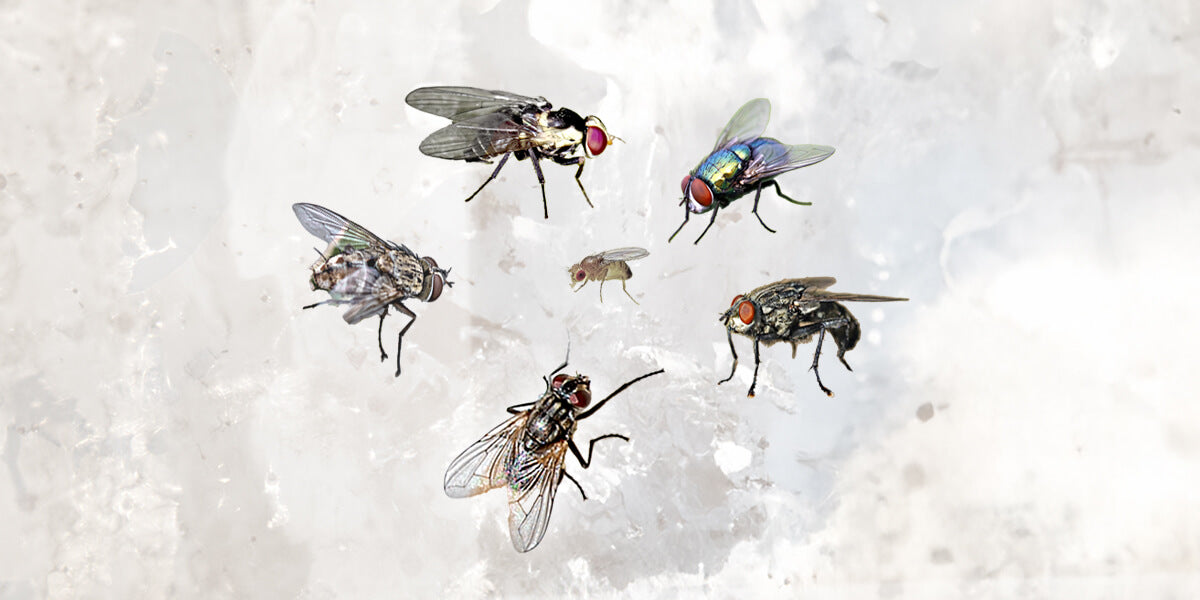
Fruit flies are very small insects, with over 3,000 species worldwide. Approximately 50 of these are native to Germany. In principle, you can encounter scavenger flies anywhere in everyday life. For example, they live at the edges of forests and in damp deciduous forests, but also feel very comfortable near human dwellings. Some species originate from Southeast Asia, but have long since spread throughout Europe and North America. Fruit flies enter our homes all year round - mostly at the same time as shopping for fruit and vegetables. However, the insects occur mainly from summer to autumn.
Fruit flies prefer overripe or damaged fruit as a place to lay their eggs. This is also why these insects tend to swarm around our fruit bowls, which is how they got their name.

To reduce fruit and vinegar flies
Long-lasting effect of up to 6 weeks
Suitable for all rooms
Insecticide-free, highly effective attractant
Go to productDiet of fruit flies
Microorganisms play a crucial role in the diet of fruit flies. Microorganisms aid in the decomposition of fruit. Adult female fruit flies are particularly interested in the liquid from fermenting fruit as a food source and in the resulting substrate, which is essential for laying their eggs. On rotting and fermenting materials, they find this suitable substrate. The larvae of these insects then feed on the fruit flesh in which the females lay their eggs, thus contributing to the further decomposition of the fruit.
Appearance and characteristics of the fruit fly
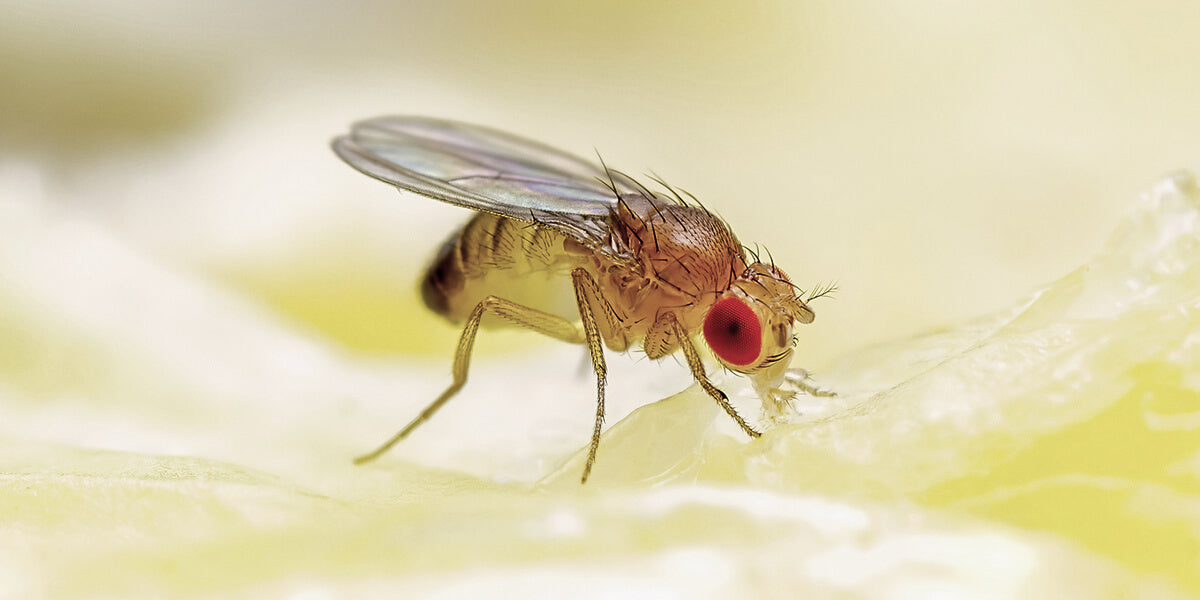
Fruit flies are not that easy to spot. Due to their tiny size, they are quickly overlooked, as their bodies are only two to four millimeters long. This makes them among the smallest of the flies. Depending on the species, they show a light to dark brown colour, usually with yellow markings. The eyes are red. Dark bands can be seen on the abdomen of some species.
Fruit flies are extremely popular in research because they reproduce so rapidly. They therefore serve as a model for tracing and easily studying genetic relationships. However, these insects, also known here as scientific flies, have other special features. For example, they have the ability to protect themselves. They deliberately lay their eggs in alcoholic substances to protect their larvae from predators. They exhibit this behaviour especially when parasites are nearby that threaten their larvae.

Reproduction and lifespan of the fruit fly
The females lay fruit fly eggs on the surface of rotting fruit as well as fermenting vegetables. We are talking about a considerable quantity of 300 to 500 eggs. The fruit fly larvae hatch after 30 hours, and pupation takes five to six days. The main problem with this insect species is its rapid and massive reproduction, meaning that a new generation develops within 10 days. A fruit fly infestation normally spreads quickly. So act quickly if you discover the first specimens of these flies in your home.
The lifespan of fruit flies depends crucially on environmental factors such as temperature. Conditions that are too hot or too cold can affect the insects. Under optimal conditions, males can live for up to ten days. Females live significantly longer, up to eight weeks.
Damage caused by fruit flies
Flies are always a nuisance, and this naturally applies to fruit flies as well. They can swarm everywhere and prefer to stay near our food. But what specific dangers can this insect species pose?
Are fruit flies dangerous?
With many fly species, there is often the problem that they carry pathogens with them and can spread them around the home. Flies therefore normally occur as hygiene and health pests. The situation is a little different with fruit flies. Although they can in principle transmit pathogens, this is generally not the case with this species of fly in practice. These animals are therefore not health pests to humans in the true sense of the word.

Food in their sights
Even though fruit flies may look harmless, they pose a certain risk. For example, fruit flies can transmit decay bacteria and thus accelerate the spoilage of food. So do not tolerate the little insects swarming around fruit and vegetables, as the females prefer to lay their eggs there when it is already overripe. This makes the fruit fly an indicator of overripe fruit where the decay and fermentation process has already begun.
Although the accidental consumption of eggs and larvae is harmless to human health, the mere thought of it is very unappetizing. The larvae themselves are after the fruit flesh, which contributes to food spoiling even faster. Anyone who values cleanliness and hygiene with food and wants to keep their fruit fresh for as long as possible should avoid fruit fly infestations or quickly proceed to consistently eliminate the fruit flies if an infestation occurs.
Winemakers' nightmare
For winemakers, fruit flies represent a very special challenge. This applies especially with regard to the so-called vinegar fly (Drosophila suzukii). While all fruit fly species infest overripe or damaged fruit, the vinegar fly also attacks healthy and still ripening fruit, such as grapes. The females can use their serrated ovipositor to penetrate the intact fruit skin and lay their eggs there as well. The larvae then damage the grapes considerably from the inside.
To make matters worse, fruit flies promote the reproduction of vinegar bacteria and other microbes. These can trigger decay processes and thus damage the grapevines. It is therefore no wonder that fruit flies are greatly feared by winemakers.
Preventing fruit fly infestations
Because fruit flies are a problem, it is worth implementing some preventive measures. This includes covering fruit bowls thoroughly so that the insects cannot get to them. Other food should also be put away consistently to avoid unnecessarily attracting the insects. However, you should not overestimate the effects of these minor measures. A fruit fly infestation can be very stubborn despite everything. Once you have allowed it into your home, you should use effective products. We will show you what to do then.

Setting a trap for fruit flies
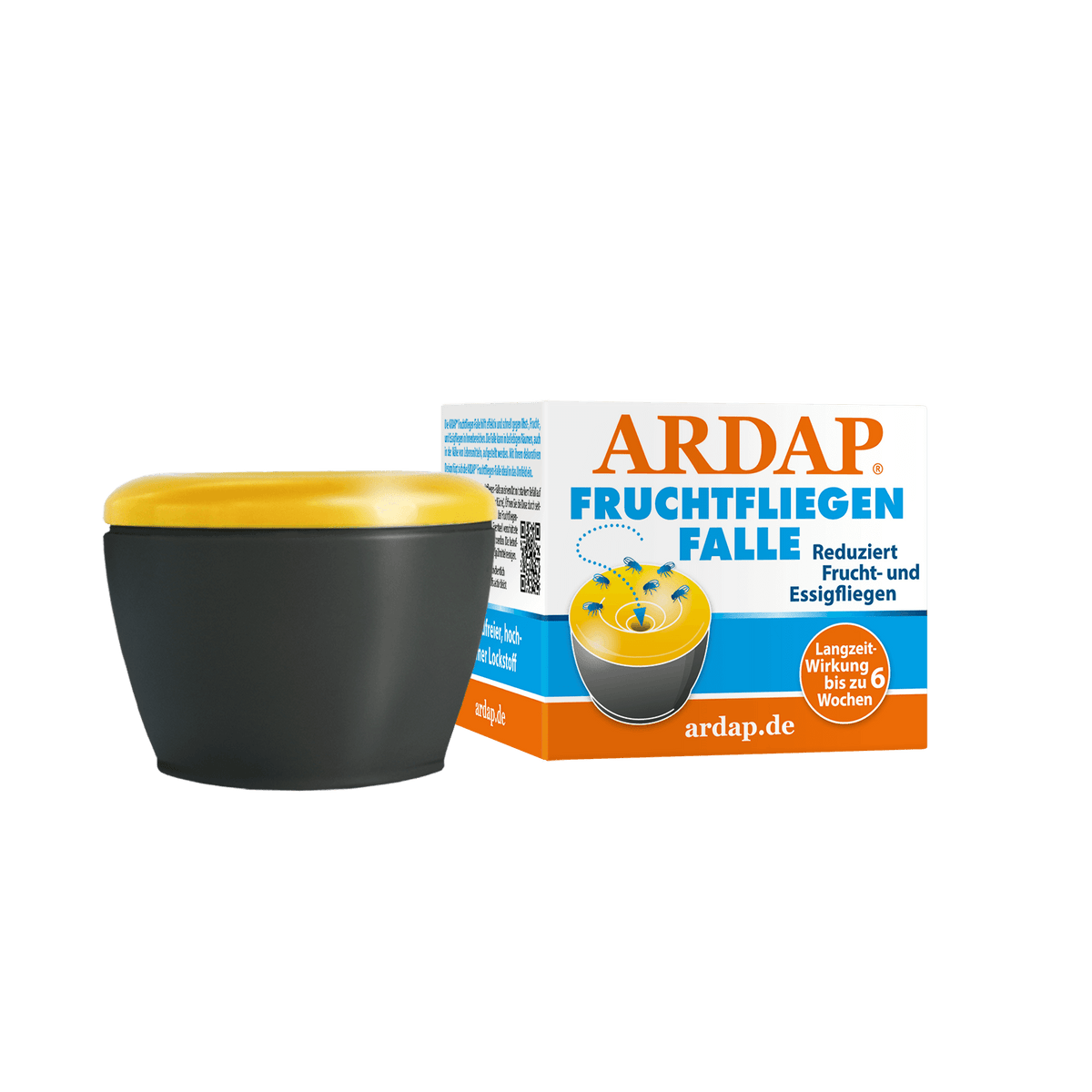
You should take a consistent approach to fruit flies. This includes setting a trap for the insects from which they cannot escape. The ARDAP fruit fly trap meets this requirement perfectly. This product was specially developed for the effective reduction of fruit and vinegar flies. It can be used in all rooms, and you will benefit from a long-lasting effect of up to six weeks.
The ARDAP fruit fly trap contains an insecticide-free, highly effective attractant that draws the insects in. It is particularly effective to place the trap near the infested food. Thanks to its decorative design, it blends in perfectly with its surroundings.

Repelling and getting rid of fruit flies
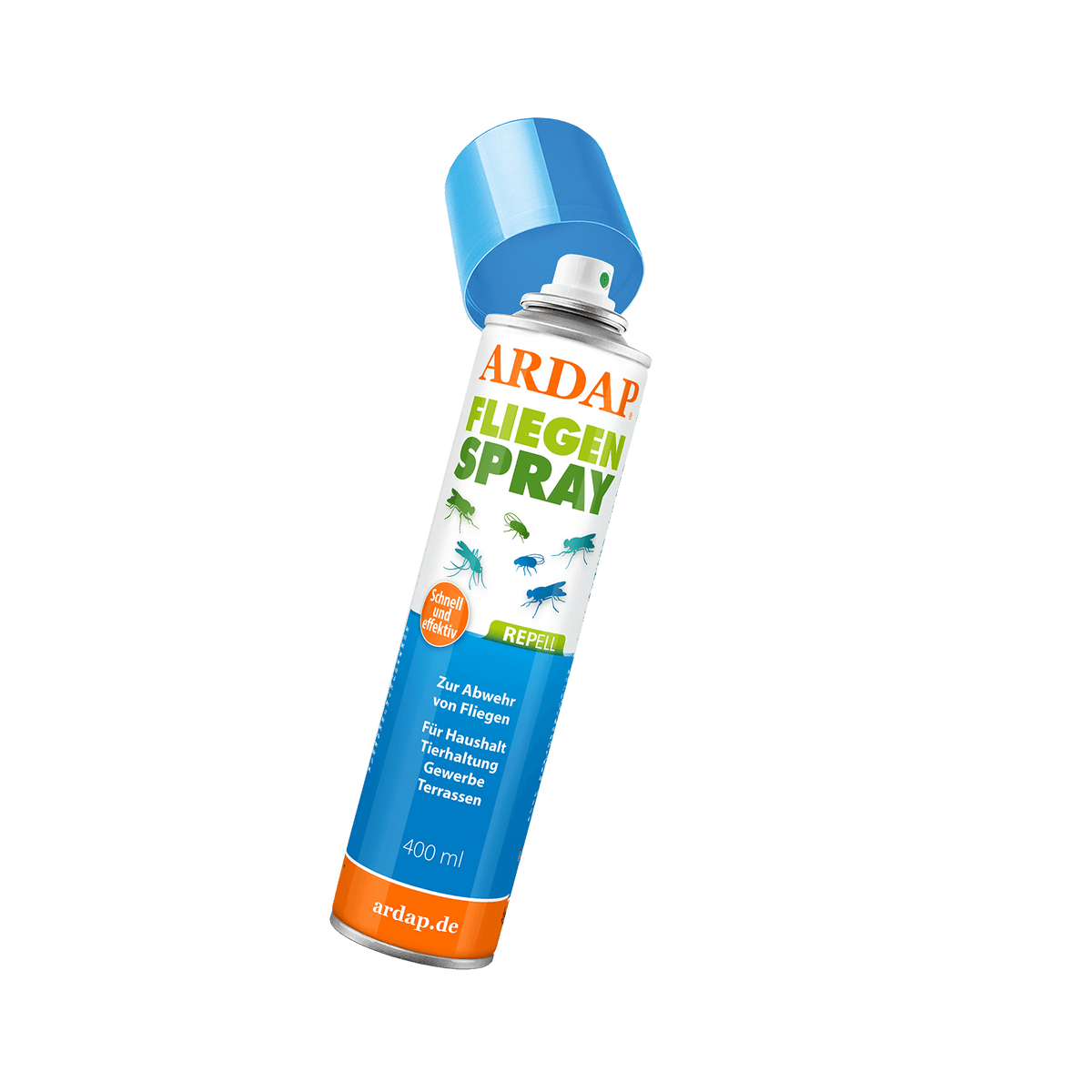
The smallest gaps are enough for fruit flies to enter your home. The ARDAP Repell fly spray is suitable for repelling these little insects in such places. It works quickly and effectively and reliably keeps the insects away. Spray entry points such as windows and door frames with the repellent spray to prevent them from entering your living area. This makes it possible to stop the spread of the insects at the very beginning. However, make sure not to spray the product directly on fruit bowls or containers, or on food.


Eliminating and effectively controlling fruit flies
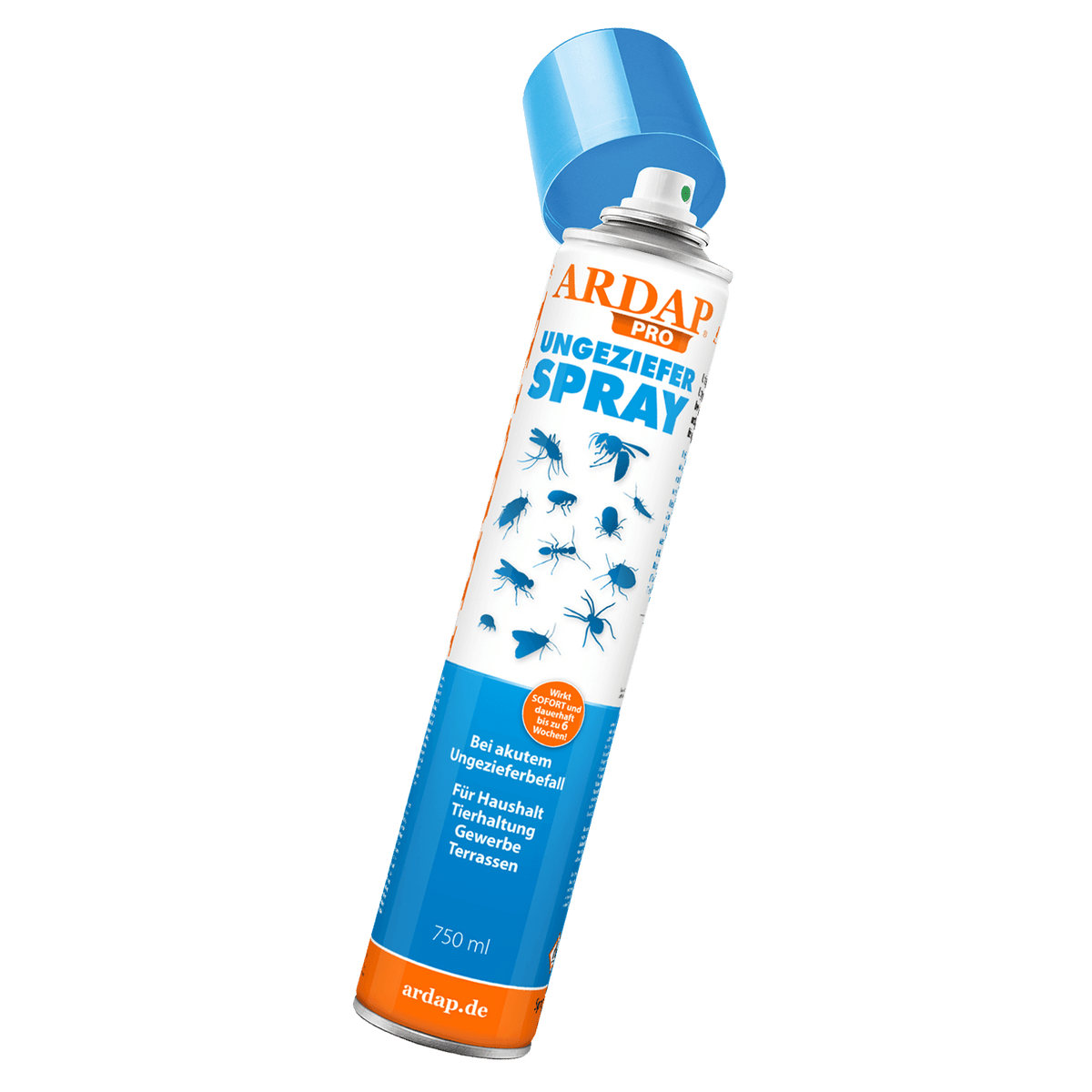
Repelling is one of the basic methods for dealing with fruit flies, and repellent products are highly effective here. Sometimes, however, this is not enough. If you have, for example, to do with a larger collection of fruit flies, you should also use products for long-term control. The ARDAP Pro pest spray is particularly suitable for targeted spraying of fruit flies or the places preferred by fruit flies. This is a professional product for controlling pests that contains a highly effective feed-and-contact insecticide. This allows you to take thorough action against flies, but also mosquitoes, silverfish, ants, as well as many other pests. It can be used in both domestic and commercial settings. It is also useful in animal husbandry. The effect takes hold immediately and lasts for up to six weeks. Contact of the spray with food must be strictly avoided.
Conclusion
Fruit flies are active all year round, even though some species overwinter in sheltered places during the cold season. You must therefore expect that the insects can appear at your home at any time. That they prefer to lay their eggs in our fruit is, of course, particularly unpleasant. For this reason, it makes sense to invest in prevention and to prepare for an infestation. With the products from ARDAP, you are always on the safe side in the event of a possible infestation by fruit and other flies and can eliminate these unpleasant insects in a targeted manner. The ARDAP Pro products are ideal when effective control is required.