





Fleas in Humans and Animals: Parasite Profile
Fleas are parasites that are not only a nuisance but also highly resilient. If they are not controlled with suitable flea treatments, the parasites multiply very quickly and spread throughout the entire house or apartment. Once a flea infestation has become established, effective remedies are needed. Ideally, a flea infestation never takes hold in the first place, because after all, fleas also pose health risks to animals and humans. But how do you recognize fleas in the first place, and what dangers do they pose? How do you get rid of them, and how can you reliably prevent a flea infestation?
We will explain this and more together with our expert, Prof. Dr. med. vet. Norbert Mencke, specialist veterinarian for parasitology.
All Flea Blog Posts:
Controlling fleas: Tips for people, pets, and the home

Dog has fleas: Home remedies at a glance

Cat fleas: Identify them for sure and control them reliably – Tips & remedies
Fleas at a glance
- Parasites (wingless insects)
- Size: 1–3 mm
- Color: Light to dark brown, with reddish areas
- Lifespan: 2 weeks to several months
- Host animals (depending on the species): Dogs, cats, humans and many other animals, such as hedgehogs, rodents, birds, etc.
Characteristics
- No wings, but extremely strong jumpers (up to 48 cm)
- Laterally flattened body – ideal for slipping through the fur
- Piercing mouthparts (they don't bite, they sting!)
- Strong claws for holding on in the fur
Life cycle
- Egg (falls from the host into the environment)
- Larva (feeds on organic material, three larval stages)
- Pupa (in a cocoon, can survive for months)
- Adult flea (hatches upon contact with a host)
Common species
- Cat flea (Ctenocephalides felis) – most common parasite
- Dog flea (Ctenocephalides canis) – less common
- Both infest dogs and cats
Dangers
- Itching, skin inflammation, allergies (flea saliva dermatitis)
- Tapeworm transmission (if fleas are swallowed)
- Anemia (in cases of heavy infestation, especially in young animals)
- Cat scratch disease, bacteria transmitted via flea droppings
Fleas are parasites. Although they are insects, they cannot fly. However, they are excellent jumpers. Fleas can also hide very well. A flea infestation is therefore usually not detected by someone catching a flea or seeing fleas jumping around on the pet or in the home. Instead, you may find suspicious spots and suspect flea bites, even though no fleas are visible. Or you first notice the fleas' droppings, which get caught in the flea comb when brushing your dog or cat. Because flea droppings consist largely of undigested blood, the dark specks leave red smears when crushed (e.g. on a damp paper tissue), which is a clear sign of a flea infestation. Even if you have not yet seen a flea, it is necessary to take appropriate measures when such signs appear to contain the start of a flea infestation immediately. As soon as you can see fleas in your animal's fur with the naked eye, the infestation is already well advanced.
Appearance of fleas
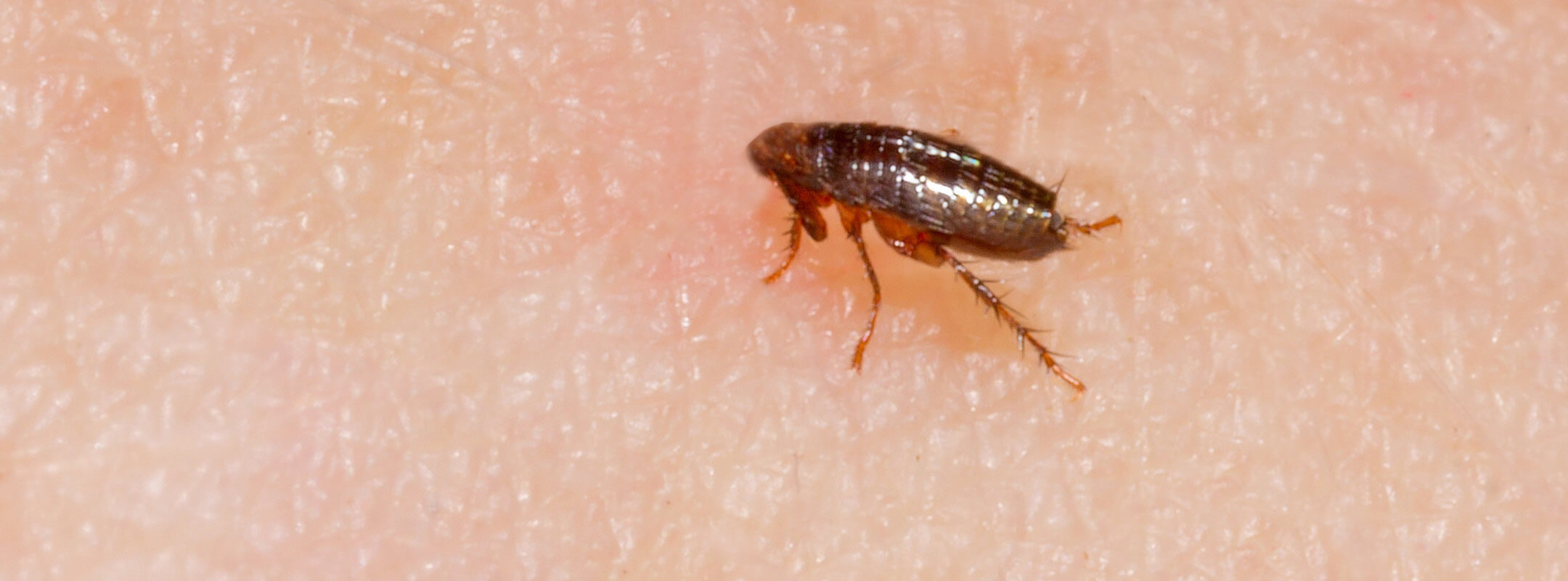
Among the best known and most widespread fleas is the cat flea (Ctenocephalides felis). Cat fleas are wingless parasites that are specialized not only for cats but, contrary to what the name might suggest, also for dogs, and can also sting humans. They are between 1 and 3 mm long and have a flat, laterally compressed body that allows them to move easily between their hosts' hairs. Their color varies from light to dark brown, often with reddish areas. The body is covered with tiny hairs.
Auch wenn die Bezeichnung “Flohbiss” geläufig ist, handelt es sich tatsächlich um Flohstiche und nicht um Bisse. Flöhe haben ein spezielles Mundwerkzeug, welches über einen Stechrüssel verfügt. Mit diesem können sie die Haut ihres Wirts durchdringen und so schließlich die Blutmahlzeit einnehmen.
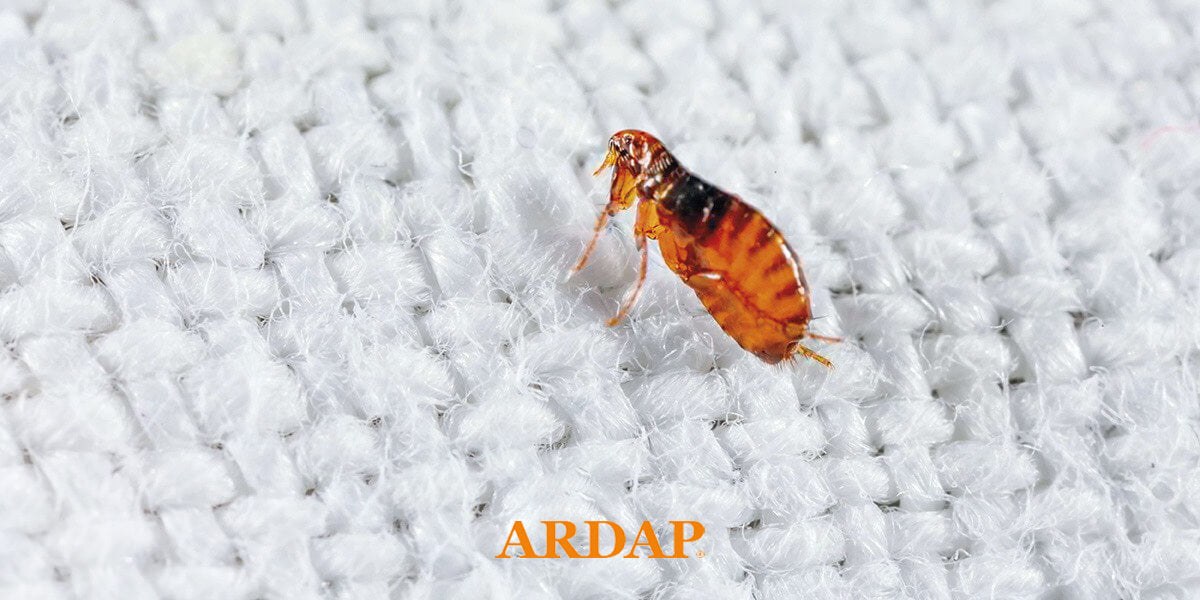
The most striking feature of fleas is their impressive jumping ability. Thanks to their powerful hind legs, they can jump an average of 20 cm (up to 48 cm) far and 13 cm (up to 20 cm) high.
Under the microscope, their mouthparts can also be seen, which enable fleas to pierce the skin and suck blood. Like other insects, fleas also have three pairs of legs. The legs are equipped with strong claws, with which fleas can hold on to the fur (or feathers) of their host animals. Unlike lice, flea eggs are not glued to the hair. The flea eggs fall out of the cat or dog's fur, where they continue to develop in protected places in the environment (e.g., in cushion or floor crevices). This is why treating the environment is particularly important in the case of a flea infestation.
Development of the flea: Life cycle
The life cycle of fleas goes through four developmental stages:
- Egg
- Larva
- Pupa
- adult flea
Depending on the environmental conditions and the availability of a suitable host, this cycle takes between two weeks and several months.
After the adult female flea has sucked blood from a suitable host animal, it lays eggs on the host. A female flea can lay an average of 27 eggs per day. The light-colored, oval flea eggs are tiny and easily fall out of the host's fur. Then they land on the floor, couch, bed, or another place where the infested host animal has been.
From the eggs hatch flea larvae, which feed on organic materials such as skin scales, feces from adult fleas, and other residues. The larvae undergo two molts (three larval stages) as they grow and develop. As soon as a flea larva has reached its final molting stage, it spins itself into a cocoon and enters the so-called pupal phase . During this phase, which is also known as pupal dormancy, the flea can survive for up to six months without blood or food and wait for a host animal.
Under favorable conditions – for example, if the protected flea in the cocoon detects the warmth or breath of a host animal – the adult flea hatches. The freshly hatched flea then jumps onto the perceived host to suck blood and start the cycle anew.
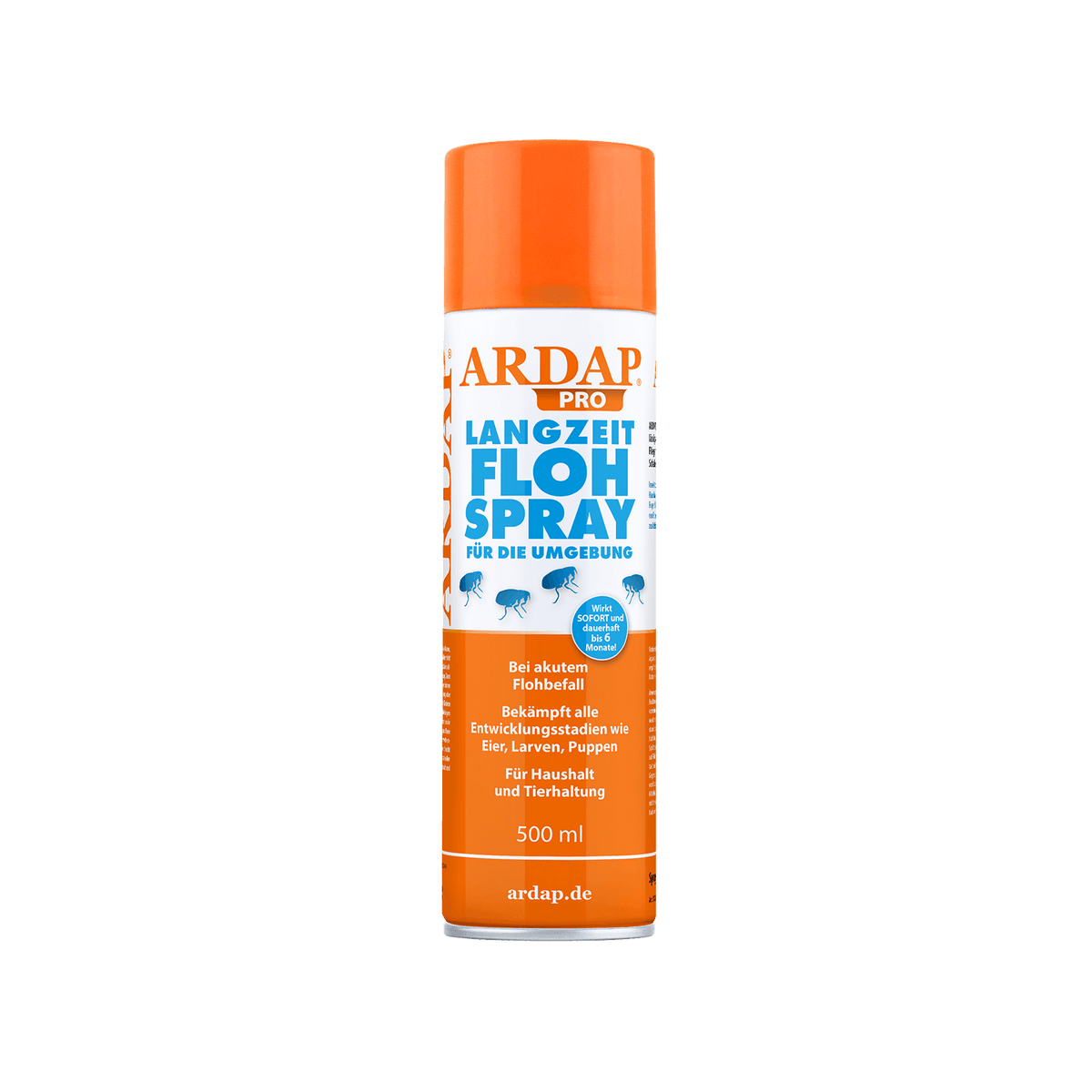
Because the majority of the flea life cycle takes place in the host's environment, it is not enough to treat only the host in the case of an acute flea infestation. The eggs, larvae, and pupae in the environment must also be controlled so that they cannot cause a reinfestation. Suitable products for environmental treatment include, on the one hand, the ARDAP Pro Fogger. At the touch of a button, it sprays a fine (spray) mist in the living area, which directly controls all developmental stages such as eggs, larvae, and pupae. On the other hand, the ARDAP Pro Long-Lasting Flea Spray is also suitable for the environment, as you can use it to spray, for example, beds, scratching posts, and floor mats, thus also controlling hidden fleas, eggs, and larvae.
Der ARDAP Pro Fogger und das ARDAP Pro Langzeit-Flohspray sind die ideale Kombination zur Bekämpfung von Flöhen in allen Entwicklungsstadien in der Umgebung.
However, in addition to this environmental treatment, the animal must always also be treated. While foggers and long-acting sprays are suitable exclusively for the home, you should use repellent products against fleas for your animal—this prevents flea infestations from taking hold in the first place. These repellent products are ARDAP Flea Spot-On for Dogs and ARDAP Flea Spot-On for Cats, or the ARDAP Flea Collar for Dogs and the ARDAP Flea Collar for Cats. Both spot-ons and flea collars provide several weeks of flea prevention for the animal.
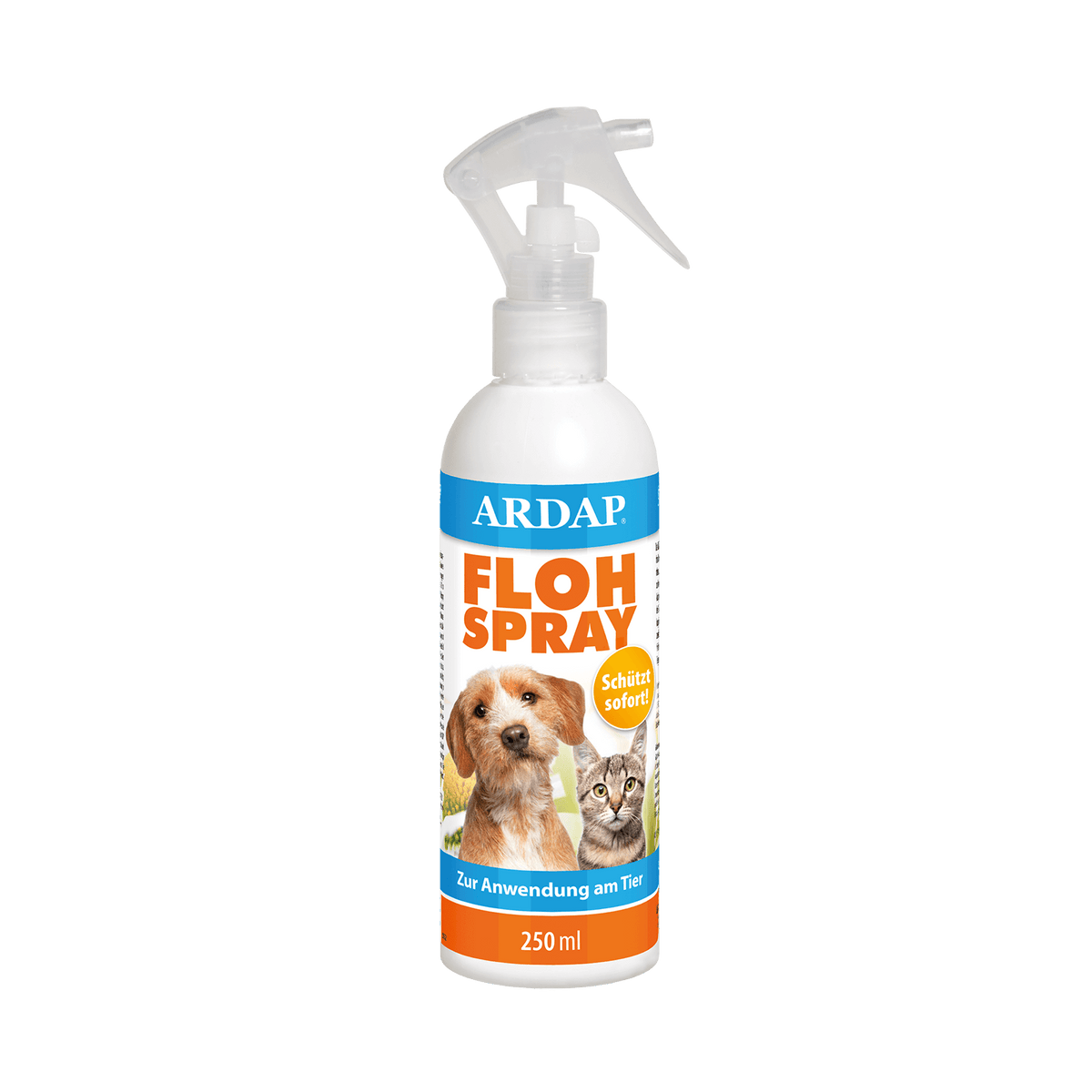
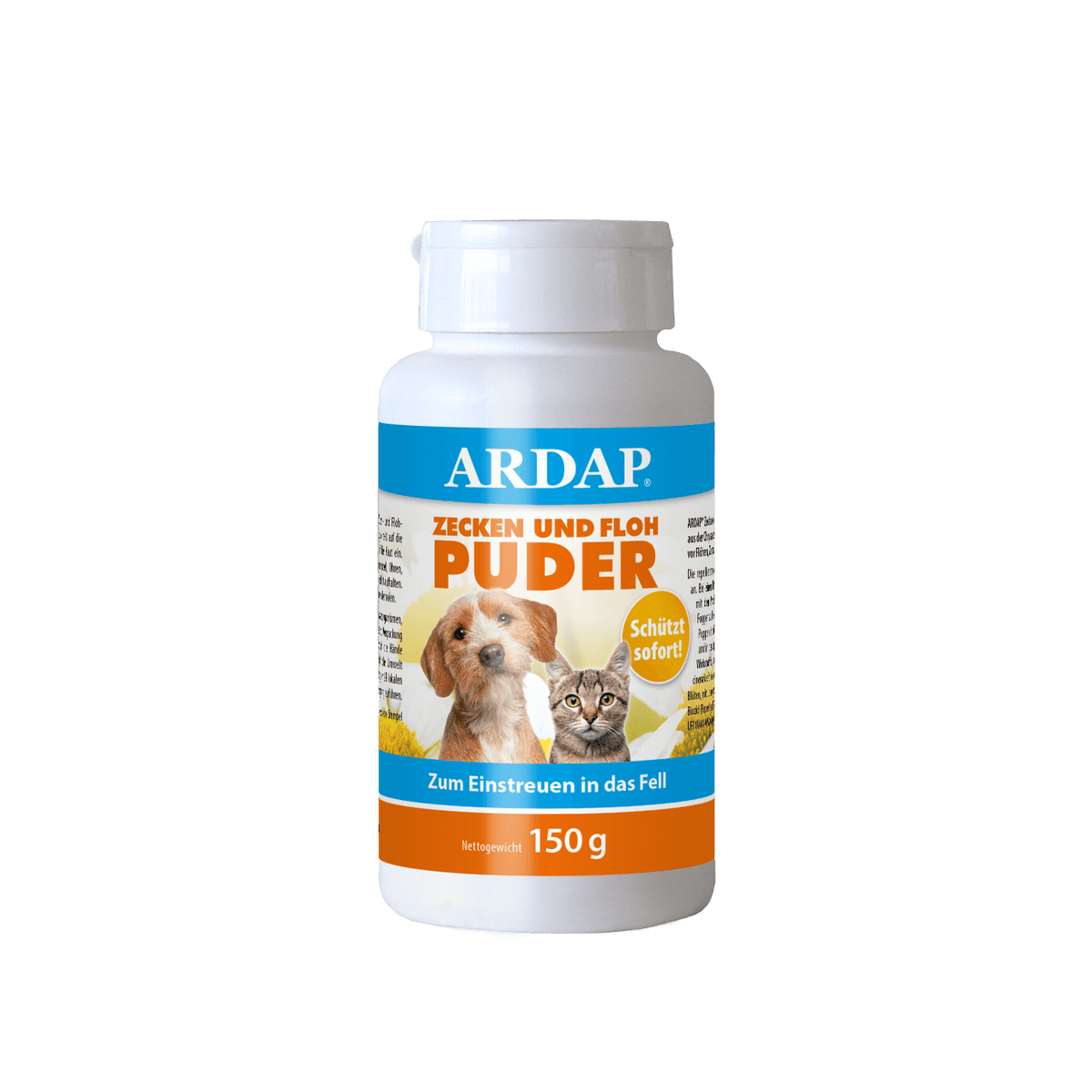
You can supplement the use of a collar and spot-on with flea powder and flea spray. These products can be applied ideally to the body areas preferred by fleas, such as the back, the base of the tail, the belly, and the inner thighs. Flea shampoo also repels fleas and simultaneously ensures a hygienic dog coat.
With so-called repellent flea products (from the Latin repellere = to drive back, repel, ward off), you can repel fleas and ticks and prevent them from settling on your pet. ARDAP's repellent products contain the active ingredient pyrethrum from the chrysanthemum flower.
Discover ARDAP for your pet and the environment







Types of fleas on humans and animals
In Germany and Central Europe, two types of fleas are particularly common: the cat flea (Ctenocephalides felis) and, less commonly, the dog flea (Ctenocephalides canis). Both types of fleas can infest cats and dogs and also jump onto humans to feed on their blood. However, human blood is not enough for them to survive, because they need the blood of their preferred host animals to reproduce.
The cat flea is the most common type of flea in households with cats and dogs. Contrary to what their names might suggest, both the cat flea and the dog flea can feed and reproduce very well on both cat and dog blood. Both types can cause similar reactions or health problems in sensitive animals and people, as well as in allergic individuals.
Other types of fleas, such as the human flea (Pulex irritans), the hedgehog flea (Archaeopsylla erinacei), and the chicken and poultry flea (Ceratophyllus gallinae), can also occur in Germany. Human fleas have become very rare in this country due to good hygiene conditions. However, poultry fleas in chicken coops can cause considerable problems if they are noticed too late.
Fleas on pets and in the home should always be controlled to prevent rapid reproduction or a flea infestation. While you cannot prevent wildlife such as hedgehogs or garden birds from having fleas and other parasites such as mites or ticks, you should make sure that the fleas do not infest your pet and that the flea infestation does not enter the home from outside.
How do fleas get onto my pet and into the home?
Fleas in the home can enter your home in several ways. If your pet comes into contact with other animals that are infested with fleas, they can easily jump onto your dog or cat. This can happen while playing outdoors or at the dog park, during a walk in the park or the woods, and also in another household.
Fleas can also get onto your pet directly from the environment. They hide, among other places, in carpets, furniture, bedding, and other textiles in the home. If your pet is in the vicinity of a flea in the pupal stage, it detects the presence of the host animal, and the adult flea hatches and jumps onto the animal.
Although it is less common, fleas can also be brought into the home by people, for example on your clothing.
Treating fleas in dogs and cats properly: How to do it
If a flea infestation has become established, measures should be taken for immediate and long-term effects. As part of an integrated treatment, you should always treat the animal's environment and apply preventive products to the animal.
- Step 1: Examine the coat with the ARDAP flea and dust comb to detect a flea infestation early.
- Step 2: Cleanse and care for the skin and coat with the ARDAP anti-flea shampoo for dogs.
- Step 3: Protect against re-infestation with ARDAP flea spot-on for dogs or ARDAP flea spot-on for cats; the products are applied to the animal's neck and are effective for several weeks. As an alternative to the spot-on, the ARDAP flea collar for cats or the ARDAP flea collar for dogs is suitable. Both collars are effective for up to 4 months.
- Step 4: Use ARDAP flea spray or ARDAP flea powder as a supplement for additional protection, e.g. before going outdoors or taking a walk.
- Step 5: Treat the living environment with the ARDAP Pro long-lasting flea spray and the ARDAP Pro flea fogger. The active ingredient combination contained kills the pests immediately on the one hand and breaks the life cycle of the further developmental stages on the other. With the flea fogger, you can distribute a (spray) mist over a large area in the room at the touch of a button. This allows the active ingredient combination to spread throughout the entire room and reach the fleas everywhere. With the long-lasting spray for the environment, you can specifically treat places and objects such as beds, scratching posts, and floor mats.
What effect do home remedies against fleas have?
The list of alleged home remedies for combating fleas and preventing fleas in dogs and fleas in cats is long. However, home remedies cannot deliver on their promises against fleas. Many misconceptions surround the often-promised miracle effect of home remedies - to the detriment of the pets, who are increasingly exposed to flea infestations.
Diseases and Risks Caused by Fleas
The health risks posed by fleas to humans and animals should be taken seriously. They range from transmissible pathogens to allergic reactions.
Health Risks to Humans
Many people react allergically to flea bites or flea saliva, or suffer unusually severe symptoms. These can range from severe or long-lasting itching, skin redness, and skin rashes (eczema, flea saliva dermatitis) to fever, chills, shortness of breath, and other symptoms. Scratched areas are also risky, as they can become infected through the entry of dirt or bacteria. But the transmission of pathogens that can lead to bartenellosis (cat scratch disease) is also a risk to humans.
To minimize the risks and protect yourself from diseases, regularly check your pets for fleas. If you notice flea bites on yourself, observe the areas closely. If you suspect an allergic skin reaction or a disease transmissible by fleas, make a doctor's appointment early to clarify the symptoms and receive treatment if necessary.
Risks to Dogs and Cats
Fleas or flea bites cause itching and discomfort in pets. In cases of severe or prolonged infestation, with increased scratching, biting, or chewing on the itchy areas, the risk of skin inflammation, oozing eczema, hair loss, and behavioral changes (e.g., increased aggression, anxiety, or insecurity) due to ongoing stress also increases.
Because fleas can carry developmental stages of tapeworms, your dog or cat can get tapeworms if your pet swallows such a flea (e.g., while grooming). To prevent a tapeworm infection, veterinarians recommend additionally administering a deworming medication as a precaution or carrying out a deworming after flea eradication.
Young animals or animals with a weakened immune system can develop anemia (blood deficiency) due to severe flea infestation. However, this is extremely rare. Far more common in dogs and cats is an allergy to flea saliva, which can lead to severe skin inflammation and subsequent diseases. To protect your pet from these and other risks, you should always rely on preventive measures that prevent flea infestation.
Conclusion
Fleas are persistent parasites that can infest both pets and humans. Their complex life cycle makes a combined treatment of the animal and the environment indispensable. ARDAP offers a comprehensive range of effective products for this purpose:
On the animal:
- ARDAP Spot-On (for dogs and cats)
- ARDAP flea collars (up to 4 months of protection)
- ARDAP flea shampoo and flea spray for targeted applications
In the environment:
- ARDAP Pro long-lasting flea spray for targeted treatment of sleeping areas and textiles
- ARDAP Pro fogger for large-area room treatment
Thanks to the repellent effect of the ARDAP flea products for use on the animal, not only can an acute infestation be repelled, but above all, a new infestation can be prevented. Combine regular prevention (e.g., with ARDAP Spot-Ons or collars) with a thorough environmental treatment with the ARDAP Pro products in case of acute infestation – this way your four-legged friends and your home will remain flea-free!
Frequently Asked Questions
- Flea dirt: Black specks in the fur that leave red streaks on damp paper
- Itching: Frequent scratching, biting, or licking (especially on the back, base of the tail, and belly)
- Visible fleas: Small, fast-moving insects in the fur (1–3 mm long, reddish-brown)
Yes, fleas also bite humans, but they do not stay on them permanently. They prefer dogs or cats as hosts. In humans, they cause itchy, red bites.
- Eggs/larvae: Up to 6 months in carpets, upholstery, or crevices
- Pupae (cocoons): Inactive for months – only emerge when exposed to warmth/vibration (e.g., from passing animals)
➡ Important: Environmental treatment (e.g., with ARDAP Pro Fogger or long-lasting flea spray) is essential!
For the pet:
- ARDAP Spot-Ons (e.g. ARDAP Flea Spot-On for Dogs/Cats)
- ARDAP Flea Collars for dogs and cats (up to 4 months of protection)
-
ARDAP Anti-Flea Shampoo (for cleaning the coat in cases of acute infestation)
In the home:
- ARDAP Pro Fogger (for large-area treatment)
-
ARDAP Pro Long-Lasting Flea Spray (for textiles, beds, cars)
Yes, for example:
- Tapeworms (if animals swallow fleas)
- Allergies (flea-bite dermatitis)
- Bacteria (e.g. bartonellosis = "cat scratch disease")
Fleas are extremely resilient. Home remedies kill neither eggs nor pupae and offer no reliable protection. Better: Use scientifically tested products from ARDAP.
Yes! Fleas are often brought in on shoes or clothing, or they hatch from old pupae in the home.
What our customers say?
Reliable solution for emergencies
Great!
Fleas are gone
Discover Flea Treatments from ARDAP
Bestseller
Our most popular products



Use biocidal products carefully. Always read the label and product information before use.
Our tip for a quick solution
