With the support of our veterinarian Prof. Dr. med. vet. Norbert Mencke, a specialist in parasitology, we help you identify the causes, risks, and measures for your cat and its environment.
- Suspected cat fleas? How to spot fleas on cats
- Cat fleas found: How can you control fleas on cats?
- Fleas on cats: What risks does a flea infestation pose?
- Cat flea checklist: Immediate measures and long-term control

Suspected cat fleas? How to spot fleas on cats
A flea infestation on a cat is not easy to spot. Especially at the beginning, when there are only a few individual fleas in the animal's fur. This is because individual fleas are difficult for cat owners to see, which is why an initial flea infestation often goes undetected. Whether and how a cat becomes infested with fleas depends heavily on the cat's lifestyle. An outdoor cat is generally exposed to a higher risk of flea infestation, but even indoor cats can become infested with fleas, for example on the balcony.
If the flea infestation progresses, as it initially remains undetected and untreated, the signs become obvious. If you find fleas, for example, when combing the fur, or if you happen to see the fleas jumping through the fur, the flea infestation is already well advanced and the flea problem is increasingly spreading. To find fleas in the fur as early as possible, a flea comb is suitable. The comb can also detect flea dirt in the fur. The dark, small crumbs are picked up by the fine teeth and can thus be combed out. Existing flea dirt is a clear sign of a flea infestation.

What do cat fleas look like?
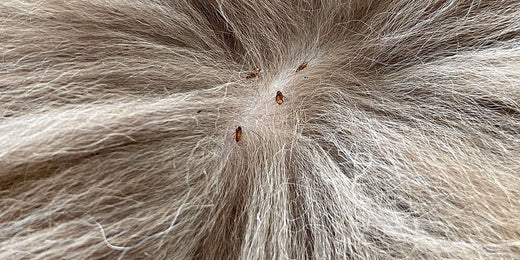
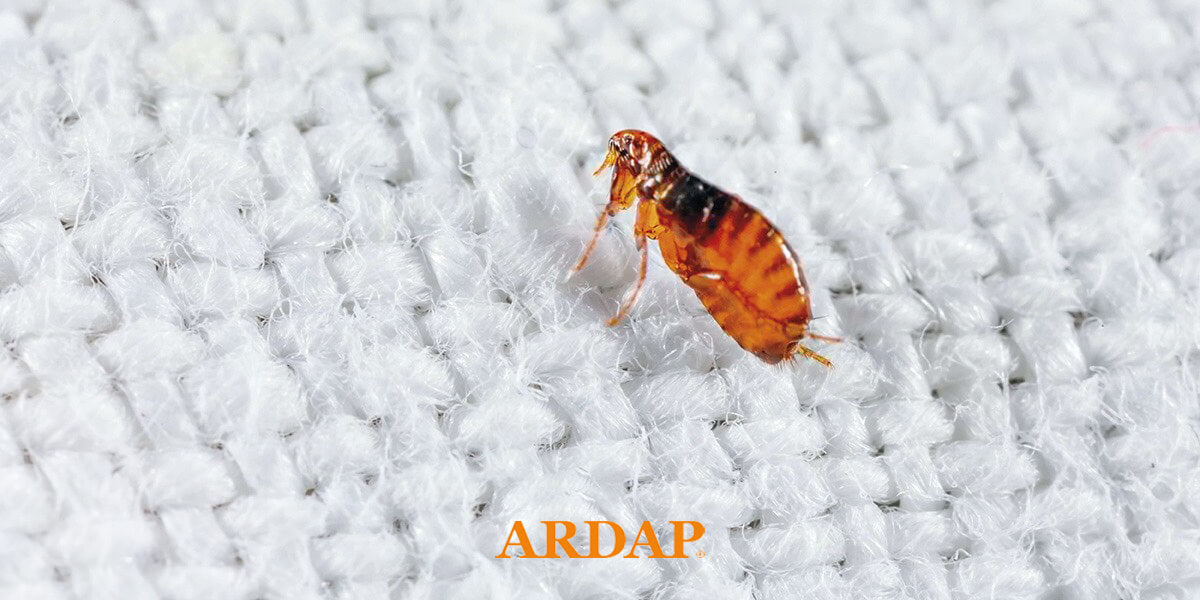
Cat fleas usually have a reddish-brown appearance. Their laterally flattened body has a robust outer skeleton (chitinous shell) and bristles. Although fleas are insects, the flea lacks wings. However, it makes up for this with its jumping ability. Fleas can travel relatively far: Due to their high jumping ability, the parasites can jump over 20 to 25 centimeters. Of the six flea legs, the two rear ones are the strongest. The body can grow to two to four millimeters in size.
Where does the flea infestation come from?
If the cat is outdoors and comes into contact with other flea-infested cats or animals, such as hedgehogs, the animal can also become infested. In this way, fleas are mostly brought into the home or house, where they multiply quickly under favorable conditions. This is because female fleas can lay an average of 27 eggs a day in the host animal's coat, from which they fall into the environment. From this, up to 250,000 fleas can develop within a month.
But in every case, the parasites do not find their way into your four walls via the cat. Even pure indoor cats without outdoor access sometimes suffer from an infestation if the tiny animals enter the house, for example via textiles such as an old carpet, and adult cat fleas use the pet as a host. Thus, no cat is 100 percent protected from the parasites and should therefore be protected preventively with repellent products.

Symptoms of the cat during a flea infestation
The best-known symptom of a flea infestation is severe itching. However, cats often do not show itching by scratching frequently. But the animal may groom its fur more intensely and bite at it, which sometimes causes wounds. Crusty skin areas, pustules, and redness also indicate a flea infestation, provided the cat reacts allergically to flea saliva. However, a flea saliva allergy in cats is often difficult to detect, unlike in dogs. This is because flea saliva allergy in cats usually appears in small areas.
Behavioral changes, including restlessness and irritability, are further signs that can accompany a flea infestation. This is because the animals often feel stressed by the bites of the parasites. If left untreated, this ultimately also leads to a reduction in coat quality and potentially to the transmission of pathogens.
Recognizing cat fleas in the home
To recognize cat fleas and remove them from the cat's fur, it is helpful to use a special flea comb. If you find dark dots, they could be flea dirt. Put the crumbs on a damp cloth. Then crush them. If the spots turn red, brown, or orange, it is almost certainly flea dirt that the females have excreted in the animal's fur. The coloring is due to undigested blood components.
Is there a flea season?
Cat fleas can multiply in living spaces all year round. Above all, the little parasites feel comfortable in a heated environment, where they can spread very quickly under optimal conditions. If a cat is in the household and thus involuntarily provides blood meals for adult fleas, the increase in the population is guaranteed. Basically, there is no typical flea season, but rather a year-round risk of flea infestation is assumed today. For cat owners, this means: Year-round protection with repellent products should be provided.
Cat fleas found: How can you control fleas on cats?
As soon as the suspicion is confirmed that your cat has fleas, you should take measures as quickly as possible to control fleas. If left untreated, a plague will always occur. When controlling, it is important to consider the environment, because 95% of the developing cat fleas are located here in the form of eggs, larvae, and pupae. In addition to the environmental treatment, repellent flea products must also be applied to the animal. What matters, therefore, is the combination of both methods, with which you can thoroughly address the flea infestation as part of an integrated treatment.
Home remedies for cat fleas
Pet owners are often inclined to first try home remedies against cat fleas. These include remedies with lemon, rosemary, and other ingredients such as apple cider vinegar or coconut oil. But please note: None of these home remedies have been proven to work against a flea infestation.
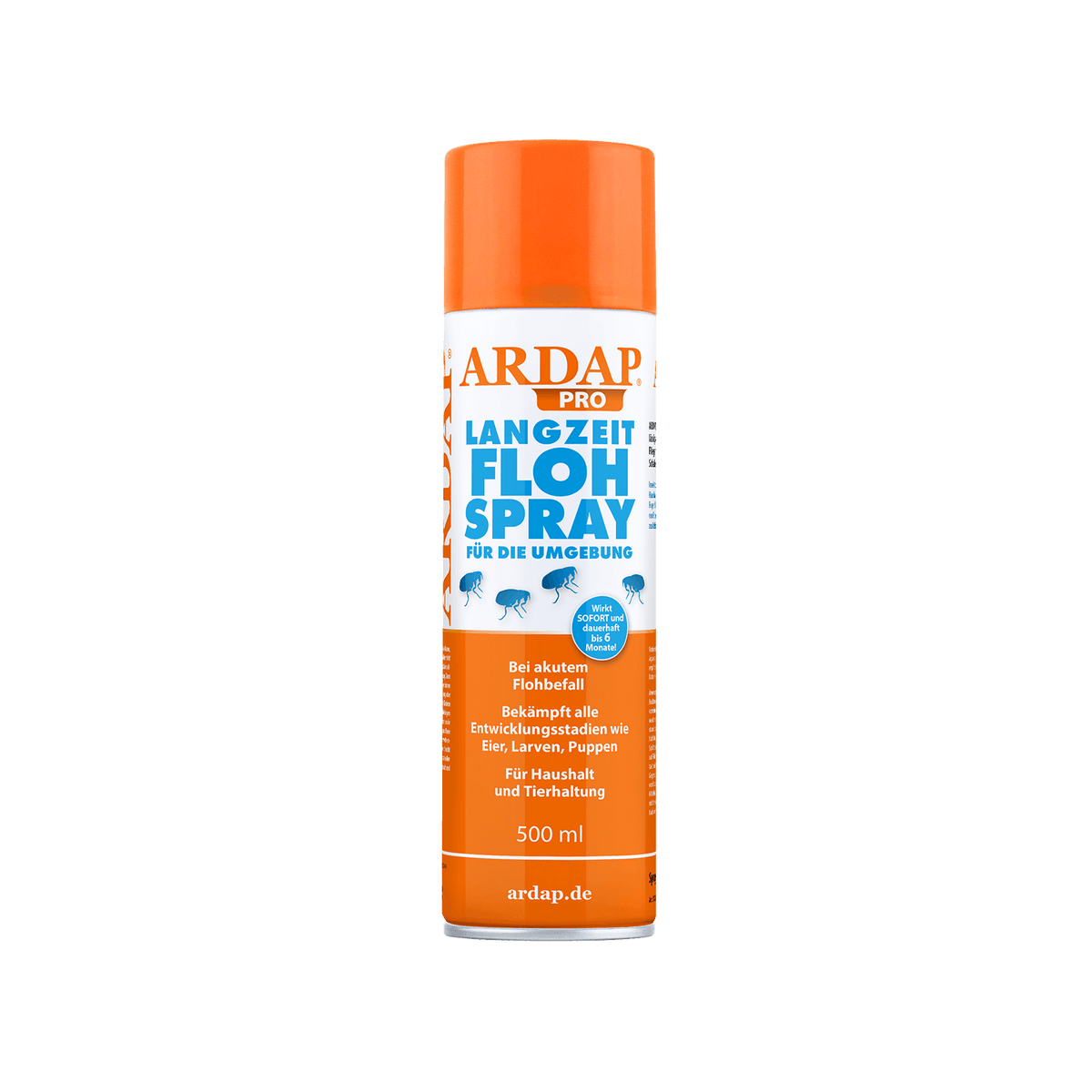
It is therefore important to use professional control in the form of an integrated treatment with products for the environment, such as the Pro Flea Fogger and the Pro Long-Lasting Flea Spray, as well as preventive measures with repellent products in the environment or on the animal.

Repellent products against cat fleas
So-called repellent (repelling) products help to protect the cat from fleas and prevent the parasites from taking the pet as a host. For this, the Flea Spot-On for Cats is suitable, for example. One application can prevent a flea infestation thanks to the active ingredient pyrethrum from chrysanthemum flowers for up to 12 weeks.
As an alternative, the Flea Collar for Cats is recommended, which reliably protects against a flea infestation for up to 4 months. It is attached loosely around the cat's neck, where it releases its repellent effect. Safety comes first: Through a safety mechanism, the collar detaches itself in case of greater resistance.


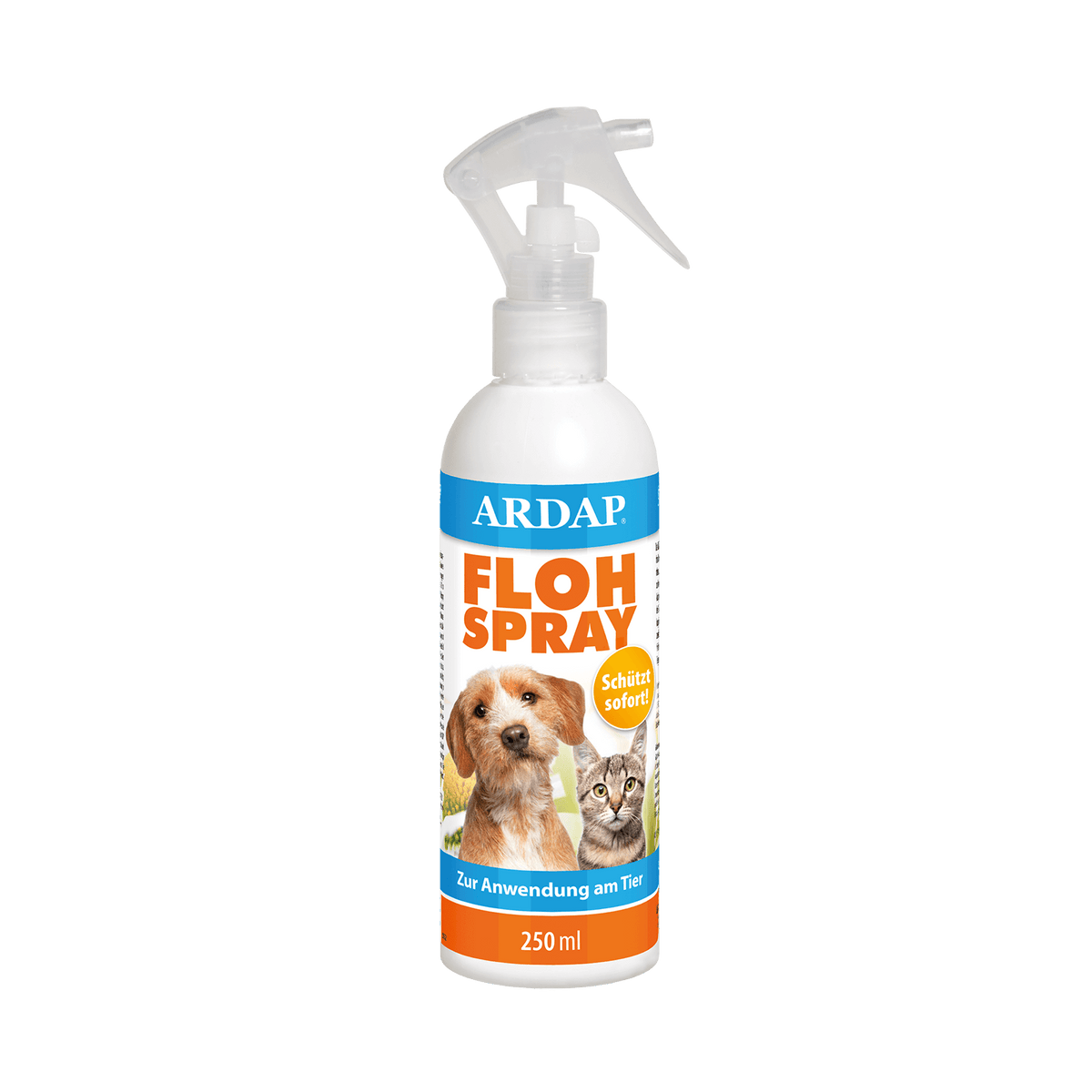
Also suitable for cats is the use of the Flea Spray or the Flea Powder as additional protection, e.g. before going outdoors. Both products are repellent products and are based on pyrethrum and lavender oil.
You can also specifically repel fleas in the environment, e.g. on scratching posts, baskets, or carpets, with repellent products. The Repell Flea Spray with pyrethrum works quickly and effectively repels fleas.

How do I get cat fleas out of the home?
Whether cat bed, scratching posts, blankets, carpets, or clothing: To get cat fleas out of the home, treatment of the animal's environment is necessary. Always keep in mind that simply beating out the textiles or vacuuming is not enough. Because the parasites are hidden, for example, in the deepest layers of carpets and have time to develop in peace in the cat's environment. The flea pupae, which are in the waiting stage, can hatch rapidly if you, for example, perceive movement or body temperature, jump on the cat, and multiply there. It is therefore important to use products for the environment that interrupt the complete development cycle of the flea.
In addition to spraying various objects with the long-lasting flea spray for the environment, the flea fogger with a growth inhibitor can ideally be used additionally for the environmental treatment. This fogs the living space and works against fleas in all developmental stages for up to 6 months.
Preventing re-infestation by cat fleas
Preventive measures against a cat flea infestation are essential to keep the blood-sucking parasites away. Our recommendations and tips summarized:
- Use repellent products for application on the animal, such as Spot-On, collar, flea spray, or flea powder, to repel fleas.
- You can also reliably repel fleas in the environment with the Repell Flea Spray.
- Brush the coat of your cats regularly with the flea comb.
- In case of a flea infestation, always remember to treat not only the animal, but also the animal environment with the Pro Fogger or the Pro Long-Lasting Flea Spray, which combat the development process of all flea stages.
- If you clean birdhouses or come into contact with hedgehogs, there is a risk of bringing fleas into the home. Therefore, take off your clothes and spray everything with the long-lasting flea spray in a tightly sealable bag before entering your house. After a few hours of exposure time, you can then wash the clothes.
- Dispose of trash bags and vacuum cleaner bags immediately after a major cleaning, so that the sucked-up flea larvae and eggs cannot develop into adult fleas.
Treating kittens against fleas
While puppies and kittens are still being nursed and cared for by their mother, the mother should be treated and protected with repellent products. As soon as the puppies and kittens are independent, the Flea Powder for Dog and Cat or the Flea Spray is recommended.

Fleas on cats: What risks does a flea infestation pose?
Fleas on cats not only cause stress and restlessness, but also pose health hazards. Therefore, an infestation should never be left untreated and your cat should preferably be protected preventively from fleas.
Risks for cats
Flea saliva often triggers an allergic reaction in cats. In addition to severe itching, the health consequences of an untreated infestation often also include bacterial skin diseases, which can lead to purulent inflammation and pustules. If the animal orally ingests adult fleas while grooming its fur, there is a risk of infection with tapeworms - because the cucumber seed tapeworm (Dipylidium caninum) uses the flea as an intermediate host.
But fleas on cats do not only have physical consequences: For the animals, the flea infestation can mean a major change in everyday life. Some cats react with great restlessness and stress to the plague. The constant itching as well as the further consequences therefore also cause a high level of internal distress and are thus burdensome for the general well-being of the cat.
Risks for humans
In some cases, cat fleas pose the risk to humans of transmitting pathogens. These include the bacterium Rickettsia felis and Bartonella henselae. The former can result in fever with skin rashes, while the latter leads to the disease known as cat scratch disease.
Are cat fleas transmissible?
Basically, cat fleas are transmissible to humans. Although the parasites have a preference for the blood of your furry pets, human blood represents an alternative for the flea. Therefore, transmission to humans and that the human is bitten is by no means ruled out.

Do cat fleas also jump on dogs?
The cat flea prefers its blood meals from cats and dogs. If you have dogs in the household, the parasites can therefore also infest them and jump back and forth between the dog and the cat, if they, for example, use a shared basket. In a household with several dogs or cats, therefore, all animals should always be treated preventively.
Cat flea checklist: Immediate measures and long-term control
- Examine the fur of your cat with the flea comb and check if fleas or flea dirt are present.
- In case of a flea infestation, treat not only the animal, but always also the animal environment, preferably with the help of the Pro Flea Fogger and Pro Long-Lasting Flea Sprays.
- In case of possible contact with fleas, do not bring textiles such as clothing into the house if they have not been treated beforehand with the long-lasting flea spray. Then wash the textiles.
- For prevention, use cat repellents such as spot-ons, collars, sprays or powders, as well as Repell Flea Spray for the environment.
In the event of a flea infestation, it is important to treat both the pet and the environment thoroughly to combat the entire flea population. Ideally, you should prevent infestation by using repellents regularly and year-round.