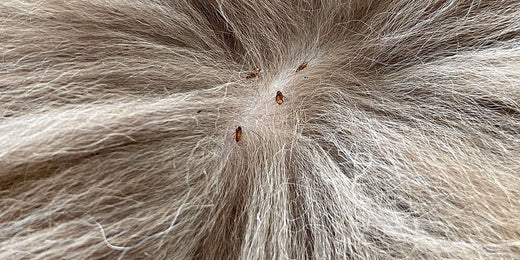
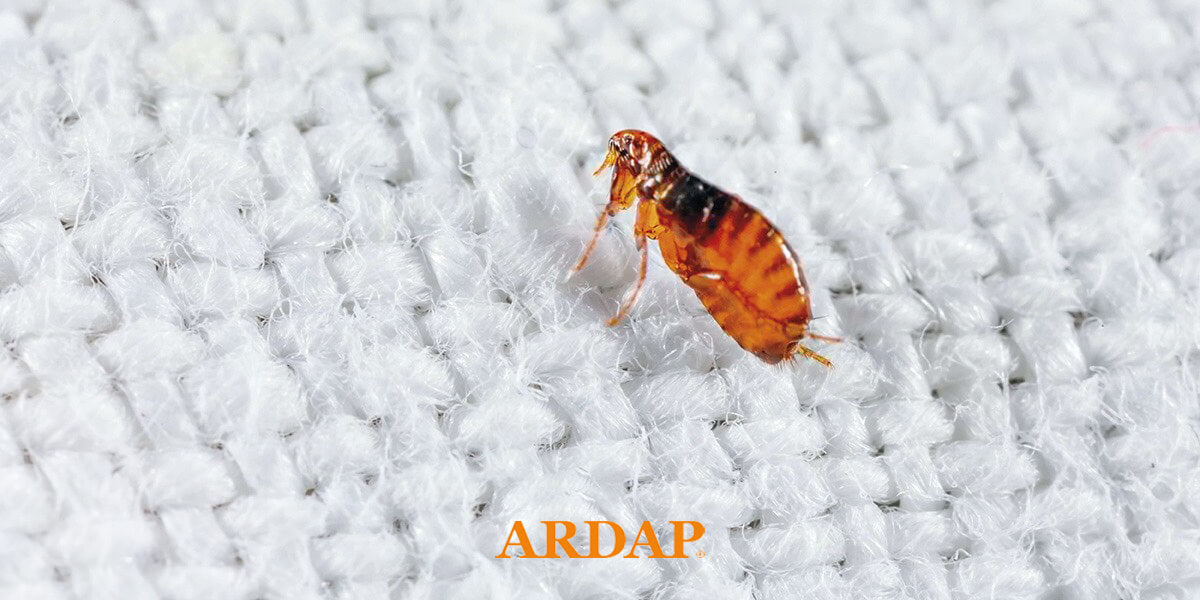
Together with our veterinarian Prof. Dr. med. vet. Norbert Mencke, a specialist in parasitology, we clarify home remedies for fleas in cats.
- Home remedies for fleas in cats
- What home remedies are available for flea infestations? Application on the animal
- Home remedies for preventing flea infestations in cats
- What home remedies work for environmental treatment?
- Fleas, cats, home remedies: How do natural remedies really work?
- Remedies for home & apartment
- Risks of flea infestations in cats
- Helpful tips for flea infestations
Home remedies for fleas in cats
When it comes to home remedies for fleas in cats, there are three possible scenarios for their application:
- The flea infestation is already present and home remedies are being sought for application on the animal
- The alleged “flea season” is beginning and preventive remedies are being sought that can, for example, be applied to the cat's fur so that a flea infestation does not occur in the first place.
- The flea infestation is already present and home remedies are being sought for cleaning or treating the environment.
We will show you how to act correctly depending on the scenario.

What home remedies are available for flea infestations? Application on the animal
A flea infestation is by no means harmless, but rather a health risk for cats and humans. When cat owners discover flea dirt in the fur and the cat may show corresponding symptoms, they often start researching possible home remedies that are intended to be applied directly to the animal.
The list of home remedies that are supposed to help the animal with a flea infestation is long. Often lemon or herbs with essential oils are mentioned. But how effective are these home remedies really in the case of a flea infestation?Lemon as a home remedy for flea infestations?
Lemon has many uses as a home remedy. Fleas are also supposed to be combated with the help of citrus fruit. In forums and among pet owners, recipes for making chemical-free home remedies against fleas with lemon are widespread. The instructions for such home remedies range from boiled water with lemon cubes to lemon juice with apple cider vinegar. The remedies are prepared as a spray that is sprayed onto the cat's fur. However, in the case of a flea infestation, no lemon-based home remedy will make the fleas leave your cat. In terms of preventing fleas, the effectiveness of such lemon-based sprays could also not be confirmed.
Rosemary as a home remedy for flea infestations
Rosemary is supposed to help against fleas as a home remedy, for example in the form of rosemary oil. As an ingredient for self made anti-flea sprays, rosemary together with other ingredients such as lemon is supposed to fight the fleas. However, just like with remedies such as lemon, the same applies here: The effectiveness of rosemary as a home remedy for combating and repelling fleas cannot be proven.

Home remedies for preventing flea infestations in cats
A flea infestation in cats is difficult to combat, and home remedies also have no proven effect. This is why it is all the more important to prevent flea infestations in cats. In this context repellent remedies are used. Some home remedies are also touted as having a repellent effect against fleas - but what is behind this?
Lemon for prevention
In the case of an existing flea infestation, lemon cannot help as a home remedy. Home remedies with lemon are also not helpful as a preventive measure. In addition, please note: Cats do not like the smell of lemon. The cat's fine nose perceives smells particularly intensely, and the cat may react sensitively.
Coconut oil for prevention
Among pet owners, the misconception persists that coconut oil or the contained
lauric acid is supposed to help prevent fleas. The oil is supposed to be massaged into the cat's fur
and thus protect the cat for several days, possibly weeks - but the same applies here: the
effectiveness of coconut oil for preventing fleas has not been proven so far. Another major
disadvantage of coconut oil as a home remedy against fleas is that many cats are irritated by the smell.
Coconut oil in the cat's fur can, however, be used to make the fur easier to comb, so that the application
of the flea comb is made easier. However, the smell
remains irritating to your cat. Therefore, it is better to use a special coat care spray that is adapted to the
needs of cats.
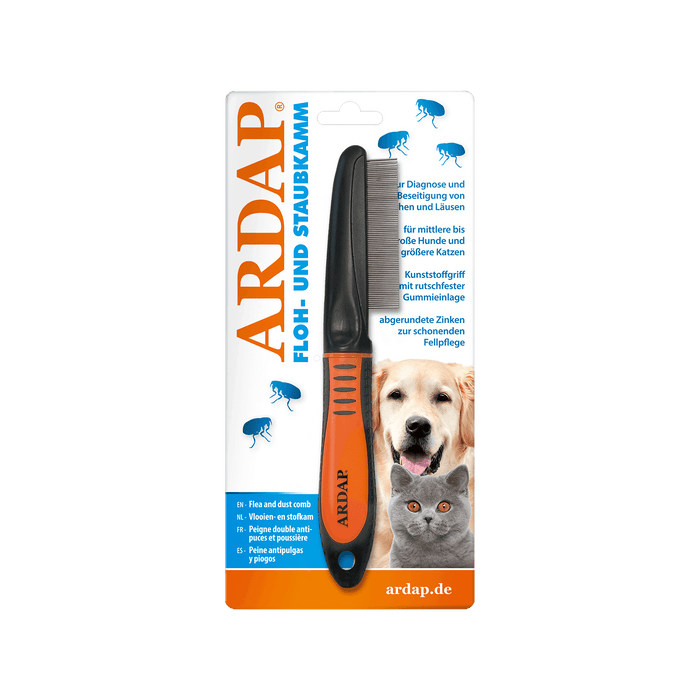
The ARDAP flea and dust comb is ideal for diagnosing and removing fleas and lice. Rounded tines enable gentle coat care, while the non-slip handle provides a secure grip.
To the productLavender oil for prevention
Lavender oil is also supposed to keep fleas away from cats as a home remedy. In fact, lavender oil alone cannot
exert a sufficient preventive effect. Lavender oil is only reliably repellent and thus effective in the long term
in combination with pyrethrum from the chrysanthemum flower (Chrysanthemum
cinerariaefolium).
Both the repellent ARDAP Flea spray
and the ARDAP
Flea powder contain lavender oil (please follow the instructions for use and label). There is
a risk with homemade remedies containing lavender oil if the lavender oil is overdosed,
which can endanger the cat. Therefore, you should stay away from homemade remedies with lavender.
Caution with black seed oil!
Black seed oil has been valued as a medicine for thousands of years to strengthen the immune system - however exclusively for humans. The oil should neither be applied to the fur nor ingested by cats, as it can lead to poisoning. Possible consequences are skin reactions, damage to the liver and kidneys, as well as respiratory problems, because cats cannot metabolize the oil due to a lack of an enzyme in the liver. Therefore, refrain from using black seed oil as a home remedy against fleas and instead use proven products with pyrethrum from chrysanthemum flowers.

What home remedies work for environmental treatment?
If a flea infestation is confirmed, it is not enough to rely on remedies for application on the animal. In addition to the treatment of the animal, intensive treatment of the environment is especially important to get rid of the flea population. Whether blankets, beds, scratching posts, toys, sofas, or carpets: eggs, larvae, and pupae can be found anywhere and multiply extremely quickly. The car as well as various resting places of the animal are also often infested. This makes it all the more important to break the development cycle of the fleas to put an end to the infestation.
Homemade furniture and room sprays are often used to combat fleas in the environment, for example made from
a mixture of essential oils, lemon, and water. Tea tree oil is also often used to combat the parasites
in the environment and on the animal. However, with a cat in the household, this oil
is strongly discouraged: The Federal Institute for Risk Assessment (BfR) already pointed out in
2007 that cats can develop symptoms of poisoning if they ingest tea tree oil. (Source: www.bfr.bund.de"). The same applies to other essential oils.
Even though many pet owners still believe in home remedies against fleas in cats
: None of the common home remedies can provenly eliminate a flea infestation. If home remedies
are used exclusively in the fight against parasite infestation, it must therefore be assumed with great
certainty that the infestation will persist.
Fleas, cats, home remedies: How do natural remedies really work?
There is currently no scientific evidence for the effectiveness of natural home remedies against fleas in cats. In addition, cats react sensitively to some home remedies, so that health problems, including both physical and psychological stress, cannot be ruled out. The widespread misconception that chemical products are fundamentally toxic and natural products are always non-toxic is not correct. Especially for cats, a variety of essential oils have been described, such as those from houseplants, that can lead to symptoms of poisoning in cats. There is also a basic risk for cat owners to give themselves a false sense of security after using such remedies: In the environment, during an infestation, there are eggs, larvae, and pupae that can persist stubbornly even after the application of natural home remedies and multiply rapidly.

Safe and effective remedies for preventing flea infestations in cats?
To prevent the flea population from entering your home in the first place and to protect the cat from fleas, reliable preventive remedies are required.
Remedies for application on the cat
The first step to protect the cat from a flea infestation is the use of reliable
repellent, i.e., repelling remedies.
To protect cats from a flea infestation for several weeks, the ARDAP Spot-Ons for cats or ARDAP
flea collars for cats are particularly suitable. Both products are based on pyrethrum from the chrysanthemum flower as the
active ingredient and are highly effective. One package of the Spot-On contains 3 tubes and offers a total of
up to 12 weeks of protection. The flea collar offers up to 4 months of protection.
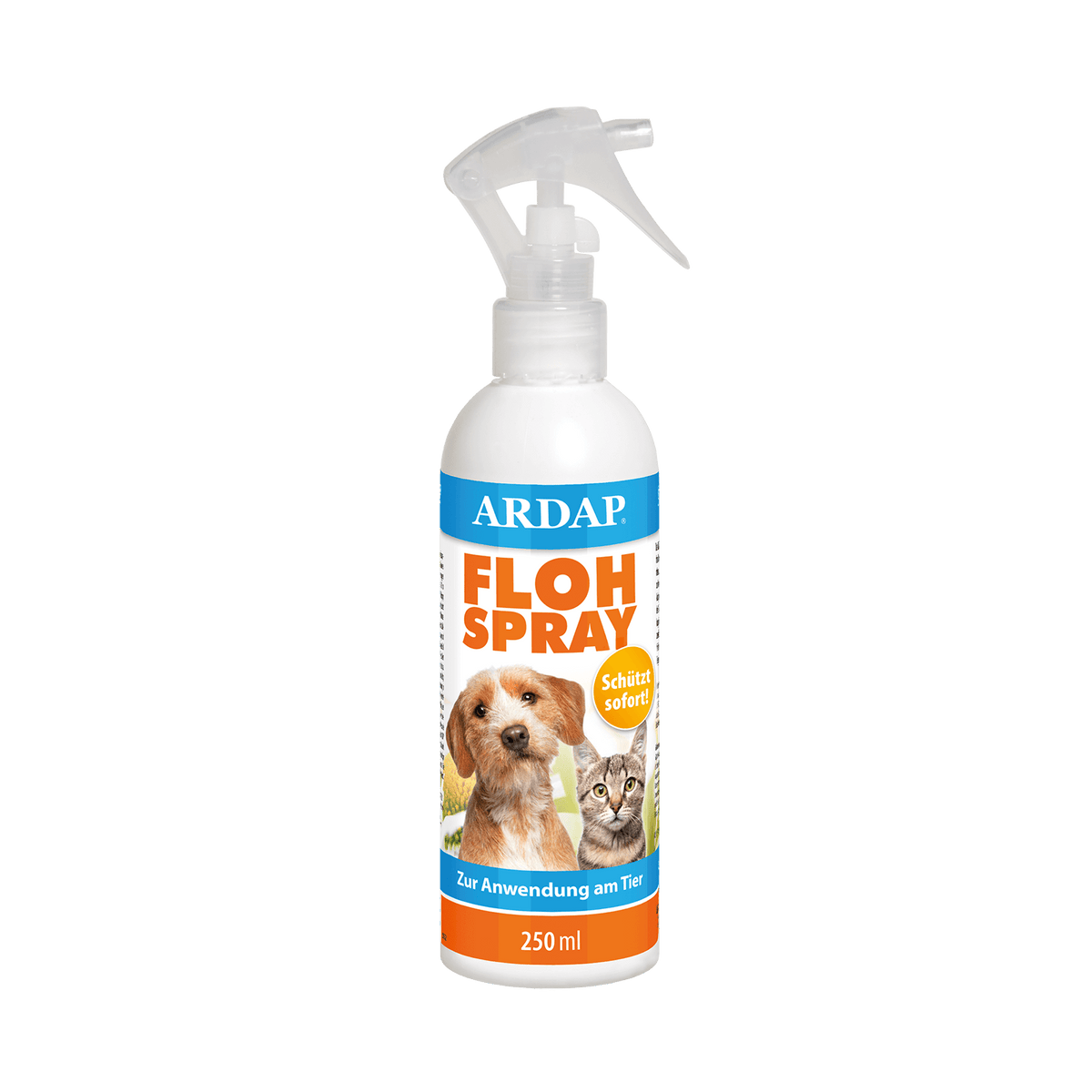
The flea spray or the flea powder are based on pyrethrum and lavender oil. With the spray, the duration of effect is about four weeks. With the powder, about one week. Both the spray and the powder are ideal supplements to the Spot-On or the collar. You can use both remedies to protect your cat on the body areas preferred by fleas, such as the legs.
Remedies for home & apartment
You didn't prevent it and noticed a flea infestation in the apartment? Now it is important to treat the
animal's environment with remedies that reliably combat the entire flea population. For the
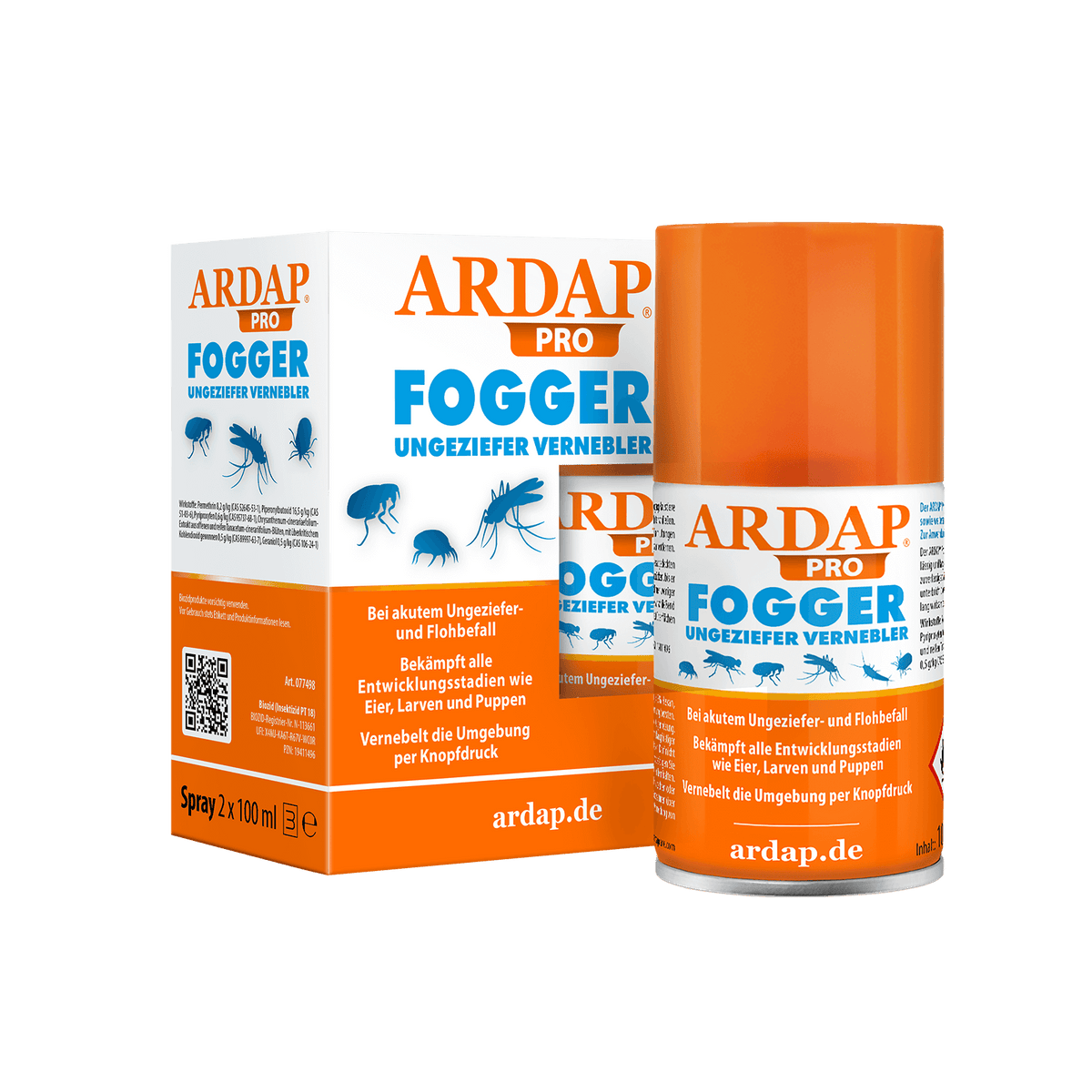
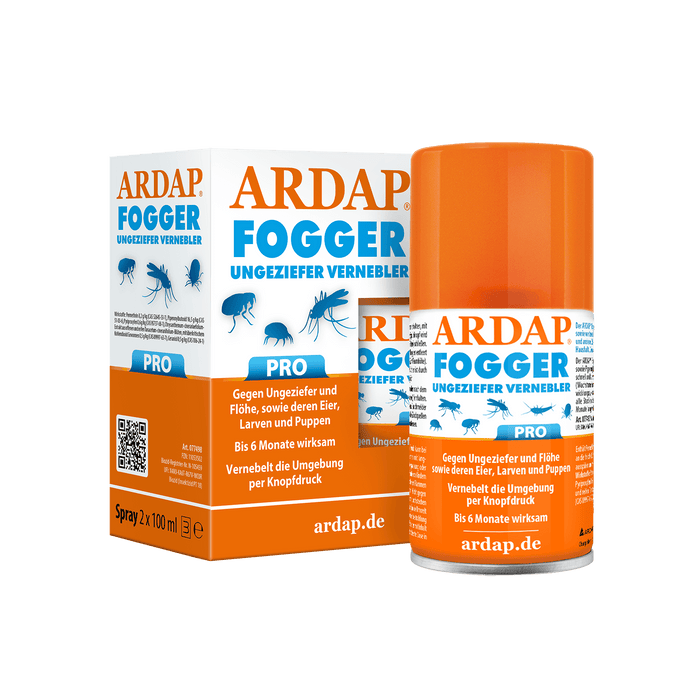
treatment of the home and apartment in the fight against fleas and other parasites, a flea fogger is recommended. With the active ingredient combination
of the fogger, fleas are killed immediately and their development cycle in the environment is broken. In addition to this
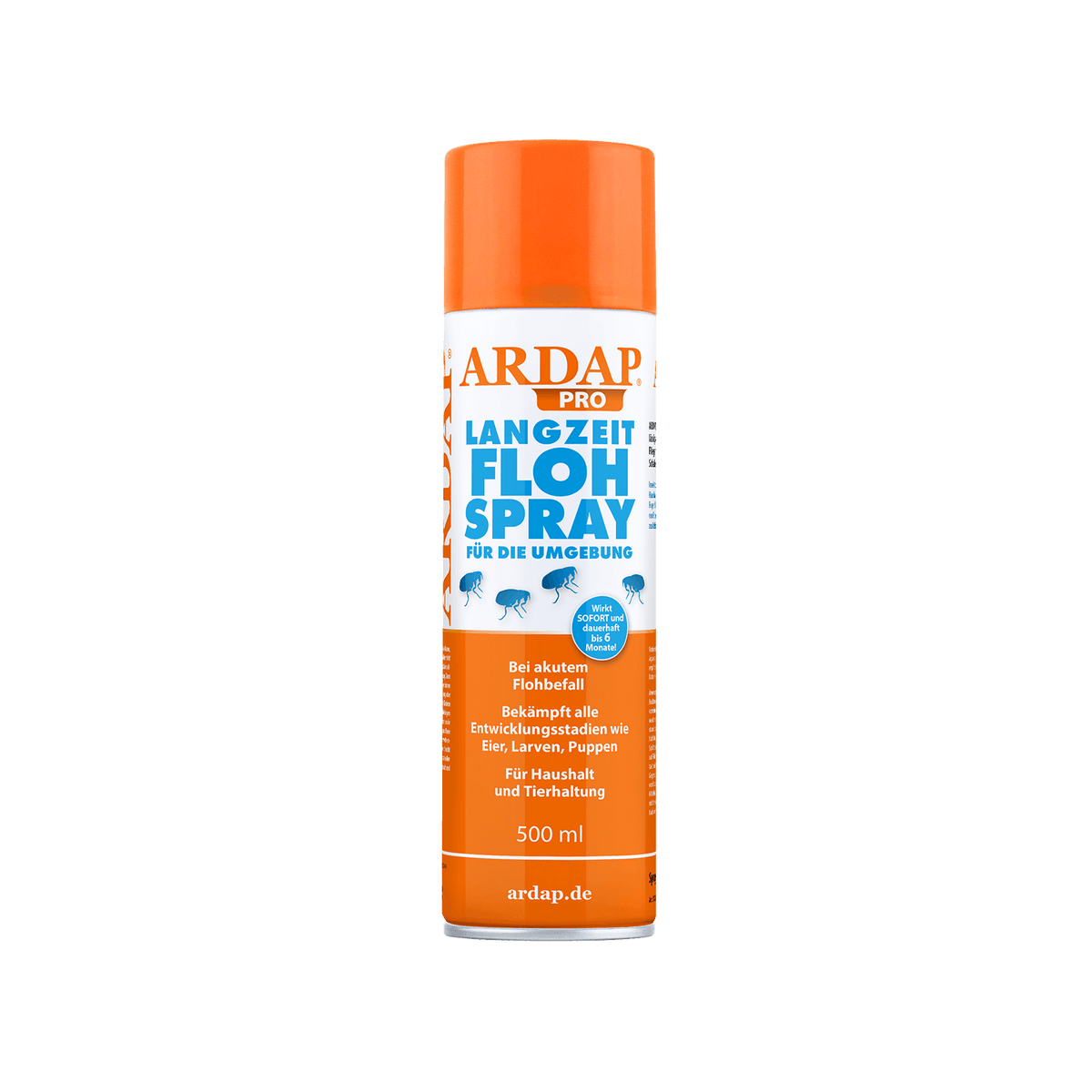
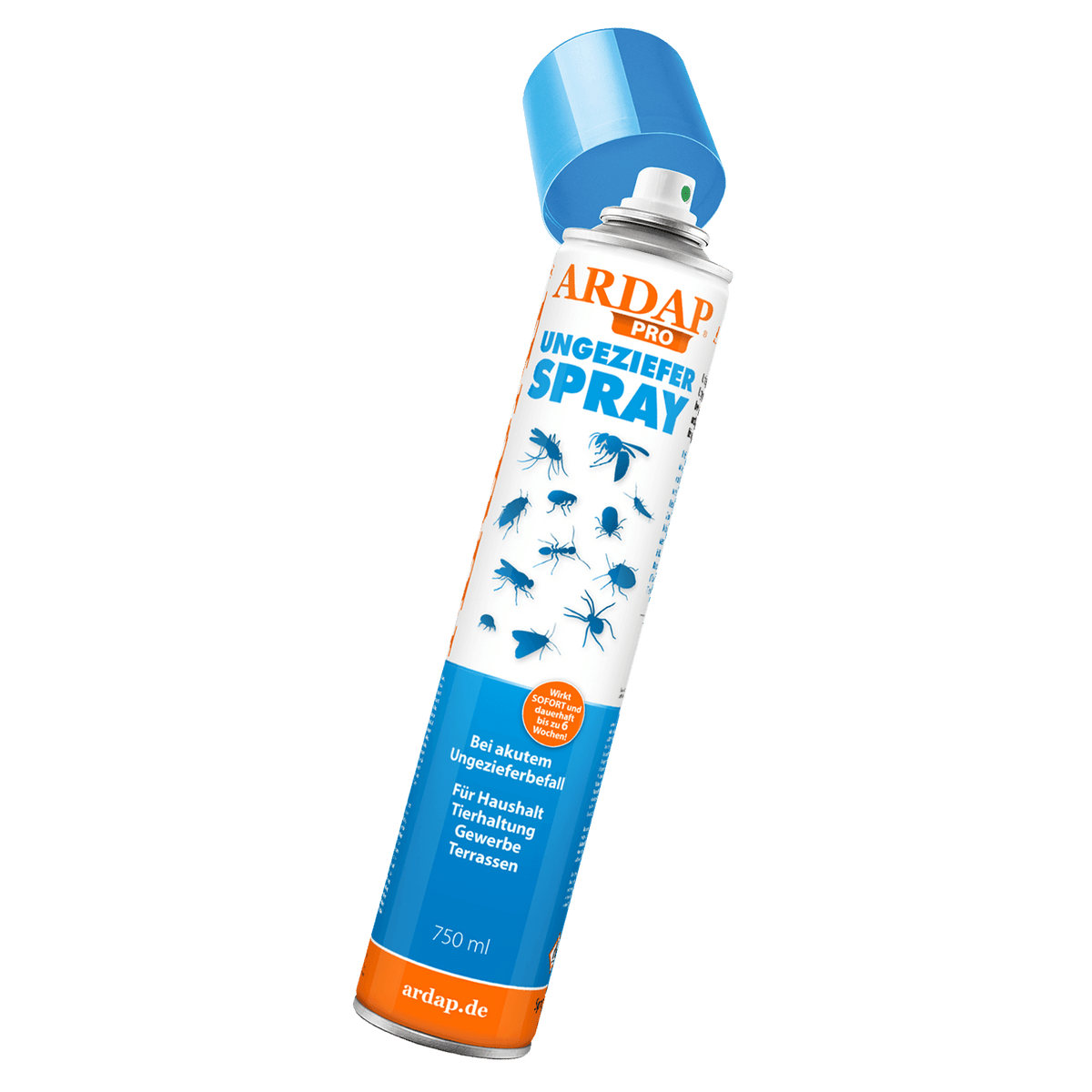
, the use of long-lasting flea sprays is recommended for targeted spraying of popular
places where your cat stays, such as beds, blankets, scratching posts, and cushions. Please read
the instructions for use before applying the flea fogger and the long-lasting environmental spray.
Ideally, you should rely on an integrated treatment to protect your cat in the event of a flea infestation
. This means: Make sure that you combine repellent remedies for application on the animal and the
environmental treatment. Fleas can also be reliably repelled in the environment with repellent remedies
. To do this, spray the Repell Flea spray
on entrance areas, doormats, beds, or scratching posts.
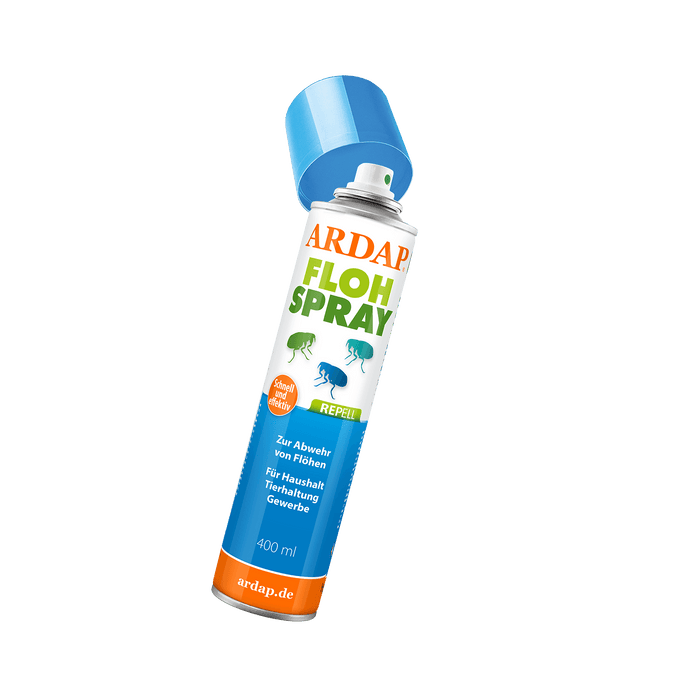
The ARDAP Repell Flea Spray offers fast and reliable protection against fleas using pyrethrum derived from chrysanthemums. The spray can be applied specifically to areas such as scratching posts, cushions, or blankets.
Go to productRisks of flea infestation in cats
Whether after a walk outdoors, a trip to the balcony, or when used textiles enter the home: cats can become infested with fleas in various situations and serve as hosts for the parasites. Even cats that live exclusively indoors are therefore exposed to the risk of becoming victims of these parasites. In addition to itching, dermatitis (skin inflammation), and the transmission of pathogens, flea infestation can also have psychological consequences for the cat, as it represents a major strain on the animal's mental well-being.
Helpful tips for flea infestation
- Comb your cat's fur regularly with a flea comb to detect any flea infestation.
- In the event of a flea infestation, always treat your pet with reliable repellent products such as the spot-on, collar, spray, or powder. It is important to consider not only your pet but also the surroundings as well.
- For environmental treatment, a combination of a flea fogger and long-lasting flea spray is recommended.
- If you have had contact with infested animals yourself, e.g. with wildlife such as hedgehogs, spray your clothes in a plastic bag with the long-lasting flea spray. After a few hours of exposure time, the clothes can be washed as usual. Alternatively, delicate garments can be placed in the freezer.

Protecting young cats from fleas: What you need to know
Young cats can also become infested with fleas. To protect kittens from fleas, it is advisable to treat the mother preventively. This applies especially during the time when they are nursed by their mother and also cleaned. As soon as the kittens are independent, you can also treat them with repellent products such as flea powder or flea spray. However, please note that kittens and their mother should not ingest the repellent products, e.g. by licking their fur. In general, whether with kittens or older cats, you should always keep in mind that preventive measures and highly effective solutions are necessary to protect the animal's health.
Matching video with application tips: