In collaboration with our veterinarian Prof. Dr. med. vet. Norbert Mencke, specialist in parasitology, we will show you what you can do to prevent fleas in the garden from entering your home.
- Can fleas in the garden be controlled?
- Protecting pets from fleas in the garden: Long-term prevention
- Where do fleas in the garden come from?
- Hedgehogs & Co. as hosts
- How can you spot fleas in the garden?
- Conclusion
- Frequently asked questions
Complete protection in the garden is not possible: Wild animals constantly bring in new fleas. The goal is not to protect the garden itself, but to protect your pet and your home.
Dogs pick up fleas in the garden, park, forest, or at dog parks. Cats (including indoor cats) can become infested via balconies, patios, or wild animals such as hedgehogs and birds.
Transmission is often indirect: Pupa-stage fleas wait in "pupal dormancy" and hatch at lightning speed when disturbed, jumping onto your pet. Direct contact is not required.
Active year-round, no real flea season: Fleas feel comfortable at 25–30 °C, survive for several months in the garden, and can even survive as pupae for up to 6 months without food.
Effective protection with ARDAP: Repellent ARDAP products protect your pet. ARDAP Repell Flea Spray works as a repellent indoors and on patios. For acute infestations, ARDAP Pro Long-Lasting Flea Spray and ARDAP Pro Fogger control all life stages for up to 6 months.
Can fleas in the garden be controlled?
It is neither possible nor worthwhile to control fleas in the garden or to eradicate the entire flea population there. Firstly, wild animals constantly bring new fleas into the garden, and secondly, you want to protect your pet and your living environment, not the garden.
For the quick and reliable prevention of fleas indoors, ARDAP Repell Flea Spray based on pyrethrum from chrysanthemum flowers is ideal. For example, it can be used specifically in entrance areas on doormats or on pet beds, scratching posts, etc.
To repel fleas from your pet, repellent products such as spot-ons, collars, sprays, or powders are suitable.


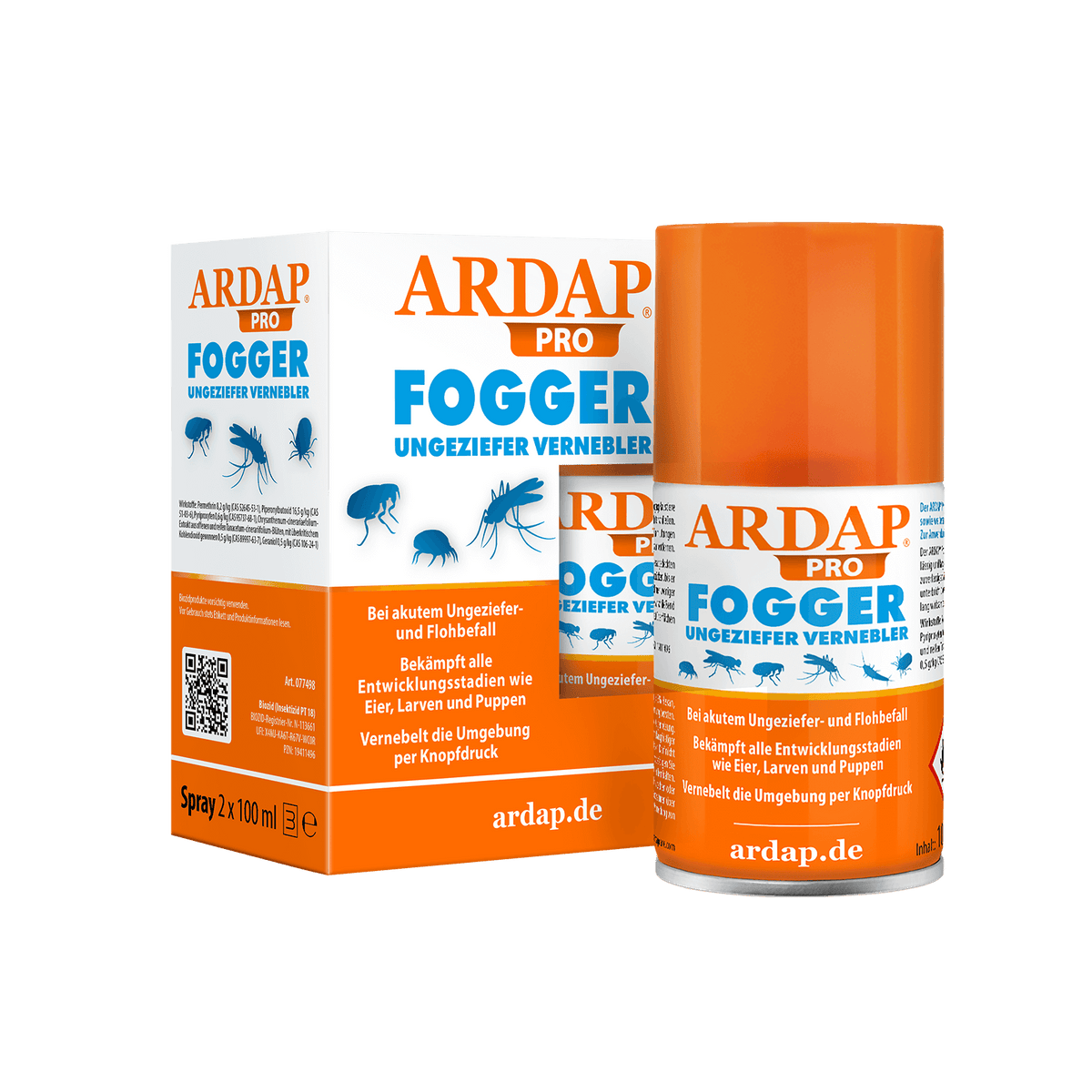
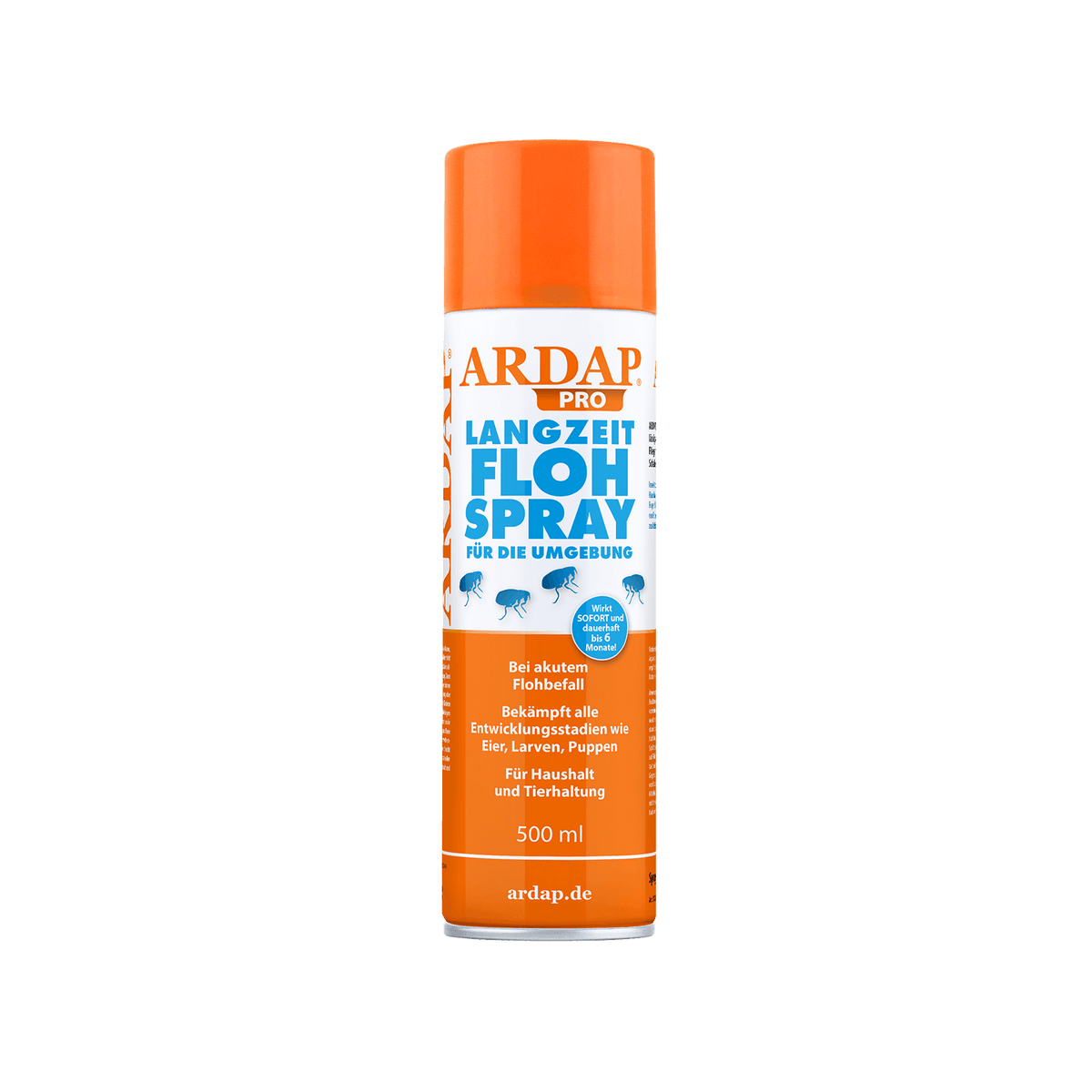
If fleas have entered the home due to a lack of preventive measures, they can be reliably controlled with the ARDAP Pro Flea Fogger and the ARDAP Pro Long-Lasting Flea Spray for the Environment . The active ingredient combination kills adult fleas and other pests immediately while simultaneously interrupting the development of flea life stages, i.e., flea eggs, larvae, and pupae in the environment.
The fogger or nebulizer distributes a fine (spray) mist so that the active ingredients can spread throughout the entire room. In addition, the fogger not only helps against fleas but also other types of parasites and pests, such as ticks, mites, or moths.
While the fogger distributes its mist throughout the entire room, the long-lasting flea spray is used to specifically inhibit the development of fleas. The long-lasting flea spray is used to spray specific areas, such as pet beds or scratching posts, very precisely. With an active duration of up to 6 months, both adult fleas and eggs, larvae, and pupae are controlled.
But how exactly can you control fleas in the garden and on the patio?
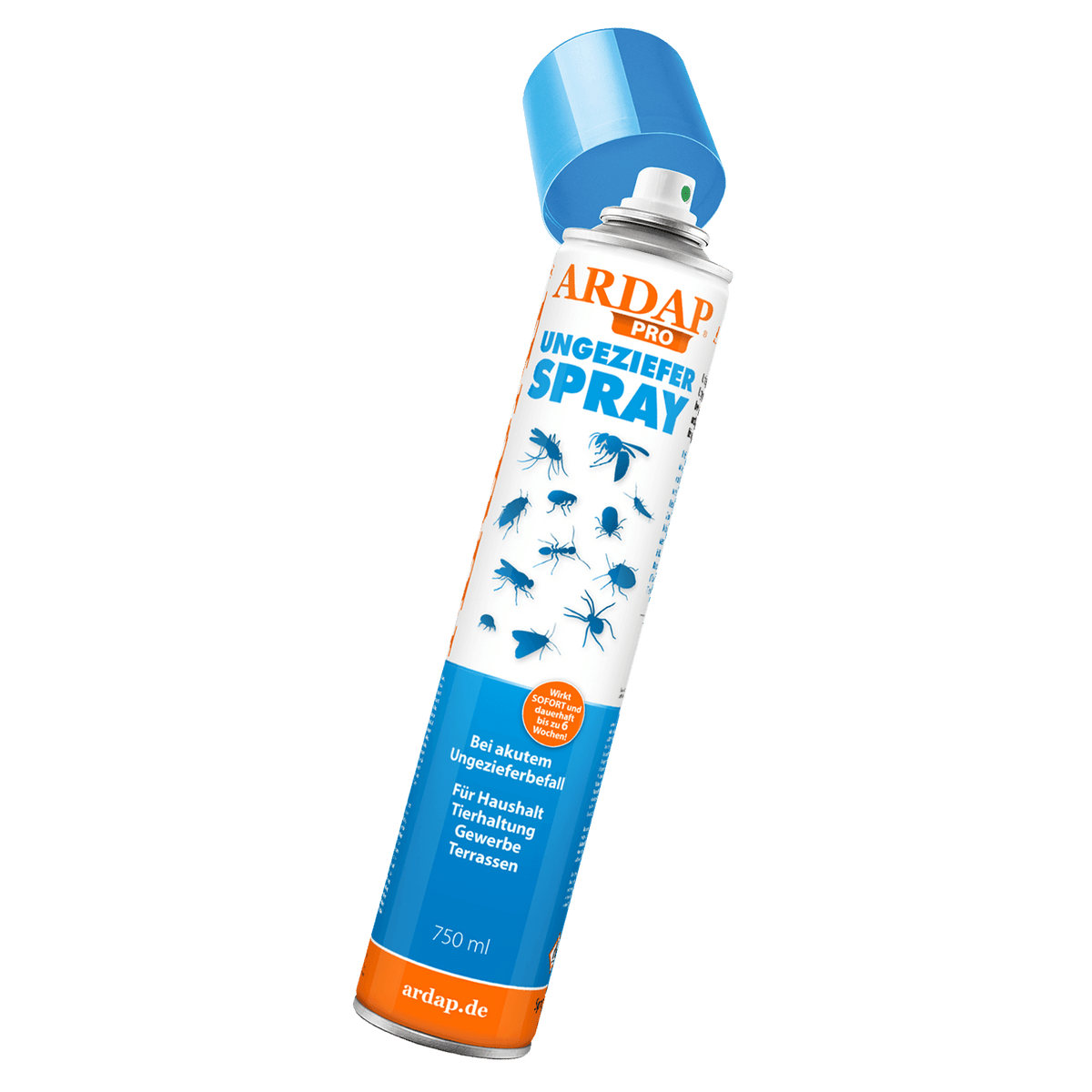
Of course, there are areas in the garden where dogs and cats, and we humans too, like to spend time. These include, for example, the patio or other seating areas. You can treat these areas specifically. In the event of an acute flea infestation, the ARDAP Pro Long-Lasting Flea Spray can also provide relief there. You can also use it to spray surfaces and objects such as seating areas, cushions, and chairs.

Measures for fleas from the garden
If fleas from the garden have entered the home, pet beds, scratching posts, doormats, etc. can be treated with a long-lasting flea spray for the environment. The ARDAP Pro Flea Fogger can also be used in rooms of up to 60 m². In addition to treatment with spray and fogger, you can vacuum thoroughly. But keep in mind: Vacuuming alone can never eliminate a flea infestation. Furthermore, flea eggs are located deep within the textiles. They cannot be removed from there by vacuuming.
To free washable textiles from fleas, place them in a plastic bag and spray everything with the ARDAP Pro Long-Lasting Flea Spray. After a few hours of contact time, you can wash the textiles as usual. Alternatively, you can place delicate garments in the freezer.
How to use the ARDAP Pro Long-Lasting Flea Spray
- Preparation: Read the product text carefully before use and pay attention to the instructions.
- Protective measures: Cover aquariums and terrariums and keep cats out of the room during the rest of the process.
- Shake the spray can well.
- Application: In well-ventilated rooms, spray specifically from a distance of around 30 cm on the areas where fleas and their life stages accumulate in the environment: such as pet beds, carpets, mats, and crevices. The surface should become slightly damp, but not soaked.
- Aftercare: Afterwards, ventilate indoor rooms thoroughly until no odor is detectable. You may enter the room after spraying and while ventilating.
To free an entire room from fleas in all life stages, the ARDAP Pro Fogger is recommended as a supplement: It reliably nebulizes the room with active ingredients and then provides up to 6 months of protection. Just like the ARDAP Pro Long-Lasting Flea Spray, it captures and controls all life stages of fleas: eggs, larvae, pupae, and adult animals.

Protecting pets from fleas in the garden: Long-term prevention
To prevent an infestation from fleas in the garden and the development of flea life stages in the home in the first place, dogs and cats should be treated regularly with a repellent, i.e., repelling, product, as fleas can transmit pathogens.
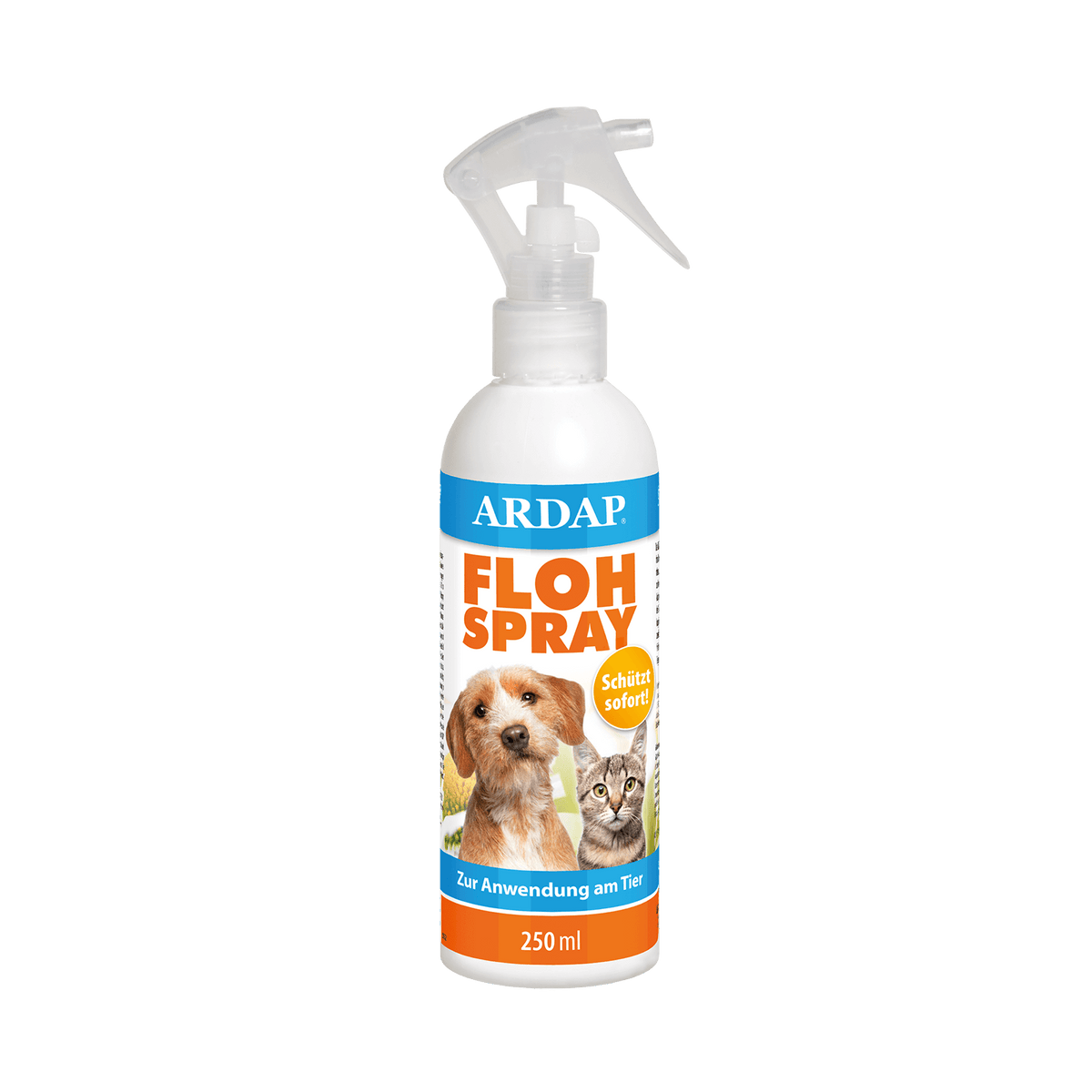
The ARDAP Flea Spot-Ons and ARDAP Flea Collars serve this repelling purpose. Both are available for dogs and cats. The flea collar provides up to 4 months of protection. The spot-on provides up to 12 weeks of protection per package. For targeted repellent protection at areas particularly popular with fleas, such as the back, the base of the tail, the belly, and the inner thighs, the use of ARDAP Flea Sprays or ARDAP Flea Powders is also recommended. For dogs, the ARDAP Flea Shampoo is also suitable, which not only cleans and cares for the coat but also provides repellent protection against fleas.
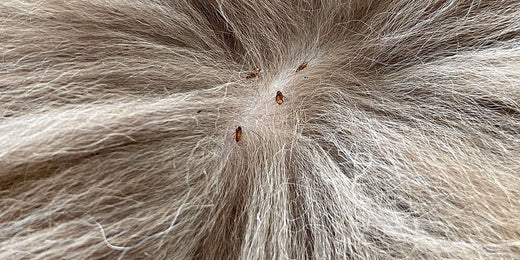
With the ARDAP Flea Comb, not only can dirt and dust be removed from the pet's coat, but you can also easily determine if your pet has fleas. Even if you do not find an adult flea, the infestation is shown by flea dirt in the animal's coat. Whether it is actually flea dirt can be determined by combing out or picking up the suspicious dark specks and then placing them on a damp tissue. If you crush the specks and the tissue turns reddish, it is clearly flea dirt.
Where do fleas in the garden come from?
A dog picks up fleas in the garden, but also when walking in the park, on the meadow, and in the forest. Typical dog meeting points, such as dog meadows and dog playgrounds, are also ideal places where the dog can become infested with parasites. In doing so, it not only encounters numerous fellow dogs but can also "collect" fleas from wild animals or birds.
Cats, especially outdoor cats, are also exposed to infestation from fleas without appropriate prevention. Even if you have an indoor cat, it can still get fleas. Does your cat spend time on the patio or balcony? Here too, cats can get fleas through infested wild animals such as hedgehogs or birds.

How long do fleas survive in the garden?
Fleas in the garden can live for several months under favorable living conditions (no severe frost, no heat above 45 °C). At the same time, pupated fleas can even survive for up to 6 months without food.
Hedgehogs & Co. as hosts
Fleas in the garden can infest hedgehogs, wild birds, and numerous other host animals. Adult fleas are so-called stationary ectoparasites. This means: Once they have found their host, they will never leave it. The cat flea is the most widespread here, which infests both dogs and cats. Hedgehogs are known as classic flea hosts, because practically every hedgehog in the garden has fleas.
Can hedgehogs transmit fleas to dogs or cats?
Yes, fleas can jump from hedgehogs to cats or dogs. The prerequisite for such transmission is direct animal-to-animal contact, for example when the dog comes into contact with hedgehogs or other wild animals in the forest or garden. Direct encounters with the shy, nocturnal hedgehog are comparatively rare.
However, an indirect transmission is more common, for example when the dog sniffs around where the hedgehog likes to stay. In such an indirect transmission, the flea is in the so-called “pupal dormancy”, for example in bushes or tall grass. In this waiting stage, the pupated flea is sensitive to external stimuli, such as vibrations from an approaching dog or cat. If such stimuli are perceived, fleas can hatch rapidly and the adult flea then jumps onto your dog or cat.
Fleas in the garden: More prevalent in the warm months?
Fleas feel most comfortable at 25–30 degrees Celsius. If it is cold, they develop and reproduce more slowly and less intensely. In principle, however, a year-round risk of flea infestation must be assumed today. There is therefore no typical flea season. Dogs and cats can therefore be infested with fleas both in the warm spring and summer and in the colder autumn and winter.

How can you spot fleas in the garden?
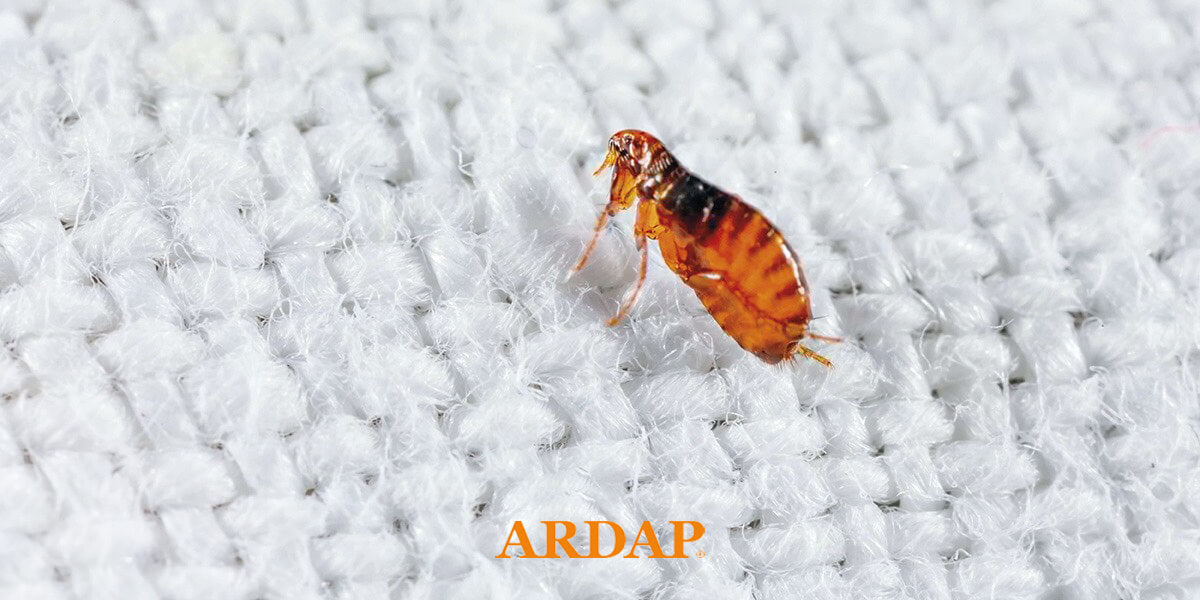
Fleas are almost everywhere. At the same time, we can really spot fleas in the garden just as little as in indoor spaces. Only with a severe flea infestation on a dog or cat do we see adult fleas in the coat. For life stages such as eggs and larvae, we need a magnifying glass.
However, not every jumping insect belongs to the flea family! For example, the little black “jumping ants” that like to jump around on vegetable plants or in the flower bed in the garden are not fleas at all, but beetles. And the tiny red “grass fleas” in the garden are actually autumn grass mites.
Are there home remedies against fleas in the garden?
As home remedies against fleas in the garden, peppermint and rosemary are considered. Such herbs contain essential oils that are supposed to deter and repel fleas. In fact, however, the effectiveness of various home remedies against fleas cannot be confirmed. That amber collars protect against fleas is also a widespread superstition. Effective protection is instead offered by repellent products from ARDAP for use on the animal against fleas.
Conclusion
Fleas in the garden cannot be permanently controlled. You do not have to. Since wild animals such as hedgehogs and birds constantly bring in new fleas, the goal is not to make the garden flea-free, but to protect your pet and your home from the parasites. This is exactly where a sensible strategy comes in: targeted, repellent protection on the animal and consistent treatment of the environment and areas where the dog and cat spend time.
Therefore, rely on a well-thought-out combination: on the animal, use repellent products such as the ARDAP Spot-Ons, collars, ARDAP Flea Spray, or ARDAP Flea Powder. For prevention in the environment, e.g., in your pet's seating and resting areas, the ARDAP Repell Flea Spray is recommended. If fleas have already entered the home, you should rely on highly effective and long-term control with the ARDAP Pro Flea Fogger and the ARDAP Pro Long-Lasting Flea Spray, ideally in combination. Since the flea risk exists year-round today, regular prevention is the most effective way to ensure that individual garden fleas do not become an infestation in your own four walls.
Frequently asked questions
Can I make my entire garden flea-free?
No, you cannot make your garden flea-free, and that is not the goal either. Wild animals constantly bring new fleas into the garden, so blanket "eradication" is neither possible nor practical. It is effective to proactively treat the areas where your dog, cat, and people spend time with repellent products from ARDAP, such as the ARDAP Repell Flea Spray, and above all, to protect the animal itself.
Can indoor cats also pick up fleas in the garden or on the balcony?
Cats that go outdoors are particularly at risk, but even strictly indoor cats can pick up fleas, for example on the balcony or patio, where infested wildlife such as hedgehogs or birds leave fleas behind. Therefore, prevention is also advisable for indoor cats. For preventive protection of the animal, the ARDAP Spot-On for Cats (protection for up to 12 weeks per pack) or the ARDAP Tick and Flea Collar for Cats (protection for up to 4 months) is suitable. Both reliably repel fleas based on pyrethrum from chrysanthemum flowers.
Do hedgehogs transfer fleas directly to dogs and cats?
The shy, nocturnal hedgehog rarely has direct contact with dogs and cats and therefore usually does not transfer fleas directly. Indirect transmission is more common: Where a hedgehog has been, pupating fleas wait in the so-called pupal diapause. Vibrations caused by a passing animal make them hatch in a flash, so the flea jumps onto the dog or cat. However, the flea will avoid your pet provided it has been pre-treated and protected with a highly effective, repellent product.
If necessary, treat infested outdoor areas such as resting places, patios, or garden corners specifically with the ARDAP Pro Long-Lasting Flea Spray, which combats fleas at all stages of development and thus breaks the cycle.
Is there a flea season when I need to be particularly careful?
There is no longer a classic flea season. Although fleas feel most comfortable at 25–30 °C and reproduce more quickly in the warmth, they find good conditions all year round in heated living spaces. You should therefore assume the risk of infestation all year round, in summer as well as in winter.
Is every little jumping insect in the garden a flea?
No, not every jumping insect in the garden is a flea. The black "earth fleas" on vegetable or bedding plants are actually beetles, and the tiny red "grass fleas" are autumn grass mites. Neither has anything to do with real fleas. A reliable test on the pet can be carried out using a flea comb and the flea dirt test with a damp cloth.
Do plants such as peppermint or amber collars help against fleas?
No, no reliable effect against fleas has been proven for herbs such as peppermint or rosemary, and protection with amber collars is a widespread myth. In addition, some home remedies can even have problematic effects on your pet. Effective protection is offered by the repellent flea products from ARDAP for use on the animal and in the environment, the ARDAP Pro products from specialist retailers.
Sources
- Fleas in Dogs - ESCCAP
- Fleas in Cats - ESCCAP
- Cat Flea - Ctenocephalides felis - Institute for Pest Control
- Combating Fleas in Dogs – Institute for Pest Control
- Epidemiological Studies on Flea Infestation in Dogs and Cats in the Leipzig Area - edoc
- Developmental Stages (Eggs and Larvae) of Cat Fleas – Vetline.de
- Studies on the Population Dynamics of Cat Fleas – Vetline.de
- Treatment and Control of Fleas in Dogs and Cats – tiermedizin.thieme.de
- Flea Saliva Allergy in Dogs and Cats – Anicura.de