- What's Crawling Around? Ants in the Kitchen
- Preventive Measures Against Ants in the Kitchen
- Unwanted Houseguests: Controlling Ants in the Kitchen
What's Crawling Around? Ants in the Kitchen
Noticing ants in the kitchen is certainly not unusual. After all, these industrious insects are always on the lookout for food and like to feed on food scraps, for example.
What Are the Crawlers Looking for in Your Kitchen
The search for food sources is the main reason why ants like to enter the kitchen and spread there. They are particularly drawn to sugary substances. It is enough for you to spill sticky liquids such as fruit juices and then not clean the affected surface thoroughly enough. Crumbs on the floor or food scraps in the trash can also attract the insects. This is why it is also important that you always remove leftovers thoroughly and keep the kitchen area hygienically clean. However, since a lot of work is always done in the kitchen, traces of food quickly remain, which can lead to an ant infestation.

Which Foods Do Ants Prefer
A large number of different ant species occur in Germany. The ants that come into our kitchen area are so-called opportunistic feeders, which can make use of many food sources. Sugary foods in particular strongly attract the insects. They therefore like to feed on fruit juices, sweets, honey, or syrup. Here you should pay particular attention to overripe fruit, which is extremely attractive to ants due to its high sugar content. But fatty foods are also interesting to them. Remnants of butter, cooking oils, or margarine act as an attractant. This also applies to fatty snacks such as chips. Ants can also make use of protein-rich foods. These include, for example, eggs or remnants of meat and fish. All types of crumbs and food scraps attract the insects. These include breadcrumbs or rice grains scattered on the floor.
A Danger to Your Health?
Ants in the kitchen are not only irritating. The insects can also pose a health risk. Due to the specific lifestyle of ants, the transmission of germs that can lead to diseases cannot be ruled out. Allergic reactions are also possible. Ants therefore have no place in the kitchen. Under no circumstances should the insects crawl over our food or spread where we prepare or consume food. The danger increases with the number of insects that have infested your kitchen. You should therefore not tolerate the ants or allow them to spread. It is better to act quickly and take the necessary deterrent measures.

Preventive Measures Against Ants in the Kitchen
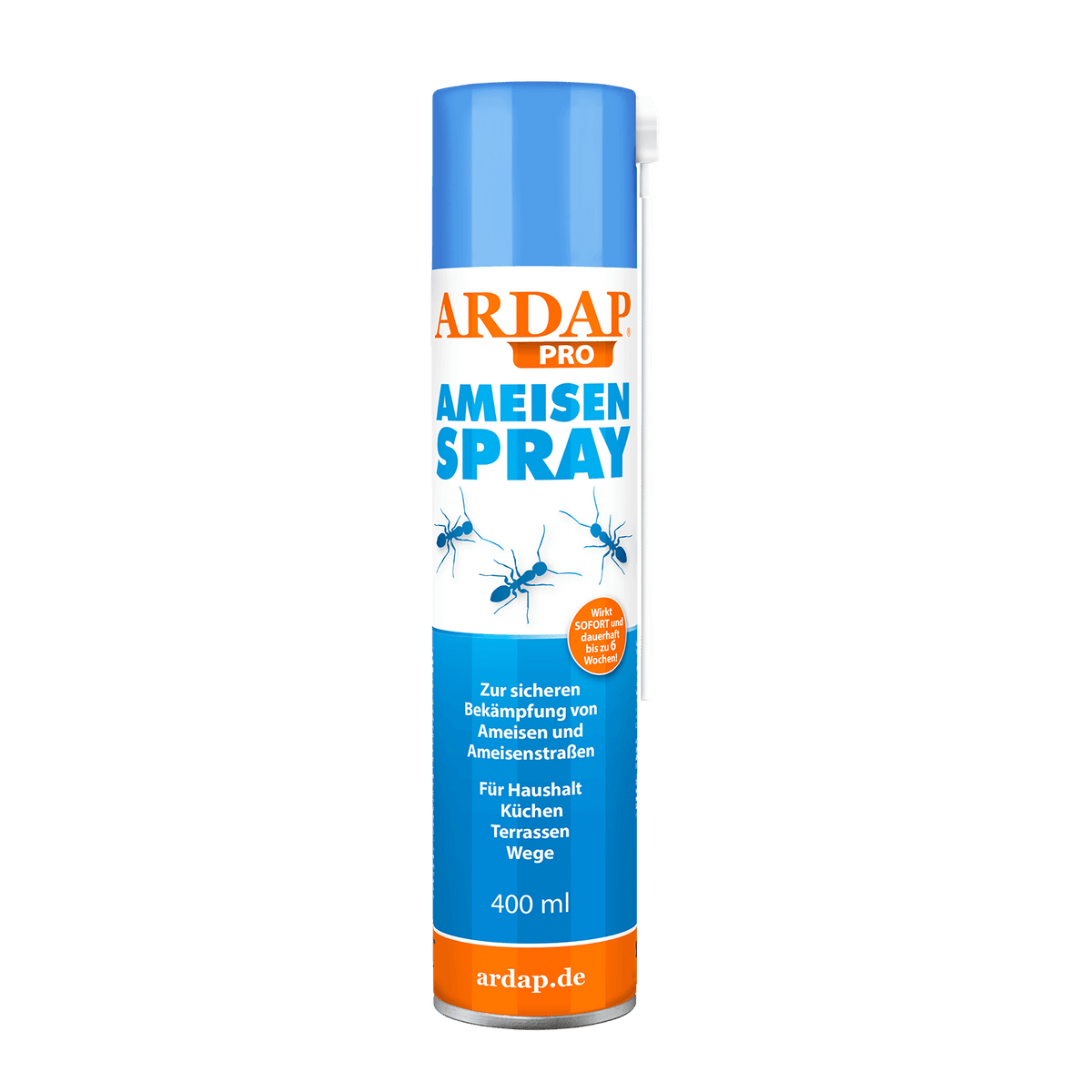
To specifically prevent an ant infestation, the ARDAP Repell Ant Spray is a reliable and safe solution. It exerts its repellent effect thanks to pyrethrum from the chrysanthemum. The practical ARDAP spray is perfect for use in the home and kitchen. We recommend, for example, spraying window and door frames preventively, as these bothersome insects often enter the home and kitchen this way.
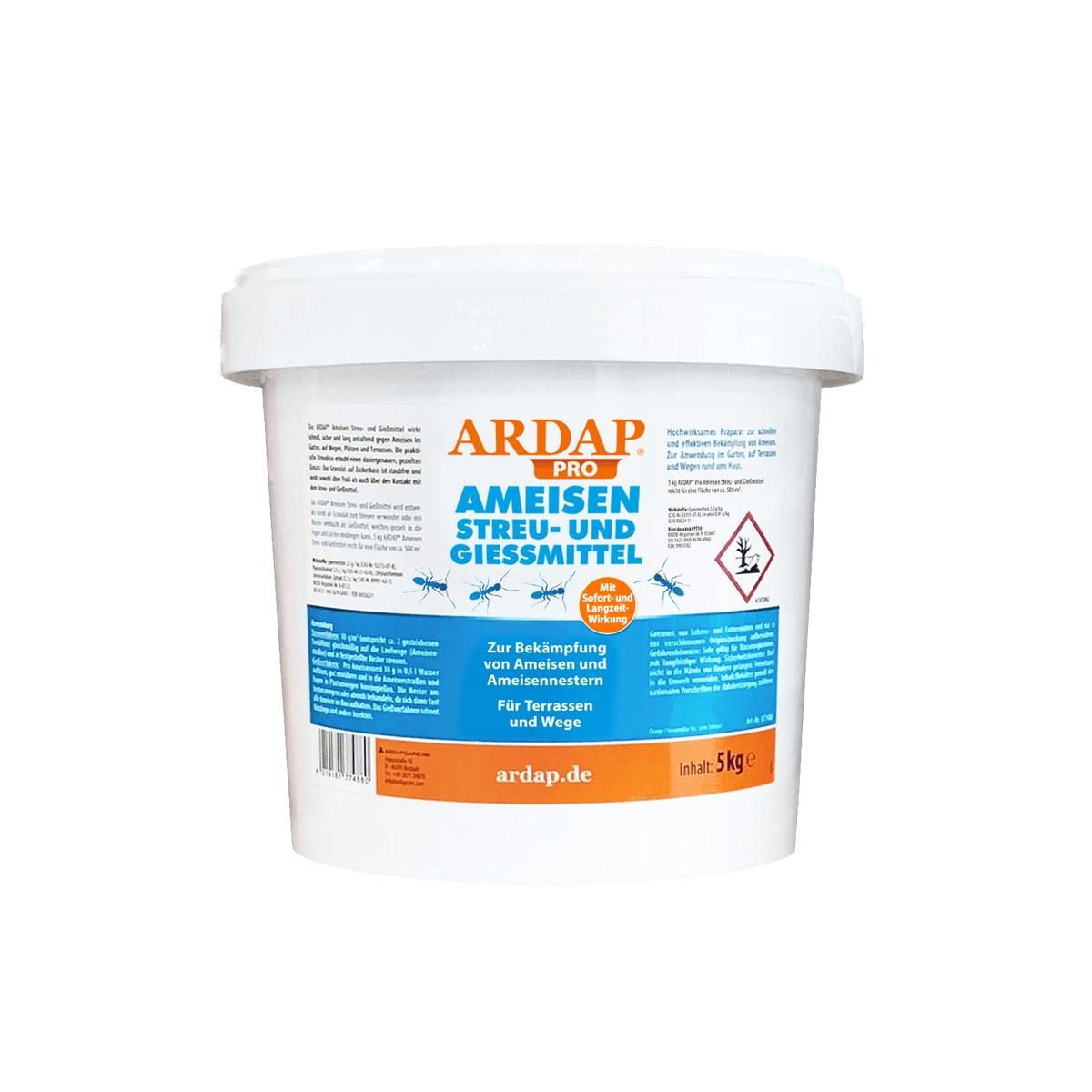
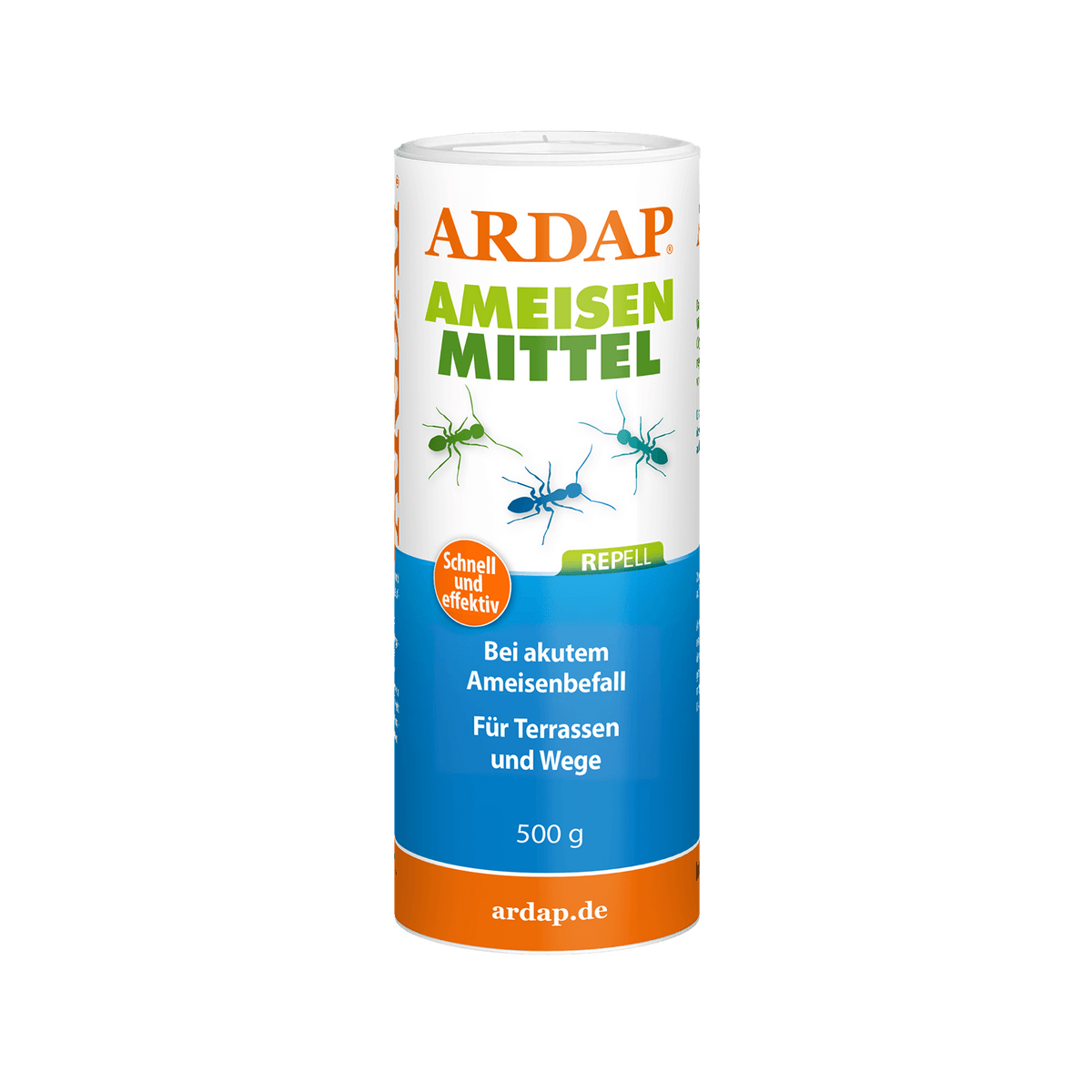
Prevention usually begins outside the closed walls. If you deter the insects from your terrace, they will not get into the house in the first place. The ARDAP Repell Ant Repellent is excellent for sprinkling on paths, paving stones, and terraces. Here, the effective repellent works quickly and reliably. Regular repetition wards off ants even in areas from which they might find access to your kitchen.
Would you like to know what other measures help against ants in the kitchen? We present further accompanying behaviors to you.


Always Store Food Properly
One of the most important and easiest measures against ants is to not leave any food standing around. Everything should be securely stored in the pantry cabinets and refrigerator. Under no circumstances should you leave food scraps on the floor, because the insects can easily get to them. It is therefore important to implement regular and thorough hygiene in the kitchen.
In this context, tightly sealable containers are also particularly practical. These are especially secure if they have intact rubber seals. This is because ants can crawl through the smallest gaps and crevices and often find access even where you would not expect it.

The Dishes Must Be Washed!
Dirty dishes contain particularly many food scraps. And that is what the ants are after. It is therefore better to do your dishes quickly. Odors created by slowly spoiling food scraps are also a problem. These strongly attract the insects. If you leave the dishes for long enough, it is very likely that ants will eventually find their way into your kitchen. You should therefore not be negligent here and not put off the dishes.
Seal the Trash Properly
Trash cans are particularly vulnerable to ant infestations. They contain larger quantities of food scraps, and these are interesting to ants. First, you should remember to always seal the trash can in the kitchen properly. Keep in mind that ants are clever at crawling through the smallest gaps. Furthermore, it is important to empty the trash regularly and not leave it standing for too long. But emptying alone is not enough: Occasionally, you should take care of the trash can and wipe it out thoroughly. Make sure that absolutely no food scraps or residues of sticky liquids or fat are found in it.
Pet Food Bowls - The Ant Eats Along
Do you have pets and put out food bowls for them? You have to be careful here too. One problem is that these are particularly easily accessible to the insects, as they stand directly on the floor. The insects can therefore quickly get to the pet food. In addition, it is common for dogs or cats, for example, not to eat their meals completely, leaving food scraps behind. This can not only be a health concern for your pet, but also directly attracts ants into your home and kitchen. Since you feed your pets regularly, this food source is therefore also basically permanently available to the ants. You should therefore never leave these food bowls half-filled or unwashed.

Wipe, Vacuum, Keep Clean
If you want to effectively prevent an ant infestation, adhering to strict hygiene is the top priority. You must therefore invest a little time and wipe and keep everything clean thoroughly. Do not forget the floors under any circumstances. Regular vacuuming and sweeping are absolutely essential. Autonomous helpers such as robot vacuums can also help remove even the last crumb from the tiles and other surfaces. If you pick up some ants while vacuuming, you should not forget to empty the bag immediately. Otherwise, the insects will crawl right back into the kitchen.
Unwanted Houseguests: Controlling Ants in the Kitchen
Do you already have a multitude of ants in the kitchen? Now is the time to turn to truly effective products. Home remedies are not among them, however.
Home Remedies Against Ants in the Kitchen?
If you want to take action against ants in the kitchen, you need to keep a few things in mind with home remedies. Basically, the chances of success here are simply not particularly high, because proven effectiveness is lacking. Home remedies tend to have a supporting or complementary effect, but should under no circumstances represent the main measure against the ant infestation. If you follow the hygiene rules, remove and take out the trash regularly, and do not leave any food lying around openly, you have already done a lot of sensible things. Essential oils, cinnamon, and other home remedies may irritate the ants and have a certain distracting effect. But they are not enough to control the insects in the long term and keep them away from your kitchen. You should always keep this in mind when you turn to home remedies. The ARDAP Repell products with pyrethrum from the chrysanthemum flower, on the other hand, offer high and proven effectiveness and should therefore be the product of choice in ant control.
Baking Soda
Baking soda, or sodium bicarbonate, can release carbon dioxide in reaction with the ants' stomach acid. The resulting pressure buildup is potentially dangerous for the insects. But this only works if the ants actually ingest the baking soda in significant quantities. However, because the deadly active ingredient baking soda does not taste good to the ants, it is often recommended to mix it with powdered sugar. This, however, makes this home remedy even more unreliable: While the sugar certainly attracts ants, they usually notice on the spot that the food is suspicious and look for alternatives elsewhere.
Cinnamon
Cinnamon is used because of its strong smell, which is supposed to disrupt the ants' sense of orientation. Therefore, a temporarily irritating rather than a controlling effect should be expected. So do not expect too much from the application of cinnamon.
Vinegar
Vinegar develops a strong smell that can cover the pheromone trails of the ants. This is also rather a short-acting deterrent, as the smell soon dissipates.
Baking Powder
Baking powder is also counted among the home remedies against ants. It also contains sodium bicarbonate, whose effect we described above. However, it can take a long time for the ants to ingest the mixture, and many repeated applications are necessary. Therefore, patience is required.
Chalk Powder
Chalk powder also does not work reliably. Although the crawlers initially avoid a line of the dusty powder, they usually find a way to bypass it to get into your four walls another way. After a while, they even cross the line. Furthermore, the durability of a chalk line is usually short due to various weather influences.

Better Safe Than Sorry: Ant Baits
If you want to successfully tackle ant control, you should avoid home remedies.
It is better to immediately opt for a specialized product such as the ARDAP Pro Ant Bait Boxes. Here, active ingredients are contained that can not only control the ants themselves, but also ant nests in the long term. ARDAP uses a novel bait gel with the active ingredient sodium chloropyriproxyfen. The principle of operation is easy to understand: The ants walk into the bait box and take the bait with the active ingredient with them, which they carry back to their nest. There, they feed the bait to the larvae and the queen. In this way, entire ant colonies can be eliminated cleanly, quickly, and reliably.
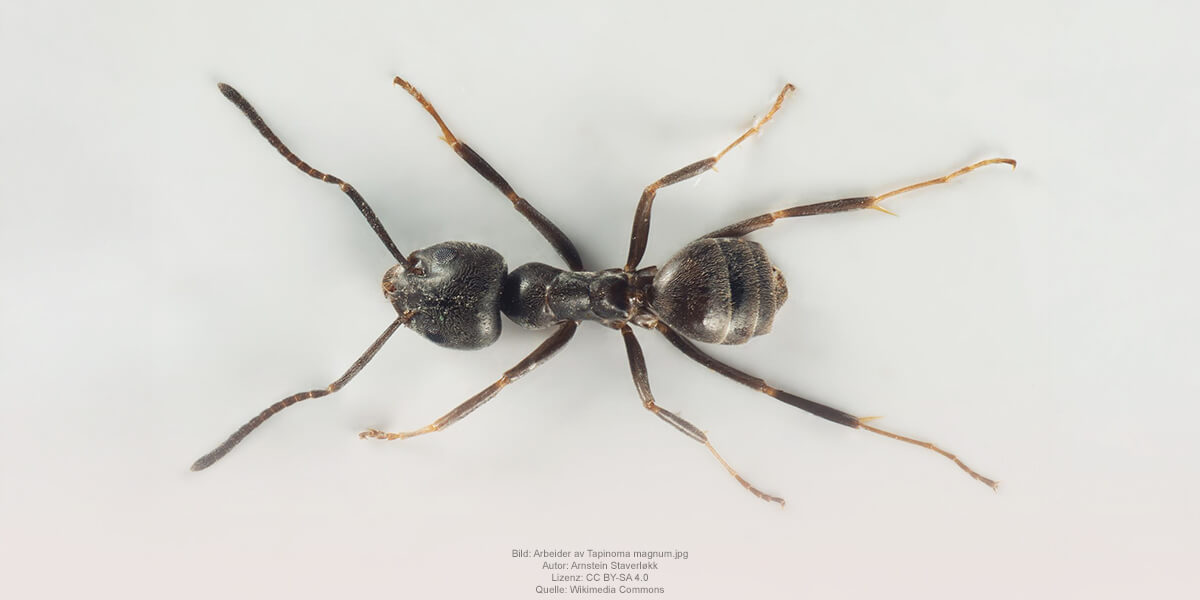
The contents of a single bait box work for up to four weeks and show the first results after just a few days. In this way, for example, Pharaoh ants, lawn ants, and carpenter ants can be controlled. The nests of the black-and-gray pavement ant can be successfully controlled within two to three weeks.