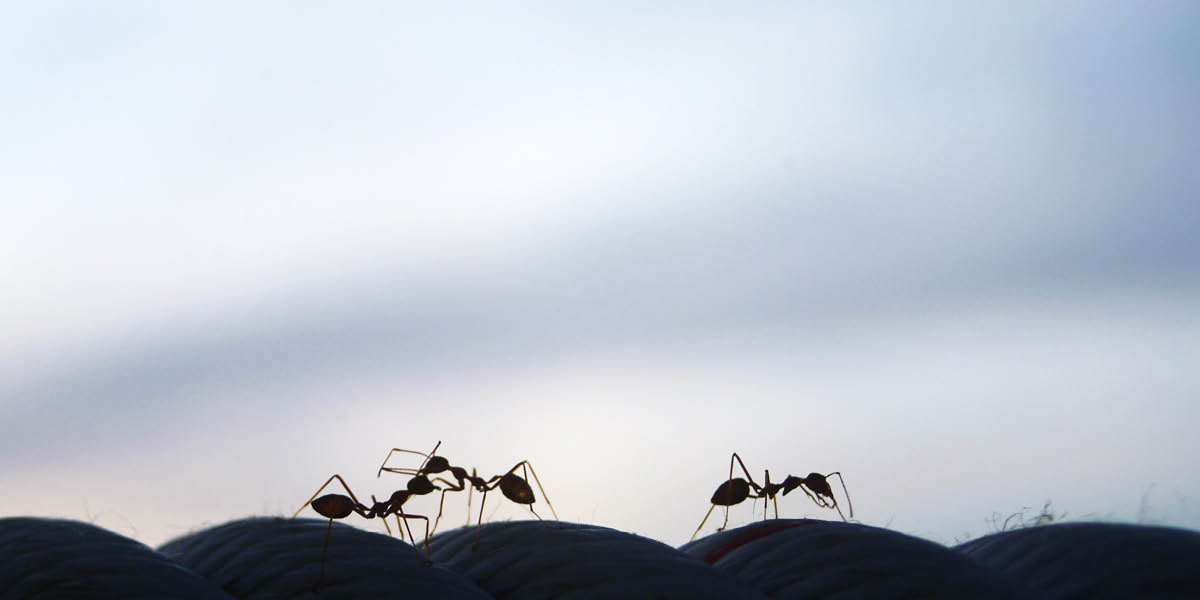
The invasive ant species Tapinoma magnum has firmly established itself in Germany: from Baden-Württemberg to Schleswig-Holstein and Lower Saxony. New reports show: The large glandularien ant is increasingly entering buildings and actively endangering infrastructure there. It nests in cable ducts and distribution boxes, transports sand into electrical systems, and can thus cause short circuits and power outages. Internet lines, sidewalks, and house foundations are also affected. In some municipalities, control measures have already been ongoing for over two years, and the complete eradication of established supercolonies is considered extremely difficult. Experts recommend reporting it to the authorities early and using strategic pest control with professional products.
Together with our expert Prof. Dr. med. vet. Norbert Mencke, a specialist in parasitology, we have compiled the most important information on the detection and control of this invasive species for you.
- Tapinoma magnum – an invasive ant species
- Large glandularien ant – reliably identifying Tapinoma magnum
- Damage caused by the glandularien ant: Is Tapinoma magnum dangerous
- Prevention of Tapinoma magnum
- Controlling Tapinoma magnum
- Conclusion
- Frequently asked questions
Tapinoma magnum is originally a Mediterranean ant species that has now also become permanently established in Germany due to climate change and goods transport.
The species forms so-called supercolonies with multiple queens, which can extend across entire streets.
It particularly frequently nests under stone slabs, in wall crevices, and around houses – with a tendency to also enter the interior of buildings.
Tapinoma magnum is often confused with the native black garden ant and therefore underestimated.
A striking feature is the unpleasantly pungent smell that is produced when Tapinoma magnum is crushed and is considered a reliable distinguishing feature.
Successful control relies on targeted, combined measures using proven products such as bait boxes, sprays, and granules – with the highly effective products from ARDAP Pro, the entire colony can be eliminated.
Tapinoma magnum – an invasive ant species
Tapinoma magnum belongs to the subfamily of glandularien ants (Dolichoderinae). The German name for the ant subfamily is also often used synonymously for Tapinoma magnum, so it is referred to as the large glandularien ant. It originally comes from the Mediterranean region or North Africa. Through international trade, the ant species was introduced to Germany. It is therefore a neozoon species and thus belongs to the so-called invasive ant species. Today, it is found mainly in warmer regions such as Baden-Württemberg or Rhineland-Palatinate, but is spreading further north.
Large glandularien ant – reliably identifying Tapinoma magnum
The correct identification of ants, the different Tapinoma species, and Tapinoma magnum itself is difficult, requires knowledge, and is not always easy even for experts. However, it is crucial for targeted control, and some features are characteristic of this ant species. In this section, you will learn what to look for to clearly recognize this invasive ant species. Only those who know the behavior, physical characteristics, and preferred habitats of the large glandularien ant can react early and prevent its spread.

Recognizing Tapinoma magnum: Appearance and smell test
At first glance, the large glandularien ant appears inconspicuous and is often confused with the black garden ant. However, there are some striking features that allow you to distinguish the invasive species from the native one:
| Feature | Large glandularien ant (Tapinoma magnum) | Black garden ant (Lasius niger) |
|---|---|---|
| Size | Workers: 2.5–5 mm, size varies within the colony Queen: barely larger than the largest workers (± 5 mm) |
Workers: 3–5 mm, all individuals are the same size Queen: 8–9 mm |
| Color | Black, shiny | Black to dark brown, matte |
| Petiole (Petiolus) | Flat, tiny, and barely visible | Pronounced and clearly visible |
| Smell | Intensely rancid/chemical when crushed | No noticeable smell |
| Nest structure | Multiple queens, huge colony | Single colony with one queen |
| Larvae and pupae | Glassy, transparent, leg bases visible | Light brown and opaque, size and shape like a grain of rice |
| Habitat | Urban, under stone slabs and paving, in wall crevices | Open, dry soils, gardens |
| Behavior | Very active, aggressive, supercolonies, invasive | Territorial, single colonies |
| Pest potential | High, enters buildings, infrastructure damage possible | Low to moderate, rarely in buildings |
Download table
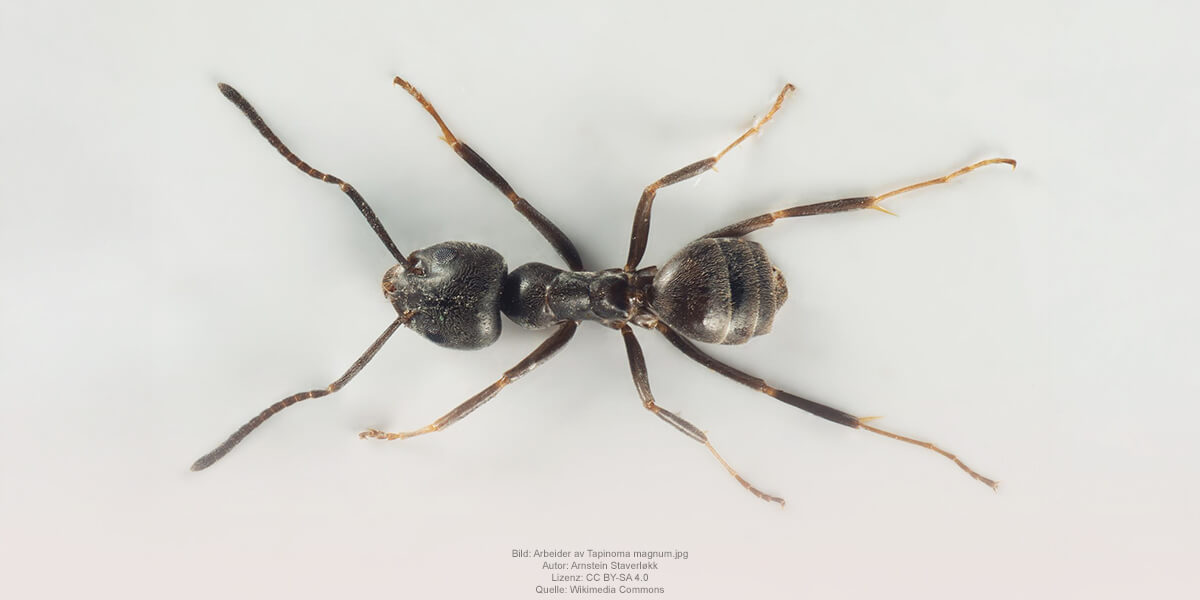
The workers of Tapinoma magnum measure approximately 2.5 to 5 millimeters in length. Within the colony, individuals of different sizes occur. For comparison: other native ants are usually all the same size within their species. The coloring of the large glandularien ant is black, with the body appearing comparatively slender and shiny. A striking feature is the lack of a stinger apparatus, which some other ant species possess. They also lack the noticeable node at the "waist" found in other species. This so-called petiole (Petiolus) is flat and tiny in Tapinoma magnum, and therefore hardly visible.
Another characteristic feature is its intense distinctive smell: If an ant is crushed, a pungent, often described as rancid or chemical aroma is produced, which is the first clue for many people of an infestation.
This smell not only serves the ants to ward off predators, but can also be helpful for identification by humans. If you manage to take a look into the nest, the appearance of the pupae can provide another clue: in the large glandularien ant, they are transparent-glassy, and the leg bases can be seen. In other ant species, the larvae pupate in rice-grain-like cocoons, which are light brown and opaque.

Occurrence and distribution
Tapinoma magnum originally comes from warmer regions around the Mediterranean, especially Southern Europe and North Africa. Through international trade – for example, through imported plants, building materials, or soil – the species has increasingly spread to Central Europe. In Germany, it is now found mainly in Baden-Württemberg, Rhineland-Palatinate, and adjacent areas. It prefers habitats in and around cities (urban and peri-urban) with heat-retaining structures, such as paved areas, wall crevices, greenhouses, or garages. Thanks to its high adaptability and lack of natural enemies, Tapinoma Magnum spreads particularly quickly and forms stable populations.
Lifestyle and diet
Tapinoma magnum is an extremely adaptable ant species with pronounced social behavior. The animals live in large colonies and communicate via scents (pheromones), which help them find food and orient themselves in the nest. They are predominantly diurnal and move quickly in well-organized, multi-lane ant trails. In their diet, the species shows itself as a true generalist: In addition to sweet plant juices and honeydew, the ants also feed on insects, carrion, animal proteins, and waste. This broad food base enables them to establish themselves in a wide variety of environments – from city parks to house gardens and even industrial facilities.
Special feature: The supercolony
A unique feature of Tapinoma magnum is the ability to form so-called supercolonies. While many ant species live in strictly separated nests, different colonies of Tapinoma magnum tolerate each other. The result: huge ant populations with several up to a hundred queens and millions of workers, which can extend across entire streets or residential complexes. The network-like connected colonies sometimes extend over areas of up to 1 hectare, which is more than a soccer field. The supercolonies are particularly resilient, as they spread quickly and distribute themselves across multiple nest sites. A single eradication measure is therefore usually not enough – a coordinated approach for effective control is essential.


Damage caused by the glandularien ant: Is Tapinoma magnum dangerous?
Tapinoma magnum is more than just an ordinary nuisance – it represents a serious threat as a pest to homes, gardens, and the local ecosystem. Particularly problematic is its massive occurrence, which is often underestimated. Within a very short time, entire supercolonies can establish themselves underground along the infrastructure of towns and municipalities, which not only severely affects the quality of life but also causes considerable economic damage in some cases. From disturbed areas of rest in your own home to permanent interventions in existing gardens and green spaces – the effects of an infestation with Tapinoma magnum are multifaceted and should under no circumstances be taken lightly.
Is Tapinoma magnum aggressive?
Compared to other ant species, Tapinoma magnum shows significantly more aggressive behavior. It is very defensive against anything that gets in its way. It also displaces our native ant species by spraying a toxic secretion. However, it is not directly dangerous to humans, but causes considerable disruptions in everyday life.
Damage caused by Tapinoma magnum
The damage caused by Tapinoma magnum is not limited to one area – it ranges from disturbing everyday burdens to substantial interventions in buildings and nature. This includes, above all, the undermining of roads, sidewalks, and walls, as well as the possible damage to power and communication networks caused by the nesting of the large glandularien ant.
Damage to infrastructure
- Undermining of roads, sidewalks, walls, and buildings leads to subsidence
- Damage to power and communication networks
Damage in the home
- Entering living spaces
- Contamination of food
- Damage to insulation and electrical systems caused by nesting
Damage in the garden and effects on biodiversity
- Increasing soil mounds on lawn areas, which can lead to unevenness and tripping hazards
- Undermining of paved areas and patio slabs, which endangers their stability in the long term
- Promotion of aphid colonies for honeydew production – a circumstance that can have a negative effect on cultivated and ornamental plants
- Loss of biodiversity through the displacement of native ant species and also useful soil organisms and pollinators
- Disruption of the natural soil climate, especially through large-scale nest installations that change the soil composition
- Disruption of the ecological balance
- Damage to young plants caused by nest activities
Prevention of Tapinoma magnum
Preventing an infestation of Tapinoma magnum is difficult for laypeople. This is because the insects remain hidden in their underground colonies for a long time. Nevertheless, it is important to keep a close eye on the general presence of ants. This includes regularly checking cracks, crevices, and joints in house walls, patios, and walkways around the house and sealing them if necessary. In addition, the regular application of ARDAP Pro Ant Spray at known danger spots can have a preventive effect to prevent them from entering. If you remain vigilant and act proactively, you can avoid an elaborate treatment in the best-case scenario. If in doubt, a pest control professional can also help you identify the species and suggest further steps. If Tapinoma magnum is clearly identified, immediate treatment is urgently required.


Controlling Tapinoma magnum
Controlling Tapinoma magnum is particularly important, as the species spreads very quickly and can cause ecological and economic damage as an invasive species. Its enormous adaptability, dense network of colonies, and ability to form so-called supercolonies make this ant species particularly resistant to conventional control methods. Individual measures are usually insufficient, as they only achieve superficial effects. A consistent, comprehensive strategy is therefore crucial, which relies on effective products and also includes hard-to-reach nesting sites.
In doing so, both indoor and outdoor areas should be considered, as Tapinoma magnum can gain access to houses via underground infrastructure (electricity, gas, district heating, and other pipes), paths, window frames, and even the smallest crevices. A targeted combination of different mechanisms of action is necessary to eliminate the insects effectively and permanently. It is also important to pay attention to preventive measures after successful treatment to prevent re-establishment.

Controlling Tapinoma magnum on Patios and Walkways
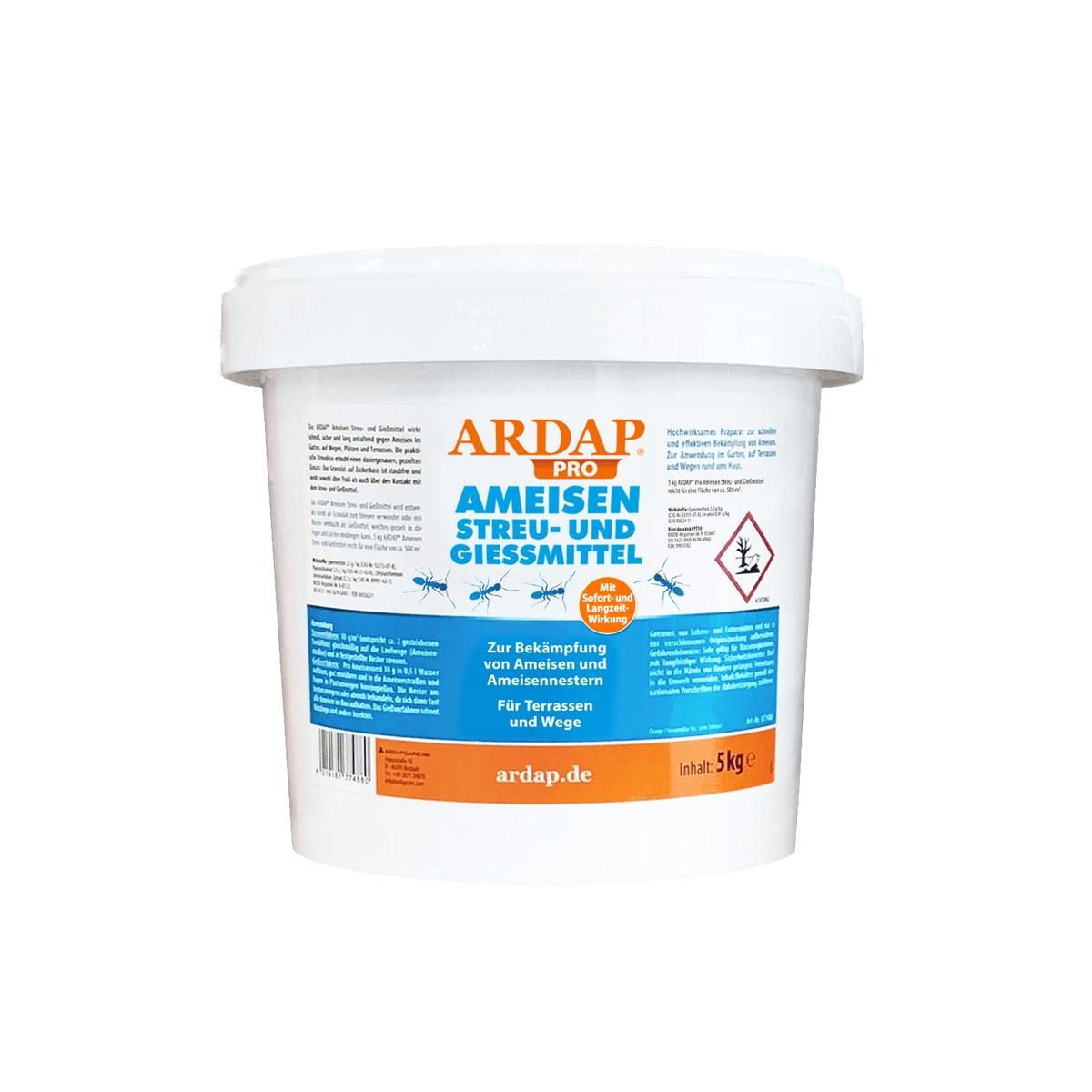
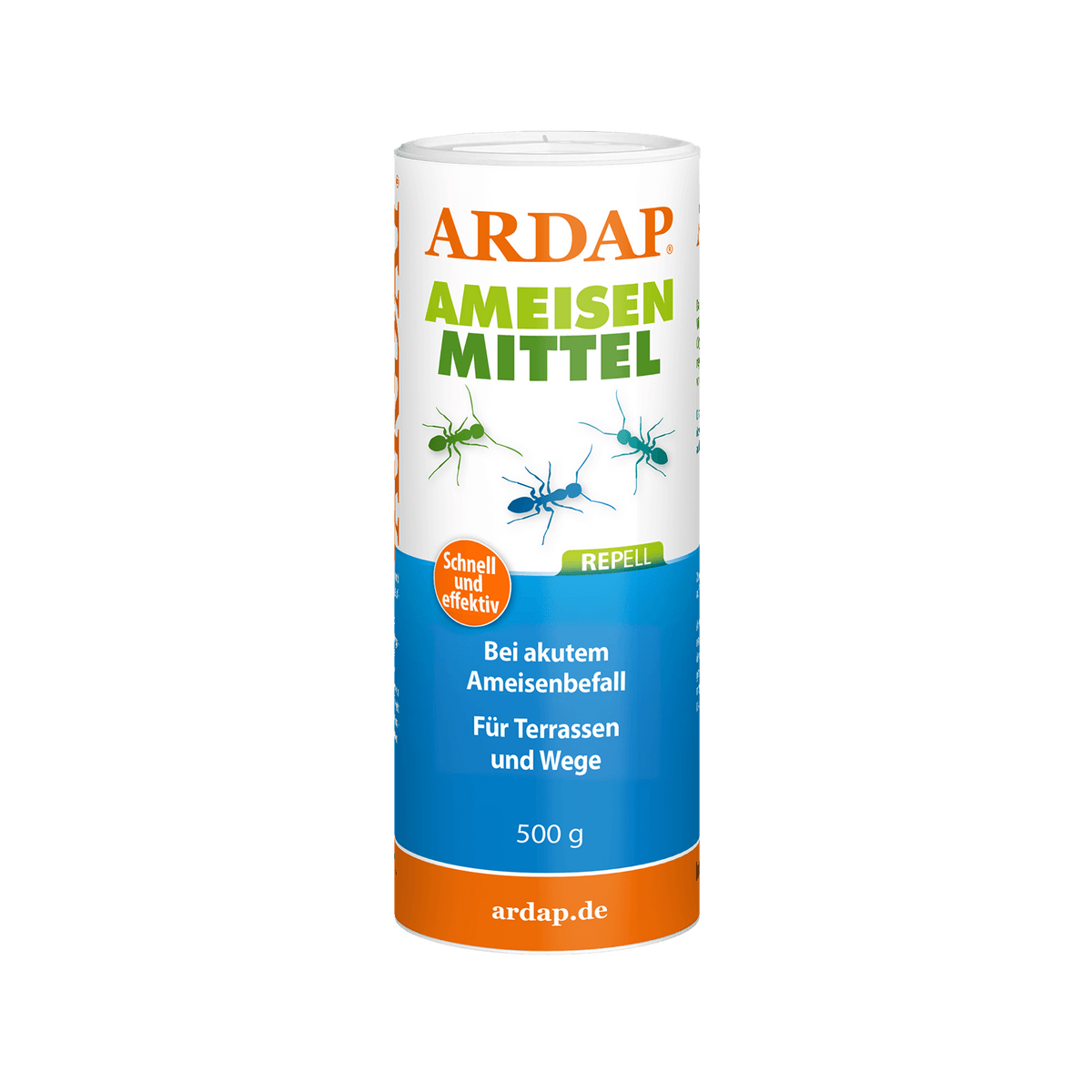
For controlling Tapinoma magnum ants in outdoor areas, the ARDAP Pro Ant Spreader and Liquid Treatment is suitable. It works quickly and highly effectively against the entire ant nest. Thanks to the dual application form – as a spreader or liquid treatment – the product can be dosed precisely and also over large areas. The combination of immediate and long-term effects makes it particularly effective. In addition, for a comprehensive control of long-lived supercolonies, it is recommended to place the ARDAP Pro Ant Bait Box where the ants emerge from the colony. Make sure that the bait box is protected from rain and sunlight. The workers find the highly effective bait gel in the bait box, carry it to the queens, and feed it to the larvae, which are consequently effectively controlled. The reproductive cycle is thus stopped at the source, and the colony will eventually collapse completely.

Controlling Tapinoma magnum in the House
The ARDAP Pro Ant Bait Box is also suitable for controlling Tapinoma magnum indoors. It can be placed neatly and simply, for example in the kitchen or basement. The innovative bait gel attracts the ants particularly effectively. The ants take up the active ingredient from the bait box and carry it into the nest. There, it is fed to the larvae, other workers, and – very importantly – also to the queens. This is how you control the entire colony from the inside out and at the source. The ARDAP Pro Ant Bait Box can be used discreetly in living spaces, but also on patios or along walkways.
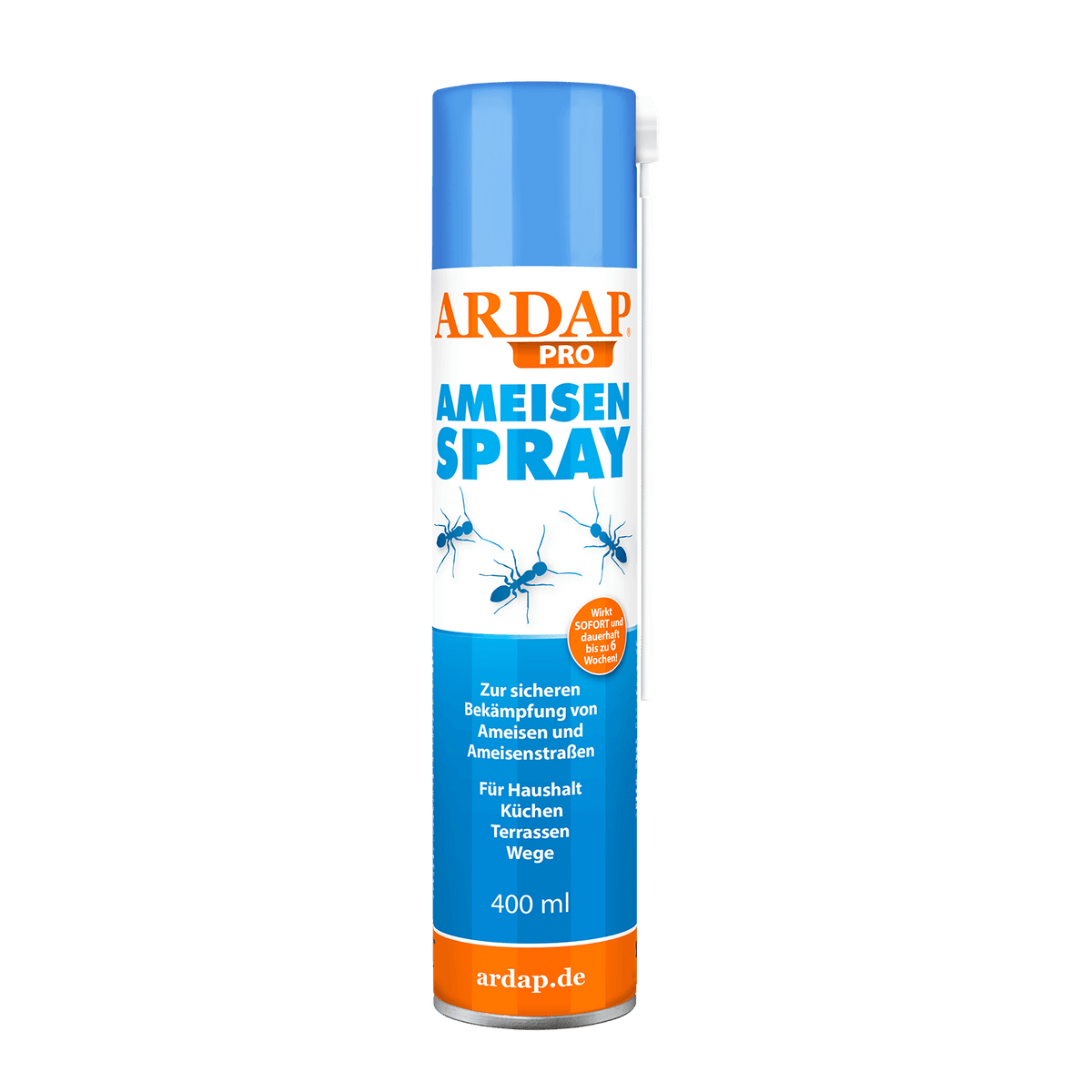
The ARDAP Pro Ant Spray represents a useful addition for indoor control. In addition to the option to eliminate an acute ant infestation, it also offers a long-term effect of up to six weeks to control recurring ants. Particularly practical: With the included spray bottle, even hard-to-reach cracks and joints as well as the nest itself can be targeted if necessary. The spray is also suitable for outdoor use.
Conclusion
Tapinoma magnum is more than just a nuisance ant – it poses a serious problem for infrastructure, buildings, private households, and even our biodiversity. Its ability to form huge supercolonies and spread unnoticed in buildings and outdoor areas makes it a serious pest. Anyone who has detected an infestation should not hesitate, but act quickly and comprehensively – because the earlier the treatment begins, the greater the chances of success. With the reliable ARDAP Products, both visible ant trails and deep-seated nests can be effectively controlled. A systematic approach combining several products and incorporating preventive measures is particularly important. In this way, a re-emergence can be avoided in the long term.
Frequently Asked Questions
How can I recognize an infestation of Tapinoma magnum?
An infestation of Tapinoma magnum is usually manifested by noticeable, multi-lane ant trails that extend over patios, walkways, and sometimes into the house. A characteristic feature is also an unpleasant smell that occurs when individual insects are crushed – it reminds one of rancid butter.
What damage does Tapinoma magnum cause?
In the house, the nest-building of the large gland ant can cause damage to electrical systems, insulation, or insulation material. In the garden, the species displaces native ants.
How can Tapinoma magnum be controlled?
The most effective way to control Tapinoma magnum ants is a combination of targeted measures with highly effective ARDAP Pro Products. ARDAP Pro Spreader and Liquid Treatment, Bait Boxes, and Sprays work together against both visible ant trails and the nest – for permanent control.
How can Tapinoma magnum be identified?
Tapinoma magnum can be easily identified with the appropriate knowledge. For example, the workers of this species are about 2.5 to 5 millimeters long, have a completely black body, and give off a distinctive smell of rancid butter when crushed. Their particularly pronounced activity and the formation of large supercolonies are also characteristic.
How big is a Tapinoma magnum?
The workers of the Tapinoma magnum reach a body length of 2.5 to 5 millimeters, so compared to some other native ant species, it is slightly larger – hence the name "Large Gland Ant". The workers vary in size, a crucial difference from most native ant species.