With our expert Prof. Dr. med. vet. Norbert Mencke, specialist in veterinary parasitology, we provide you with valuable information on how to deal with a possible ant infestation.
- It All Starts with the Egg – The Ant Life Cycle
- What Does It Look Like? Ant Egg Fact Sheet
- Taking Quick Action Against Ant Eggs
- Conclusion
- Frequently Asked Questions

Ant eggs are a clear sign that an active ant nest is nearby and that the colony is successfully reproducing.
The eggs are specifically protected by the workers and regularly moved to ensure optimal conditions for the development of larvae and later ants.
Simply eliminating visible ants is not enough, as the actual cause – the nest with the queen, eggs, and brood – remains untouched.
For effective control, it is crucial to disrupt the ants' development cycle and not just address the mature insects outside the nest.
Especially in indoor spaces, ant eggs indicate that the nest may be located in cavities, under floors, or in wall areas, and that appropriate specialist products such as ARDAP Pro Ant Spray must be used.
It All Starts with the Egg – The Ant Life Cycle
Anyone who observes ants will often see busy insects at first glance. In an ant colony, these are the workers looking for food. Behind this effort lies the goal of ensuring the colony's survival. Ant eggs therefore play an important role and are carefully protected. But how many eggs are actually laid? And when do the larvae hatch?
How many eggs do ants lay?
Ant queens lay several eggs daily during their breeding season. How many that is depends on various factors, such as the ant species. The availability of food, the temperature, and, for example, the location of the ant nest are also important. Depending on the species, ants can lay around 20 to 30 eggs or even significantly more. Some ant species are particularly productive and lay thousands of eggs daily. Therefore, the number of ant eggs varies.
When do the larvae hatch?
In the life of an ant, the larvae initiate the next life cycle as soon as they hatch from the eggs. After the ant queen has laid her eggs, this process can take several days or weeks. Here, too, environmental conditions play a role, among other factors. The more favorable these conditions are, the sooner the larvae can mature and hatch.
Until then, the ant eggs are well cared for and, if necessary, carried to other locations that promise better growth conditions or greater protection from external influences. If, for example, an ant nest is unexpectedly exposed, as can happen when lifting sidewalk slabs, the ants will immediately begin to carry and protect the eggs. For transport, the usually sticky eggs are bundled into "egg packages" so that they can be easily relocated.

The small ant larvae, which hatch from the eggs over time, can then be identified by their appearance: they are small, worm-like creatures that are whitish. Neither legs nor a head are visible at this stage.
Biologically, the development of an ant is referred to as holometabolous development, meaning that, like flies or fleas, ants undergo a complete metamorphosis: from the egg through three to six larval stages, then the pupa, to the adult ant (also called the imago).
What Does It Look Like? Ant Egg Fact Sheet
For humans, ant eggs are not easily visible to the naked eye. Nevertheless, it often helps to be informed about their appearance and to know what special characteristics they have.

What Do Ant Eggs Look Like?
The typical shape of the eggs is oval, and they are sometimes somewhat elongated. This makes it possible to bundle, protect, and transport the ant offspring easily. Ant eggs also usually have a light, milky color and a shine. If they have been freshly laid, you can tell by their rather transparent appearance.
Please note: Here, too, the ant species and the respective stage of the egg's development play a role, among other factors. The older the eggs, the darker their color may be. It often also becomes cream-colored, yellowish to brownish, and varies depending on the species.
How Big Are Ant Eggs?
Ant eggs are usually tiny, meaning their size is often only a few millimeters. This makes it especially challenging for laypeople to discover or identify the eggs. Once the insects have found the ideal nest location, the larvae can therefore often develop and hatch undisturbed, provided that other conditions are also right.

Special Characteristics
One special characteristic of ant eggs is that the sex depends on the fertilization of the egg. If fertilized, they usually develop into workers. If not, males emerge, whose task is later to mate with the queens. However, it can happen that unfertilized eggs sometimes serve as food if there is a shortage.
Taking Quick Action Against Ant Eggs
Do you suspect that you have ants or ant eggs in your home? Although the development of ants is a fascinating process, quick action is required if it takes place inside or around your home. If food is available and other conditions are also ideal for a nest location, the insects can reproduce unhindered.
Eggs in Sight?
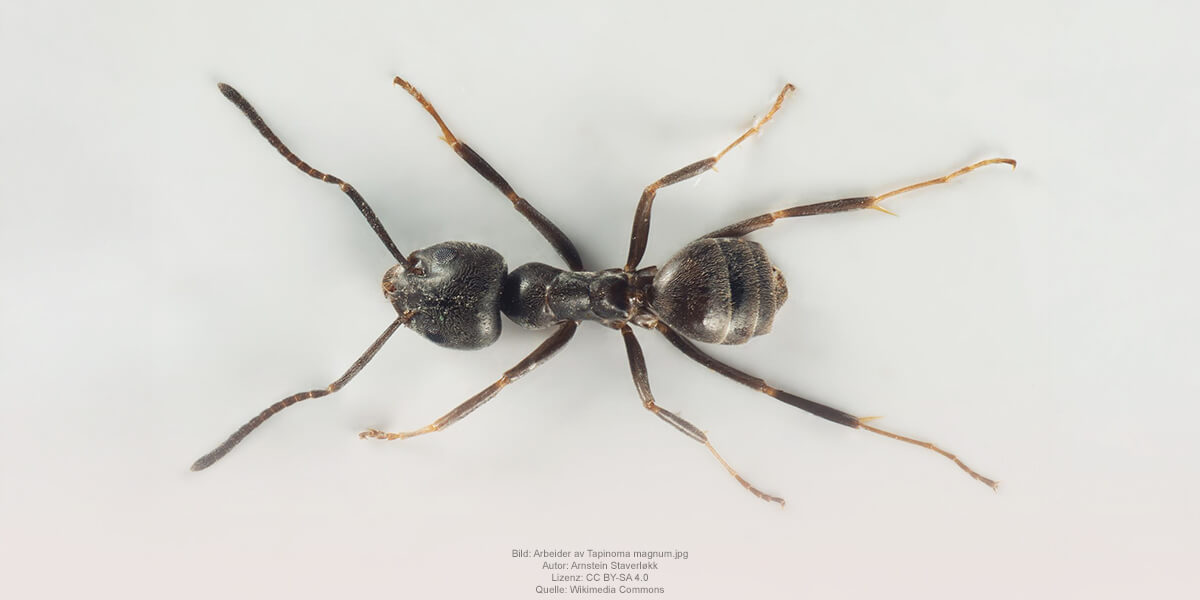
The nests containing the eggs, as well as larvae and pupae, are usually very well hidden, so that you generally cannot discover them with the naked eye. Eggs are always a sign of a colony. If you discover the hard-to-see eggs, the colony is already well established, and you should not hesitate and immediately take countermeasures in the form of effective ant control products. This is because with certain species, such as wood-destroying ants like the Brown field ant or the Black carpenter ant, considerable property damage is imminent. In addition, the ants use food as a source of nourishment, which can be a hygiene problem.
Into the Nest: Effective Control Products
To lay their eggs, the insects look for locations that offer good conditions for the nest. Very often, the pests are then found, for example, near the kitchen. Generally, the nest is built in cavities, skirting boards, or under floor coverings, with the eggs always stored centrally in a well-protected place within the respective nest. If you discover an ant trail, it often helps to follow the insects in both directions. This will lead you to the ant nest. To successfully stop the colony from spreading, effective products for controlling the nests should be used.

Ant Bait Box
The product of choice for existing ant nests with ant eggs is the ARDAP Pro Ant Bait Box. This is a reliable product with a special, innovative bait gel. It is suitable for both households and basements, patios, and balconies. Thanks to the gel's strong attractant effect, both ants and ant nests are effectively controlled.
How to use the ready-to-use ARDAP Pro Ant Bait Box:
Step 1: Plan the preparation and placement
- Before use, you should read and follow the package instructions completely. Plan the placement depending on the location of use:
- In indoor spaces such as living rooms or basements, place 1–2 bait boxes directly on the ant trails, one for every 10 m².
- Outdoors, for example on a patio or balcony, place one bait box directly in front of the nest entrance.
- In cases of heavy ant infestation, using several bait boxes at the same time is recommended.
Step 2: Open the ready-to-use bait box
- Take the bait box out of the packaging. Press the side latches outward and remove them completely. This creates openings through which the ants can enter the box and take up the bait.
Step 3: Note the date
- Write the application date directly on the bait box. The bait remains effective for up to 4 weeks after opening, so you can keep track of its effectiveness at all times.
Step 4: Place it correctly
- Indoors, place the bait box directly on the visible ant trails.
- Outdoors, place the box in front of the nest entrance and make sure to protect it from rain and direct sunlight.
Step 5: Wait for the effect
- The nests of various ant species can die off after just a few days, including, for example, Pharaoh ants, fire ants, and carpenter ants.
- For the Black carpenter ant, the full effect usually takes 2–3 weeks.
- Note: It is normal not to see any ants in the bait box. The insects take up the bait and then return to their nest, where the effect takes hold and the entire ant colony is controlled.
Step 6: Follow-up treatment for heavy infestation
- In cases of particularly heavy or recurring infestation, the application can be repeated after a break of 3–4 weeks.
Ant Control Products
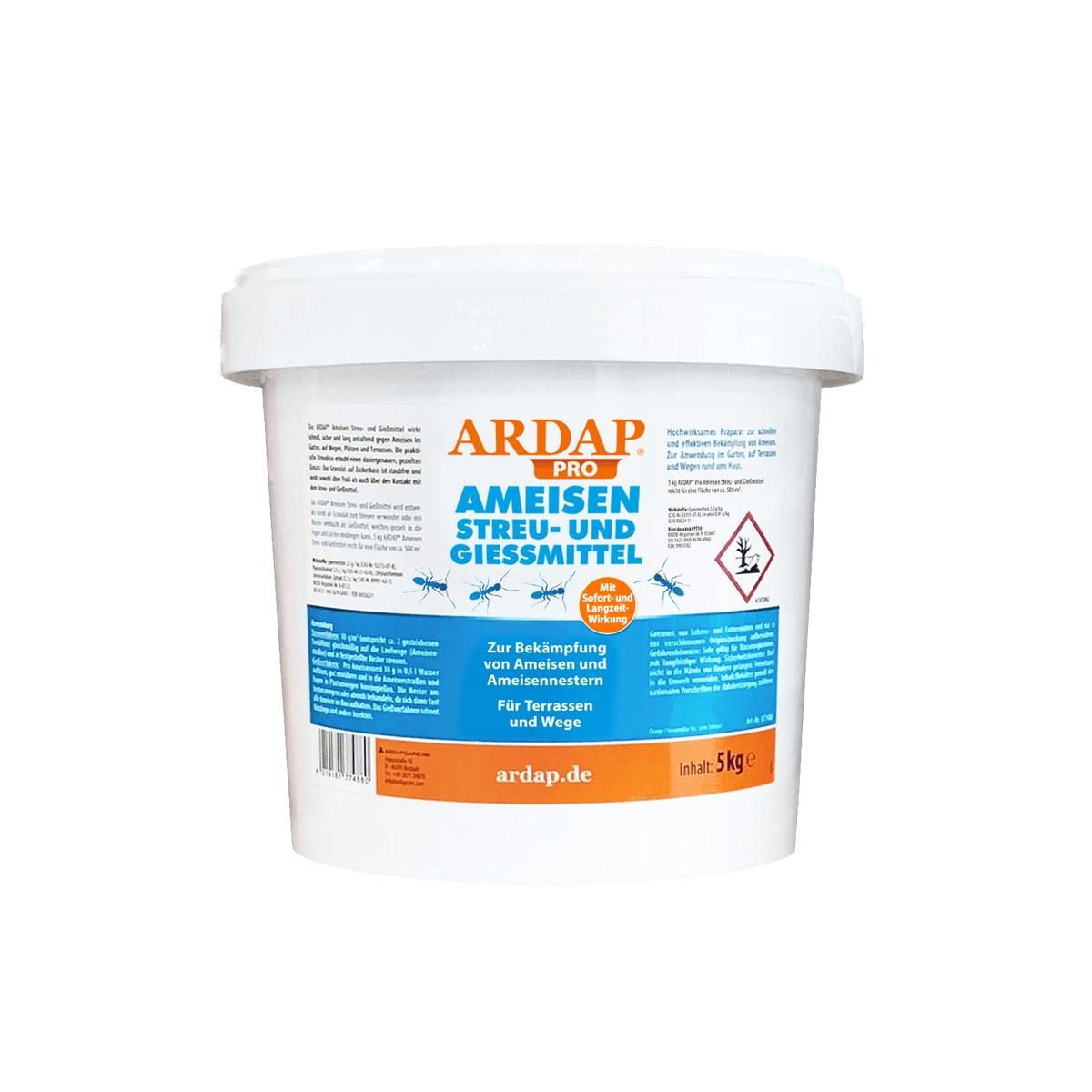
The ARDAP Pro Scatter and Pour Products against ants are specifically designed for outdoor areas where the actual problem originates: in the nest with the ant queen, eggs, and brood. By applying it as a scatter or pour treatment on walkways, patios, or balconies, the active ingredient is thoroughly carried into the nest and thus also reaches hidden nest areas. In this way, not only individual ants wandering around are controlled, but the larvae inside the nest are also reliably targeted. At the same time, the colony's reproduction is disrupted because the queen, as the source of the infestation, is also controlled. Especially with ant problems around the house, on the patio, or along walkways, this approach ensures that the ant infestation is not only reduced in the short term but ended in the long term.

Long-lasting effect against ants and ant nests
For scattering and pouring
Precisely dosed application in joints and holes
To the productAnt Spray
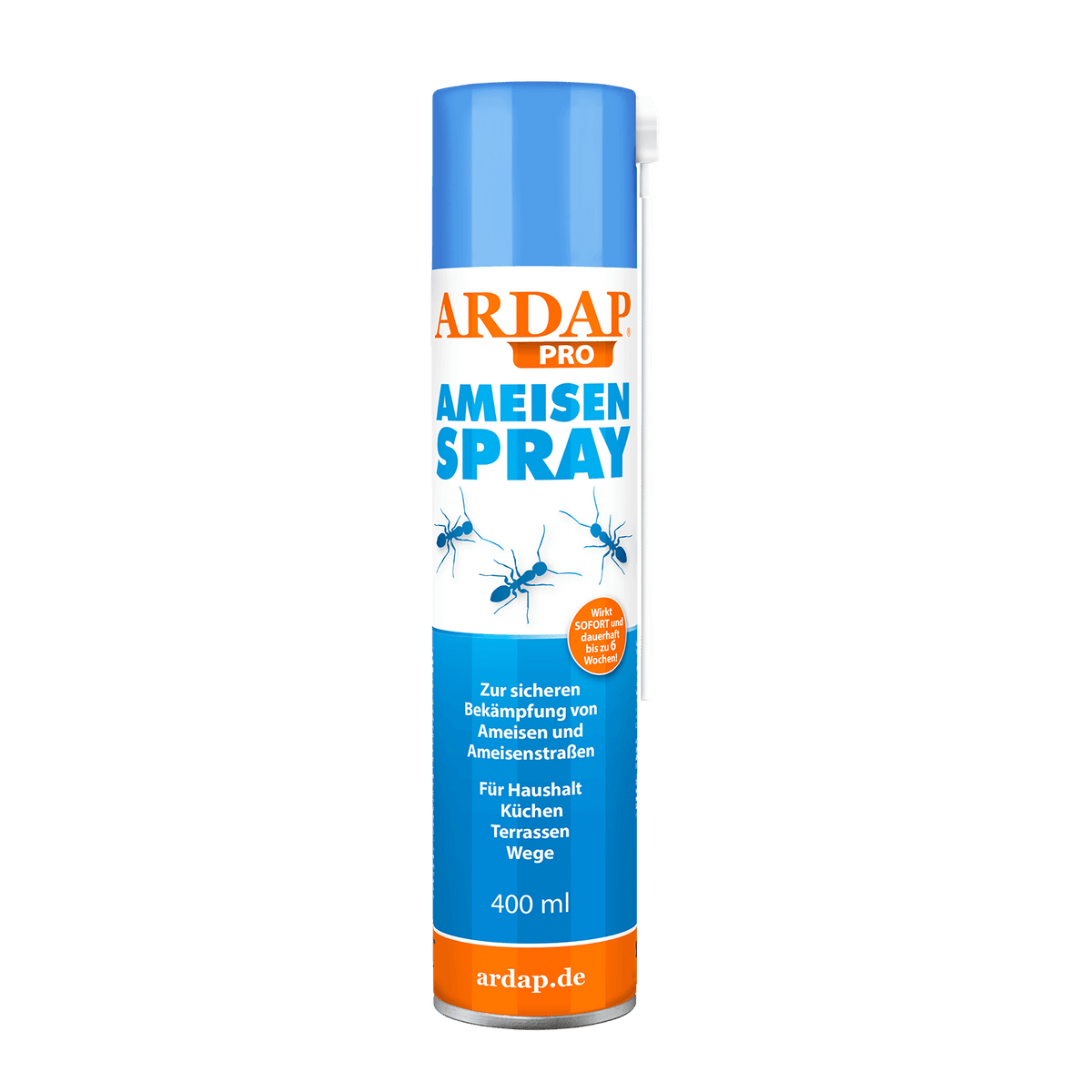
The ARDAP Pro Ant Spray is particularly suitable for the targeted control of ants and ant eggs on walkways, nest entrances, and hard-to-reach areas. The active ingredient works immediately upon contact between the ants and the sprayed surface. Since workers regularly travel between food sources and the queen, the spray helps to weaken the colony and disrupt reproduction. The spray remains effective for up to 6 weeks. The ARDAP Pro Ant Spray can be used indoors (e.g., on skirting boards, in the kitchen, in the basement, or at transitions to the patio), as well as outdoors on walkways around the house, on the patio, or on the balcony. Thanks to the practical spray nozzle, targeted spraying of hard-to-reach areas (e.g., cracks and joints) is also possible.

With a spray nozzle for cracks and joints
Long-lasting effect for up to 6 weeks
Controls ants and ant trails
To the productRely on Targeted Repellents
Ideally, ants will not establish a nest or lay eggs in your home in the first place. To achieve this, it makes sense to rely on targeted and early prevention of the insects. With repellent products from ARDAP, you reliably repel ants in indoor and outdoor areas.
Ant Control Product
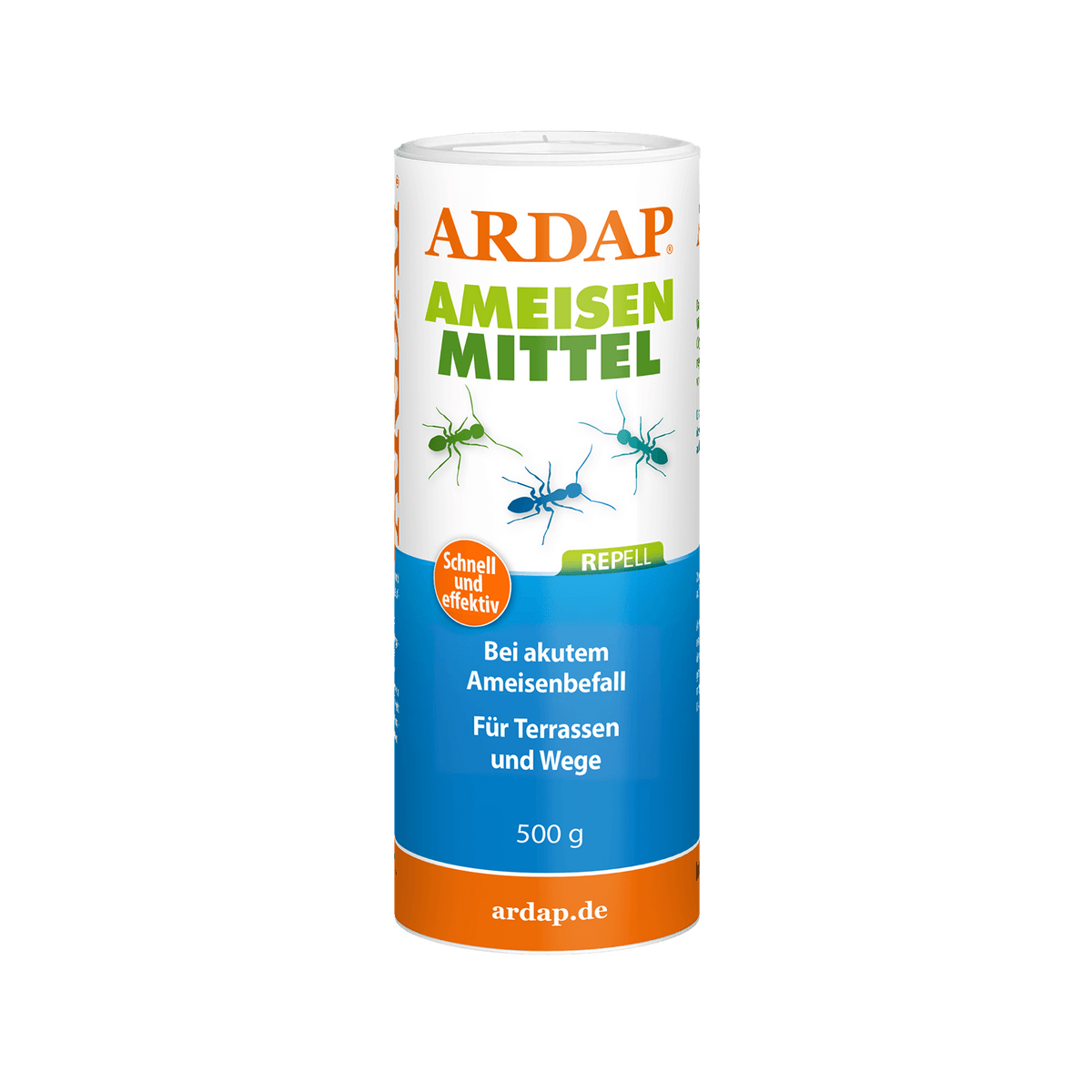
The ARDAP Repell Ant Control Product is ideal for repelling ants. Its easy application and handling make it perfect for keeping the insects away quickly and reliably. The ant control product is designed for outdoor areas where ants can become pests, such as your balcony, patio, walkways, and house entrances.
Using the practical scatter box, regularly place some of the granules directly and evenly on ant trails, in entrance areas, or around nests to benefit from the repellent effect.
Ant Spray
As another means of deterrence, the ARDAP Repell Ant Spray is recommended. This product is suitable not only for outdoor use on patios, paths, and entrance areas, but also for indoor use, for example in the kitchen.
Thanks to pyrethrum from chrysanthemum flowers, the spray repels ants quickly and reliably. Simply spray the frequently used ant trails and other areas where you often discover them on a regular basis.
Conclusion
Ant eggs are a clear warning sign that an active ant nest is already nearby and that the infestation will continue to increase without targeted measures. Anyone who only removes the visible ants is not combating the cause, as the eggs, brood, and queen ant remain protected in the nest and continue to develop unhindered. It is therefore crucial to take action that considers the entire life cycle of the ants and addresses the origin of the colony. Products such as the ARDAP Pro Ant Bait and Pouring Agent or the ARDAP Pro Ant Spray enable targeted control in nest areas, ant trails, and hard-to-reach places. This not only curbs the ant infestation in the short term but also eliminates it in the long term before new generations develop from the eggs and cause greater damage to your house or patio. The ARDAP Repell products are suitable for the preventive deterrence of ants.
Frequently Asked Questions
Why are ant eggs in the house a serious problem?
Ant eggs in the house are a serious problem because they indicate that an active ant nest is located in the immediate vicinity or already inside the building. New workers continuously develop from the eggs, which quickly increases the infestation without targeted measures. For ant trails and nest entrances indoors, targeted control with the ARDAP Pro Ant Spray can be useful to immediately curb the spread and provide long-term protection for 6 weeks.
Is it enough to remove visible ants if ant eggs are present?
Removing visible ants is not enough if ant eggs are present, as the actual cause – the nest with eggs, larvae, and queen – remains untouched. As long as the brood is protected in the nest, the colony continues to grow and the ant infestation returns. In this case, both the ARDAP Pro Ant Bait Box and the ARDAP Pro Ant Bait and Pouring Agent ensure that the entire ant colony in the ant nest is permanently eliminated and all developmental stages are effectively controlled.
Where are ant eggs and nests usually located in living areas?
Ant eggs and nests are often located in cavities, under floors, behind baseboards, or in wall gaps in living areas. Transitions from the patio or balcony into the house are also typical nest locations, as they offer protection and short distances to food sources. You can reach hard-to-access places with the practical spray bottle of the ARDAP Pro Ant Spray.
What role does the queen ant play in reproduction?
The queen ant plays a central role in reproduction, as she is solely responsible for laying eggs. If the queen is not controlled, the colony can continue to produce new ant eggs even after a reduction in the number of workers. The use of the ARDAP Pro Ant Bait Box and the ARDAP Pro Bait and Pouring Agent in the nest area makes it possible to target both the queen ant and the developmental stages, and thus the brood, and permanently disrupt the colony's life cycle.
How can ant eggs and their cause be targeted?
Ant eggs and their cause can only be targeted if measures are used that work deep into the nest. Crucial are ant products that address both the ant trails and the hidden nest areas to permanently disrupt the colony's life cycle.