Together with our veterinarian Prof. Dr. med. vet. Norbert Mencke, a specialist in parasitology, we are here to support you in dealing with a possible ant infestation.
- How and why do ants get into the house?
- Preventing ant infestations in the home
- Successfully controlling ants

How and why do ants get into the house?
The search for a food source is the simple reason why ants like to enter our homes. They use every opportunity to get inside. For example, they look for suitable gaps in drafty doors and windows and use them as entry points. Even a single queen ant can be enough to establish a new colony in the house. At first, only a few ants arrive, but soon more follow, until eventually the entire colony is on the move. They form so-called ant trails, along which they organize the transport of food to the nest. They leave pheromones on this trail, alerting other ants to the food source. If this food source is in your home, it can quickly lead to a major ant infestation.
It is also possible that the residents themselves bring the ants in from outside. The insects can hide in clothing or in a flower pot that you bring inside. So, if there are ants in the house, it does not necessarily mean that there is a lack of hygiene.
Once ants have settled in, they are surprisingly difficult to get rid of. This is why it is so important to act promptly and take measures to repel them. This way, you can prevent an acute ant infestation.


Why control ants in the home?
You may wonder why you should worry about ants in the home in the first place. After all, ants are beneficial insects, and some species, such as the red wood ant (Formica rufa), are even protected. While this is true, it overlooks the fact that ants can also be pests and cause significant damage in the home.
In nature, ants perform many important functions and help loosen the soil with their nest-building activities, for example. They dispose of dead animals and thus help maintain the ecosystem. But ants are hardly useful in the home, basement, or on the balcony. And they have a tendency to spread quickly once they have discovered a food source. The longer you wait, the harder it becomes to bring the ant infestation back under control.

What damage can ants cause in the home
A look at the damage ants cause in the home makes it easy to see why it is not a good idea to stand by and watch as the insects spread through the home.
Ants can cause a variety of damages, depending on the ant species. The following species found in Germany are particularly relevant. For example, the brown pavement ant (Lasius brunneus) is one of them. It is recognizable by its light bronzy-brown head, which is also where it gets its name. This species is a nuisance and can cause serious material damage to buildings, thus becoming a pest. It is therefore one of the wood-destroying ants. Ant infestations in wood is often preceded by water damage, so we recommend consulting a building expert, as the ant is actually only an indicator of damage to the building structure. The brown pavement ant is regularly found in houses, where it builds its nest.
The wood-destroying ants include not only the brown pavement ant but also the carpenter ant (Camponotus ligniperdus), the shiny black ant (Lasius fuliginosus), and the two-colored pavement ant (Lasius emarginatus). In this case, it is particularly important to locate the nest and remove it using the bait box with nest effect, or to control the ants and their entire colony.
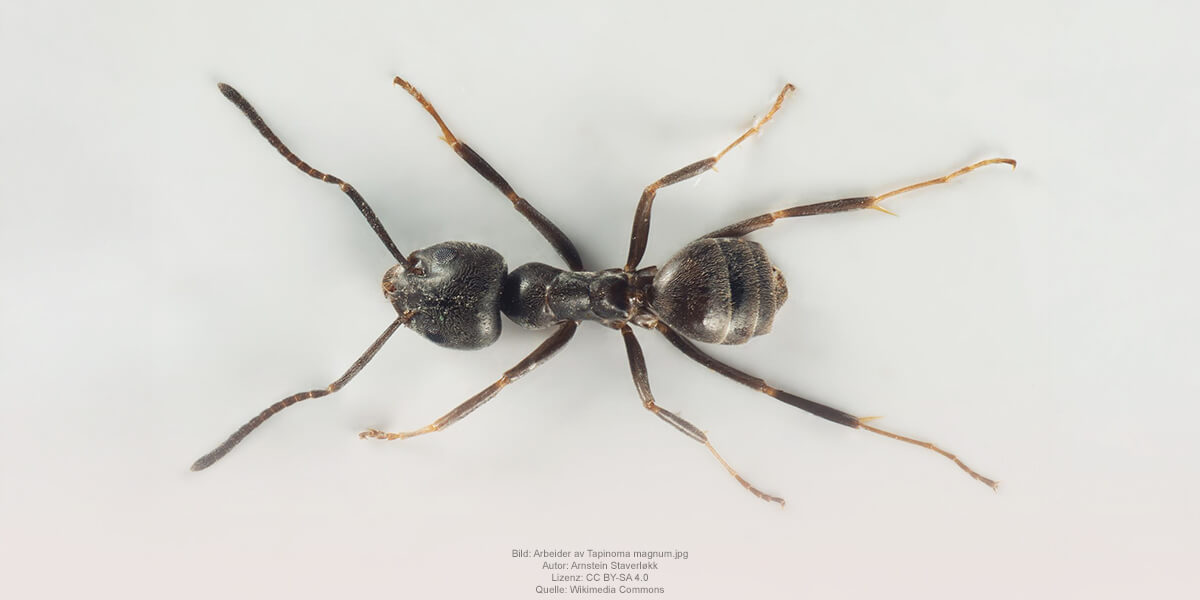
The black pavement ant (Laser niger) is the most common species in Germany. It has a uniform dark brown to black color and is also considered a nuisance. It is the workers that enter houses in spring in search of food. They can easily navigate multiple floors.
It also becomes dangerous when the insects crawl into electrical devices. They can damage them and, in extreme cases, even cause an electrical fire. So ants have no place here either.

Locating ant nests specifically
The first step in controlling ants is always to first locate the ant nest. There are several ways you can track down the insects. However, tracking them is not quite as easy as it is in the garden. Outdoors, piled-up sand mounds clearly indicate ants nearby. Such mounds of earth or sand are generally not found in the home.
The easiest way is to look out for ant trails and carefully examine their path. You should follow the ant trails in both directions, which, with a little luck, will lead you to the nest and also to the food source. The goal of the control measures should be to destroy the colony and thus the nest with the queen. For this, use the ARDAP Pro ant bait box. You should also remove the food source so that no more ants are attracted to your home.
Ant nests are often found in interstitial spaces, wall cavities, underfloor heating, or in the basement. However, pantries or built-in wardrobes may also be possible locations. So you should look for nests there.
Preventing ant infestations in the home
You can do quite a bit to prevent an ant infestation. We will show you which measures really work and are easy to carry out.
Always a good idea: prevention
The easiest way to deal with an ant infestation is to prevent it from occurring in the first place. For example, inspect your home and critical areas such as doors and windows. It is worth sealing joints and gaps regularly. You should not give ants any opportunity to enter the home through holes or cracks in the masonry.
Handling food is particularly important. Anything that can attract ants should not be left out freely. This applies especially to food. Cover it properly before storing it, even in the refrigerator. Make sure that waste and organic waste are inaccessible. Without attractive food sources, ants have no reason to come into your home.
Also keep an eye on built-in wood and make sure that no moisture penetrates it.

Do not wait, act
You have ants in the home and want to observe the situation for now? That is probably not such a good idea. Even if the infestation initially consists of only a few individuals, you should not underestimate how quickly the insects can get reinforcements from their colony. The animals rarely miss out on an attractive food source.
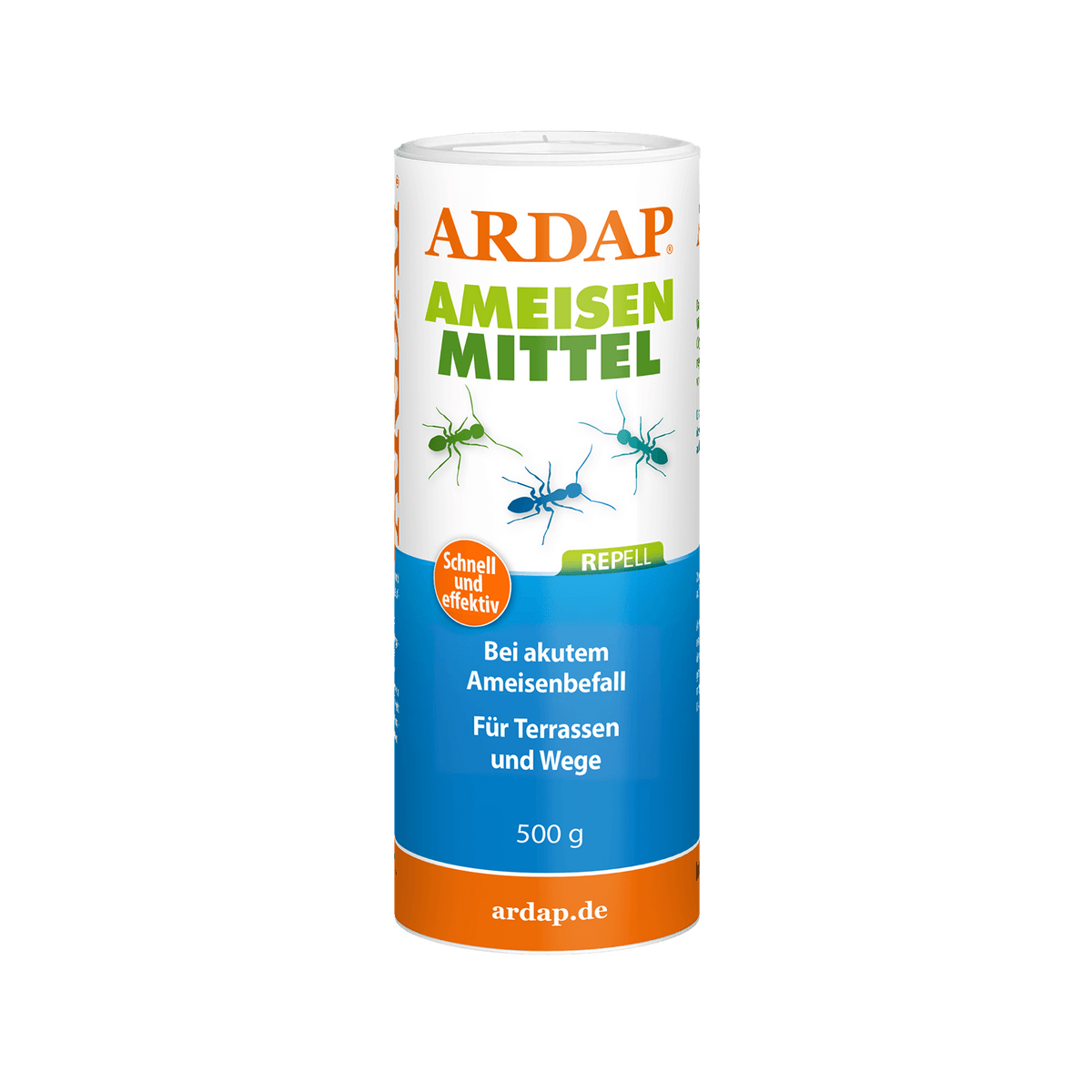
This is especially true for the wood-destroying ants listed above, which require prompt action. These species can cause significant damage over time and therefore must not be allowed to remain in the home. It is also unlikely that the ant problem will resolve itself. Therefore, it is better to quickly use repellent products such as the ARDAP Repell ant spray. To prevent ants from entering the home in the first place, you can also sprinkle the ARDAP Repell ant treatment on home entrances, joints, and holes.
Successfully controlling ants
You have discovered ants in your home and no longer want to tolerate the infestation? Here are some of the most effective methods you can use to repel or control the insects. This makes it possible to create a home completely free of ants in no time at all.
Ant spray
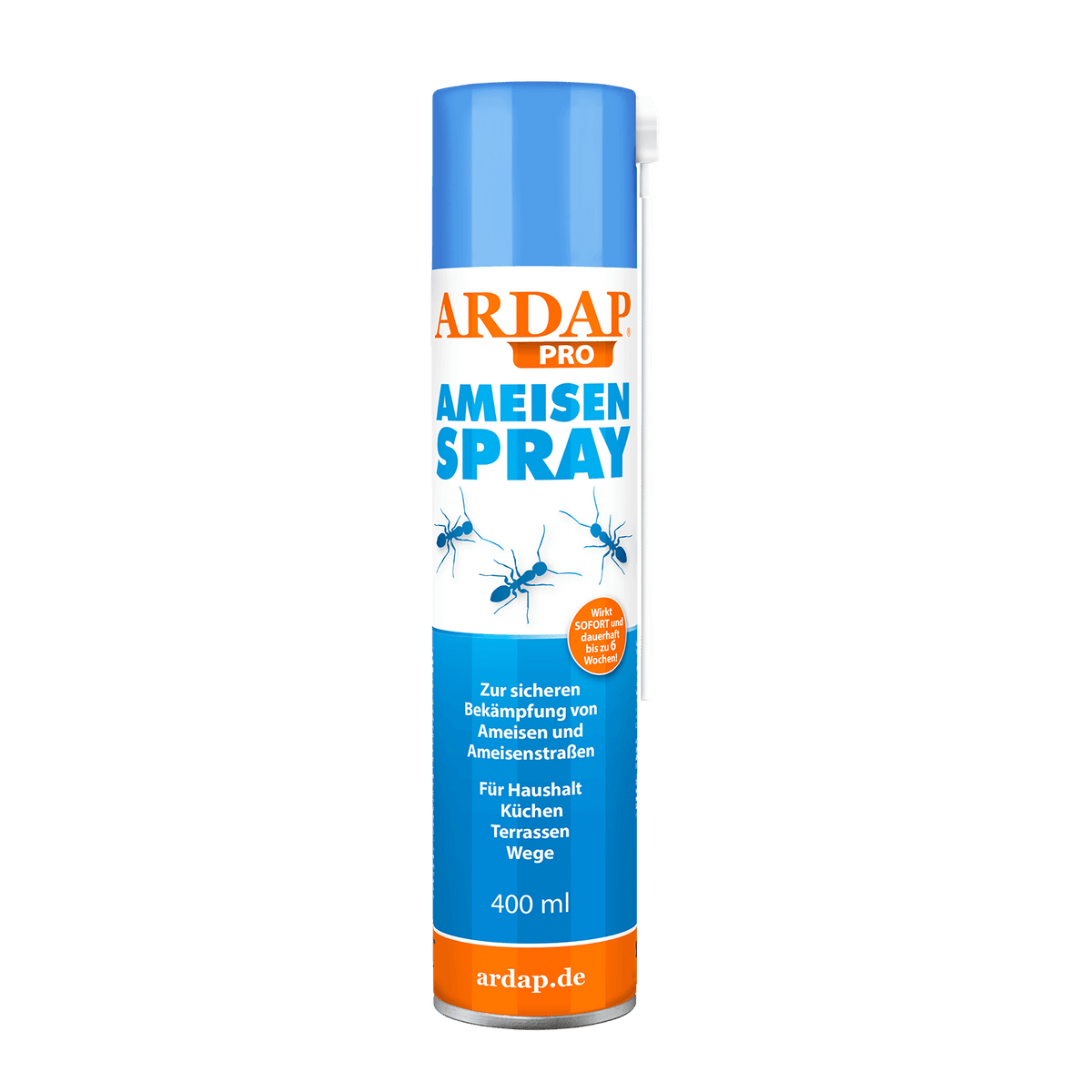
The ARDAP Repell ant spray is used for the immediate and effective repelling of ants. It can be used in the home as well as outdoors. The main advantages are its ease of use and high repellent effectiveness.
The ARDAP Repell ant spray is useful, for example, for an acute ant infestation in the kitchen, on the patio and walkways, and everywhere in the home. You can spray the product specifically on the desired areas.
This product contains the repellent active ingredient pyrethrum from chrysanthemums. Spray all areas where the insects are located. It is recommended to spray for one second over a distance of two meters. You can also use it to spray ant trails.

Ant bait box
Is the ant infestation acute and do you want to control the entire nest? Then the ARDAP Pro ant bait box makes a highly effective product available to you. A novel bait gel is used here, which is characterized by its strong attractive effect. You can use this product to control all ant species and the entire ant nest. It can be used indoors and outdoors on the patio and balcony, in the basement, and in the home.
The principle of the ant bait box is simple: The box contains small holes through which the ants can enter. There, they take up the gel contained within and transport it back to their nest. In this way, the ants feed the bait to the larvae and the queen. You can expect that only a few days of patience are required to control the nests of various ant species. Nests of the black pavement ant can be successfully controlled within 2–3 weeks.
The product offers many advantages. It is highly effective and controls the ant nest and the next generations. In addition, the bait gel is conveniently housed in a sturdy, weather-resistant box.
Place the ARDAP Pro ant bait boxes in front of the nest entrance or directly on the ant trail. By pressing in and removing the seals, you open the holes and make the box ready for use. Tip: Write the activation date on the designated field on the bait box. The contents of a bait box are effective for up to 4 weeks.