- Identifying the Brown Carpenter Ant
- Damage Caused by the Brown Carpenter Ant
- Act Quickly: Effective Pest Control
Identifying the Brown Carpenter Ant
Brown carpenter ants (Lasius brunneus) are not uncommon in Germany. These native insects can be found in all regions of the country, making them a noteworthy ant species. While they play a crucial role in natural ecosystems and are beneficial to many processes, they are unwelcome guests in homes and buildings. This is because they can cause considerable damage. Therefore, it is important to identify the brown carpenter ant and understand its lifestyle so that you can respond promptly and correctly in the event of a possible infestation.

Appearance and Lifestyle
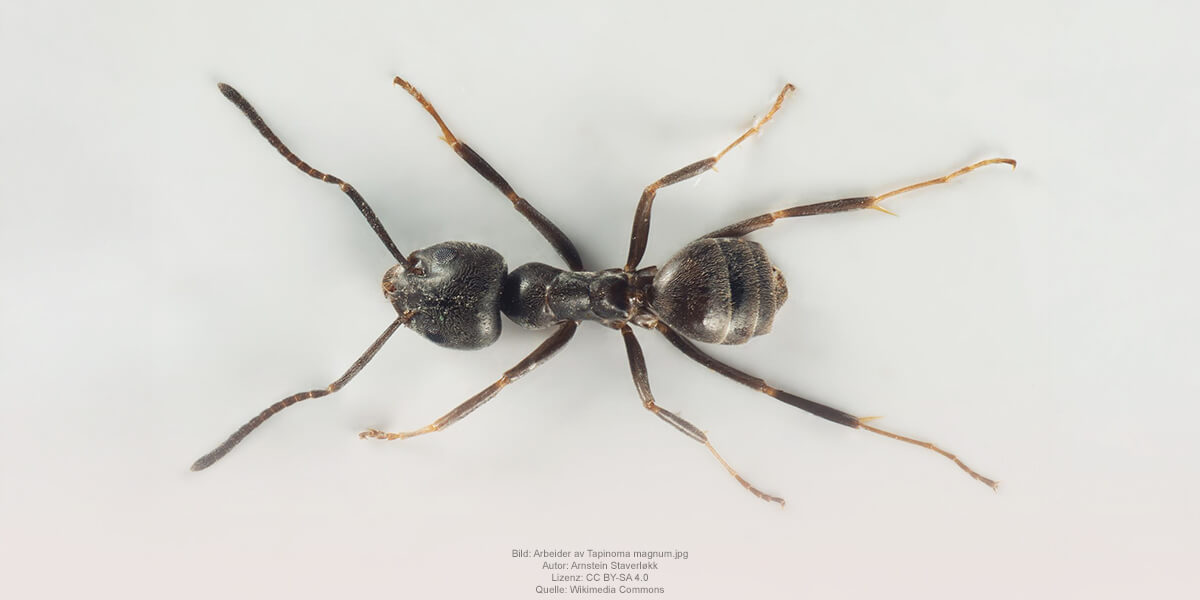
The Latin word "brunneus" in the name of this ant species can be translated as "brown". This provides a very concrete clue to the appearance of this insect: the middle of the body is colored yellowish-brown. The head is bronze-brown, while the rear of the animal is much darker and is often described as dark brown to black-brown.
While the females and males, which are winged ants during swarming season, can grow somewhat larger, the length of the workers is limited to just three to four millimeters.
The lifestyle of the animals shows that everyone has a fixed task: the winged sex ants swarm out during mating season to reproduce. After the males have mated with the queens, their work is done. Now begins the time of colony formation for the young queens. This is because this ant species, like other ant species, lives in communities and is strongly focused on nest building and the associated tasks.

At Home in the Forest
The brown carpenter ant is usually at home in German forests, gardens, and parks. These insects spread everywhere they find deciduous wood. This is because they are always looking for suitable nest sites—primarily in decaying wood. Therefore, the ants feel particularly comfortable in dead wood, such as trees with dead branches.
There, where the ants hollow out decaying wood and build nests, food procurement follows. The brown carpenter ant feeds—like many other species—on so-called honeydew. This food is the sugary excrement excreted by various types of aphids. If the ants enter the house, they can feed on sugary food scraps, for example.

Off Course: The Brown Carpenter Ant in Your Home
In principle, brown carpenter ants live in nature, where they diligently search for dead wood to spread. However, they also have all kinds of enemies there that destroy nests and become predators. If the animals discover a rich food supply and good nesting conditions in houses and buildings, it is therefore a welcome invitation.
Through open holes, cracks, as well as crevices in doors, gaps, and windows, brown carpenter ants become aware of these potential nesting sites. If there is decaying wood near or in your home, this is an ideal basis for the insects to nest and form a colony. Often, the tiny animals initially go undetected due to their intelligent approach and their size. This gives them the opportunity to spread out in peace.
Damage Caused by the Brown Carpenter Ant
Just like other ant species, the brown carpenter ant is essential to the ecosystem. In nature, they have important tasks that contribute to the balance of the environment. However, damage can be observed in buildings and homes. Therefore, immediate action is required if an infestation is suspected in your own home. If treatment is omitted, the risk of serious damage increases.

Infestation of Pre-Damaged Wood
Do you live in an older house or are you dealing with a building where moisture penetrates? Especially roofs, beams, and wooden floors that are already pre-damaged pose a problem. If there are moisture problems and a fungal infestation, these are good conditions for brown carpenter ants, which are known as wood-destroying insects. Because they bore deeper into the decaying wood to nest, the damaged structures are additionally stressed.
In addition to the brown carpenter ant, there are other ant species that are referred to as material pests. These include three other ant species: the shiny black carpenter ant (Lasius fuliginosus), the red carpenter ant (Camponotus ligniperda), and the two-colored carpenter ant (Lasius emarginatus).

Problems for the Building Fabric
Once the brown carpenter ants have nested, considerable damage to the building fabric is imminent. For those affected, this not only has direct consequences for their own home. The costs of rectifying the problem also increase enormously. As soon as a potential ant infestation becomes apparent, homeowners and residents must therefore react promptly.
Act Quickly: Effective Pest Control
Material damage cannot always be repaired directly if it remains unnoticed. If you notice conspicuous areas on the wood or windows, doors, or frames, it is important to inspect them more closely and repel or also control the ants if the damage progresses. Please note that household remedies are not the choice of means in such cases. This is because the effect is not guaranteed and can contribute to the progression of the infestation.


The Queen in Focus
The formation of colonies begins with the queen. Therefore, it is important to locate her in the event of an infestation. Often, this process is complicated because both the ant queens and the ant eggs are located in a safe and well-protected place.
In many cases, an infestation can therefore only be detected when some of the winged ants leave the nest to mate. After mating, the young queens shed their wings—and now their real work begins. They build nests, hatch the offspring, and thus form large populations.
If only individual workers are repelled, the work is far from over. As long as the queen of the brown carpenter ant can lay eggs undisturbed, the growth of the colony continues. If you discover ants in the house or, for example, on your balcony, you should therefore observe them closely.

To locate the nest with ant eggs and consequently also the queens, follow the ant trails—ideally in both directions. This will tell you where the insects are going to procure food—and where the nest might be located. Once this is found, control can begin with suitable means.
Into the Nest: Ant Bait Box
Because ant nests with eggs indicate colony formation, repellent means are often no longer sufficient. The ARDAP Pro Bait Boxes therefore offer the ideal solution in the fight against infestation. The product works due to a novel and special bait gel that automatically attracts ants.
The bait boxes are easy and precisely dosable. It is important that you first open the sealing cap of the box. This exposes the passages for the ants. Now place the bait box directly where the ants are located. If you discover ant trails or the nest, place a bait box there as well.
As soon as the ants take up the gel and subsequently carry it into the nest, the process begins. After just a few days, this way, a wide variety of ant species can be controlled.

Additional Repellent Aid: Ant Treatment
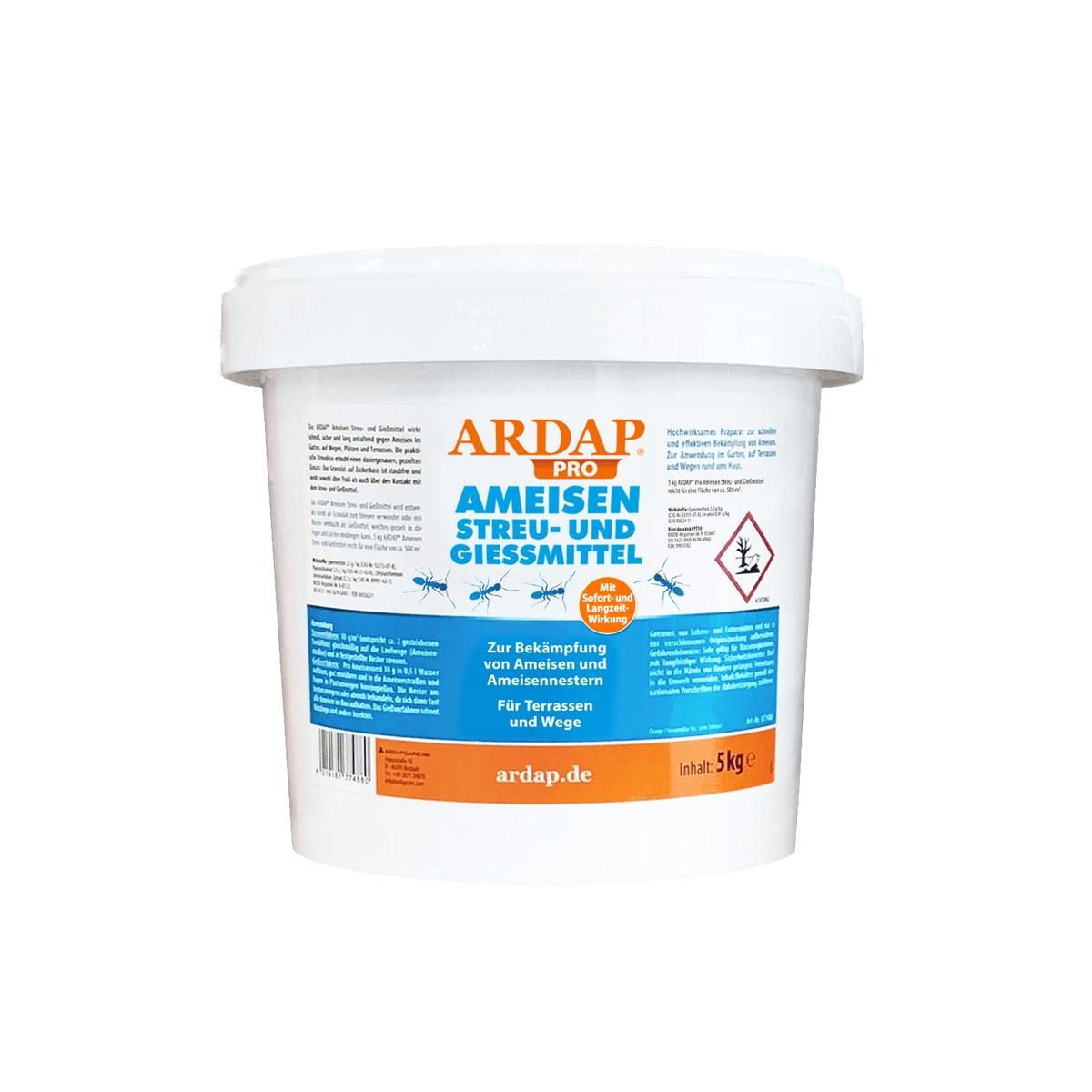
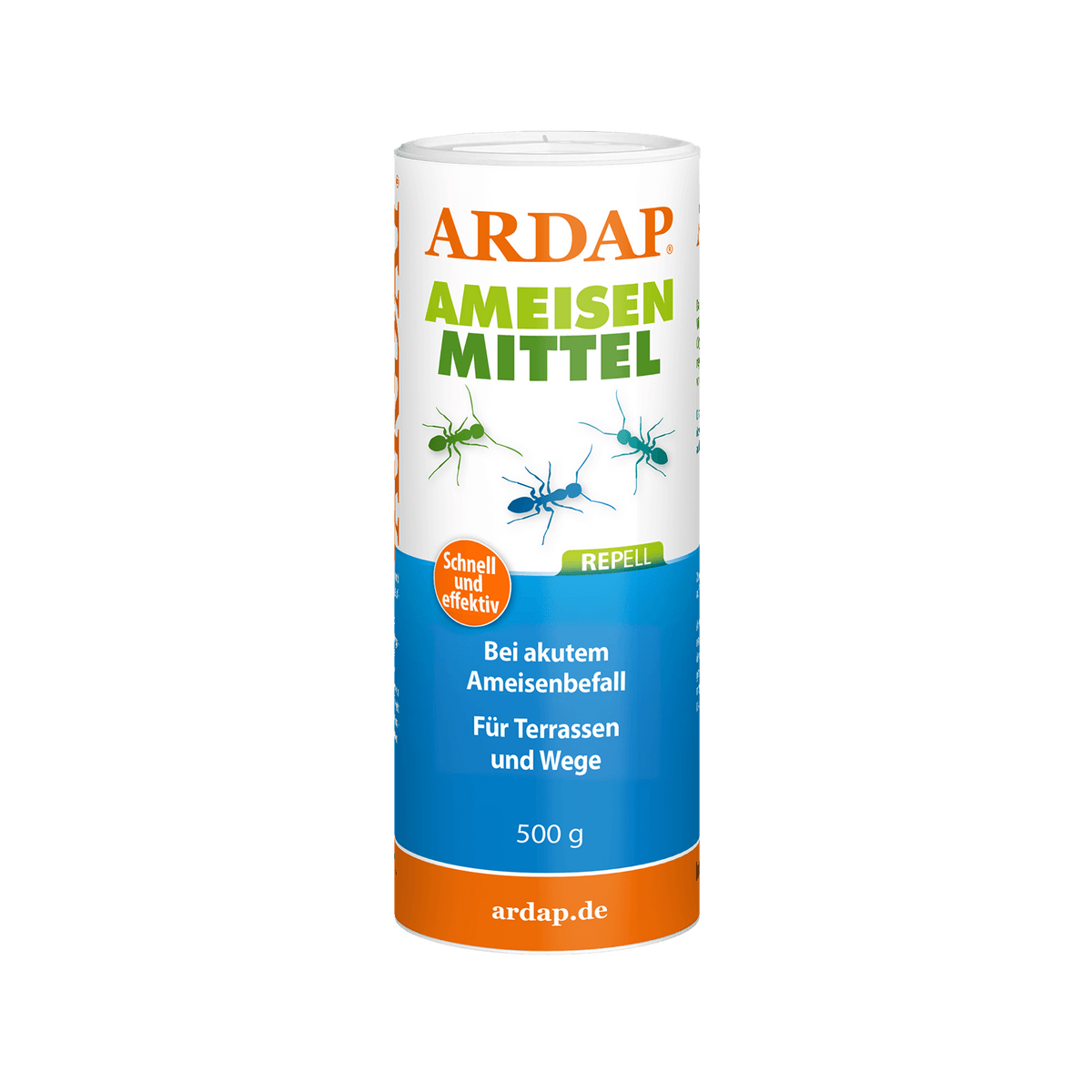
If the nest is likely not in your home or on your terrace, you can use repellent means to ensure that ants do not spread further or enter the house. For use in outdoor areas in the immediate vicinity of the house, such as terraces, balconies, paths, or garages, the ARDAP Repell Ant Treatment is suitable. Everywhere you find ants and ant trails, scatter some granules using the practical dosing aid of the packaging.
If you have located ant nests, you can also put the product directly into the entrances. This way, it also acts as a repellent against ants there.
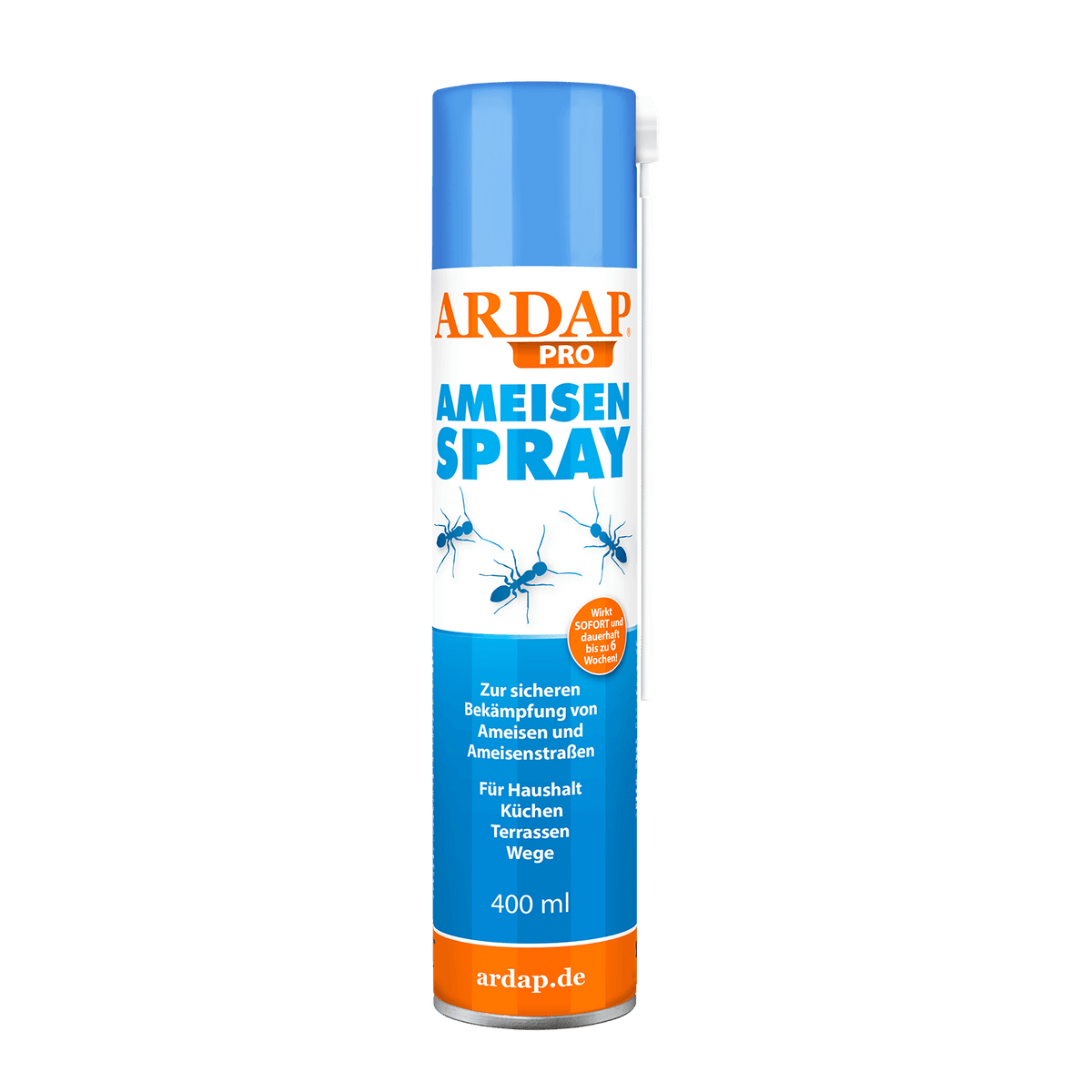
For use both outdoors and indoors, such as in the kitchen, basement, and so on, the ARDAP Repell Ant Spray is also suitable. You can also spray it where ants like to stay to repel them there quickly, efficiently, and specifically.

In Case of Doubt: Involve a Building Expert
In the event of an acute ant infestation with the wood-destroying brown carpenter ant, it can be advisable to involve a building expert. This is especially important when considerable damage is expected, for example with older or decaying material as well as problematic houses and buildings. Since control can sometimes be difficult, those affected depend on professional support in special cases. If you discover serious damage to the material or your house is repeatedly infested, immediate help is required.
Generally speaking: Keep ants away by disposing of food scraps immediately and keeping the kitchen, basement, and other rooms clean. Also ensure that open cracks and holes as well as leaks are sealed. Moisture damage should be repaired early to reduce the risk of further challenges.