Together with our expert Prof. Dr. med. vet. Norbert Mencke, specialist in veterinary parasitology, we will support you if your home is infested with the black garden ant and other ant species.
- This is the black garden ant
- A pest: infestation and damage
- Defensive measures against the intruder
- Targeted control, prevent damage
This is the black garden ant
The black garden ant (Lasius niger) is known by many names. We also refer to it as the matte black or black-grey garden ant, or the black pavement ant. It belongs to the subfamily of antlions (Formicinae) and to the genus of garden ants (Lasius) within this subfamily. Once you become familiar with the appearance and various characteristics of this ant species, it will be easier for you to identify the insect in the home and surrounding area.
- Scientific name: Lasius niger
- Distribution: Europe, Asia, Africa and North America (most common ant in Germany)
- Colour: uniformly dark brown to black
- Size: 3–5 mm males; 8–9 mm females
- Wings: males and females (workers have no wings)
- Swarming season: July to August
- Development: monogyne ant species (colony with only one queen)
- Lifestyle: highly adaptable; lives at forest edges, in open landscapes, as well as in gardens and cities
- Food: sugar- and carbohydrate-containing substances
- Special features: very fast-moving ant; good sense of orientation (eyes)
Appearance
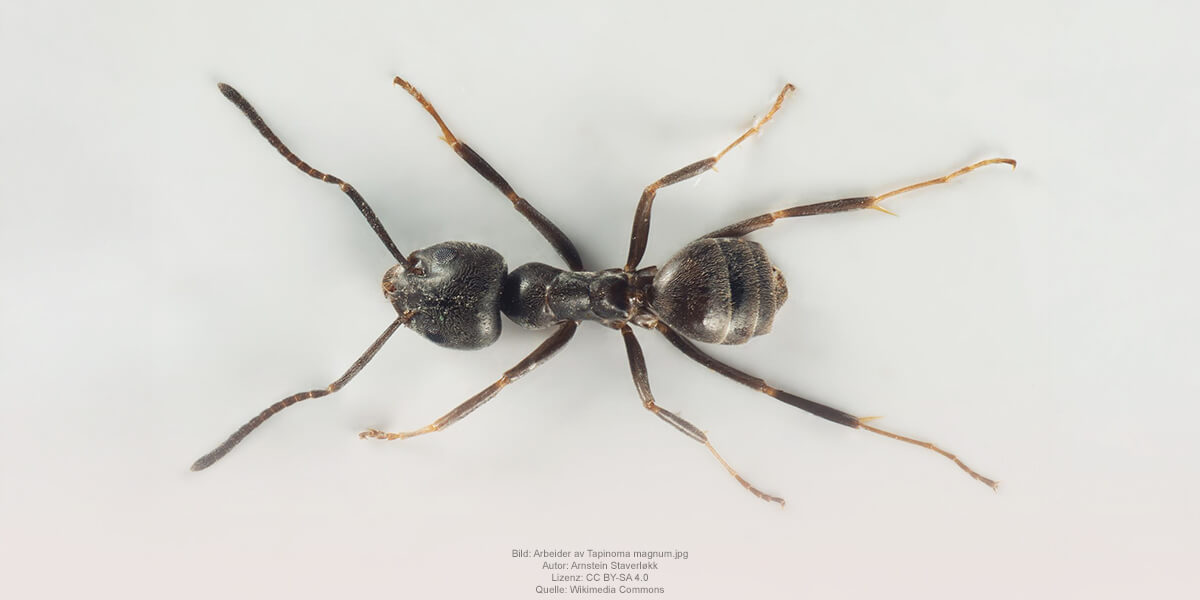
This ant species shows a predominantly dark brown to black colour. However, the colour can vary depending on the lighting and may appear grey. The animals have fine hairs on their abdomens, which gives their appearance a certain gloss. Well-developed compound eyes are located on the sides of the head, helping this ant species to have a wide field of vision.
The workers of this species measure between 3 and 5 millimetres in length. The males are approximately just as large, measuring 3.5 to 4.5 millimetres. The queens are significantly larger. They measure 8 to 11 millimetres. Their thick back of the head is filled with eggs. Apart from the workers, these ants also have wings during the summer swarming season. The body structure consists of three segments and is typically divided into head, thorax and abdomen for ants. In addition, there are six legs and the characteristic bent antennae of ants.

Occurrence and lifestyle
The black garden ant is widespread throughout Europe, and in Germany it is even the most common ant species. It is therefore not unlikely that you will encounter these insects at some point and that they may even visit you at home. Because these ants can practically be found in all habitats. This includes forest edges as well as meadows, gardens and urban areas. The reason for this is the high adaptability of this species. The black garden ant can survive in a wide variety of environments.
In the colonies of this species, there is only one queen. We therefore also refer to it as a monogyne ant species. The black garden ants are active mainly during the warm season. The swarming season takes place from July to August. In summer, it is therefore most likely that we will see these ants in our gardens and homes. The winged sex ants are then particularly active, mate, and search for locations for new colonies.
Key facts at a glance
As with all ant species, the black garden ant is generally a beneficial insect. For example, it crumbles and aerates the upper layers of soil. Nevertheless, this does not change the fact that it has no place in our domestic environment. Here it acts as a pest if it, for example, feeds on our food in the house. A differentiated view is therefore required.
It is also interesting that the black garden ant lives in symbiosis with leaf, shield, and root aphids. The ants provide protection and receive food in return, making it a so-called “trophobiose”. They breed the root aphids in their own nest and build protective coverings for the aphids against predators. The main food of this ant species is honeydew. The ants tap this honeydew from aphids. It can be said that the black garden ants practically keep the aphids like livestock.

A pest: infestation and damage
The black garden ant becomes a problem as soon as it approaches our homes and tries to search for food in the house or build new nests here. Because the damage that can be caused by this ant species should not be underestimated.
The black garden ants cause damage throughout the house as well as on the terrace. Here it is crucial to assess the situation correctly and take countermeasures in good time.
In the home
The black garden ant is known for its high speed at which it can move. Especially in the spring, when food is scarce, these insects enter our homes. Here they go in search of food. Floors do not pose an obstacle for them. This naturally makes it easier for them to spread throughout the house.
An infestation is relatively easy to recognize if an ant trail has already formed between the nest and the food source. It is possibly possible that black garden ants are also found in decaying wood. However, this rarely happens.
It is more likely that you will encounter these ants in the kitchen or the pantry. Because the insects are after sweet and protein-rich substances. It is therefore to be expected that they will eventually reach the food supplies. And this naturally poses a major problem, for example in hygienic terms. The insects crawl over our food and kitchen surfaces, whereby they can contaminate them. The spread of pathogens is also possible.

On the terrace
Since the adaptable black garden ants are also found in our gardens, an infestation of the terrace is inevitable. They build nests, for example, in paving joints or under terrace slabs. Here they are quite difficult to discover. It is therefore worth carrying out regular checks and paying particular attention to joints and cavities. The earlier you discover the nests, the better.
When the ants build their nests, they transport sand and soil to the surface. Therefore, you should look out for small piles of sand and soil. These little piles are visually disruptive and clearly indicate an infestation. In addition, it is to be expected that ant trails run across the terrace or the balcony. The ants use these to transport the found food.
Possible damage includes, for example, the impairment of plants, as the black garden ant breeds aphids. These can multiply in plant boxes and pots and thus damage the plants.

Defensive measures against the intruder
The best way to deal with the black garden ant is to prevent its settlement from the outset. You can achieve this through various defensive measures:
Ant products
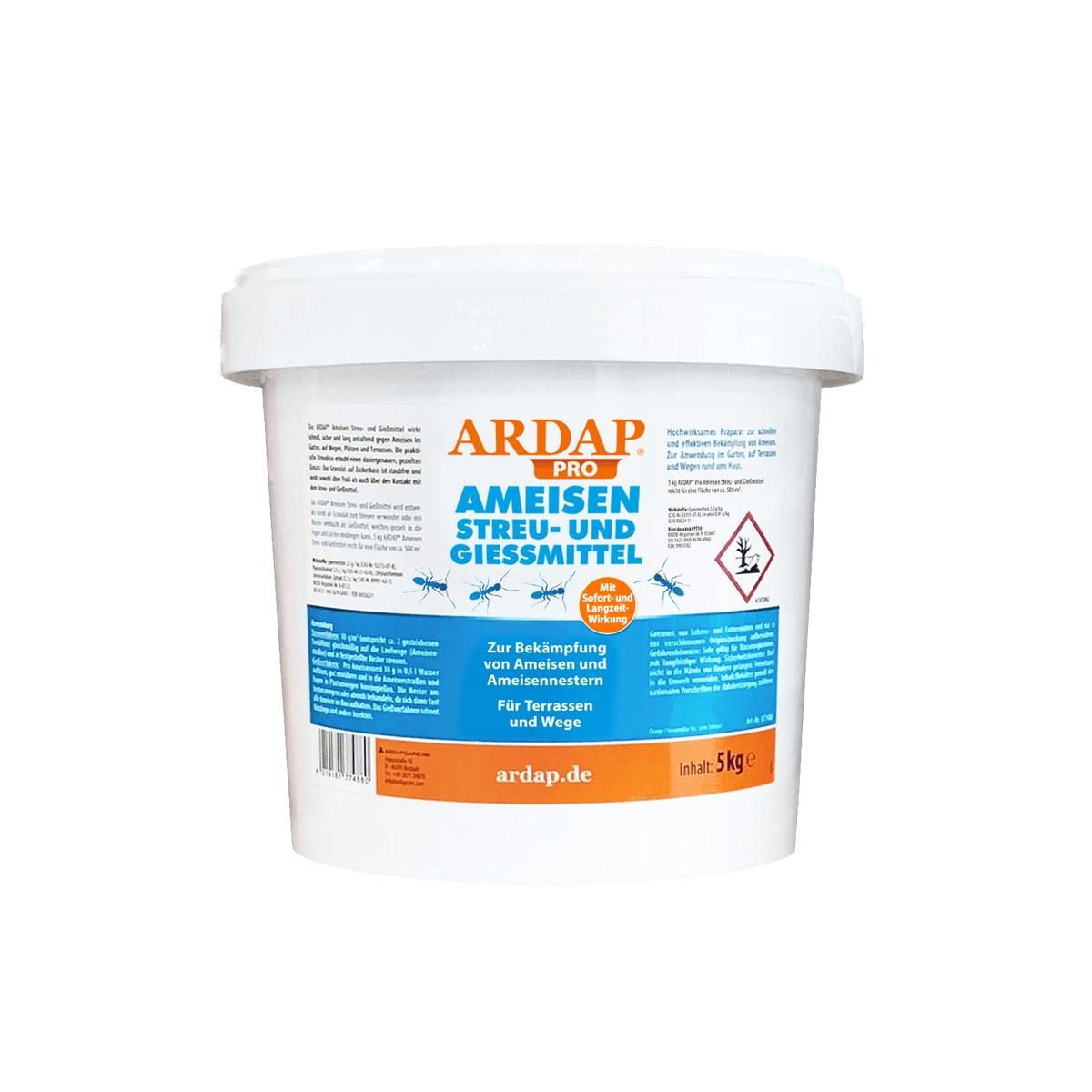
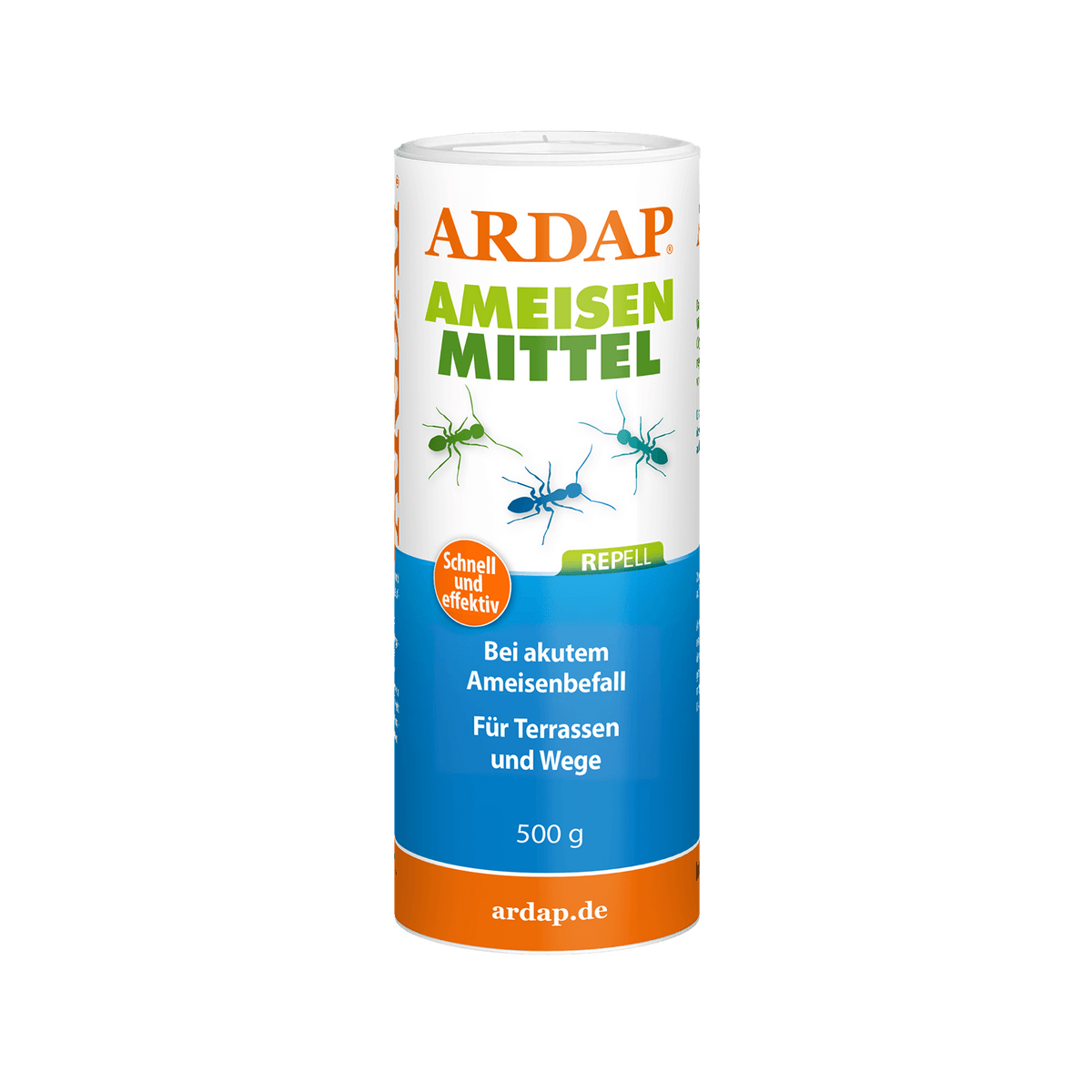
Defending against the black garden ant is challenging because we may have to drive them out of the home, but also from the terrace or balcony. For the targeted defense on paths, terraces and paving stones, the use of the effective ARDAP ant product is recommended. The advantage is the easy application and the repellent effectiveness based on pyrethrum from the chrysanthemum. Simply sprinkle the product in the desired places to combat the ant infestation. You can use this product anywhere around the house where the black garden ant becomes a pest.
Ant spray
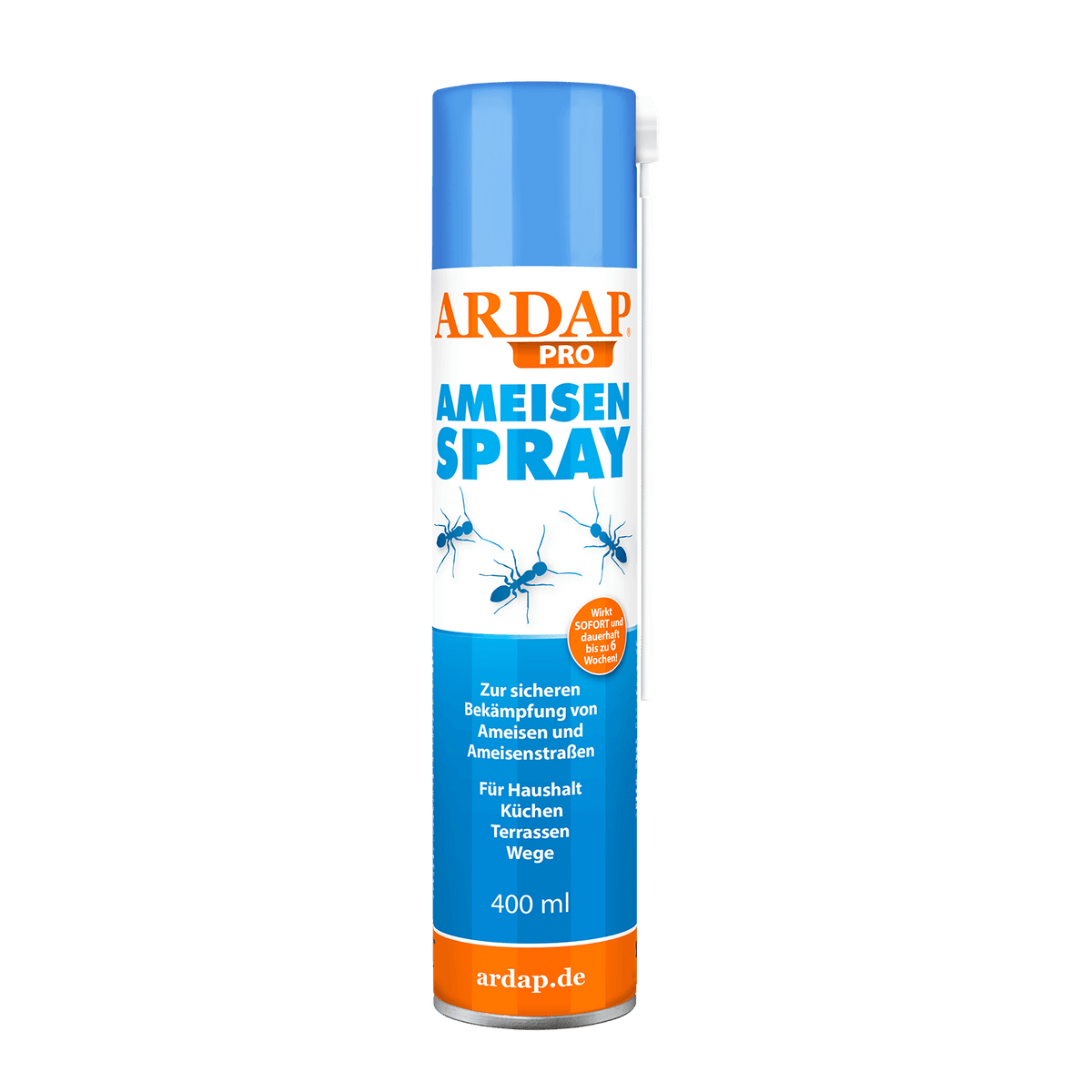
The ARDAP Repell ant spray is an effective preparation for defending against ants, which can be used not only on the terrace, balcony and outdoor paths, but also in the household. You benefit from a fast immediate effect to repel the black garden ant and other ant species.
Further measures
Ants like to enter the house through holes and cracks in the masonry. You should therefore repair and fill these immediately or seal them in another way.
Ants are reliably attracted by food scraps in the food bowl or with food scraps in the kitchen. Therefore, do not leave anything lying around that would be interesting to the black garden ant. This applies especially to sweet and carbohydrate-rich foods. You should always securely seal and store your supplies.
You can also cut back the vegetation around the house and thus make it harder for the ants to enter. Pre-damaged wood also poses a problem. Moisture should be avoided and shock ventilation is recommended. If you prevent damage from developing here, the ants cannot settle as easily.

Targeted control, prevent damage
Ants have no place in the kitchen and storage rooms, and thus on food. Therefore, you should target the intruders with effective products.
Ant bait box
Do you want to take targeted action against the nests of the black garden ant? For this, the use of the ARDAP Pro ant bait box is recommended. This product is also intended for indoor and outdoor use and is ideal for the terrace as well as the household and the basement. This is a highly effective bait that the ants take in as soon as they crawl into the box. They carry the bait back to their nest and feed it to the queen there. The bait gel develops its full effect within a very short time. After just a few days, the nest has disappeared, and entire ant colonies can be reliably eliminated with this product.
The advantage is the strong attraction and the easy application. You only need to take the box out of the packaging and press and remove the seals. It is best to place the box directly on the ant trail or in front of the nest entrance.