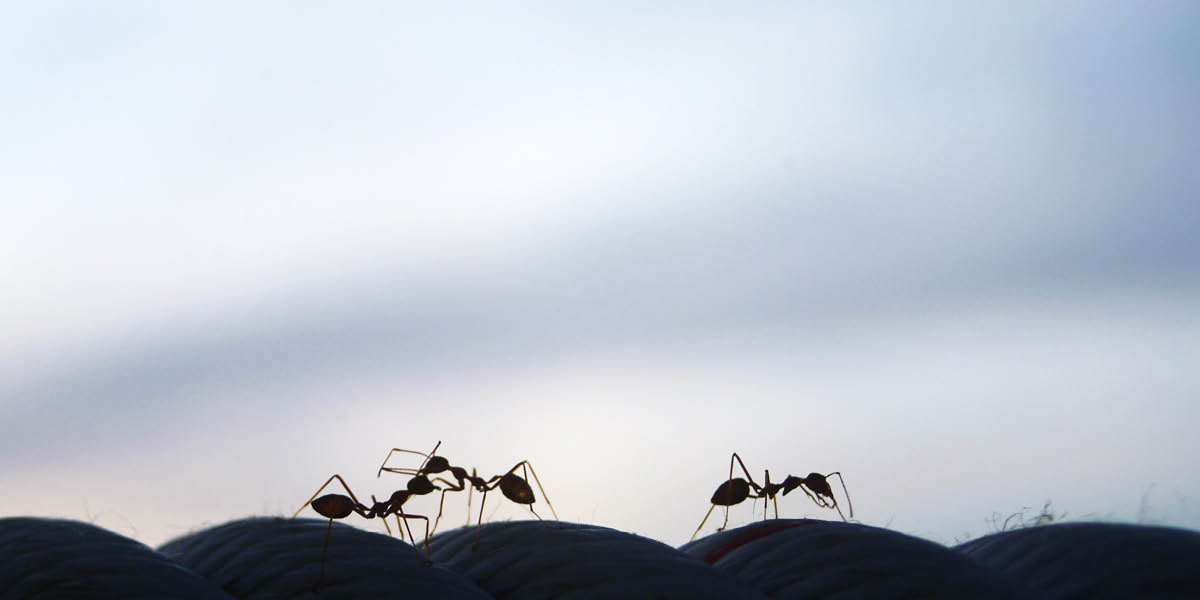
Together with our expert Prof. Dr. med. vet. Norbert Mencke, a specialist in veterinary parasitology, we help you reliably repel ants.
- A Real Giant: The Black Carpenter Ant
- Warning: (Material-)Pests on the March
- Successfully Repel and Control Carpenter Ants
A Real Giant: The Black Carpenter Ant
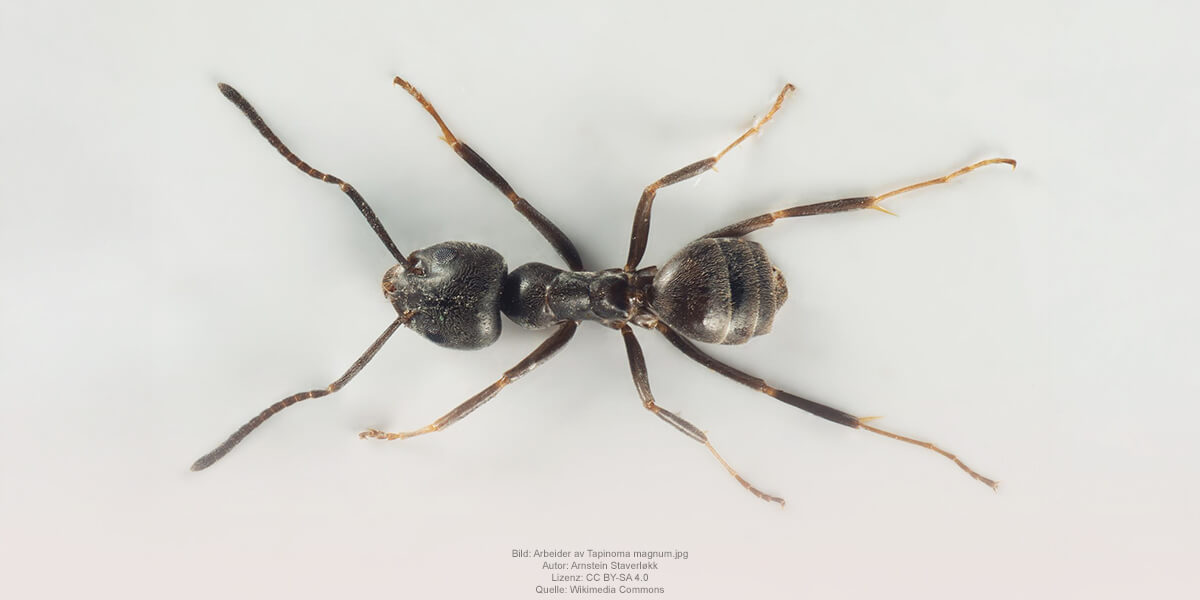
Black carpenter ants (Camponotus ligniperda) are officially considered among the largest ant species in Europe. In Germany, the carpenter ant is even the largest among the industrious insects. To help you identify and better understand these special ants, learn about their distinctive features below.
Appearance and Characteristics
Carpenter ants are easily recognizable by their size: they often grow significantly larger than one centimeter. Their queens can reach a size of up to 1.8 centimeters, while workers grow to about 1.4 centimeters. The head and abdomen of this ant give it its name: the front and back of the animal are black. The middle part of the body, on the other hand, is rather reddish.
Despite their imposing appearance compared to other species, these are generally rather easy-going ants. Overall, they are considered reserved and adaptable when it comes to their food sources, as well as the conditions in which the animals live. The crepuscular ants also often do not begin foraging until late in the day. This way, they can more easily avoid predators.

Distribution and Habitat
The black carpenter ant is found in many parts of Central Europe. It is also widespread throughout Germany and is thus sighted in a wide variety of regions across the country. Ant colonies are known for building underground nests, thereby creating subterranean passageways. This ant species is often found in coniferous forests. The animals prefer decaying and dead wood, so they are attracted to damp wood.
And what do black carpenter ants eat? The ants' diet consists of so-called honeydew. This consists of sugary substances, which are produced especially by aphid species and serve as an energy source for the ants. However, it should be kept in mind that carpenter ants in our homes can also find food sources and may feed on food scraps, for example, which makes them pests. Overripe fruit can also serve as a food source. Smaller insects are also on the carpenter ant's menu as a source of protein.

Special Features of the Black Carpenter Ant
Although they are extremely easy-going ants, black carpenter ants should still not be underestimated. The workers can defend themselves well against potential enemies and dangers. In serious cases, they therefore behave comparatively aggressively and defend themselves and their colony.
This ant species does not have a venomous sting. However, if it comes to a defensive situation, the black carpenter ant defends itself with its powerful jaws, also known as mandibles.
Warning: (Material-)Pests on the March
Black carpenter ants are well-known material pests. The animals generally make a valuable contribution to the ecosystem and thus to the environment. That is why they should not be displaced from their natural habitats either, as this would otherwise threaten to create an imbalance. However, it is problematic when the animals enter our domestic environment and cause serious damage there.
In general, the term “material pest” describes insects that attack materials found in buildings, for example. This can include wood, which is gradually damaged.


Wood in Danger
The black carpenter ant finds ideal conditions in decaying, damp wood for hollowing out the material and building nests there. At first, this may even sound harmless: What harm can a small ant colony do? However, caution is advised. The animals have extremely large nest areas. The uninvited guests feel comfortable and safe in the wood, so queens live there, as do the larvae and eggs.
This allows them to spread over larger areas. This leads to damage to the material. Possible consequences, especially to buildings, are unstable wooden structures. This means that load-bearing wood can also be directly and long-term attacked. That is why it is also referred to as a “wood-destroying ant.”

If damage to the wood already exists, such as moisture problems, it is often further exacerbated. Thus, the ants pose a particular danger to older buildings and wood that is directly attacked. But even intact material is not protected from risk. Because ant colonies are not always noticed immediately. Therefore, it can also be a creeping damage that slowly takes shape and leads to greater damage. As soon as the ants begin hollowing out the wood, the entire structure is weakened.
Window frames, columns, and ceilings can all be affected by infestation, for example. Anyone who discovers an ant trail at home or finds a nest should therefore react as quickly as possible. In such cases, it is often not apparent how far a potential infestation has already progressed.
In addition to the carpenter ant (Camponotus ligniperda), there are also other species that belong to the wood-destroying ants. These include, for example, the brown pavement ant (Lasius brunneus) as well as the shiny black carpenter ant (Lasius fuliginosus). The two-colored pavement ant (Lasius emarginatus) is also known as such a pest.

Successfully Repel and Control Carpenter Ants
If the black carpenter ant has once infested our home, serious wood damage can occur. Often unnoticed, the animals first nest themselves without necessarily causing any visible damage to the wood. However, once the ants are there, long-term effects are imminent. To address this problem, we recommend the following products to reliably repel the pests or control an infestation.
Ant Products
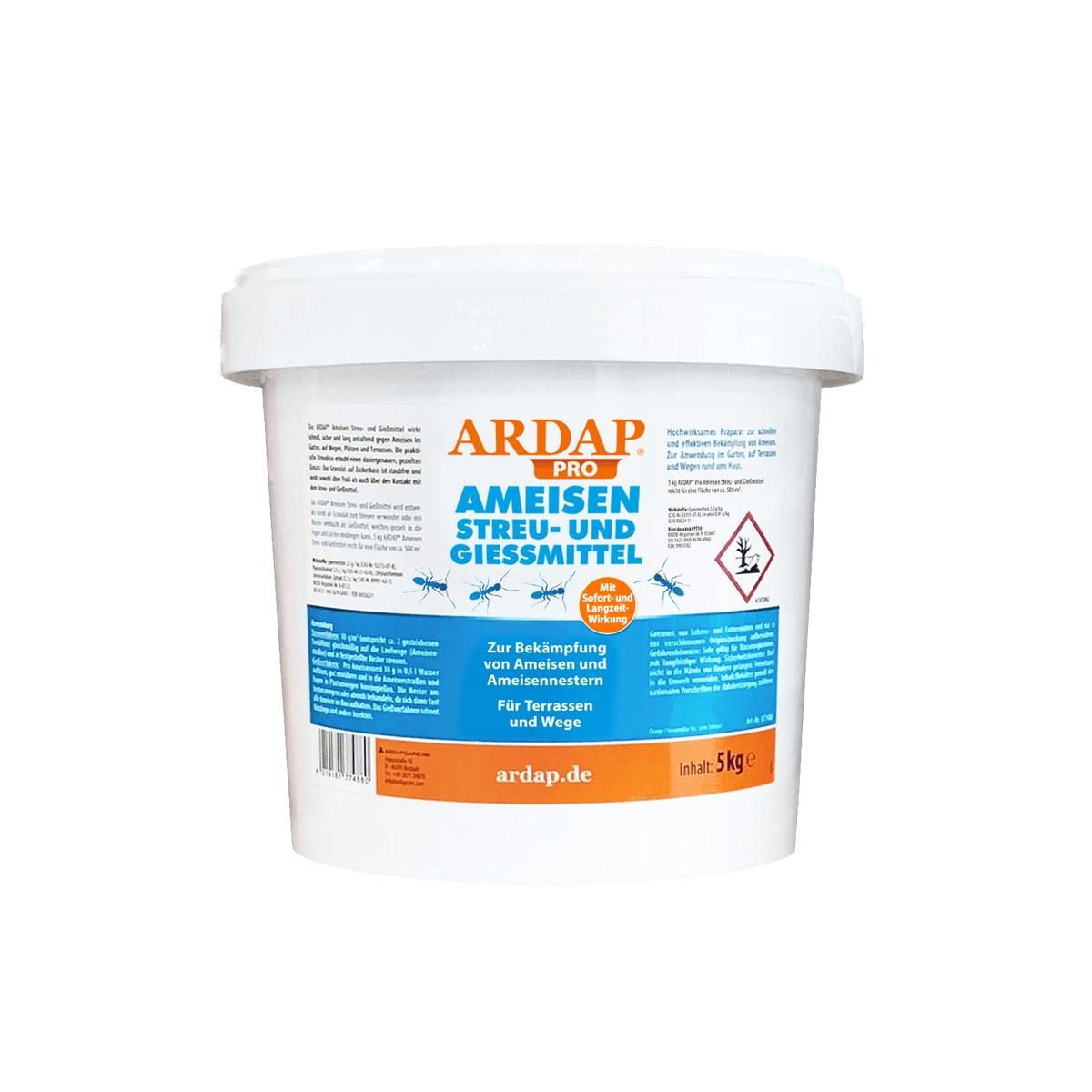
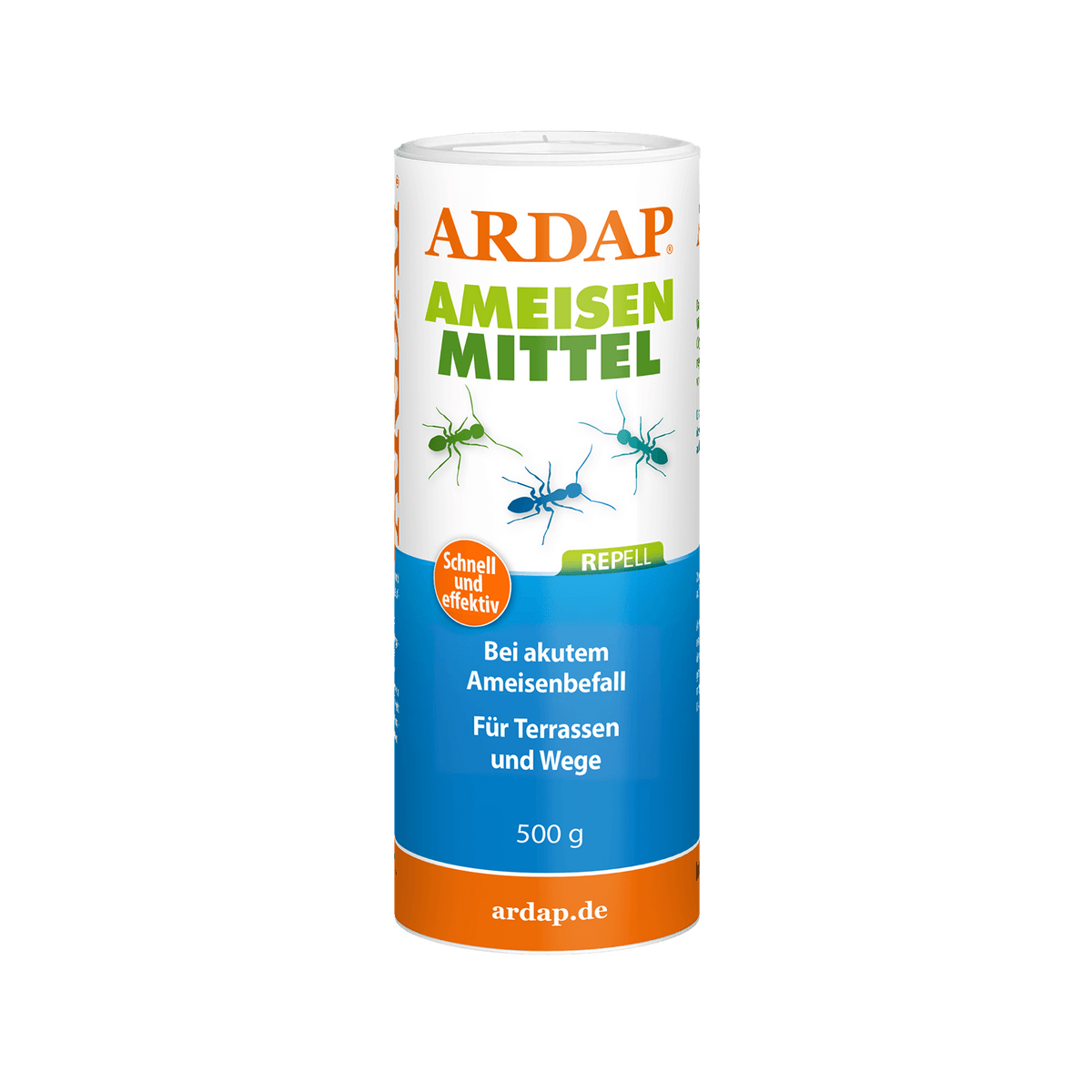
The ARDAP Repell ant product helps you with an acute ant infestation on terraces, paths, and paving stones. It is used as a scatter product to specifically repel black carpenter ants and other ant species. The reliable product ensures that the animals are successfully kept away from entrances or paths to the house.
To do this, scatter the ant product directly on the areas and paths where ants like to gather, so that it can work quickly and effectively. The practical scatter box helps with dosing. Evenly scatter about ten grams of the product—this corresponds to approximately two level teaspoons.
Ant Spray
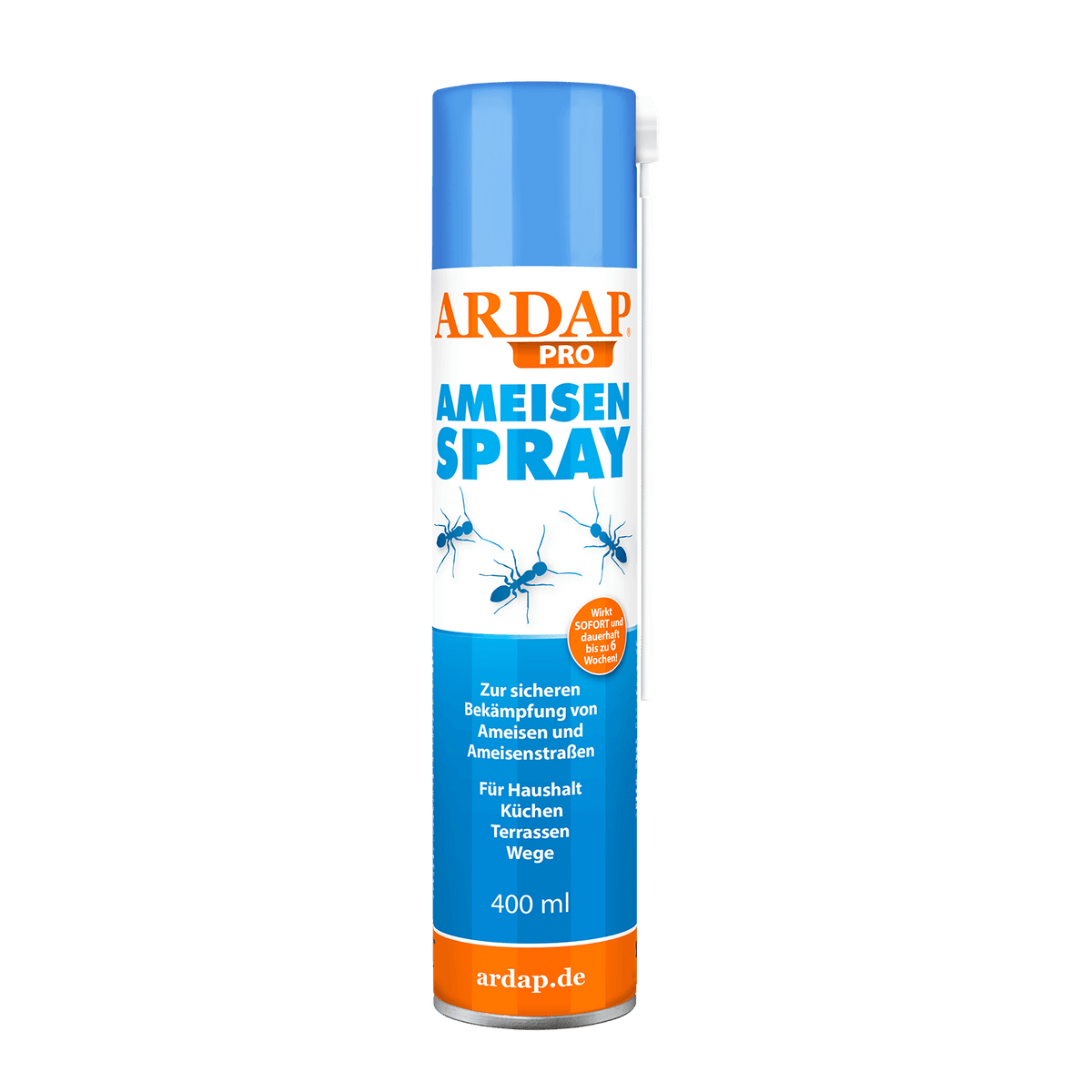
The ARDAP Repell ant spray also helps you effectively repel black carpenter ants. You can use this product not only outside on the terrace or on paths and entrances to the house, but also inside the house, for example in the kitchen.
Based on pyrethrum from chrysanthemum flowers, the ant spray helps to repel ants quickly and reliably. To do this, spray any areas and places where you discover or suspect an infestation. This includes both ant trails and areas where you discover the animals more frequently. Spray for one second over a distance of two meters so that the repellent effect can develop effectively.
Ant Bait Box
Not only on balconies, sidewalks, or terraces, but also in the house: With the help of the ARDAP Pro ant bait box, you can specifically control an ant infestation. The innovative bait gel is known for its intense attractant effect, so that it works reliably against various ant species. The practical product offers odorless and easy application.
But how does the product work? Place the box directly on the ant trail. Also place it in front of the nests of the crawling insects so that they can get inside. The bait boxes contain holes so that the pests can walk directly into the boxes. Once they have arrived there, they take up the bait gel and carry it back to their nest later. There, the bait can develop its full effect—within a few days, the ants will be successfully controlled.