With our expert, veterinary specialist and parasitologist Prof. Dr. med. vet. Norbert Mencke, we have compiled sound advice for you on preventing and controlling ants on the balcony.
- The Great Crawl
- How can ants on the balcony be avoided?
- Effectively deterring and controlling ants on the balcony
- Are there effective home remedies against ants on the balcony?
- This damage is caused by ants on the balcony
- Where do ants hide on the balcony?
- Conclusion
- Frequently Asked Questions
Ants are mainly attracted to the balcony by food scraps, sugary drinks and honeydew from aphids.
They use the smallest cracks, crevices and even plants as routes and hiding places and often reach balconies from adjacent gardens.
Home remedies such as vinegar, lemon juice or cinnamon do not work reliably against ants.
Ants can cause damage to plants, furniture, electrical appliances and even the house.
Prevention is important and can be achieved through hygiene and, e.g. by sealing off access points, as well as through reliably repellent products from the ARDAP Repell range.
Effective control of the entire ant colony is achieved with specialized, highly effective products from the ARDAP Pro range against ants.

The Great Crawl
There are various reasons why ants spread on the balcony. The insects are usually attracted by food scraps or sugary drinks, and also by plants with aphids. Aphids secrete sweet honeydew, which ants love. Therefore, they practically keep aphids as "livestock", harvest their sweet excrement, protect them from enemies and even transport them to other, previously uninfested plants. The aphids themselves feed on plant sap, which stunts the leaves and eventually causes the plant to die.
Ants are always looking for food and suitable places for new nests, which often leads them to balconies in residential areas. They usually come from nearby gardens, lawns or other green spaces and use small cracks and crevices in walls, window frames or floor slabs as their routes. They are excellent climbers and can reach even high-up balconies, roof terraces and roof gardens. Sometimes they also use trees or other plants as access to higher balconies or window sills.
When do ants appear on the balcony
Ants on the balcony usually appear in spring or summer. Their activity increases with the temperatures because they are looking for food in the warm months, reproducing and looking for suitable places to build nests. Ants are usually most active in late spring, summer and early autumn – exactly at the time when people also like to spend time outdoors and enjoy "vacation on the balcony".

A special phenomenon at this time is flying ants. These are sexually mature males and females that develop wings for their "wedding flight" to mate. Flying ants often leave their nest in swarms, fertilized females land after mating as newly minted queens, shed their wings again and establish a new colony. Ants with wings are therefore a clear sign of the impending reproduction and expansion of an ant colony.

How can ants on the balcony be avoided?
Avoiding ants on the balcony starts with hygiene and targeted precautions so that ants are not attracted to the balcony in the first place. Through the use of the repellent ARDAP Repell ant sprays or the ARDAP Repell ant product, consistent sealing of possible entry points and good hygiene, you can protect yourself from an uncontrolled ant invasion.

Attention, food scraps!
Food scraps and sugary drinks are among the most common causes of ants on the balcony, because sugar is an important energy source for the entire colony. The adult workers are constantly looking for food, need a lot of energy for their strenuous tasks, but the ant queen and the brood also depend on sugar, although the requirement varies depending on the life cycle or season.
During the brood care phase and the time of nest building, ants constantly need energy and are therefore constantly looking for sugary food sources. The workers share the sugar they have collected in the nest with other members of the colony through trophallaxis (mouth-to-mouth feeding). In other phases, the requirement is lower, but the ants then collect supplies all the more diligently, so that they have enough energy available even during the next peak period.
If an ant finds a sugary food source on its scouting tour, it returns to the nest and leaves a scent trail of pheromones. These chemical signals are perceived by other ants, which then also follow the trail to reach and secure the food. Through this efficient communication system, even large groups of ants can reach your balcony very quickly.
Prophylaxis through hygiene
Therefore, make sure not to leave any food and drink scraps, pet food or organic waste on the balcony, as ants can perceive such food sources from afar. With their sensitive, specialized receptors, they recognize sweets particularly well, and even tiny amounts of sugar are an attractive prey for an ant colony, for which a journey over the house wall to a balcony on the 3rd floor is worth it.
To protect yourself from ants on the balcony or in the apartment, you should not leave food lying around, always store it safely and sealed, and immediately remove spilled scraps (e.g. cake crumbs or drink residues on the tabletop). Regular cleaning of the balcony and the quick removal of potential food sources are therefore essential to keep ants away.
We must stay outside! No entry to the house
Ants also find ways into the house, for example through cracks, crevices and damaged seals on doors and windows. Regular cleaning of kitchen surfaces and floors, secure storage of supplies, as well as the use of repellent ant products on the balcony or at the entrance to the apartment help to keep the insects out of the apartment.
Effectively deterring and controlling ants on the balcony
To deal effectively with annoying ants, you can deter them by using repellent products. The products can be applied directly to ant trails, balcony floors and other affected areas and were specially developed to reliably and effectively keep ants away. If you want not only to drive the ants away, but also to control the nest and the entire ant colony, it is recommended to place the ARDAP ant bait box.
Repellent ant products
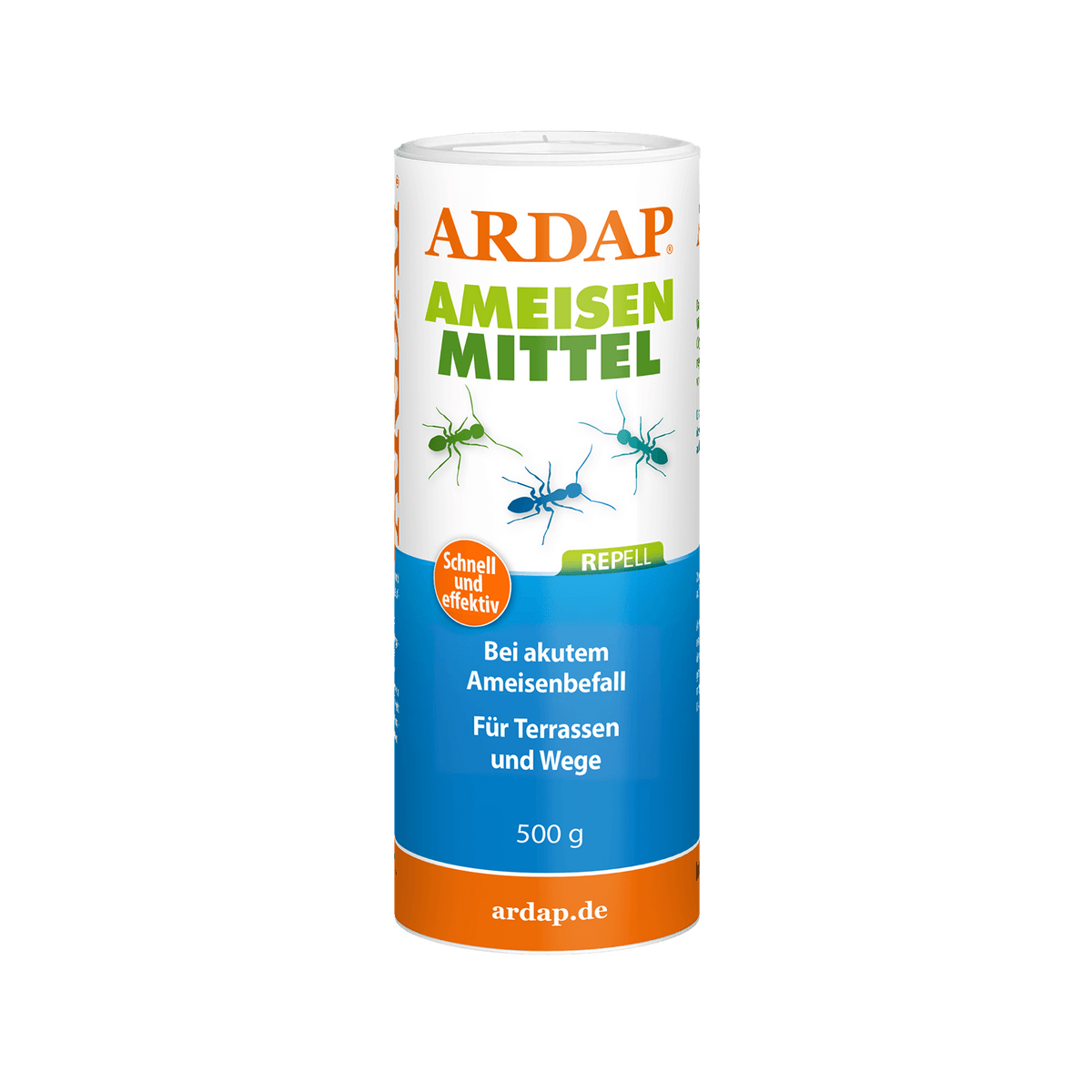
The ARDAP Repell ant product is ideal for the targeted deterrence of ants on paths, terraces, balconies and paving stones. It is sprinkled and contains the active ingredient pyrethrum from the chrysanthemum flower, which exerts a repellent effect and prevents ants from advancing further or nesting. It is recommended to repeat the application every 2-3 days depending on the weather.
Repellent ant spray
The ARDAP Repell ant spray is a universal preparation for deterring ants, which in case of acute infestation is simply sprayed on ant trails, the balcony floor or house and apartment entrances (e.g. thresholds, window sills). It deters not only ants, but also flies, spiders, fleas, silverfish, mites and other insects. The application should be repeated every 2-3 days depending on the weather. The spray can also be used in the house.

Control with the ant bait box
The ARDAP Pro ant bait box contains a novel bait gel with the active ingredient sodium cacodylate. The ants take up the bait and carry it into their nest, where it exerts its effect and eliminates the entire nest or the entire ant colony within a few days. The bait boxes work against various ant species and are just as suitable for the balcony and terrace as for indoor spaces, e.g. kitchen, basement and storage room. Make sure that the bait box is placed protected from rain and direct sunlight.
Targeted control in outdoor areas
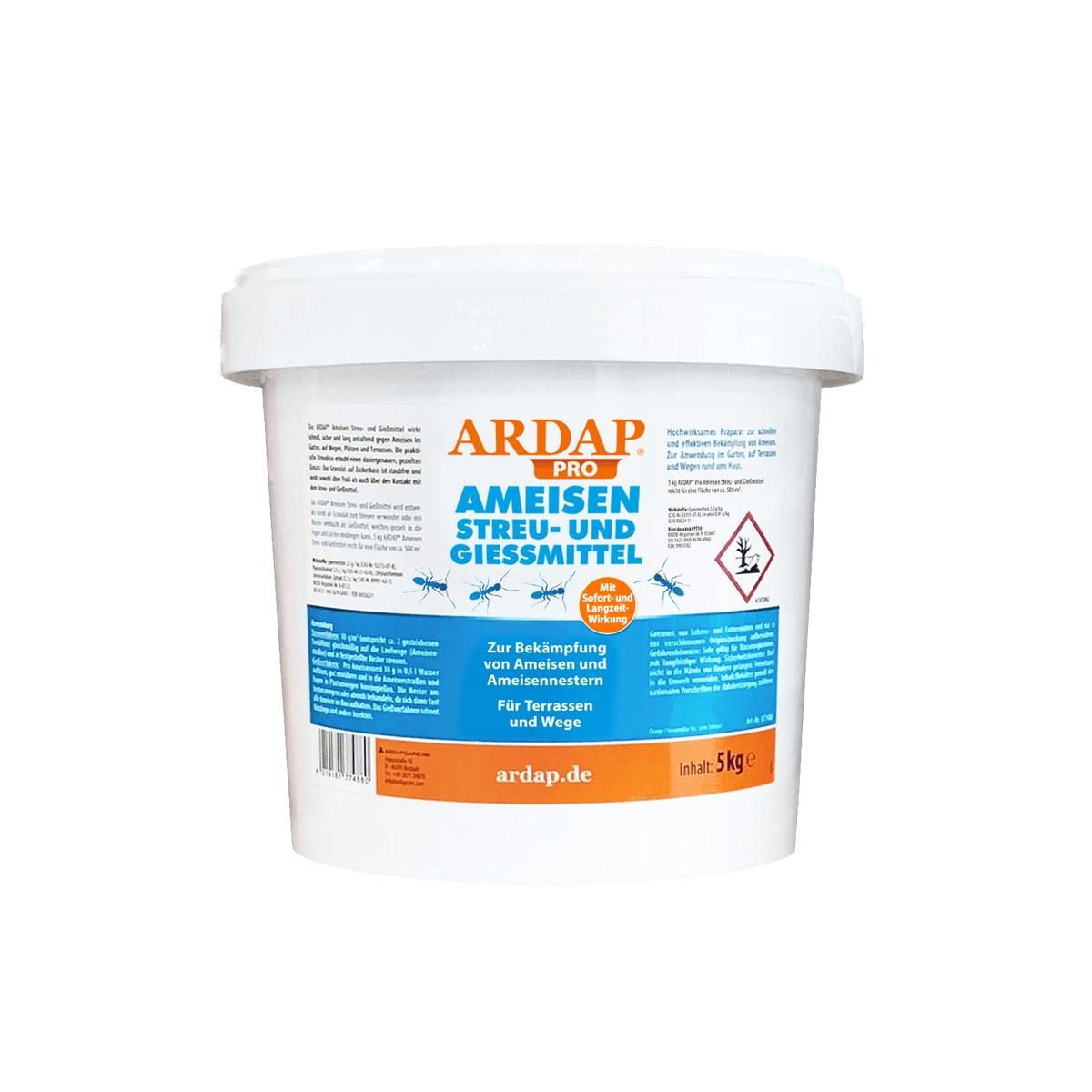
If the ant infestation on your balcony is already established and deterrence measures are no longer sufficient, the use of the ARDAP Pro ant scatter and pour product is also a very good option. This product works both through direct contact and through ingestion — that is, ants take up the granules and carry them into their nest, eat them themselves and feed them to both larvae and the queen. This way, the problem is controlled at the source. The granules are low-dust and can be used in a targeted manner, e.g. in joints, cracks or at the ant trails.
Alternatively, the powder can be mixed with water to form a solution and poured out specifically – this way the entire colony in the low-lying nest or hard-to-reach areas is reached. Since the product also has a long-term effect, it offers protection against renewed outbreaks of ants on the balcony for weeks.

With long-term effect against ants and ant nests
For sprinkling and pouring
Precisely dosed application in joints and holes
To the productQuick immediate help for spraying
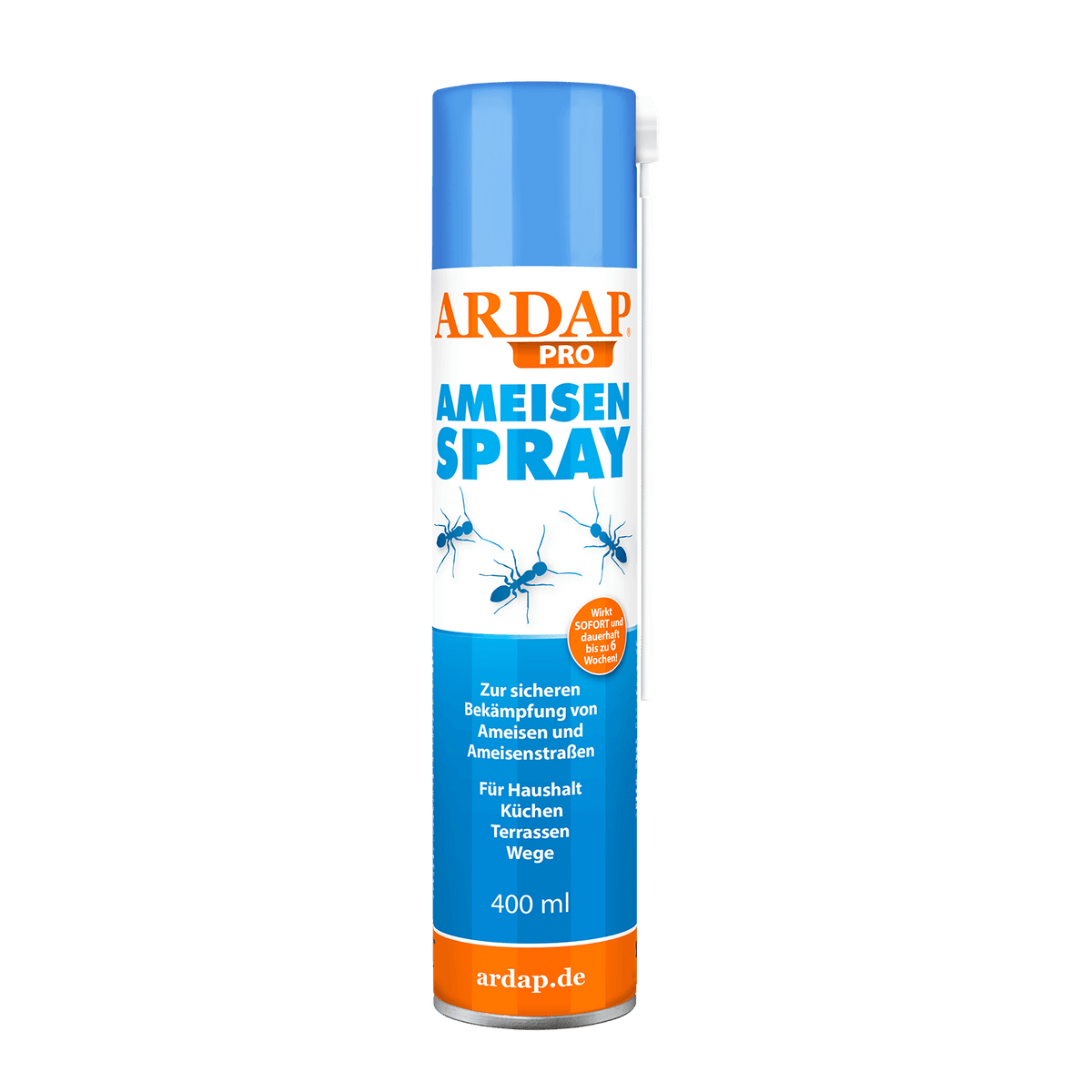
If you want to react quickly - e.g. in case of acute ant trails or suddenly occurring and severe activity — the ARDAP Pro ant spray is a sensible option. This spray works immediately on contact with the ants and offers a long-term effect of up to 6 weeks. It also contains a spray nozzle, which allows targeted spraying into cracks, joints and hard-to-reach places. The active ingredients contained ensure a reliable elimination of ants on surfaces and along their access routes.

With spray nozzle for cracks and joints
Long-term effect up to 6 weeks
Controls ants and ant trails
To the productAre there effective home remedies against ants on the balcony?
Vinegar, lemon juice, coffee grounds and baking soda or baking powder are well-known home remedies against ants, as is sprinkling cinnamon, crushed chalk or diatomaceous earth along the ant trails. However, such products do not work reliably, and some home remedies are even counterproductive. For example, powdered sugar, beer and honey, which are also sometimes recommended for ant control, can attract even more ants. Theoretically, you could kill individual ants with baking powder, but it does not taste good to the ants. Highly odorous substances such as cinnamon or essential oils irritate the ants and distract them from their scent trails, but the impairment of their sense of orientation only lasts for a short time.
Home remedies are therefore not an effective method for ant control. To effectively prevent ants on your balcony, it is better to use a specialized product such as the ARDAP Repell ant spray, which reliably deters ants and other pests and is easy to use. If you already have a large ant infestation on the balcony and want to get rid of them quickly, you can use the ARDAP Pro products for controlling ants, such as the ARDAP Pro ant scatter product, to specifically control the ant nest or the entire colony.
This damage is caused by ants on the balcony
Ants can cause various damages on the balcony. In plant pots such as window boxes, they dig tunnels, which damages the roots and separates them from the soil. What is useful for loosening the soil in the forest significantly impairs the water absorption of balcony plants, so that your herbs, flowers or perennials may wither from lack of water despite sufficient watering in the worst case. In addition, ants can damage plant pots and balcony furniture by penetrating small cracks and crevices and enlarging them. And last but not least, the formic acid in the soil can irritate your hands if you come into contact with the contaminated soil while planting or weeding. This can result in redness, itching or swelling.
Another problem is the close relationship (symbiosis) between ants and aphids. This can not only damage plants or cause them to die completely, but many people are also disgusted by aphids and their excrement, the sticky honeydew. Because this is also distributed around the plant and collects on plant pots, saucers, balcony furniture and the floor.
If ants get access to exposed food on the balcony, it is not only unhygienic. For people with an insect venom allergy, an ant nest on the balcony can also pose a serious health risk.

Ants can also enter electrical devices such as the radio on the balcony and cause short circuits there, e.g. through formic acid, and in the worst case, cable fires.
Last but not least, ants pose a threat to the thermal insulation of buildings, as they destroy materials such as polystyrene and cork. Wooden structures are particularly at risk from certain ant species, such as
- the shiny black carpenter ant (Lasius fuliginosus),
- the red wood ant (Camponotus ligniperda), or
- the black wood ant (Camponotus herculeanus)
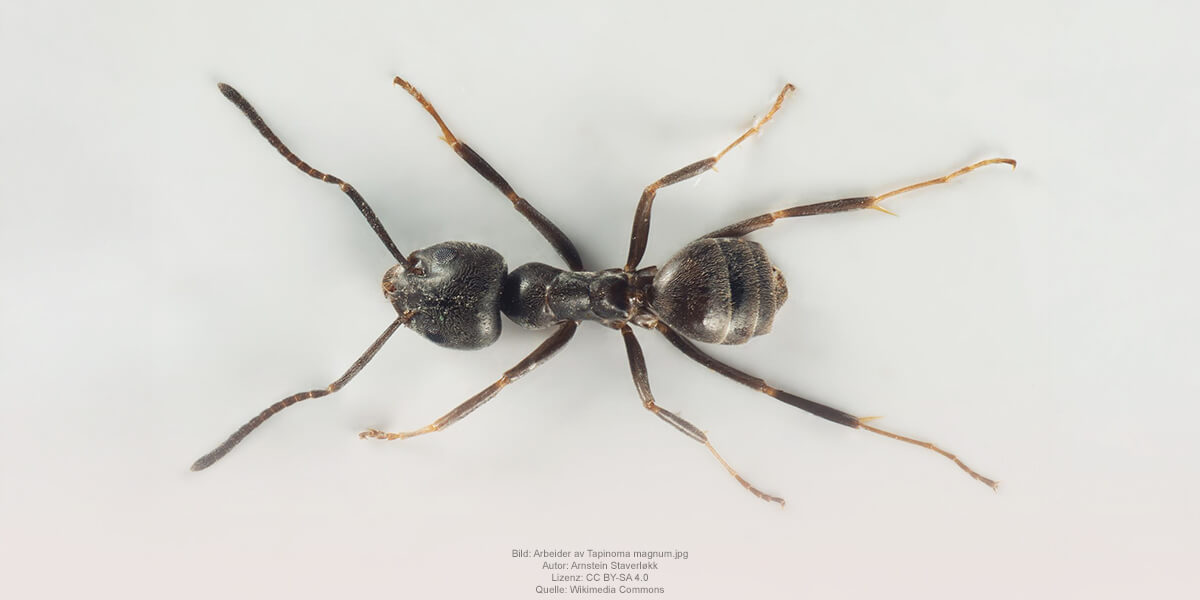
These ants like to nest in wooden structures and can cause considerable damage to the building fabric (e.g. half-timbered buildings, wooden frame structures, roof beams) if left unnoticed for a long time.
It is therefore better to prevent ant infestations.


Where do ants hide on the balcony?
Ants on balconies hide particularly often in flower boxes and planters, as well as under floor tiles. They nest in loose soil and use gaps in furniture or the balcony structure, which they expand over time. Therefore, you should regularly check such hiding places and repel or control ants before they multiply too much, become a nuisance, enter the house, and cause damage. During an "ant check", pay particular attention to dark, damp corners and the areas under heavy objects (e.g. large planters) that are rarely moved.
Conclusion
Ants on the balcony are no minor issue, but can cause various types of damage that should be avoided. ARDAP offers effective solutions for repelling or controlling ants on the balcony. The ARDAP Repell ant spray reliably and quickly keeps ants away. The ARDAP Repell ant treatment as a scatter powder works particularly well on ant trails and at nest sites by preventing ants from spreading. For a long-term solution, the ARDAP Pro ant bait box is recommended, which is equipped with a special bait gel and can eliminate the entire colony. In particularly stubborn cases with severe ant infestations, both the ARDAP Pro scatter and pour treatment for area treatment and the ARDAP Pro ant spray for hard-to-reach areas offer an effective immediate measure against these nuisance and harmful insects outdoors. This quickly makes your balcony ant-free and, thanks to the long-lasting effect of ARDAP Pro products, also protects it well in the long term against re-infestation. You can then enjoy your time "outdoors" at home again in peace.
Frequently Asked Questions
Why do I have ants on my balcony?
Ants are attracted by food scraps, sugary drinks, and the sweet honeydew from aphids, and thus enter your balcony, for example, from the garden. They are also looking for suitable nesting sites and often reach the balcony through cracks, gaps, or plants.
Can ants on the balcony be repelled with home remedies?
Home remedies such as vinegar, lemon juice, cinnamon, or baking powder can temporarily irritate ants on the balcony, but they do not work reliably and generally do not repel ants effectively. Some home remedies can even attract ants further. You can achieve reliable ant repulsion or control of stubborn ant infestations both on the balcony and indoors or outdoors with the highly effective products from ARDAP.
Are there safe and effective products for controlling ants on the balcony?
Yes, there are specialized products from specialist retailers that can control ants. For controlling entire nest colonies, the ARDAP Pro ant bait box is recommended, which is designed so that the highly effective bait is carried into the nest by the ants, where all developmental stages (larvae, workers, and especially the queen) are controlled. Alternatively, the ARDAP Pro scatter and pour treatment can be used, with which the entire colony can also be eliminated at the source and particularly large areas can be treated. Hidden entrances in gaps, cracks, and joints can be sprayed with the highly effective ARDAP Pro ant spray, which ensures an ant-free zone on your balcony.
Where do ants hide on the balcony?
Ants on the balcony often hide in flower boxes, planters, under floor tiles, and in gaps in furniture or the balcony structure, which they expand over time.
How can I prevent an ant infestation?
Thorough hygiene and the removal of food scraps can prevent an ant infestation on the balcony. The use of ARDAP Repell ant treatment and ant spray effectively prevents uncontrolled spread. If the infestation is already starting to get out of hand, the highly effective products from the ARDAP Pro line specifically help against ants, allowing you to enjoy an ant-free balcony.