Together with our expert Prof. Dr. med. vet. Norbert Mencke, specialist in veterinary parasitology, we provide you with important information about ants and support in the event of an infestation in the home.
- What is a flying ant?
- Masses swarming in flight
- Repelling and controlling flying ants?
- Conclusion
- Frequently asked questions
Flying ants are not a separate species, but mature males and young queens that develop wings during a special stage and perform the nuptial flight for mating and founding a colony.
The swarm flight takes place mainly in summer, with species such as the black pavement ant in July/August, the red wood ant from May to July, and the carpenter ant in late spring.
Flying ants are larger than workers, possess two different pairs of wings, and serve the reproduction. They are usually harmless, but can contaminate food supplies and cause hygiene problems.
Typical entry points are windows, doors, and cracks in the house. Careful observation of these entry routes and spraying with ARDAP Repell ant spray help with control and deterrence.
For long-term ant control, the ARDAP Pro products from specialist retailers are suitable.
What is a flying ant?
When you hear the name flying ant, you might first think of a separate ant species. However, that is not the case. In fact, it refers to a specific stage in the life and development cycle of the ant. Let's take a closer look at this phenomenon:
An ant with wings?
Flying ants are not a species or subspecies of ants. Instead, wings grow on mature males and special females. Workers generally do not have wings. In principle, flying ants go through a special phase in their development. Specifically, this refers to the male drones and young queens. Only these animals develop wings, and even then only for a limited time. Therefore, a flight of ants cannot be expected throughout the year.
Some people are alarmed when they first see flying ants, because they can appear mysterious and even dangerous when they appear in a large swarm. However, this is a completely normal phenomenon for these insects. After all, they depend on it to develop and build new nests. If they enter the house during this process, or even come directly from cracks and crevices and fly around the house, they can be perceived as very disruptive. We provide you with important background information so that you can better assess this spectacle and prepare for it.
What species are there?
Practically every ant species produces winged individuals. Particularly interesting here, of course, are those species that are common in Germany, and it is important to know when their swarm flight can be expected. This gives you the opportunity to prepare in good time and take deterrent measures.


One of the most common ant species in Central Europe is the black or black-grey pavement ant (Lasius niger). It is also widespread in Germany, and its swarm flight usually takes place in July or August. This species is often perceived as a flying ant because it tends to form very large swarms. Nevertheless, this ant species normally has no wings and only carries them during mating season.
The red wood ant (Formica rufa) forms large colonies and is found mainly in forest areas. The mature animals of this species fly from May to July.
The Pharaoh ant (Monomorium pharaonis), on the other hand, is a special case: the queens of this ant species have wings that are shed after mating. This species lives indoors, and rapid reproduction occurs through the formation of secondary nests. Pharaoh ants pose a real problem here because they act as pantry and material pests and can compromise hygiene.
The carpenter ant (Camponotus herculeanus) swarm flight usually takes place in late spring or early summer.
In the months from July or August onwards, flying yellow meadow ants (Lasius flavus) can be expected.
So it is indeed possible to encounter flying ants throughout the year. Nevertheless, it is essentially the summer months that need to be considered and require special precautions.

Appearance and size
For flying ants, it is not only the wings that make them visually distinguishable from workers. The sexed individuals are generally significantly larger than the workers, and their bodies are more robust. This enables them to undertake the strenuous nuptial flight.
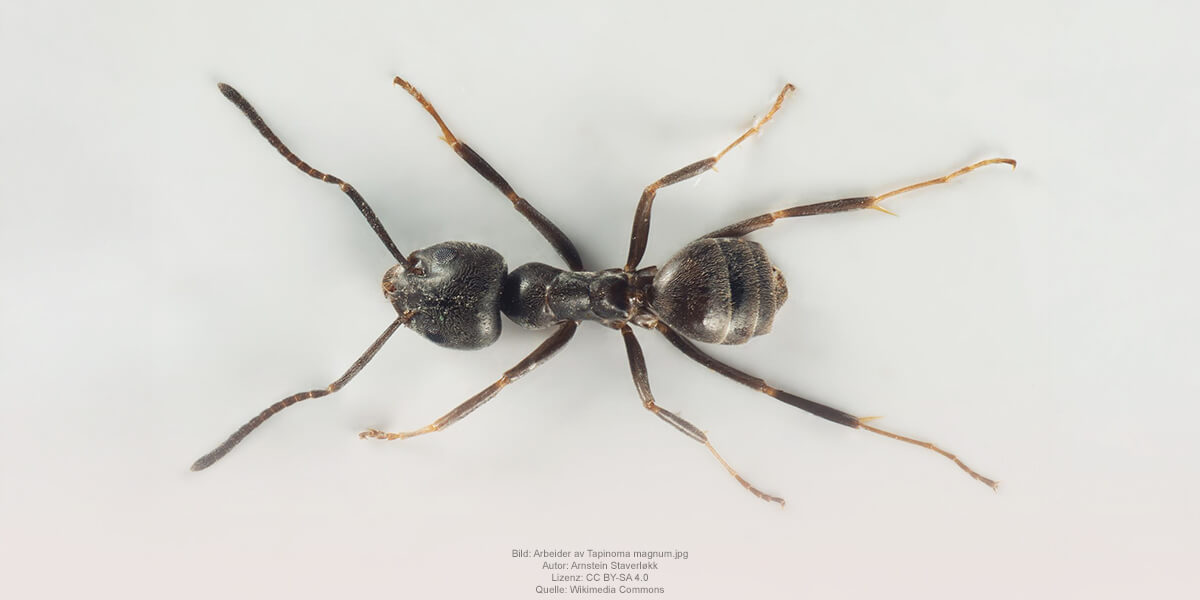
A characteristic feature of ants is their waist-like body shape. This is formed by the so-called gaster connection or petiole segments, which connect the middle body section (thorax) with the abdomen. This narrow constriction makes the ant's body appear segmented and "supple", which enables a high mobility of the abdomen – an important advantage in defense, reproduction, and communication. This typical "wasp waist" also remains clearly visible in the winged sexed individuals and gives them the typical appearance of ants.
Otherwise, of course, the wings are among the most striking features. These are transparent and generally slightly larger on the front side than in the rear area. In sunlight, they can appear slightly shimmering.
Are the winged insects dangerous?
In principle, flying ants are not aggressive and do not bite or sting. If they wander into our homes, however, they can certainly cause problems, because they really have no business being here. If they get into our food supplies in the kitchen, they can damage or contaminate them. The spread of pathogens is also possible. In this sense, flying ants are therefore associated with the same risks that you should also keep in mind with individual ant species. In principle, flying ants aim to establish new nests and colonies - and they should by no means choose your home for this. Therefore, it is not a good idea to ignore the presence of these uninvited guests.


Masses swarming in flight
When ants fly and appear in swarms, their numbers are often impressively large. Encountering huge swarms in summer is therefore not uncommon.
Why do flying ants appear in swarms?
In principle, the swarm flight is necessary for ants to reach new areas. They search for suitable locations, the young queens mate, and new nests are formed. The development of wings therefore serves primarily to disperse these insects. They can only find enough mates for mating if they come far enough on their flight path.
The nuptial flight
Winged ants do not swarm out every day, but wait for optimal conditions for the nuptial flight: warm, still, and dry. Mating takes place in flight, for example, with the black pavement ant. This usually happens in summer. Precisely during this time, flying ants pay us a visit in our homes - even if this was not necessarily their goal.
Until that time, they simply wait in their home nest, then they suddenly take off as if by appointment. This phenomenon can occur synchronously in several colonies. The mature animals now find each other, every female mates with several males. They store the received seeds and use them at a later time.
Ants on a nuptial flight make an impressive sight. However, this is less pleasant when it can take place right in our homes. Since flying ants appear in such large numbers and all take off together as if on cue, the level of disruption can be astonishingly high.
Repelling and controlling flying ants?
You do not want to tolerate flying ants in your home environment? Thanks to suitable products, you can specifically prevent pantry damage, material damage, and hygiene problems caused by ants.

Keep an eye on entry routes
In principle, the ant's entry route describes the path through your building to the nest. Typical entry points are everywhere there are light sources. Therefore, ants like to come through windows and open doors. But they can also use cracks in the building to enter. If you know the entry route and observe from which direction the ants are coming to you, you can trace this path back to the nest. And this helps you with the control. Once the nests are located, you can take targeted action here.

With a spray nozzle for cracks and crevices
Long-term effect of up to 6 weeks
Controls ants and ant trails
To the productOut of the house
If flying ants have wandered into the house, you should quickly let them back outside. Because these insects really have no business being in living areas, in the kitchen, or in the pantry.
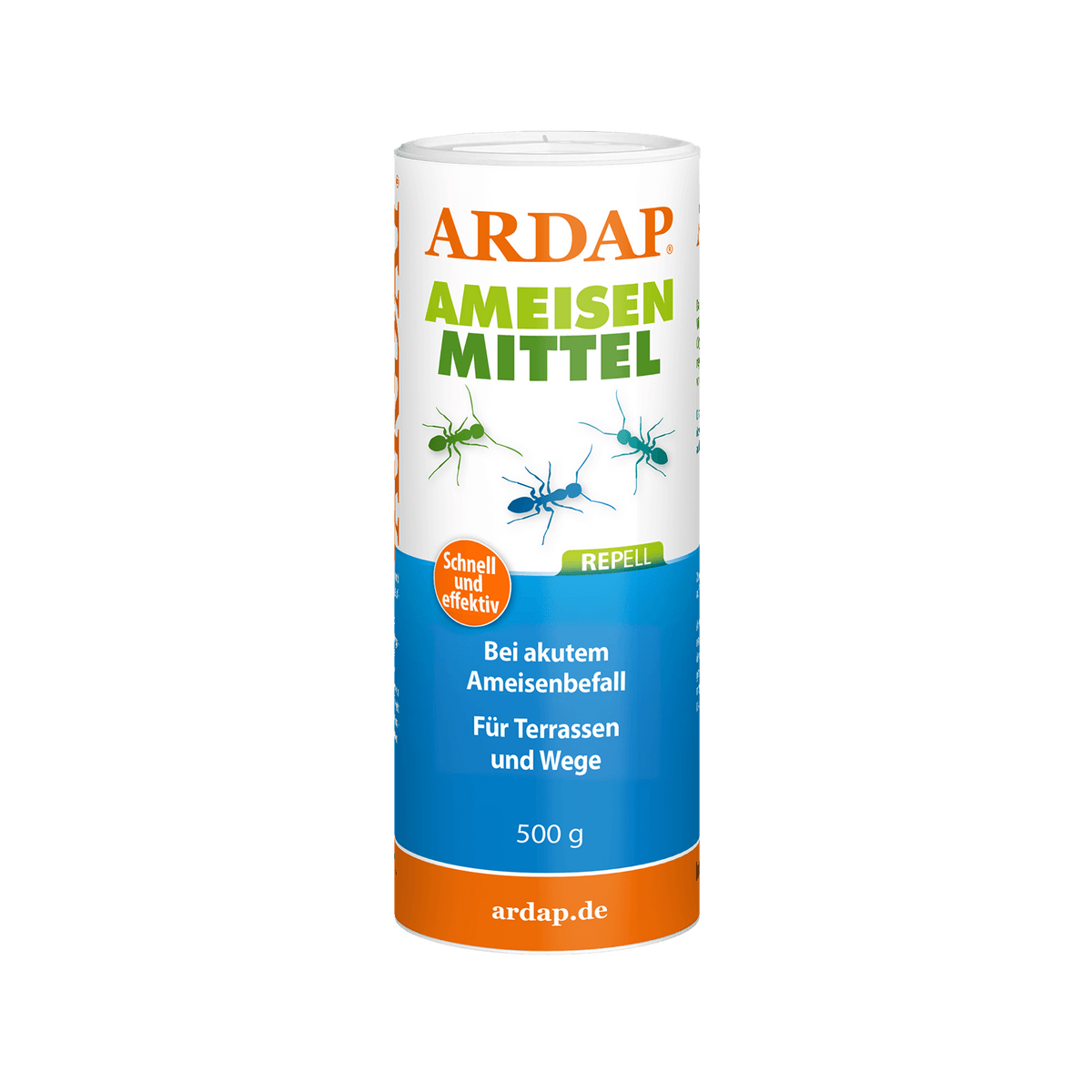
Here, deterrent products such as the ARDAP Repell ant treatment for sprinkling at the entrance to the house or the ARDAP Repell ant spray for targeted spraying on preferred walking routes and entry points are suitable. This is also ideal for preventively spraying window and door frames, so that ants do not even get into the house this way.

Effective products for controlling nests in the house
Particularly effective for controlling an acute ant infestation, so also for flying ants, is the use of the ARDAP Repell ant bait box. Here, a novel bait gel with a strong attraction effect is used. This can practically control all ant species along with the nests. It can be used anywhere in the house and in the basement. And it is also suitable for the balcony or terrace. The bait box attracts ants and keeps gel ready, which they take as food and carry back to their nest. The workers feed the gel to their queens. The treatment can therefore develop its full effect directly in the colony. This makes a thorough and rapid elimination of the nests along with the ants living there possible. You can basically place the bait box anywhere you want, but it should be protected from rain and direct sunlight.
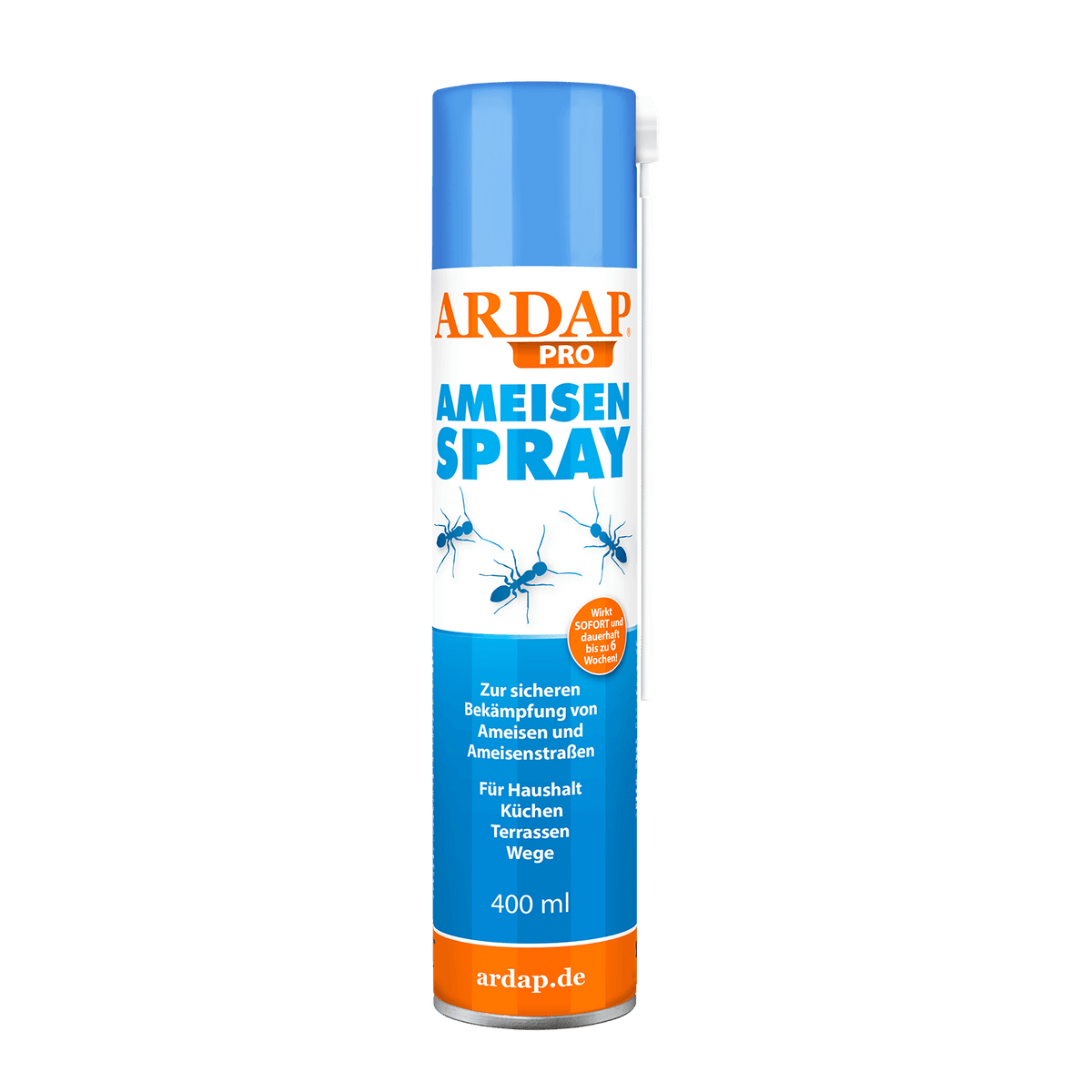
The ARDAP Pro ant spray also offers quick help in the event of an ant infestation and works immediately after contact with the ants while also ensuring a long-term effect of up to six weeks. Thanks to the practical spray nozzle, hard to reach places such as cracks and crevices can be treated precisely . The spray is particularly effective for use in indoor areas and is also suitable for outdoor areas such as balconies, terraces, or paths around the house.
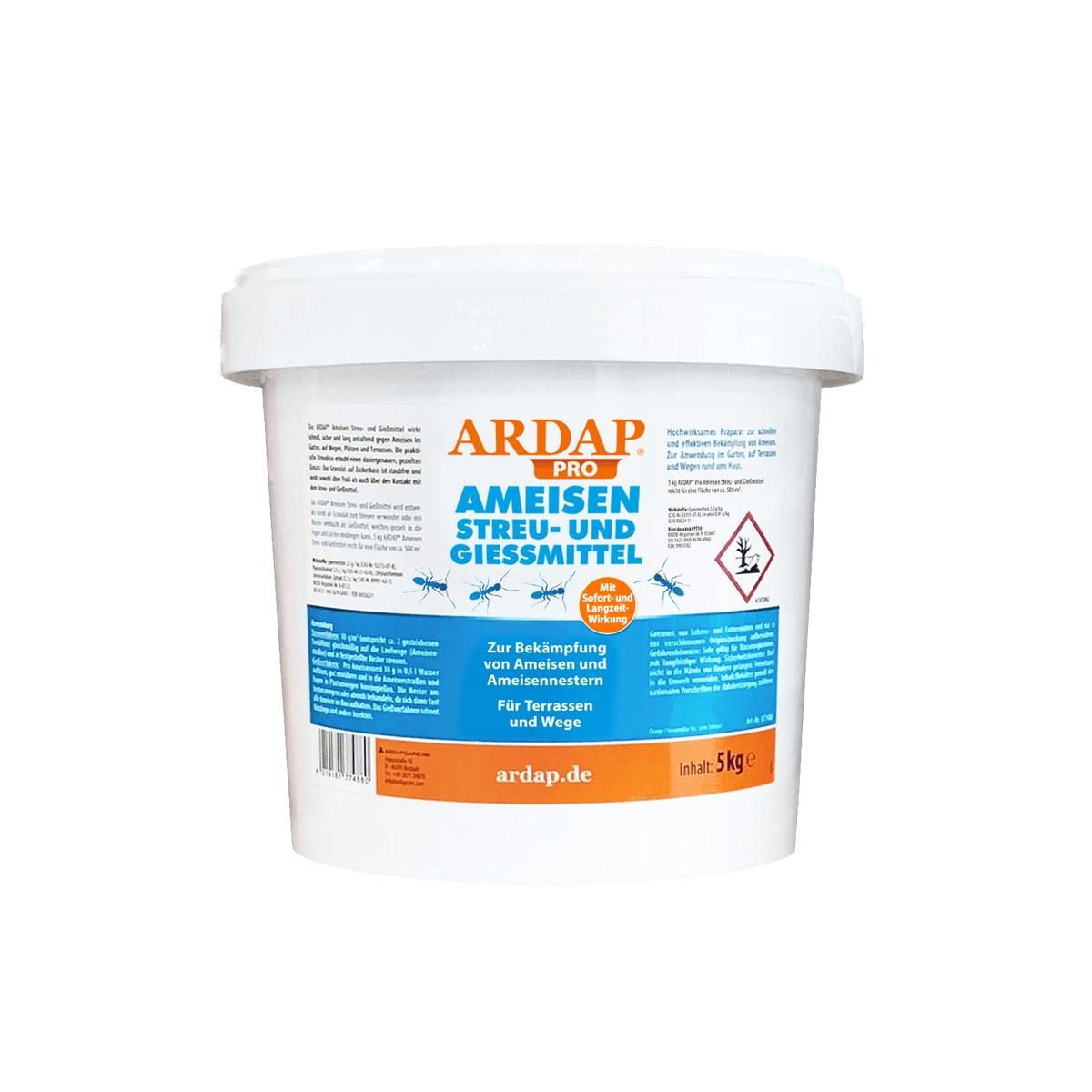
In the outdoor area, the ARDAP Pro ant sprinkling and pouring treatment is also suitable for the long-term control of ants and ant nests. It can be applied precisely by sprinkling on ant trails, paths, joints, or directly into nests or by dissolving it in water and pouring it out targeted. With the pouring method, the treatment also reaches hidden breeding chambers and ensures a rapid and safe elimination of the entire colony.
Conclusion
Flying ants are not a separate species, but sexually mature males and young queens that develop wings during a special phase of their life cycle. They leave the nest to mate and establish new colonies in the so-called nuptial flight. This swarm flight takes place mainly in summer, with the size and appearance of the winged ants differing significantly from the wingless workers.
Products such as the ARDAP Repell ant spray and ARDAP Repell ant product are suitable for repelling flying ants. Targeted control is achieved using the products from the ARDAP Pro series, such as ant bait boxes, ant spray, and ant granules and liquid products, which permanently eliminate a wide variety of ant species and entire colonies.
Frequently Asked Questions
What are flying ants?
Flying ants, also known as winged ants, are not a separate species, but sexually mature males and young queens during a swarm or nuptial flight. They leave their colony to mate and establish new colonies.
Why are there flying ants?
Flying ants exist because the flight of ants serves reproduction and the dispersal of the species. During the swarm flight phase large swarms of flying ants can become visible on warm, humid days.
When do flying ants appear?
Flying ants appear mainly in the summer months of July and August. Some species, such as the black pavement ant swarm already in June, while others, such as the red wood ant in late spring. Thus, in principle, winged ants can become visible almost year-round.How can I identify flying ants?
Flying ants can be identified by two pairs of differently sized wings, a narrow “wasp waist” and a clearly segmented body, and they are also usually dark brown to black. The wings of the flying ants are longer at the front than at the back.
Are flying ants dangerous?
Generally, the flying ants themselves are not dangerous, as they do not sting or bite during the nuptial flight. They are exclusively focused on reproduction during this phase. Flying ants do not pose a direct danger to humans or pets at this time, but can be perceived as a nuisance. Flying ants become dangerous once mating is complete and the mated females begin to establish their new nests and colonies. In particular, the wood-destroying ants can then cause, for example, damage to the building fabric of your homes. At the latest then, such ant species should be controlled.
How can flying ants be prevented?
Flying ants can be prevented by always removing food remnants, eliminating wood and plant debris, and maintaining general hygiene measures. In addition, access to the house (cracks, gaps in the masonry, etc.) should be sealed. Furthermore repellent ARDAP products from specialist retailers help to prevent an infestation of flying ants. This also allows all entry points such as windows and doors to be treated preventively to drive away swarms of winged ants immediately at or in the house.