Together with our expert Prof. Dr. med. vet. Norbert Mencke, specialist in veterinary parasitology, we provide an overview of various ant species as well as effective tips for infestations.
- Beware, it's venomous! An overview of the 24-hour ant
- 24-hour ant: the ritual
- How to deal with ants in the house and on the patio?
- Conclusion
- Frequently asked questions
The 24-hour ant (Paraponera clavata) is a tropical ant species that is found exclusively in Central and South America and is not native to Europe.
Its name is derived from the extremely severe and long-lasting pain that its sting can cause, which in individual cases can last up to 24 hours.
The sting of the 24-hour ant can cause one of the most intense pains that an insect can cause in humans.
The venom responsible for the intensity of the pain is Poneratoxin venom, a neurotoxic peptide that strongly irritates the nervous system without permanently damaging the tissue.
The ant is not considered aggressive, but it consistently defends its nest and uses the sting specifically for defense or hunting .
Encounters with the 24-hour ant are possible primarily during travel to tropical rainforest areas. Ants can be repelled or controlled with ARDAP's highly effective pest control products.
Beware, it's venomous! An overview of the 24-hour ant
The 24-hour ant (Paraponera clavata) is also known as the Tropical Giant Ant. In English, the term "bullet ant" is commonly used. These terms already suggest that this ant species poses a certain danger.

Where does the name "24-hour ant" come from?
Unlike native species, the 24-hour ant can sting. It injects a painful venom into the body of its victims. This has a strong and long-lasting effect. It causes extreme pain for a period of up to 24 hours, which is where the name of this species comes from. Victims of the 24-hour ant have reportedly stated in the past that the sting feels as if they had been hit by a bullet. The English term "bullet ant" accordingly refers to the extreme pain of this sting. In fact, it is said to be one of the most intense pains that an insect can cause in humans. The name is therefore by no means an exaggeration.
Science has its own index to assess the effects of insect venom stings. This is the Schmidt Sting Pain Index. The scale provides for a classification into several levels from 1.0 to 4.0. In fact, the 24-hour ant is at level 4.0, which describes a pure, intense, and radiant pain. It is also said here that the victim feels as if they were walking on glowing coals while a rusty nail seven centimeters long was stuck in their heel. This drastic description leaves no doubt that this ant species should be avoided. More information on this can also be found at this link.


The ant's venom
What exactly is the venom in the 24-hour ant? The stinger delivers the venom Poneratoxin, which is a particularly potent neurotoxin. It is considered particularly painful, but causes no tissue damage. Specifically, the venom disrupts the transmission of nerve impulses in the target tissue. This leads to excessive nerve stimulation and excitation. Ultimately, this manifests as severe pain.

In the human body, the venom can trigger a whole range of reactions. These include numbness, dizziness, or muscle twitching. This is accompanied by a burning, throbbing, and stinging pain. The affected area can also swell locally and blisters may form. Systemic reactions such as numbness are expected, for example, especially when multiple stings occur. Generally, with insect venoms, there is a risk of an anaphylactic shock, although this is rather rare. Many other allergic reactions are conceivable. The venom is extremely dangerous to humans in its overall effect. So you had better not encounter the 24-hour ant.
Of course, the 24-hour ants use this venom for a specific reason. They use it to protect their nest and defend themselves against larger intruders. Basically, this ant species does not show unusually aggressive behavior. It only attacks when threatened and then uses its venom, which serves as an effective deterrent.
Appearance and distribution
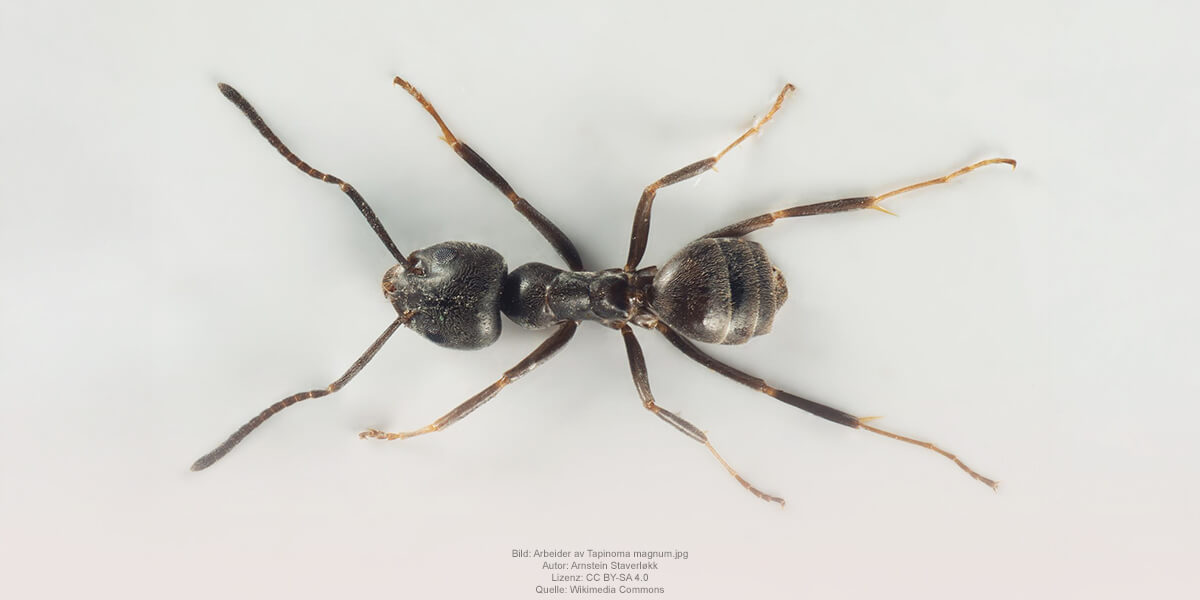
The first thing that strikes you about the 24-hour ant is its size. In fact, it is one of the largest ant species worldwide. The workers reach a body length of 18 to 25 millimeters. This corresponds to approximately one thumb's width. Only a few other ant species are known to be even larger. Interestingly, there is no significant difference between the workers and the queen. The latter measure between 2.0 and 3.0 centimeters.
The coloration ranges from reddish and brownish to black. The ants have golden-colored front legs, and their bodies and legs are hairy. Furthermore, they are equipped with a stinger that they can retract. In terms of their shape, they resemble a wingless wasp somewhat. This is, of course, also due to the sheer size of these insects.

Anyone who takes a closer look at the 24-hour ant and its potent venom is probably glad that this species does not occur in our latitudes. These insects only pose a danger when we travel to certain regions. The 24-hour ant lives in the tropical rainforest in South and Central America. More precisely, its range is located in equatorial America and extends north to Nicaragua and south to Bolivia. We can encounter this ant species up to 750 meters above sea level. Only occasionally do they make their way to even higher regions. It occurs mainly on the Atlantic side of Central America, but can also be found in suitable habitats on the Pacific side.
The lifestyle of the 24-hour ant
The 24-hour ant belongs to the monogynous ant species. This means there is only one queen in the colony. The number of workers is also relatively small. They like to stay at the base of tropical forest trees and forage for food in the tree crowns. These insects are particularly active during morning and evening twilight as well as at night. Deviations here depend on the season. In the foliage of the trees, the workers find insects such as arthropods and bring this food back to the nest. In fact, the workers are the sole hunters of this species. Food also includes honeydew, which they collect from aphids.

It is typical that the workers of the 24-hour ant go out hunting alone. They therefore do not form long trails. However, they lay down trails and mark them, as other ant species do, with pheromones.
24-hour ant: the ritual
In the Amazon region, it is primarily the Sateré-Mawé who resort to the 24-hour ant for the performance of a certain ritual. They are mainly interested in the strong venom of this ant species. The indigenous Sateré-Mawé people live in the border region of the two Brazilian states of Pará and Amazonas. Specifically, it is an initiation ritual and a test of endurance, courage, and pain resistance of the initiates. Young men are prepared for adulthood here. Intense physical pain plays a crucial role in this.
The preparation of the ritual involves incorporating live 24-hour ants with their stingers facing inward into a glove made of leaves. This glove is pulled over the young initiates. They must wear it for about ten minutes. During this time, the ants sting multiple times. The boys must endure severe physical pain, and numbness in the affected limbs is also possible.
For the indigenous peoples, this ritual has a deep spiritual meaning. It symbolizes the transition from childhood to adulthood. If the young men can endure the pain, they prove their discipline, courage, and strength. They show that they are ready to take on responsibility and can fulfill their role in the community. Such a boy earns the respect of the elders and qualifies for leadership positions within the tribe if he repeats this ritual. It may be that he has to survive it up to 25 times.

How to deal with ants in the house and on the patio?
Even if you certainly do not have to repel the 24-hour ant in Germany, you should think about how to deal with an increased ant presence in your domestic environment. Effective products are available with which an infestation of various species can be quickly brought under control. We show you how you can deal effectively with these uninvited guests.
Highly effective ant products
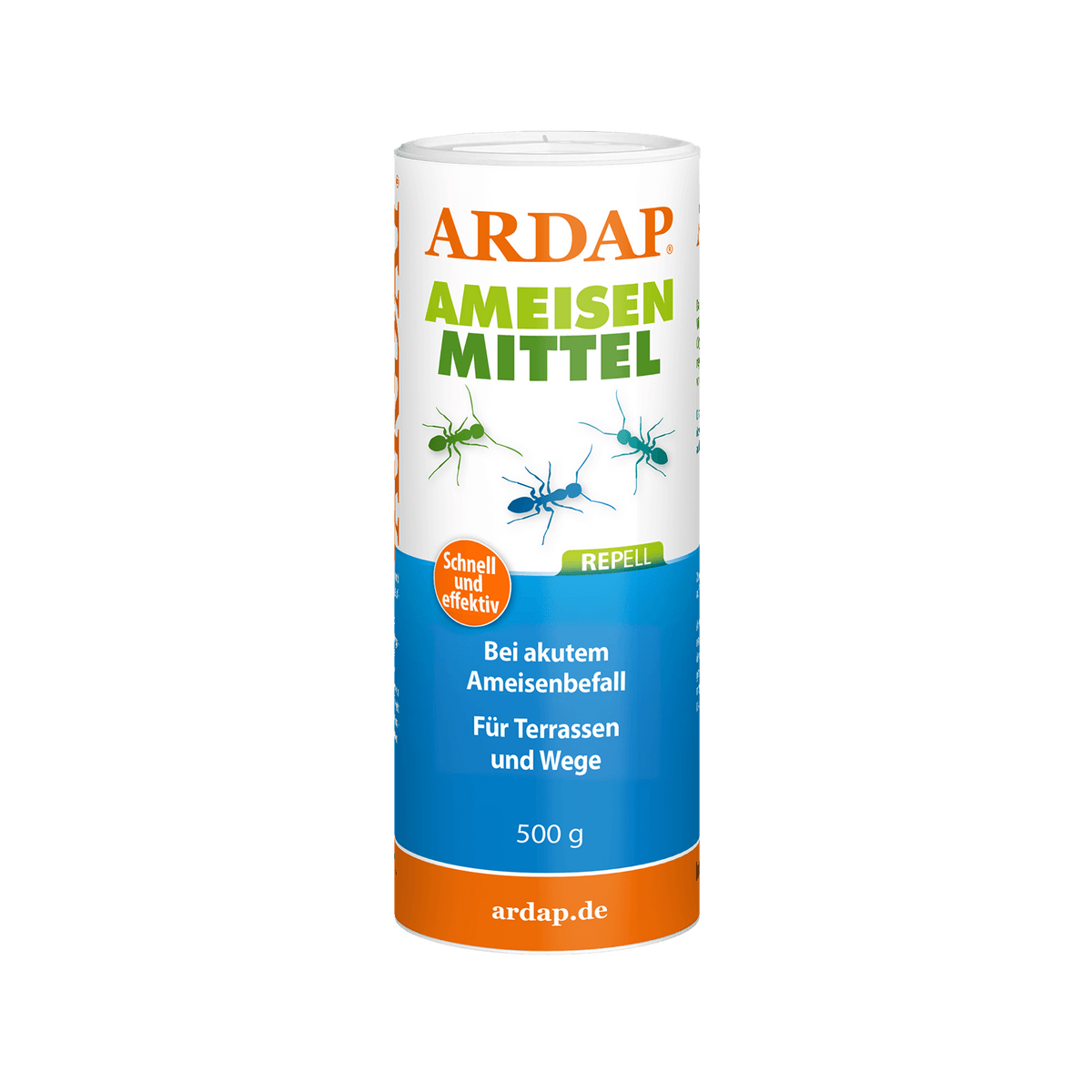
For scattering on patios and paths, the ARDAP Repell ant product is an appropriate product with the active ingredient pyrethrum from the chrysanthemum. This ant product is suitable for the reliable and highly effective repelling of ants of various species. The scatter product is ideal for precise dosing and targeted use in outdoor areas.
Distribute the ARDAP Repell ant product evenly on the ant trails. These are also called ant trails. This way you effectively repel ants before they cause greater damage to patios, paving, or walkways.
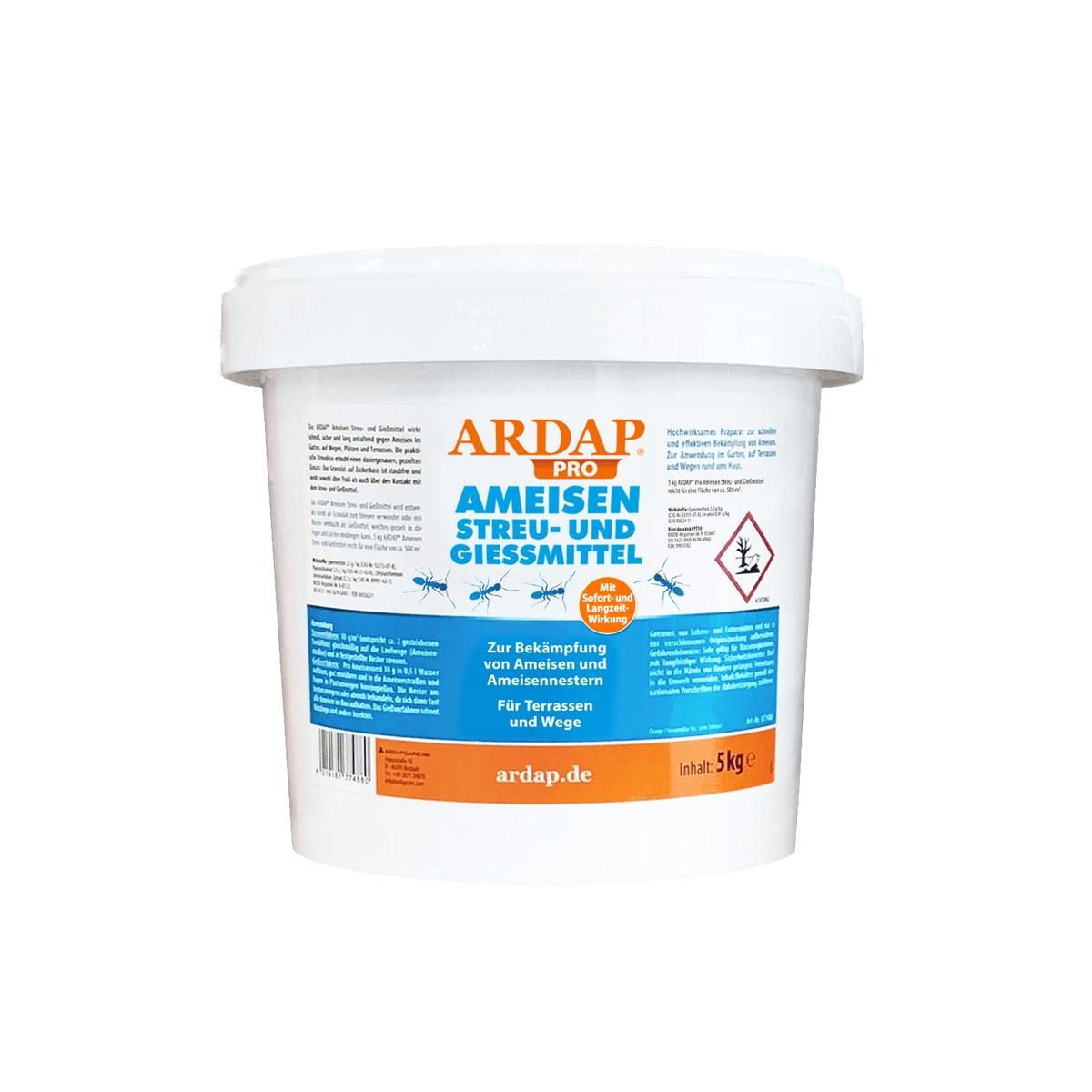
If you already have a stronger ant infestation and have also detected nests, you can use the ARDAP Pro ant scatter and pour product. The dust-free granules work both through ingestion and direct contact of the ants with the product, as soon as it is scattered on ant trails, in joints, or directly into detected nests, or distributed as a pour product with water. This way, an entire ant colony in outdoor areas such as a patio, balcony, or paths around the house can be quickly and long-lasting controlled.Ant spray: easy to use and effective
For an emerging ant presence in the house or outdoors, the ARDAP Repell ant spray offers a quick remedy. The active ingredient pyrethrum from the chrysanthemum serves to repel ants and can be sprayed on the preferred places, paths, and entry points of the ants on the patio, at the entrance to the house, or also in the kitchen. The ants then avoid the treated areas and are thus effectively repelled.
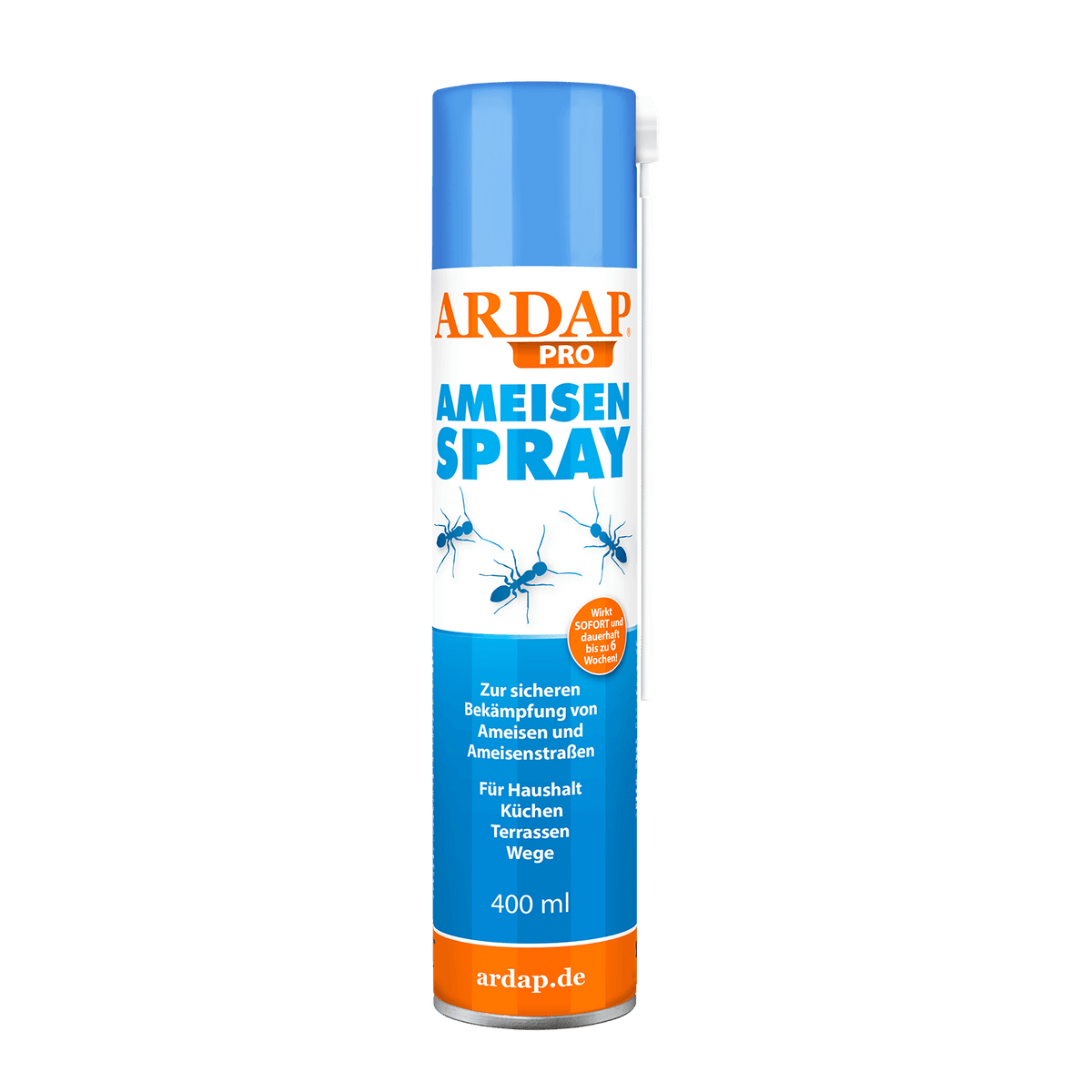
The ARDAP Pro ant spray serves as targeted immediate help against stronger ant infestations. The practical spray makes it possible to treat ants directly at hard-to-reach nests, cracks, or paths, by capturing and controlling the harmful insects upon direct contact with the solution. This way, visible ant traffic routes can be reliably interrupted and nests in hard-to-reach areas can be targeted.
Eliminate entire colonies with the bait box
With the ARDAP Pro ant bait box, a novel bait gel is available for the control of ants and their colonies and nests. This is characterized by its high effectiveness and attraction. The ants are attracted by the attractant, enter the box through small openings, and take up the gel there. If they then carry it back to their colony and feed it to the queen and larvae there, it can exert its full effect against the source of the ant population. In a few days, the nest along with all the ants and the queen can thus be reliably controlled.
Conclusion
The so-called 24-hour ant is not a native pest, but an exotic insect that is noticeable primarily when traveling in tropical regions. Its powerful sting, the injected venom, and very strong, long-lasting pain make it a special biological phenomenon that is not comparable with ant problems in Central Europe. Even though its sting causes extreme pain, these ants play a rather minor role in everyday life here.
Significantly more relevant here are native ant species, which occur in houses, on patios, or in the garden and can cause problems there through ant trails, nest building, and foraging. Such occurrences can be targeted and controlled if acted upon early. For the repelling or control of native ants, suitable products from ARDAP are available, which are tailored to typical areas of application around the house, garden, and property.
Frequently asked questions
What is the 24-hour ant?
The 24-hour ant is a tropical ant species found mainly in Central and South America and known for its extremely painful sting. The name refers to the very long, sometimes lasting up to 24 hours, pain that can occur after a sting.
Why is the sting of the 24-hour ant so painful?
The sting of the 24-hour ant is so painful because it injects a highly potent venom that overstimulates the nervous system. The pain is often described as burning, throbbing, and exceptionally intense.
Is the 24-hour ant found in Germany?
The 24-hour ant is not found in Germany, as it is adapted to tropical climatic conditions. Encounters with this ant species usually only occur while traveling in the appropriate regions.
Is the 24-hour ant dangerous to humans?
For healthy adults, the 24-hour ant is generally not life-threatening, but the sting is extremely painful and lasts for a long time. In rare cases, allergic reactions may occur, which is why seeking medical attention may be advisable.
Which ant species cause problems here?
In Germany, it is primarily native ant species such as the black garden ant and the brown garden ant, that appear in houses, on terraces, or in the garden and cause problems there with ant trails and nest building. These ants can be effectively controlled and, in cases of severe infestation, eradicated with products from ARDAP.
Why do native ants often appear in the house or on the terrace?
Native ants are mainly attracted by food scraps, moisture, and sheltered nesting sites. Cracks, joints, or transitions from the outside to the inside provide them with ideal conditions. To prevent them from entering the house and to repel ants, ARDAP Repell products such as ant spray and ant treatment are recommended. For severe or recurring ant infestations, highly effective ARDAP Pro products help.
How can native ants be controlled?
Native ants can be targeted for control by consistently treating ant trails and nests. Products from ARDAP are available for this purpose, which are tailored to typical ant problems inside and around the home.