In this post, learn what you can do about silverfish in the bathroom and kitchen – with the support of our expert, Prof. Dr. med. vet. Norbert Mencke, a specialist veterinarian in parasitology.
- Fans of damp spaces: What are silverfish doing in the bathroom and kitchen?
- Measures against silverfish in damp spaces
- Effectively control silverfish in the bathroom and kitchen – here’s how!
Fans of damp spaces: What are silverfish doing in the bathroom and kitchen?
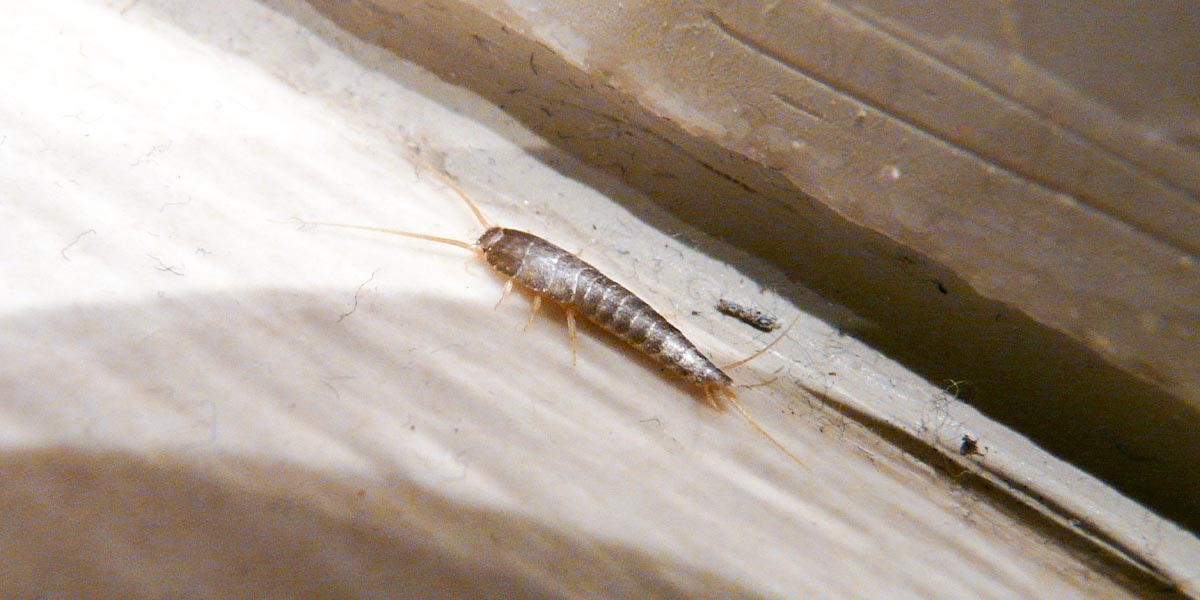
Silverfish (Lepisma saccharina) feel particularly comfortable in your bathrooms, kitchens, basement rooms, and storage rooms. These rooms offer them the perfect combination of warmth, high humidity, and plenty of hiding places. Everyday activities such as showering, cooking, or washing regularly produce condensation, which increases humidity and creates ideal living conditions for silverfish.

A great climate for silverfish
Bathrooms and kitchens offer silverfish excellent places to retreat. From the insects’ perspective, these rooms feature numerous cracks, cavities, and hard-to-reach areas. Cracks in tiles, porous or inadequately sealed joints, and gaps behind baseboards or kitchen cabinets are particularly attractive to silverfish. These hiding places not only offer protection from light but also provide a stable environment for laying eggs. The situation becomes particularly critical when structural defects are also present, such as leaky pipes, cracks in walls, or damaged joints. These weak points also promote the accumulation of moisture, which in turn encourages the growth of mold, providing food for the silverfish.

What do silverfish feed on?
Silverfish are omnivores with a preference for starchy and sugary substances. They feed on materials containing starch or cellulose. Skin scales, hair, and mold are also high on their menu, which explains why they are often found in damp spaces such as bathrooms. Organic residues tend to accumulate in hard-to-clean corners or hard-to-reach areas, providing the insects with a continuous food supply. In kitchens, crumbs or remains of starchy foods such as bread or rice attract the animals.
Are silverfish in the bathroom and kitchen a danger?
Although silverfish are generally harmless to human health, they can still cause a number of secondary problems. The insects do not transmit diseases or bite, but their excrement and molting remains can trigger allergic reactions in highly sensitive individuals. The biggest problem for people when silverfish appear is probably the fact that mold may be hidden. While mold serves as a food source for the insects, its spores pose a considerable health risk to humans.

Indicators of (structural) damage
The presence of silverfish in the bathroom and kitchen can therefore indicate damage to the building structure. Often, their preferred hiding places point to leaks through which moisture can enter walls or floors. A common problem is damaged joints in tiled areas, which allow water to penetrate the building structure underneath. Cracks in walls, inadequately sealed window frames, and damp areas around leaky pipes in a wall are also popular places to retreat. Unfortunately, often undetected structural damage not only promotes the spread of silverfish but also that of mold. Moisture seriously endangers the structural integrity of a building.
Measures against silverfish in damp spaces
Silverfish in the bathroom and kitchen require targeted measures to get rid of them permanently. A combination of preventive steps and the use of specialized products helps to effectively repel the insects and prevent future infestations. There is no alternative.

Works quickly and effectively
Repels silverfish
For kitchens, washrooms, bathrooms, and basements
Go to productReliably repel silverfish
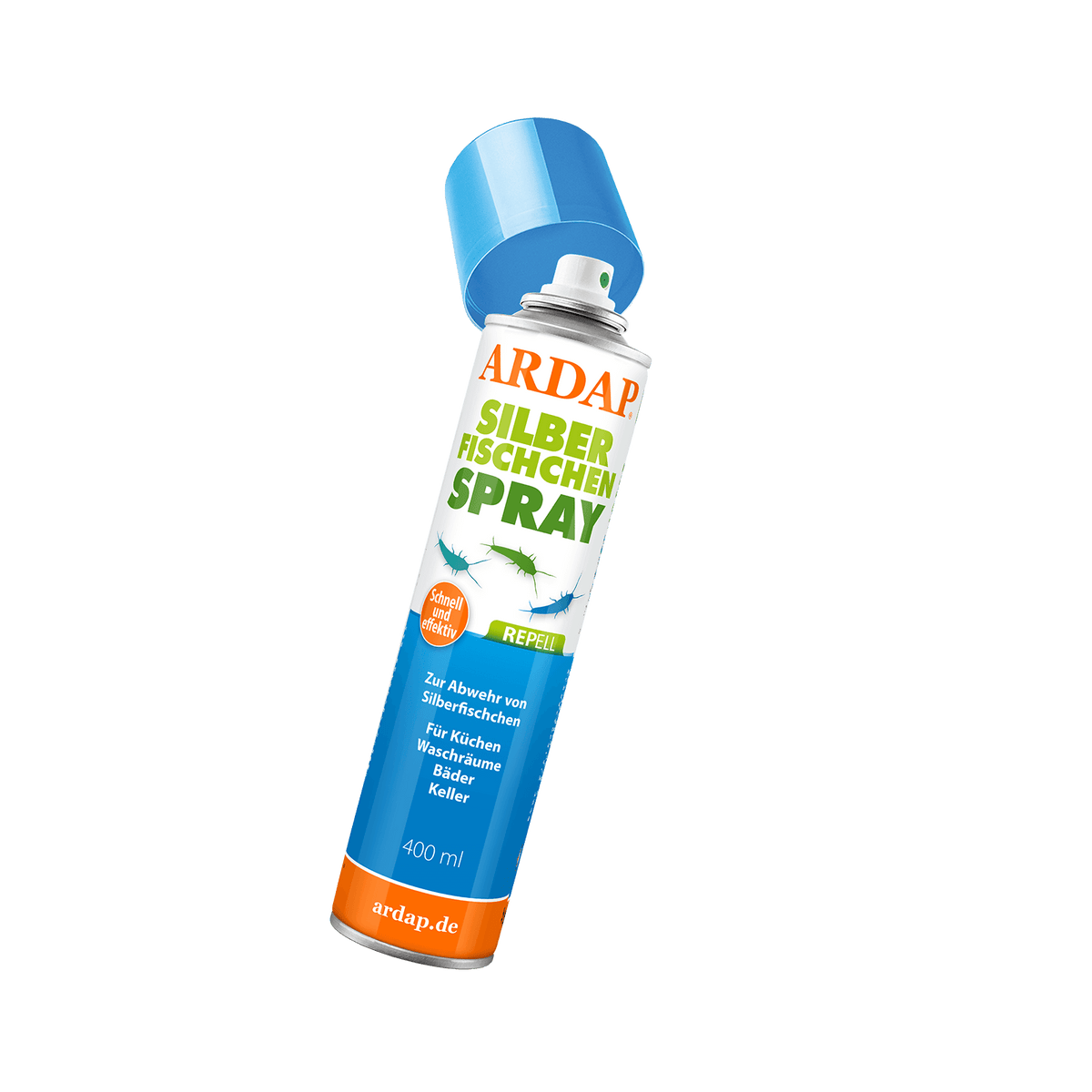
Silverfish can be very effectively repelled using repellent products from specialist retailers. The ARDAP Repell Silverfish Spray, for example, offers a reliable solution. The repellent spray is based on pyrethrum from chrysanthemum flowers – an active ingredient that reliably keeps silverfish away. The spray is applied directly to their preferred hiding places – cracks, behind baseboards, or in damp corners. This creates a barrier that deters the animals from seeking out their places of retreat.

Regular airing
To permanently deprive silverfish of their means of survival, the right indoor climate also plays an important role. Regular through-ventilation reduces humidity and improves air circulation, making damp spaces such as bathrooms and kitchens less attractive to the insects. Especially after showering or cooking, any moisture that has accumulated should always be removed by airing thoroughly.
Limit places of retreat
Silverfish seek hiding places that offer protection and ideal conditions. To curb their population, it is important to minimize such places of retreat. Cracks in floors or walls should be sealed, loose wallpaper secured, and hard-to-reach areas such as baseboards or cabinets regularly cleaned and treated with a repellent against silverfish. It is also advisable to have leaks in masonry, damaged joints, or cracks in tiles repaired promptly and professionally to prevent moisture from penetrating further. These measures create a more pleasant living environment – but not for the silverfish.

Effectively control silverfish in the bathroom and kitchen – here’s how!
If silverfish regularly appear in your bathroom or kitchen, it is not enough to simply repel the visible ones or even crush them and regulate the indoor climate. Because: A silverfish rarely comes alone! If you find scurrying silverfish every time you turn on the light at night, you can assume there is a larger aggregation of insects in your living area. In the event of an extensive infestation, targeted control measures should be taken that cover all developmental stages of the insects – from eggs to fully grown animals.
In the event of a larger infestation, special products for targeted control should be used, such as those offered by the ARDAP Pro Series. These products ensure the complete and long-term elimination of the insects.

ARDAP Pro Silverfish Bait Box
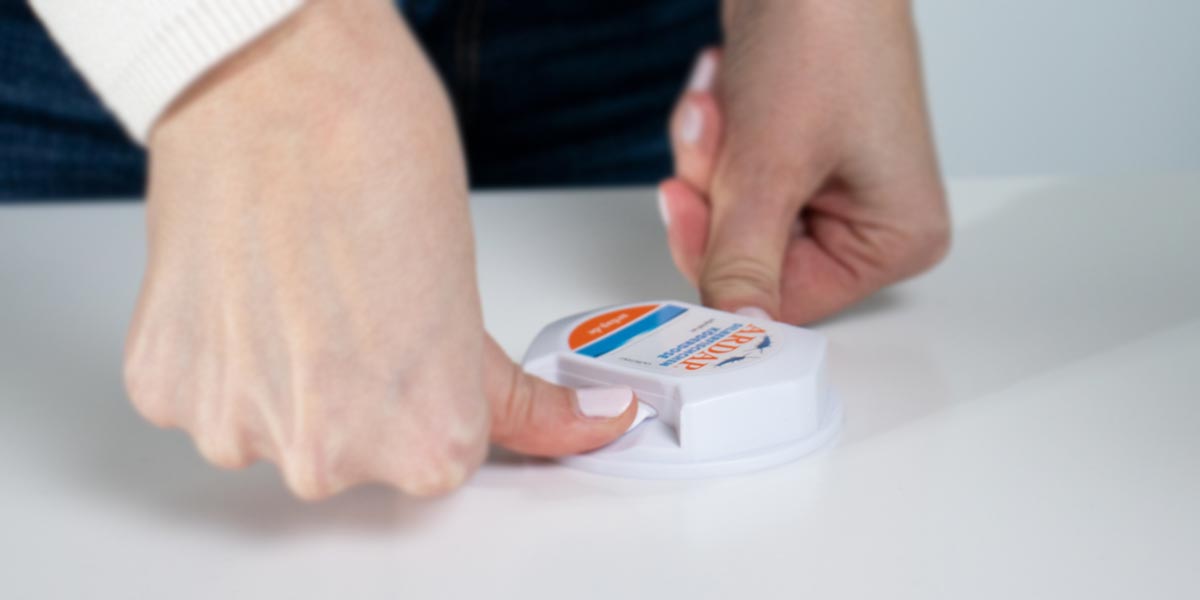
The ARDAP Pro Silverfish Bait Box is a proven method for the targeted control of silverfish using a novel attractant that draws the insects in. The silverfish crawl into the bait box, absorb the active ingredient, and carry it to their place of retreat. There, other silverfish are also controlled. Unlike eusocial ants, silverfish do not form classic nests, but communicate mainly via pheromones, which promote increased concentrations, known as aggregations.
The bait box is designed for damp spaces and is therefore ideal for bathrooms and kitchens. It can be discreetly placed behind cabinets, under sinks, or along baseboards. Its discreet application ensures that it is neither disruptive nor visible. In just a few days, entire aggregations can be controlled cleanly, quickly, and reliably without unnecessarily burdening the living space.

ARDAP Pro Fogger
The ARDAP Pro Fogger offers a large-scale solution for treating entire rooms. The active ingredient mist distributes evenly throughout the room. The fogger is specially designed for use in cases of persistent infestation or severely affected rooms. It contains an effective combination of killing and growth-inhibiting ingredients that render not only adult animals but also their eggs and larvae harmless for a period of up to 6 months.

ARDAP Pro Sprays
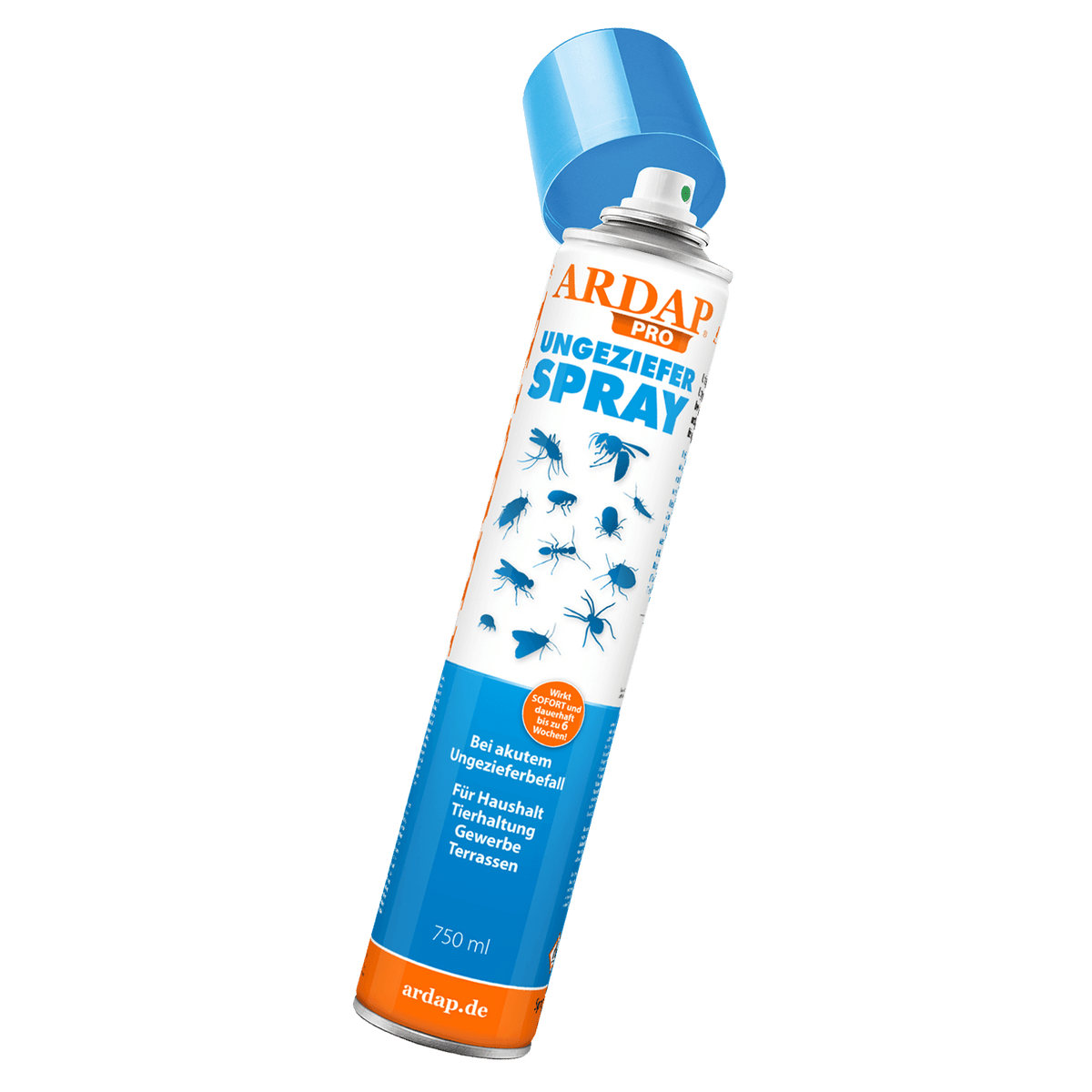
The ARDAP Pro household pest spray and the ARDAP Pro Long-Term Floh Spray are used to treat hard-to-reach areas such as corners, cracks, or hiding places behind furniture very precisely. Both sprays have a long-lasting effect that effectively controls silverfish and other insects. The long-term floh spray works just like the fogger with a long-term effect of up to 6 months, so that various developmental stages of the silverfish can also be eliminated.