- How do silverfish get into your home? And why?
- Can you prevent silverfish at home?
- Side note: booklice in bookcases and behind wallpaper
- No chance for silverfish and booklice: control methods

How do silverfish get into your home? And why?
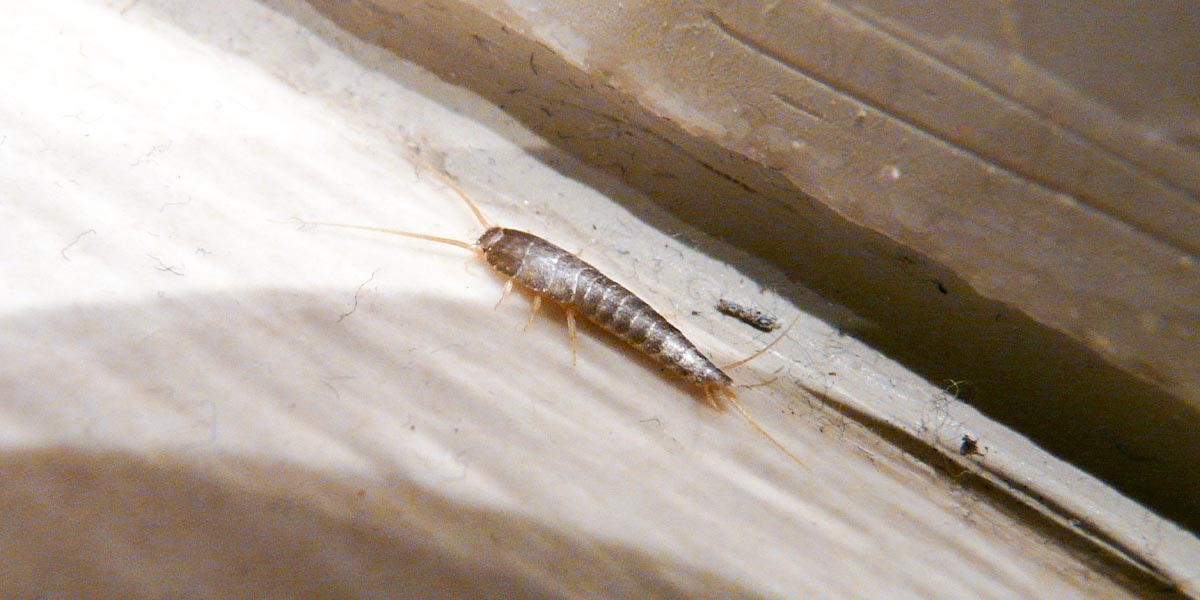
Silverfish (Lepisma saccharina) enter your living area especially when four parameters are met: First, the insects need access to human dwellings, they also need the right humidity, an optimal temperature range, and of course a suitable food supply. In fact, our homes and houses are not ideal habitats for silverfish at first—unless the indoor climate is rather poor for humans. These annoying pests therefore also occur preferentially when something is wrong with the building in the apartment or house.

Are silverfish harmful?
The good news first: silverfish are not directly harmful to human health. They do not feed on blood, so they do not sting or bite. They are also not aggressive, but rather shy. Nevertheless, their appearance usually causes us great discomfort and often a feeling of disgust. This can also (unconsciously) be due to one of silverfish's favorite foods: mold. The animals love the fungus especially when it can grow unnoticed in the darkness of the masonry. Mold, in turn, is known in humans as an allergy trigger and a cause of respiratory diseases.

Signs of possible building damage
The main cause for the presence of silverfish is moisture. This explains why these insects usually set up their hiding places in kitchens, basements, and bathrooms. The required indoor climate can be caused by leaky water pipes, damage to the building's sealing, or condensation. Cracks in walls and floors, poorly sealed windows and doors, or missing vapor barriers in the roof construction also make homes and houses attractive to silverfish. By the way: Most aggregations of silverfish are discovered in the cold months, as heated and damp indoor spaces offer the insects a welcome winter quarters!

Silverfish in the home – is that normal?
Silverfish are spread worldwide and appear everywhere they find suitable living conditions. In damp rooms such as bathrooms, kitchens or laundry rooms, the occasional appearance of the insects is quite normal. Older buildings with uninsulated walls, leaky pipes, and cracks in the masonry are particularly sought after by silverfish. However, individual animals that quickly disappear from light into darkness at night under the ceiling light are always an indication of a (hidden) population, because a silverfish rarely comes alone. Although the insects reproduce slowly, they can build up a stable population under consistently good conditions. Without appropriate countermeasures, the number of animals inevitably increases and the problem becomes increasingly difficult to control. Eventually, a mass infestation occurs, and the animals no longer settle only in damp rooms, but also move into other areas such as bedrooms or living rooms.
It is therefore important to act early and use effective means to repel the pests.

Fast and effective repulsion
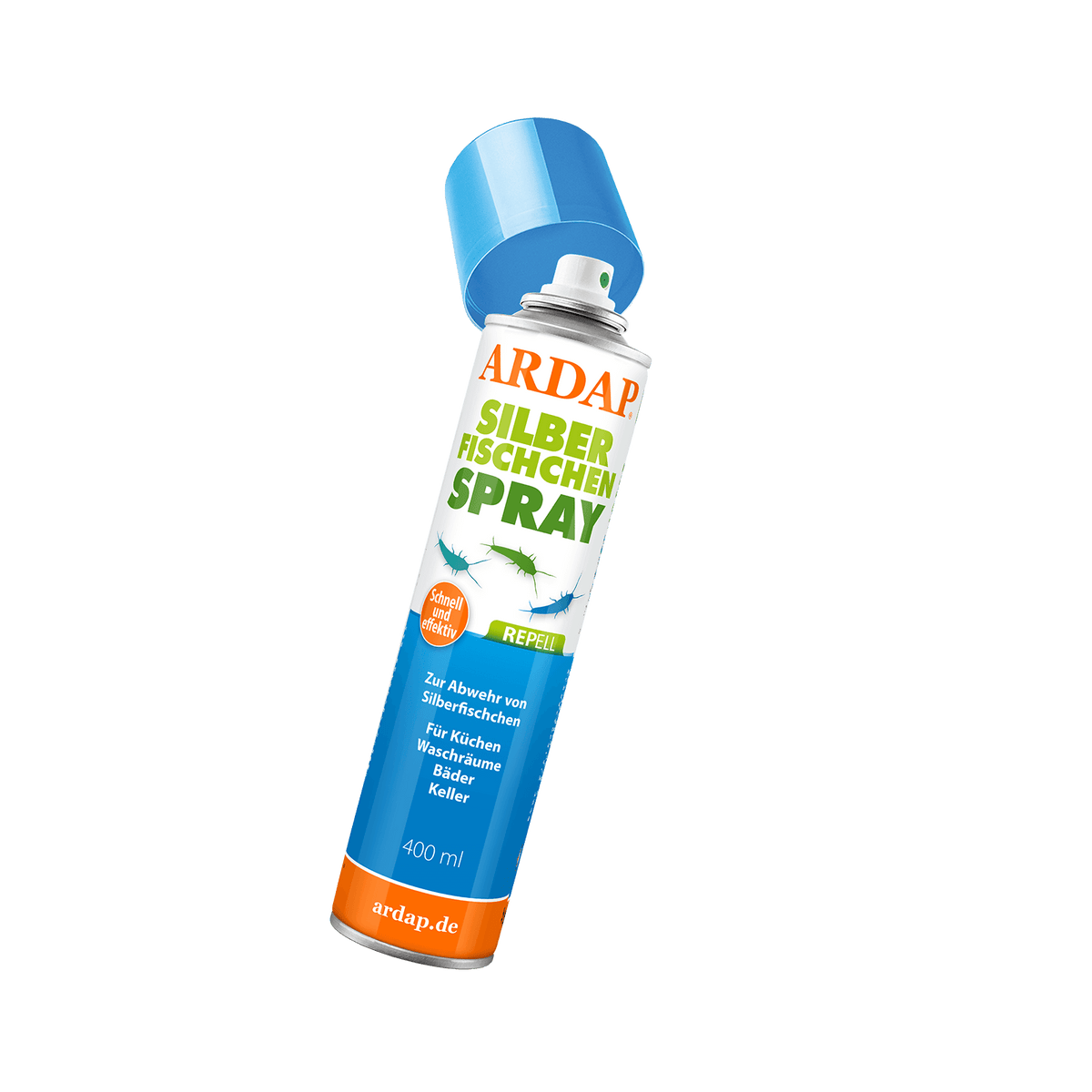
The ARDAP Repell Silverfish Spray offers fast and effective repulsion. The spray is based on the active ingredient pyrethrum from the chrysanthemum, which reliably repels pests. The spray is sprayed directly locally on known or suspected hiding places or areas where silverfish like to hang out. These are, for example, silicone joints with cracks, cracks in tiles and joints, behind baseboards, in drains, or in basement rooms. The product thus offers a good way to reliably repel the nimble squatters in a short time.

Can you prevent silverfish at home?
The infestation of homes and houses can be well prevented by using the repellent Silverfish Sprays as well as other targeted measures—whether in an old building or a newly built house. The goal should always be to make the living conditions as unattractive as possible for silverfish. Proper ventilation, reducing humidity, and eliminating unwanted moisture sources are supporting measures to prevent a silverfish infestation in your home.

Ventilation, sealing, and more—additional measures against silverfish
There are sensible measures you can take to make life uncomfortable for silverfish in your home. But beware: All the measures mentioned here should always be understood only as support.
With proper ventilation, you take away one of the animals' most important foundations for life: high humidity. It is good if you open the windows completely several times a day for five to ten minutes, especially in bathrooms and kitchens. In addition, the goal is now to take away the silverfish's hiding places and breeding grounds. Gaps under baseboards, cracks in walls and floors, and gaps in windows and doors: Find crevices, cracks, and holes and seal them. This takes away the light-sensitive insects' ability to hide and reproduce.

Side note: booklice in bookcases and behind wallpaper
Booklice (Ctenolepisma longicaudata) are close relatives of silverfish. They are slightly larger and darker—and above all, they are not dependent on moisture. On the contrary, booklice prefer dry, dark, and warm areas.

What distinguishes booklice from silverfish
Booklice and silverfish both biologically belong to the family of silverfish (Lepismatidae). Despite their similarities, they differ in their habitats, appearance, diet, and behavior. Booklice are usually larger than silverfish, colored gray-brown to dark gray, and lack the typical metallic sheen of the skin surface. While silverfish prefer damp, warm environments with high humidity, booklice like it dry, dark, and warm—preferably with a humidity level below 50 percent. Silverfish feed on starch- and sugar-containing materials, preferably on skin scales, hair, or mold. Booklice, on the other hand, love cellulose-containing materials, including paper, wallpaper, and books. Their behavior also clearly distinguishes the two silverfish. While silverfish are nocturnal and quickly flee from light, their relatives are slower, more robust, and therefore less adapted to flight.
Danger from booklice in your own home
Booklice do not pose a direct health threat to humans. However, the insects can cause considerable damage, as they eat book pages, documents, and starch-containing adhesives, such as those found in bookbindings. Wallpaper and wallpaper paste are also on their menu, as are cardboard or packaging. The animals' hunger is particularly problematic for stored keepsakes, valuable documents, or collections. If booklice are not controlled early on, they spread unchecked—and therefore cause even more damage.

No chance for silverfish and booklice: control methods
A widespread infestation of silverfish or booklice can only be eliminated with effective means for control The specialist trade has the right products ready for this.


ARDAP Pro Silverfish Bait Box
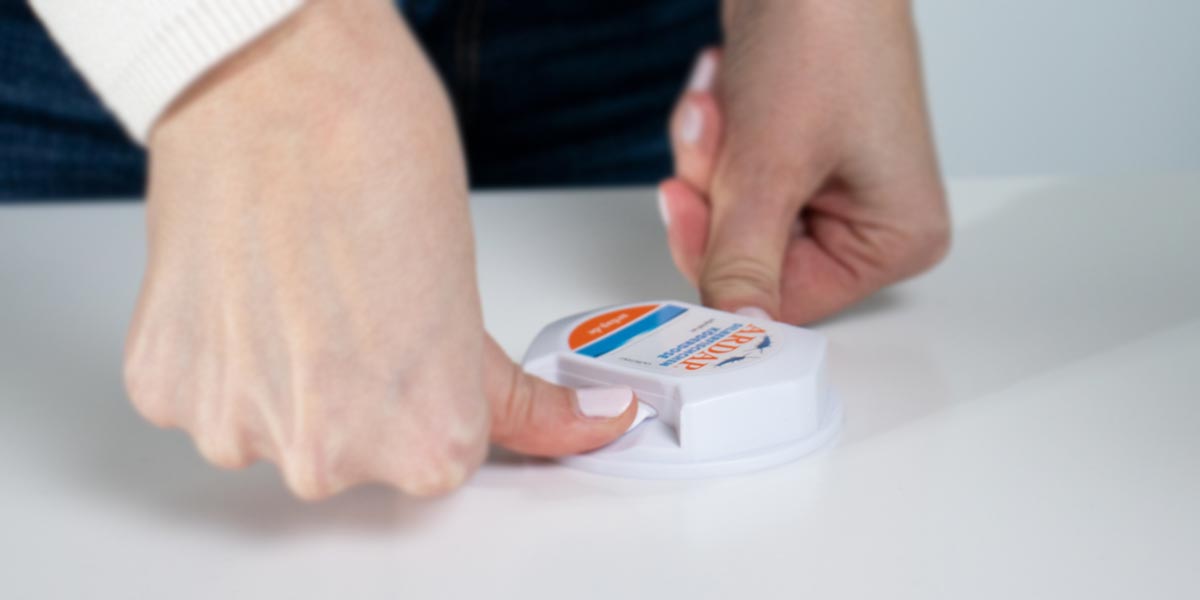
The ARDAP Pro Silverfish Bait Box offers a proven method for the targeted control of silverfish and booklice. It contains an innovative attractant that draws the insects in. The silverfish are lured into the box, take up the bait, and carry it into their hiding place. The ingredients act on the developmental stages, thus preventing the pests from reproducing and stopping further spread and reproduction. The silverfish are reliably controlled in a few days.
The bait box is moisture-resistant and thus explicitly designed for damp rooms such as bathrooms or kitchens. In addition, the product is suitable for reliable use throughout the entire living area and can be discreetly placed behind furniture, under sinks, or along baseboards.

ARDAP Pro Fogger
The ARDAP Pro Fogger is specially designed for use in entire rooms affected by a persistent pest infestation. It produces a fine active ingredient mist that distributes evenly in the environment. Thanks to the combination of killing and growth-inhibiting active ingredients, the fogger not only works against fully grown animals, but also effectively eliminates eggs and larvae. The ARDAP Pro Fogger is an excellent addition to targeted measures such as the spray and the bait box.

ARDAP Pro Sprays
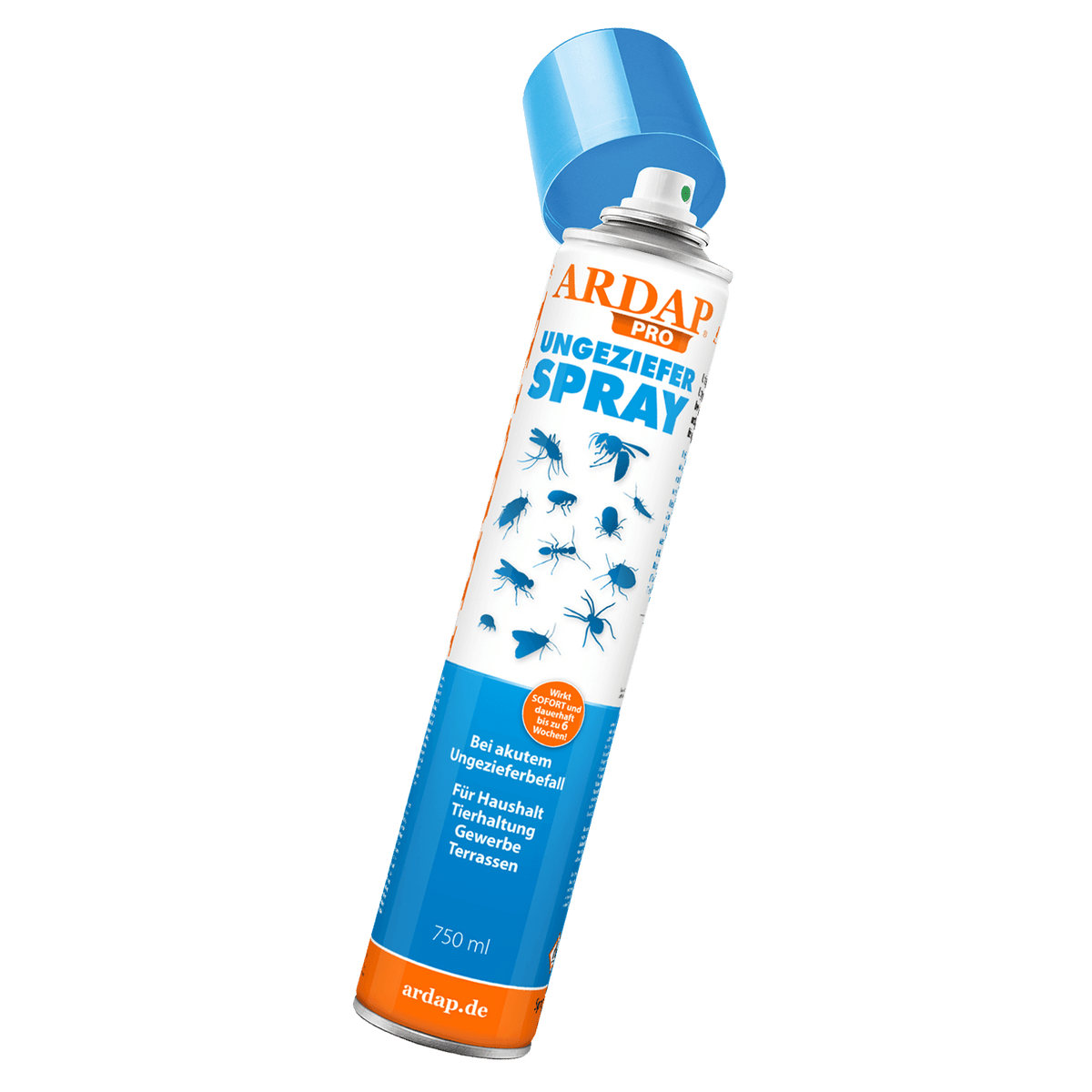
With the ARDAP Pro Pest Spray and the ARDAP Pro Long-Term Flea Spray, you can also intensively treat particularly hard-to-reach areas such as corners, crevices, or hiding places behind furniture. Both sprays have a long-lasting effect against the various silverfish as well as other crawling insects and arachnids. The long-term flea spray contains a growth inhibitor that controls the various developmental stages of the silverfish over a period of up to 6 months.