Our expert Prof. Dr. med. vet. Norbert Mencke, a specialist in veterinary parasitology, will help you deal with a humpback fly infestation.
- What it looks like: Identifying humpback flies
- Are humpback flies dangerous to humans?
- Controlling and eliminating humpback flies
- Conclusion
What it looks like: Identifying humpback flies
The humpback fly (Megaselia scalaris) is one of the smaller species of flies and is distinguished by its characteristic appearance. As this species is also a health pest, you should be able to identify these insects accurately. We will help you with the necessary background information.
Appearance of the humpback fly
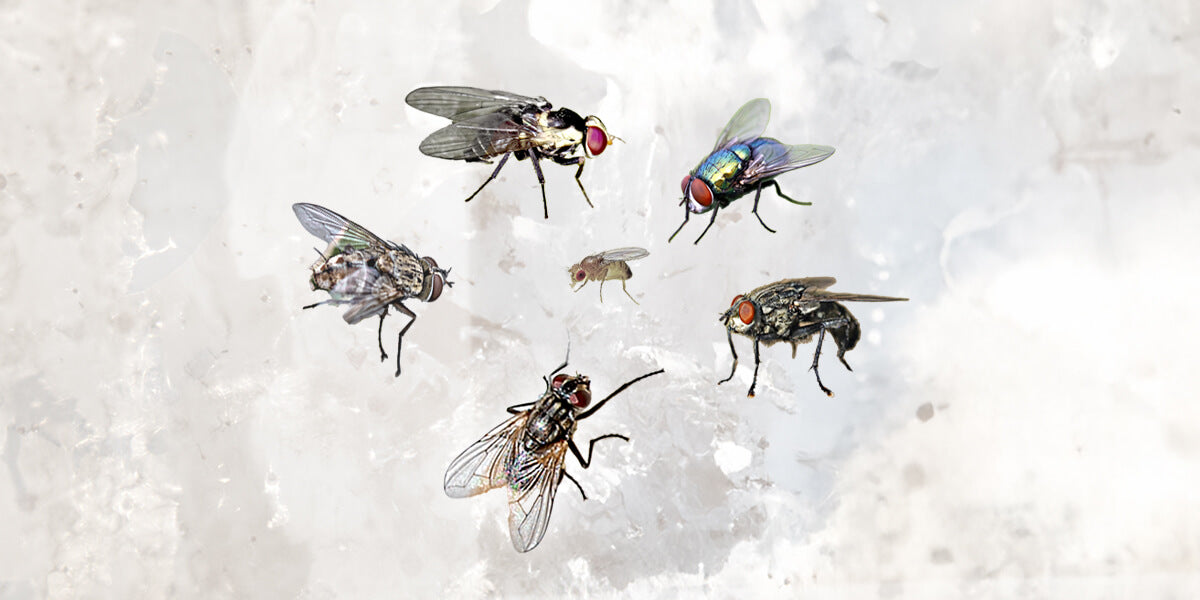
The humpback fly owes its name to its most important external distinguishing feature. The chest section, or thorax, is highly arched in this species, giving it a humped appearance. Its fast and jerky movements are also striking. It displays these movement patterns when it is on flowers and leaves. Humpback flies are therefore also known as racing flies.
The humpback fly is one of the small species of flies. Its body measures no more than 0.6 to 6 millimeters in length. The animals have a rather dark brownish-yellow coloration.
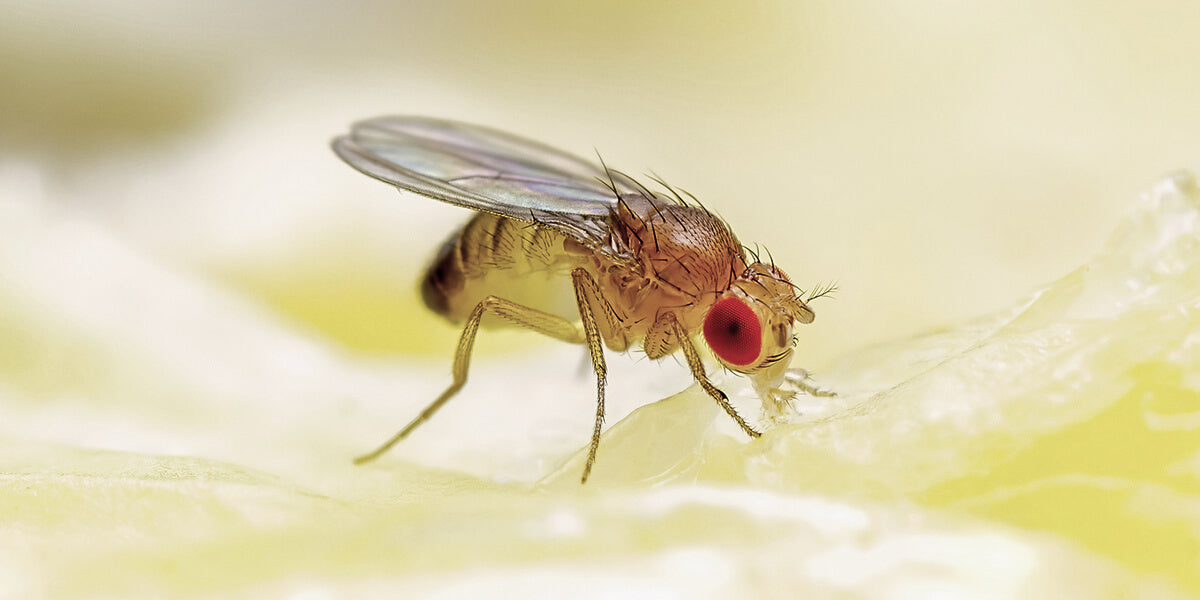
The humpback fly also has wings that appear simply structured. These have no cross veins and only a few, but distinctive longitudinal veins. In addition, the wings are transparent. It is therefore fundamentally possible to confuse it with any other small species of flies. However, fruit flies, for example, have red eyes and therefore differ from humpback flies despite their comparable size with their characteristic hump.

Origin and distribution of the humpback fly
The humpback fly (Megaselia scalaris), which belongs to the family with the scientific name Phoridae, is a species of fly introduced to Europe, which actually originates from Southeast Asia. It belongs to the order of two-winged insects Diptera, and over 4,000 species are described worldwide. These insects can be found from tropical to temperate climate zones. Their high adaptability is one of their strengths. Therefore, they were able to leave the subtropical and tropical regions and unfortunately also spread among us. And humpback flies are by no means rare in countries like Germany. It is therefore all the more urgent to prepare and be able to deal with a possible infestation. Because once the humpback fly has spread, it is no longer so easy to drive away.
Through global trade and the transport of goods, humpback flies have made their way to our cities and residential areas. In the household, they end up in the kitchen, for example. They prefer to stay in trash cans and drains.
They also penetrate commercial areas where food is processed (for example slaughterhouses or commercial kitchens) and always where many people gather, such as in hospitals or nursing homes.
In addition, they like all damp areas, but can also cope with dry periods and can even survive in colder regions. Outdoors, the insects are mainly found during the warm months – so from spring to autumn. Indoors, however, they are active all year round and can therefore pose a continuous problem and danger.


Reproduction and lifestyle of the humpback fly
In flies, rapid reproduction generally poses a major problem, because the population can spread rapidly. In the humpback fly, the reproductive cycle is particularly short. The greatly shortened larval stage is striking: It is completed after only about two to four days. Even with the large housefly, it takes about twice as long. Presumably, humpback flies have adapted to the rapidly rotting substrates they feed on and want to make the most of them as a food source.

A female humpback fly lays between 20 and 100 eggs. The eggs are laid in rotting food or carcasses. In addition, development can occur parasitically, i.e., for example in other insect larvae. The adult fly (imago) lives only a few weeks. But newly hatched young females lay their first eggs at the age of only half a day, the cycle starts all over again, and at a rapid pace.
In terms of food, humpback flies utilize a wide range of sources. They feed, for example, on dead organic material. Depending on the species, development can also take place in human and animal corpses. In other humpback fly species, the larvae feed on rotting plant tissue. Some species utilize mushrooms or eat waste in beehives. Here again, the high adaptability is evident. And that is what makes these insects so dangerous.
Are humpback flies dangerous to humans?
In principle, the humpback fly poses a danger to humans that should not be underestimated. These insects can transmit pathogens and impair hygiene, for example in the kitchen. It should be crystal clear that these pests have no place in our homes and apartments. Here you will learn what makes the humpback fly so dangerous.

Humpback flies as hygiene pests
Humpback flies are certainly annoying. Due to their small size, they penetrate even the smallest cracks in the building and can be a real nuisance here. Floor drains also serve as entry points into buildings. However, their appearance as hygiene pests is much more serious. Flies generally like to stay in places that are not very hygienic. This includes animal carcasses, excrement, trash, and generally rotting organic material. Here they pick up dangerous germs and pathogens, because the flies crawl into the material and can thus carry germs on their entire body surface. In addition, they have mouthparts with which they can distribute germs everywhere.
Humpback flies show a particularly pronounced preference for rotting organic materials, waste, feces, and carcasses. If humpback flies are in your living environment, contamination of surfaces or food can quickly occur. Compliance with high hygiene standards is therefore absolutely necessary. This includes the regular cleaning of work surfaces or taking out the trash. Food businesses, in turn, must check their inventory. Floor drains are also ideal breeding grounds here. The key is that ideally such an infestation never occurs in the first place.
Humpback flies are carriers of pathogens and health pests
Humpback flies can transmit various pathogens that cause diseases. And that is what makes these flies so dangerous to us humans. They therefore pose a direct health risk to us. The infection risk refers, for example, to salmonella, which can lead to diarrheal diseases. Other pathogens can cause gastrointestinal infections or wound infections. This is particularly threatening for already weakened people and those with a weakened immune system.

To top it all off, humpback flies have the habit of laying their larvae in the living wound tissue of humans and animals. We call such an infestation myiasis, also known as flystrike. The insects use wounds, for example, for egg-laying and cause inflammatory reactions and severe infections here. Even tissue destruction is possible. Older people, immunocompromised individuals, and hospital patients are among the people at risk here.
Another danger is accidentally ingesting humpback fly eggs orally with other food. This can happen if we store food openly and do not notice the contamination by humpback flies. This can result in gastrointestinal, i.e., stomach and intestinal inflammation. Symptoms include nausea, vomiting, or diarrhea, as well as abdominal pain.
Controlling and eliminating humpback flies
Have you caught the unpleasant humpback flies and want to get rid of them as quickly as possible? Now only high-quality products from specialist retailers, whose effectiveness is proven, can help. This danger cannot be sufficiently contained with a fly swatter, fly screens, or even home remedies.

Control with highly effective products
Due to the health risks posed by humpback flies, there can be no doubt that control is necessary. Special sprays have proven particularly effective here. They offer the advantage of being targeted. You therefore spray the product where humpback flies prefer to stay or enter the building.
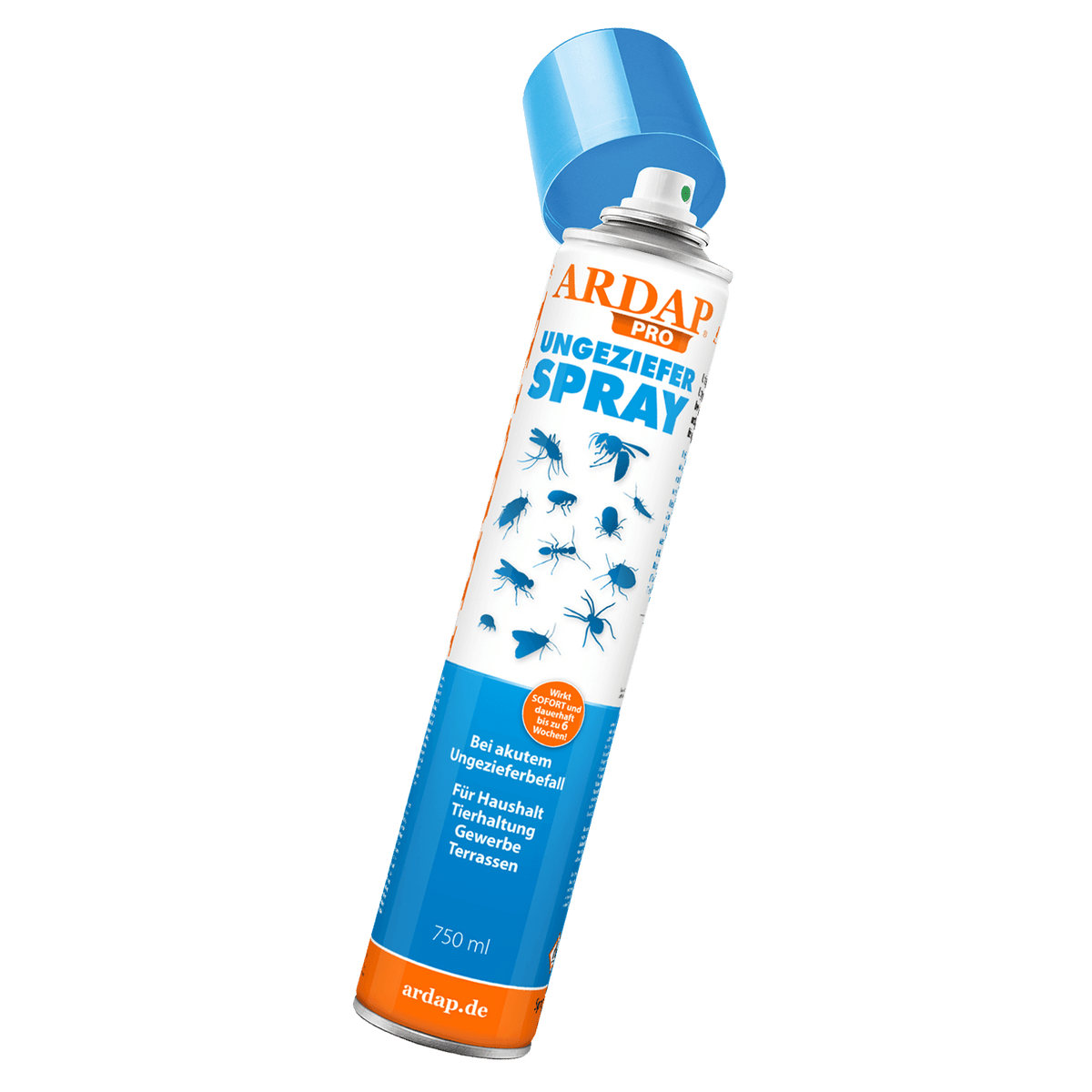
The ARDAP Pro Ungezieferspray is used for the immediate control of pests such as the humpback fly. The product has proven itself over decades and is universally applicable against various pests and nuisances such as fleas, bedbugs, mites, ants, and ticks. So it is worth always having this product at home.
The immediate and long-lasting effect of up to six weeks distinguishes the ARDAP Pro Ungezieferspray. If there is an acute infestation of humpback flies, you are excellently equipped with this product. This applies not only to use in the household. The spray is also suitable for commercial use, animal husbandry, or the patio.

Where is the breeding ground of the humpback fly? You must answer this question if you want to contain the spread. In principle, all biological substrates are possible breeding grounds. However, they are often found in rotting fruit. You should dispose of such fruit immediately. The task is often not quite so easy. If the flies have nested behind the stove or in a pipe or drain, you may not be able to dispose of the breeding ground easily. The spread can continue in smaller animal carcasses in the garden or in the compost. What is to be done here? The first goal of control must always be to find the source of the infestation with humpback flies and then clean it. This includes cleaning wastewater pipes, cleaning and subsequently sealing cracks and gaps, among other things.
With the ARDAP Biotonnen-Pulver, you can already achieve a lot if you want to contain the spread of humpback flies in organic waste. ARDAP developed this product for use in the biotonne, on the compost, or also in containers for kitchen waste. The granules extract moisture from the organic material and stop unpleasant odors. This reduces the likelihood that humpback flies or other pests will establish their breeding grounds here.
Conclusion
The humpback fly may be small and seem harmless, but the risks it poses are not. We are dealing with a persistent hygiene pest that can also transmit pathogens. The lifestyle of these flies is particularly problematic. They stay near carcasses, excrement, and waste and thus come into contact with a wide variety of germs. ARDAP offers a solution here with products that can quickly contain an infestation. This is how you maintain hygiene in your household and effectively protect yourself and all other residents.