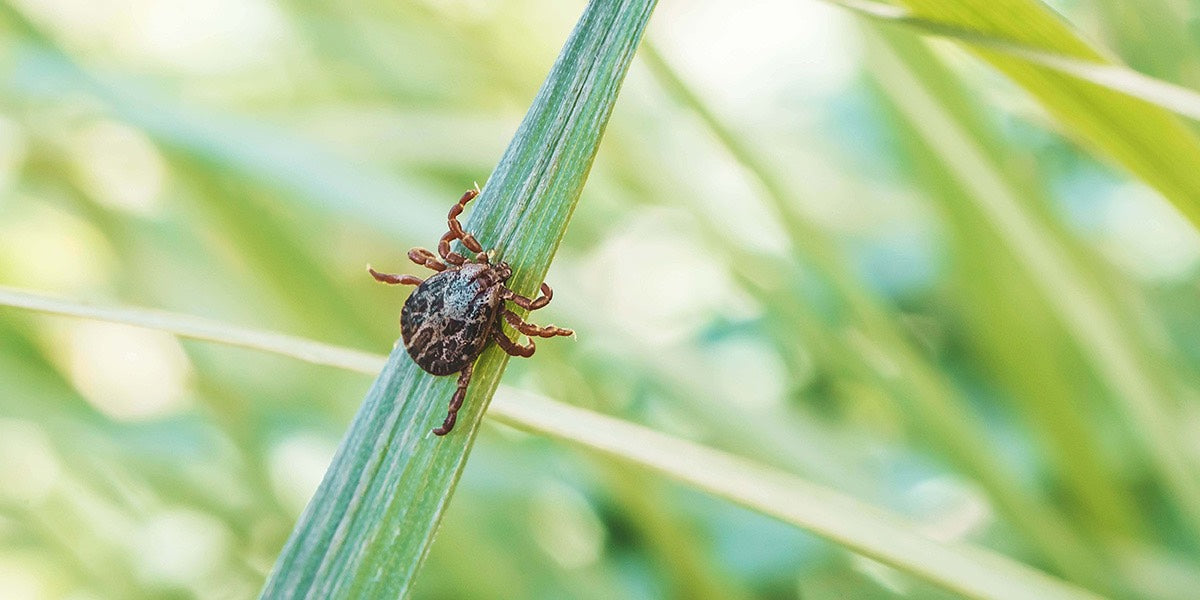
Together with our expert Prof. Dr. med. vet. Norbert Mencke, specialist in parasitology, we provide you with a comprehensive guide, from detection and preventive measures to targeted control.
- Recognizing earwigs
- Why do earwigs enter homes?
- Are earwigs dangerous?
- Repelling earwigs
- Controlling earwigs
- Conclusion
- Frequently Asked Questions
Earwigs (Forficula auricularia) are nocturnal animals that seek out dark, damp hiding places during the day.
The name is misleading: The common earwig is also called an earwiggler and belongs to the order of earwigs (Dermaptera). However, entering ears is not part of its typical behavior at all.
Occasionally, earwigs pinch with their pincers, but this usually has no consequences for humans. Nevertheless, they are sometimes perceived as unpleasant and annoying.
Prevention is crucial: To avoid infestation, you should reduce moisture, seal cracks, and eliminate potential food sources to avoid attracting the insects.
With products from ARDAP, earwigs can be effectively repelled or controlled.
Recognizing earwigs
Taxonomically, the genus of earwigs belongs to the order of earwigs (Dermaptera) and thus to the flying insects, even though most species are very rarely seen in the air. We take a closer look at the most common earwig species in our region (Forficula auricularia) and point out specific identifying features.

What earwigs look like
The common earwig (Forficula auricularia) is the most widespread species in Central Europe and has existed for more than 30 million years. It reaches a body length of up to 16 millimeters and has a shiny reddish-brown to dark brown coloration. Although its wings are fully developed, they are rarely used for flying. A characteristic feature for clearly distinguishing the sexes is the abdominal appendages developed into pincers (Forceps): While males have strongly curved pincers (Forceps), the pincers of the females are straight or only slightly curved. The pincers appear threatening to many people, but they are mainly used for defense, help with catching prey, and are used during mating. In addition, earwigs have a flattened body structure that allows them to hide in narrow cracks and crevices.
Origin of the name "earwiggler" or "earwig"
Despite their name, earwigs do not crawl into human ears – this is an old myth. The German name "earwiggler" and the term "earwig" also go back to centuries-old ideas. In the past, people believed that the animals would crawl into the ears of people at night and cause damage there. This myth has persisted in many cultures and can also be found in various language variants. Linguists also attribute the naming to the fact that the animals' abdominal pincers resembled tools that were previously used for cleaning ears. The term "earwig" probably also finds its origin in ancient naturopathy: the insects were then administered in dried and powdered form as a medicine against ear ailments or hearing loss. Today it is clear: earwigs have no connection to human ears, but prefer crevices and cracks as hiding places.

Life cycle: Eggs, larvae, and imago of the earwig
Earwigs reproduce seasonally, twice a year they exhibit typical courtship behavior and a long mating act. In spring as well as autumn, the male embraces the female with his more strongly curved pincers at the abdomen and holds her tightly. The earwig females later lay about 50-90 fertilized eggs in small earthen holes and even engage in brood care – a peculiarity among insects. In doing so, the females clean the clutch and even help with hatching. As soon as the earwig larvae hatch from the eggs, the mother dies and is eaten by the larvae. They then undergo several molts from the larval to the nymph stage until they reach the adult stage (imago). The development cycle is highly dependent on temperature and humidity. Especially near buildings, where it is warm and sheltered, stable populations can develop quickly.
Behavior and lifestyle of earwigs
Earwigs are active primarily in the twilight and at night. They feed diversely: on plant remains, algae and fungi, but also on small insects such as mites and aphids as well as their eggs. The eggs of codling moths and clothes moths are also on their menu. In the garden, they thus perform valuable services, as they can reduce pests. However, if they get into the house, they are quickly perceived as disturbing and unhygienic there.
Why do earwigs enter homes?
Earwigs primarily seek protection, moisture, and warmth in our buildings. While they flee into our buildings in autumn to escape the impending cold, they are drawn into our cool basements or garages in too dry and hot summers. Typical entry points are leaky doors, window frames or small cracks in the masonry.
Preferred hiding places of earwigs in the house
- Gaps and cracks at doors, windows, and baseboards
- Damp basement rooms or laundry rooms
- Bathrooms, especially under bathtubs or behind fixtures
- Flower pots with standing water or damp cardboard
Are earwigs dangerous?
The name earwiggler sounds threatening, so it is also reasonable to suspect that these insects could pose a danger. Let's take a closer look at the animals and their potential danger:
Danger to humans?
Earwigs are considered harmless. Although they can pinch with their pincers, this "earwiggler bite" is barely noticeable or painful and leaves no traces. They possess neither a venom that could affect us, nor do they transmit pathogens. The myth of the "earwiggler in the ear" is outdated and has no real basis.
Threat to materials?
In the household, earwigs cause no serious damage. They do not eat furniture or textiles. Only on fruit or delicate houseplants can small feeding marks occasionally occur, but this usually does not mean any major damage.

Beneficial or pest?
In the garden, earwigs fulfill a useful function, as they can minimize the occurrence of pests such as aphids. However, if they get into the house, they are perceived as disturbing and viewed as an indicator of moisture and building defects. There they should not be tolerated, but rather prevented and kept away through suitable measures.
Repelling earwigs
It is more than understandable that you do not want to share your apartment or house with earwigs. We explain the preventive options and show how you can deal with annoying earwigs.
Preventive measures
To keep earwigs away, preventive steps are particularly important:
- Seal cracks: Check window and door seals, renew silicone joints, and provide basement shafts with fine-mesh insect wire.
- Reduce moisture: Regular ventilation, the use of dehumidifiers, and avoiding standing water in flower pots act preventively.
- Regulate light sources: Turn off outdoor lights at night or use motion sensors. Insect wire on windows is also helpful.
- Remove food sources: Do not leave fruit bowls open, dispose of organic waste regularly, and keep rooms clean.

Controlling earwigs
If many animals have already settled in the house, prevention and repulsion alone are no longer enough. Then you should take targeted measures to control the earwigs.
Effective means for control
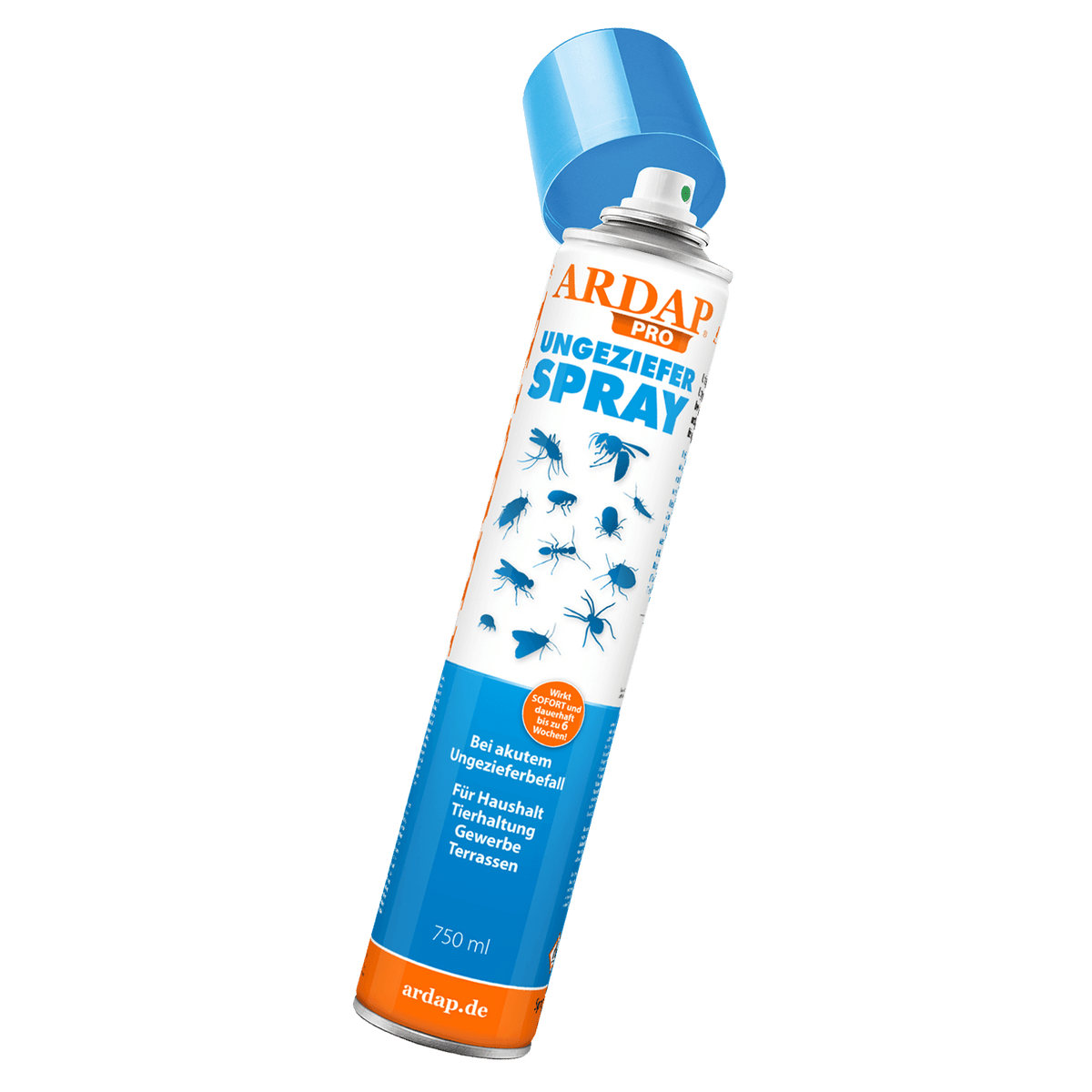
As soon as earwigs appear in larger numbers and to a greater extent in your apartment or house, it is time to take effective action against the insects. Particularly suitable and above all immediately and long-term effective is the ARDAP Pro Pest Spray, which can be applied in cracks, crevices, joints, behind baseboards, on window frames, door thresholds, or hidden areas such as behind furniture. Through the contact of the earwigs with the sprayed surface, the pests are reliably controlled and re-infestation is prevented for up to 6 weeks.
Treat especially the areas where the animals typically appear. These points are particularly susceptible to infestation, which is why they should be treated specifically. In this context, people often speak of "critical areas", i.e., places where earwigs prefer to enter or hide.

The proven original
Insect spray with long-term effect
Highly effective for acute earwig and pest infestation
To the productConclusion
Earwigs are fascinating insects with useful properties in the garden, as they utilize organic material and pest insects. However, they are quickly perceived as unpleasant and annoying in apartments and houses and are also indicators of moisture and building defects. The most effective strategy consists in first ensuring a dry and sealed living environment and sealing possible entry points for the insects. In the case of a very strong infestation, targeted control measures with the ARDAP Pro Pest Spray offer a reliable solution. This keeps your home free of earwigs in the long term, but also many other annoying and harmful pests.
Frequently Asked Questions
Are earwigs harmless?
Yes, earwigs are harmless to humans and neither poisonous nor dangerous. Nevertheless, they are often perceived as unpleasant and annoying.
Why is the earwiggler called that?
The earwiggler is called "earwiggler" because there are some old ideas and myths surrounding the medical treatment of ears and ear diseases with the insect, which cannot be scientifically confirmed. The name is primarily due to the pincer on the abdomen, which resembles an ancient tool for cleaning ears. In addition, earwigs were processed into medicine against ear pain and hearing loss in early naturopathy. Also related earwigs, whose wings resemble human ears, have played their part in the name of the earwiggler known and settled here.
What do earwigs do to humans?
Earwigs actually do nothing directly to humans, they rather avoid contact with humans. Occasionally they pinch with the pincers if you touch them, which is however harmless and carries no health consequences.
Are earwigs pests?
Earwigs are not real pests. In the garden, earwigs are beneficial, in the house they are considered pests. If they appear in large numbers, this can also be an indication of leaky or damp spots in the building.
Earwigs crawl into ears – is that true?
No, earwigs do not crawl into human ears. This is a myth without any real basis.
Earwiggler bite – what to do?
A bite or rather a pinch by an earwig is very unlikely and if so, harmless. The affected skin area should merely be cleaned with water and if necessary disinfected.