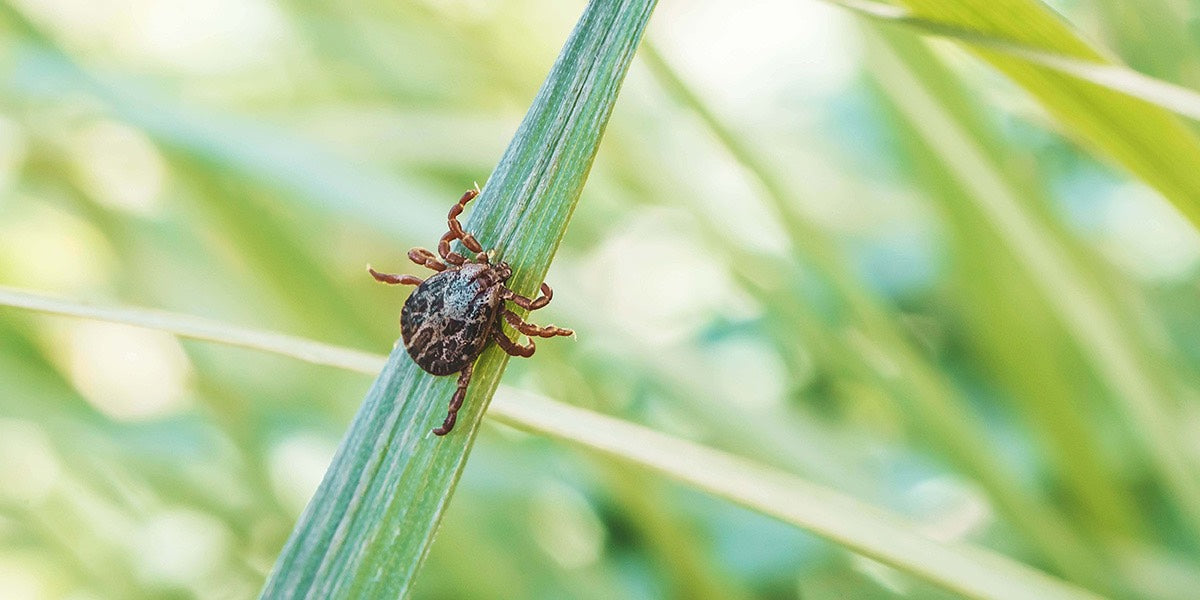
Together with our specialist veterinarian for parasitology, Prof. Dr. med. vet. Norbert Mencke, we explain how to identify fur moths, prevent infestation, and reliably control them. Hygiene, targeted measures, and high-quality products play a crucial role.
- The fur moth at a glance
- Damage caused by the fur moth
- Differences between clothes moths and fur moths
- Preventing and deterring fur moths, controlling fur moths
- Conclusion
- Frequently asked questions
Fur moths are specialized textile pests whose larvae use keratin as a nutrient source, causing considerable damage.
Fur and wool products are particularly at risk, but carpets and upholstered furniture as well.
A combination of hygienic measures such as cleaning, airing, and proper storage can severely restrict the living conditions of fur moths.
Small holes and fine webs in fabrics are decisive signs of a fur moth infestation. Adult moths can also be detected using sticky strips.
The targeted use of effective products from the ARDAP Pro line can reliably contain an infestation and also protect against re-infestation by fur moths.
The fur moth at a glance
Fur moths are widely distributed material pests that occur preferentially in households with animal-based textiles such as angora, merino, or sheep's wool, and of course furs of all kinds. They develop unobtrusively and are often only noticeable when garments or carpets are already damaged. In this section, you will learn how to recognize fur moths, how they live, and what differences there are with similar species such as the clothes moth. This basic information helps to correctly assess an infestation and to take appropriate countermeasures early.
What are fur moths?
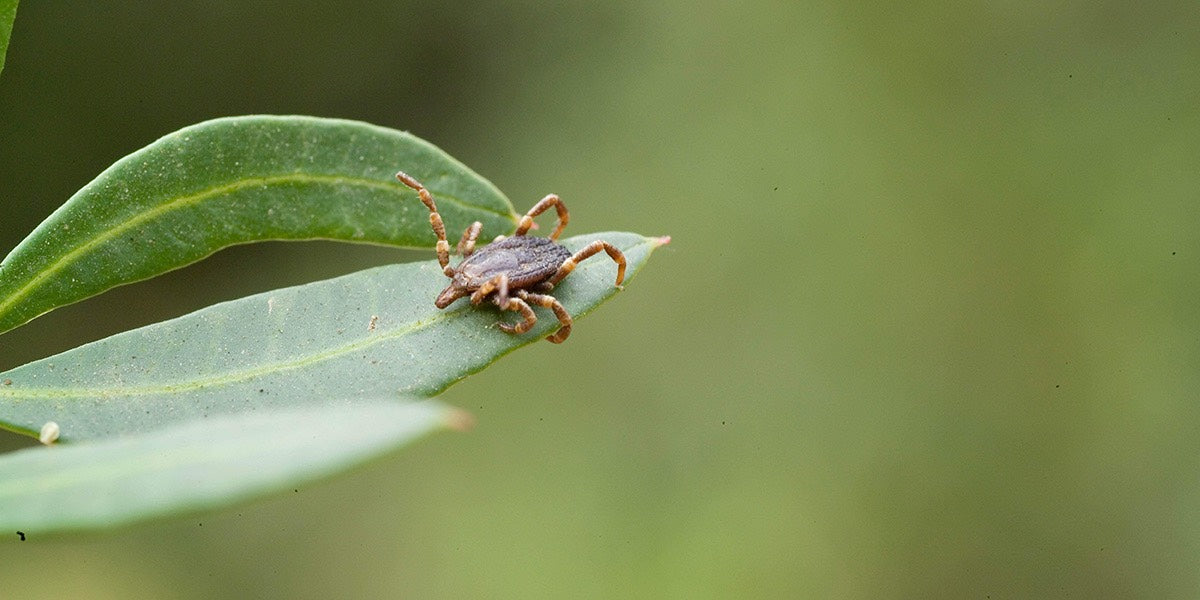
Fur moths (Tinea pellionella) belong to the order Lepidoptera and the family of true moths (Tineidae). They occur preferentially in homes where textiles of animal origin are present. The adult animals themselves do not cause damage – it is the larvae that cause considerable destruction with their feeding behavior. They feed on keratin-containing materials found in (animal) hair, wool, or feathers, which is why they are true pests.

Image: Fur moths, Tinea pellionella, author: Janet Graham, license: CC BY 2.0, source: Wikimedia Commons
What does a fur moth look like?
Adult fur moths are between 8 and 15 millimeters long and are therefore significantly larger than the much-talked-about clothes moths. Fur moths have brownish-yellow wings with three characteristic dark spots. Their body is narrowly built and densely hairy, giving them a matte appearance. At rest, the wings appear folded like a roof and shimmer slightly silky. The long, thread-like antennae are striking, reaching almost half the body length and serving for orientation in the dark.
Appearance: Fur moth larva
The caterpillars or larvae of the fur moth are whitish and about one centimeter long. Their silky, tubular cases, in which they pupate after complete larval development, are particularly striking.
Fur moth larvae live in protective cocoons, also called webs, made of textile fibers and silk threads. These fur moth cocoons or pupal cases often stick to the underside of furs, in carpets, or on upholstery. They are the clearest sign of an active infestation. If such a cocoon is discovered, all surrounding textiles should also be thoroughly checked.

Occurrence and lifestyle of the fur moth
Unlike other moth species, adult fur moths avoid light sources and stay preferentially in dark, enclosed spaces. They fly only rarely and are usually found near their egg-laying sites, such as in wardrobes, attics, or old upholstered furniture.
Fur moth larvae like to feed through all fabrics containing animal fibers. These include textiles containing the following materials:
- Silk
- Cashmere wool
- Sheep's or angora wool
- Merino wool
- Camel hair
- Furs of all kinds
- Feathers and down
Fur moths prefer dark, undisturbed places and develop best at temperatures between 15 and 25 degrees and a humidity of 60–80%. A female fur moth lays up to 100 eggs, from which the voracious larvae hatch after a few days. Their development time depends heavily on environmental conditions and can take several months.

Damage caused by the fur moth
An infestation by fur moths often goes unnoticed for a long time, but the effects can be considerable. Fur moth larvae leave visible damage to textiles and lead to significant material loss over time. In this section, you will learn what traces fur moths leave and why quick control is so important.
Are fur moths dangerous?
Fur moths are not a direct health hazard, but they can cause considerable material damage. Their larvae eat holes in valuable clothing, carpets, or upholstery fabrics. In addition, dust and larval residues can accumulate in heavily infested areas, which can trigger allergic reactions in sensitive individuals. An untreated infestation can spread quickly and destroy entire textile collections.
Differences between clothes moths and fur moths
Fur moths are often confused with clothes moths, as they have similar habitats and damage patterns. However, the two species differ significantly in their appearance, preferred food, and behavior. The following overview shows the most important characteristics to reliably distinguish the pests from each other.
| Characteristic | Clothes moth | Fur moth |
|---|---|---|
| Color | Brownish | Brownish with three black spots |
| Size | 5–8 mm | 8–15 mm |
| Activity time | Night | Night |
| Food | Clothing, carpets, curtains, paper, food | Fur, wool, silk, feathers, hair |
| Habitat | 10–25 °C, 50–70 % humidity | 15–25 °C, 60–80 % humidity |
Preventing and deterring fur moths, controlling fur moths
An infestation by fur moths can be reliably contained through preventive measures and targeted control. Cleanliness, temperature treatment, and the use of suitable, highly effective products from the ARDAP range are the most important steps.


Prevention and deterrence of fur moths
Prevention is the best protection. Regular airing, thorough cleaning, and storing textiles dry prevent fur moths from finding a suitable environment.
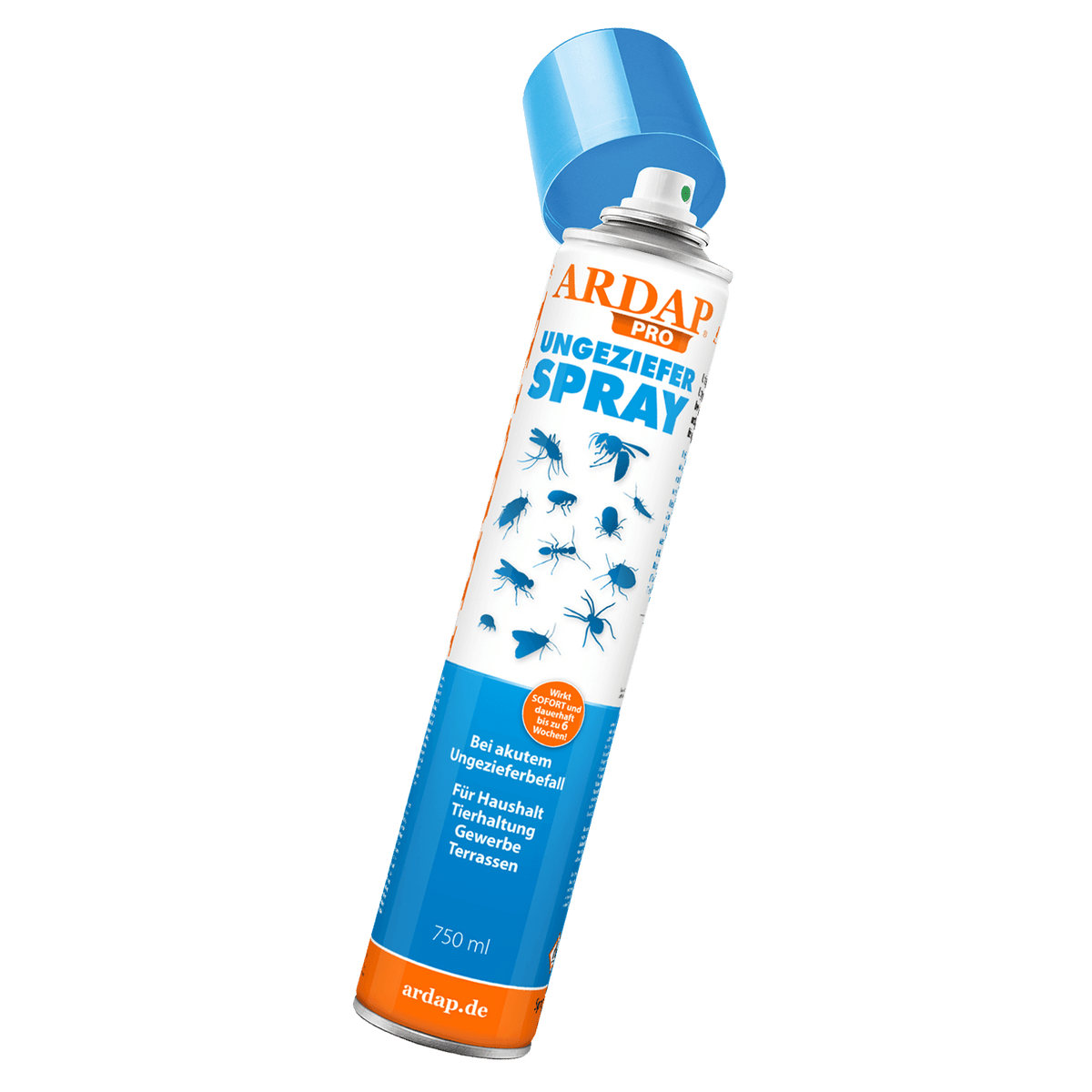
The entry of fur moths into living spaces can be effectively prevented by treating window and door frames regularly with ARDAP Pro Pest Spray. The protective film works for up to six weeks and prevents moths from settling indoors. As soon as adult fur moths come into contact with the treated surfaces, they are controlled and thus do not enter the interior at all – this also effectively prevents egg-laying on sensitive textiles. Alternatively, fine-mesh insect screens on windows and balcony doors provide additional protection and prevent initial infestation by fur moths flying in.

Highly effective remedies against fur moths
If an infestation of fur moths occurs despite all precautions, it is high time for effective and efficient control. With the right products and a step-by-step plan, fur moths can be successfully eliminated.
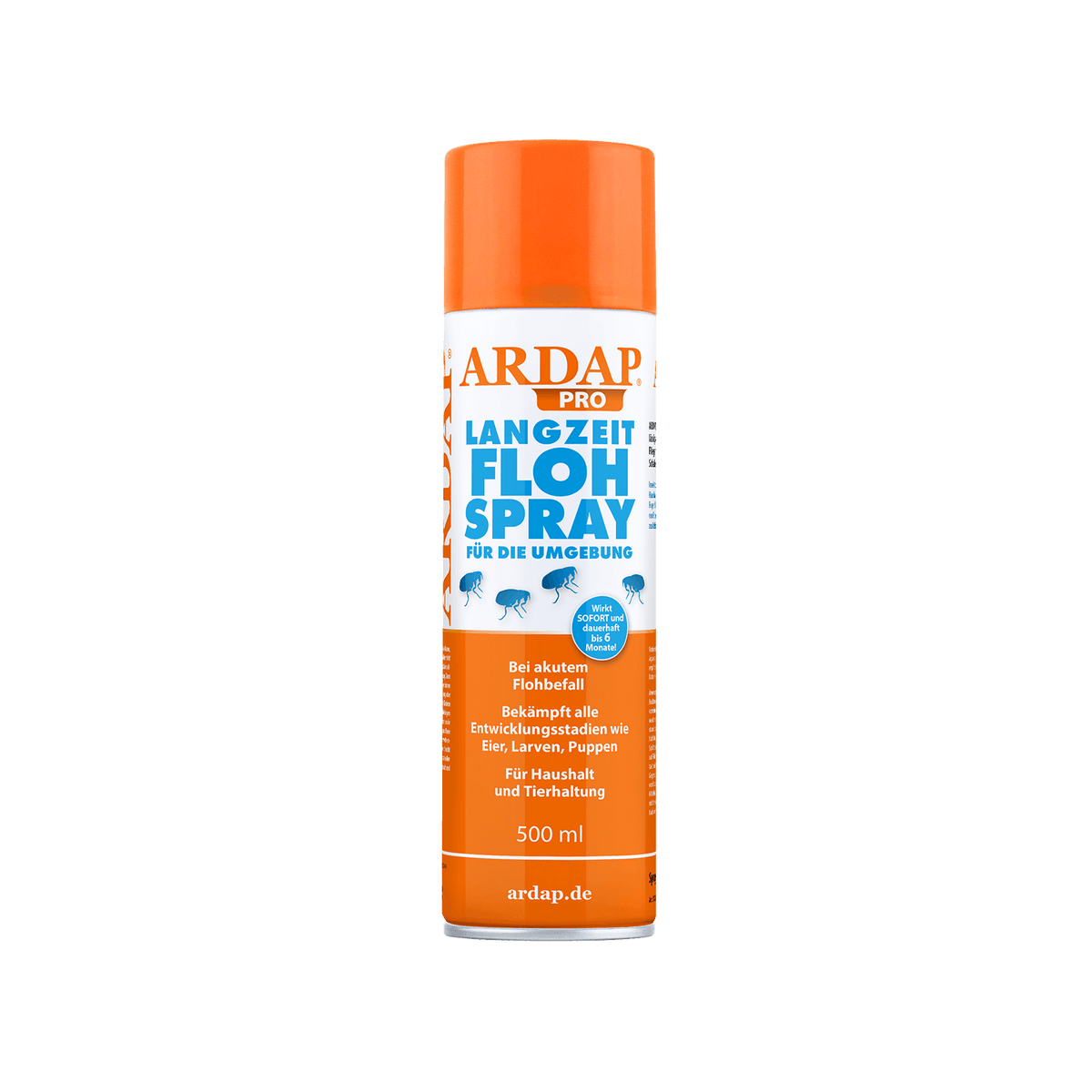
The ARDAP Pro line offers effective solutions for controlling fur moths. The ARDAP Pro Long-Term Flea Spray with the growth inhibitor pyriproxyfen works for up to 6 months and stops the development of the larvae in the cocoon.
The control of fur moths takes place in several steps and ensures that all developmental stages – from the eggs to the adult moths – are reliably eliminated:
- Empty the wardrobe: Empty the entire wardrobe completely and place all garments in sturdy plastic bags. For heavily damaged textiles, check whether treatment is still worth it – in many cases, disposal makes sense.
- Treatment of the textiles: Carefully spray the clothing in the closed bag with the ARDAP Pro Long-Term Flea Spray. Then close the bag as airtight as possible and let the spray work for several hours so that the active ingredients can penetrate all fibers. Pay particular attention to the information on the product label for sensitive materials and test the use of the spray beforehand on a hidden spot.
- Cleaning the wardrobe: Thoroughly vacuum and clean the empty wardrobe. Then the interior – including crevices, corners, and back panels – is also treated with the ARDAP Pro Long-Term Flea Spray. This reliably controls adult moths, larvae, and pupae in hard-to-reach hiding places.
- Post-treatment: After the exposure time, wash the treated clothing as usual or according to the washing instructions. Residues, dead fur moths, as well as their eggs and cocoons, are removed during the washing process. Only after that should the textiles be put back into the cleaned wardrobe.
This procedure ensures that fur moths are killed in all developmental stages – both in the clothing and inside the wardrobe. The ARDAP Pro Long-Term Flea Spray offers a long-lasting effect of up to six months and additionally protects against other pests such as fleas or carpet beetles.
Conclusion
Fur moths belong to the unobtrusive but damaging insects in the household. Their larvae cause feeding holes in furs, carpets, and garments and can multiply greatly if an infestation goes unnoticed. Who focuses on regular hygiene, proper storage, and the targeted use of effective remedies such as the ARDAP Pro Long-Term Flea Spray, can effectively and permanently control fur moths. If an infestation is detected, quick action is crucial – the earlier the measures take effect, the less the damage. With the ARDAP Pro products, a proven solution is at your disposal, which is based on scientific expertise and reliably works against fur moths and other pests.
Frequently asked questions
What can be done against fur moths?
A combination of thorough cleaning and the targeted application of sprays such as the ARDAP Pro Long-Term Flea Spray in the wardrobe and on the clothing helps against fur moths. This reliably kills larvae and eggs and stops the development of new moths. Temperature treatments (freezing or heating) are suitable for textiles that cannot be washed.
How do I remove fur moths from pelts?
Pelt that is infested with fur moths should first be sprayed in a plastic bag with a suitable ARDAP Spray to kill all developmental stages, i.e., adults, eggs, and larvae. After an exposure time of a few hours, the pelts should be thoroughly shaken out or vacuumed. Pay particular attention to the information on the product label for sensitive materials and test the use of the spray beforehand on a hidden spot. Alternatively, pelts can be wrapped in plastic and frozen for at least two days.
How do clothes moths get into the house?
Clothes moths usually enter the home via infested clothing, carpets, or old upholstery. Bird nests near living spaces can also be a source. Of course, individual clothes moths can also simply fly into the house through open windows or doors. To stop this, spray the ARDAP Pro Ungezieferspray on window and door frames. The product works directly on contact with clothes moths for a period of up to 6 weeks.
How can I detect and control clothes moths in my carpet?
Typical signs of clothes moths in the carpet are small holes, fine webs, or sand-like residues. Carpets should be thoroughly vacuumed and treated with the ARDAP Pro Langzeit Flohspray to effectively control clothes moths in all stages of development immediately and for a period of up to 6 months.
Were they clothes moths or pantry moths?
While clothes moth larvae exclusively attack textiles of animal origin, pantry moth larvae feed on organic residues such as skin scales, hair, and grease in clothing, as well as food scraps such as bacon, cheese, sausage, pasta, etc. Both pests can cause similar damage to textiles, but differ significantly in appearance and lifestyle.
Clothes moths are brownish-yellow moths with typical three dark spots on their silky shimmering wings. They are slender and densely hairy. Their long, thread-like antennae, which serve for orientation in the dark, are striking. Clothes moth larvae are small whitish caterpillars.
Pantry moths are small oval-shaped beetles in various shades of color (brown, beige, yellow). Pantry moth larvae are dark brown and have pointed arrow hairs that can cause allergic reactions. The droppings of the pantry moth resemble long, brown threads, which can also be found in food supplies. Their larvae pupate in wood, cardboard, or plaster, their cocoons are usually transparent. Both the ARDAP Pro Langzeit Flohspray and the ARDAP Pro Ungezieferspray work reliably against all crawling and flying pests.
Were they clothes moths or webbing moths?
Whether a find is clothes moths or webbing moths can be distinguished by a few characteristics:
Webbing moths (Tineola bisselliella) are 4–10 mm long, have slender, elongated bodies and solid straw-yellow to golden-brown forewings, usually without spots or markings. Their wings shimmer silkily, the head is slightly "bushy" hairy. They prefer dark, quiet places and mainly infest wool, but also other animal fibers.
Clothes moths (Tinea pellionella) grow to 5–8 mm and often appear slightly darker compared to webbing moths. Their wings are sand-colored to clay-yellow with one to three dark spots on the forewings – the most important distinguishing feature. The larvae build and carry a cocoon ("tube" made of textile fibers) with them. Clothes moths preferentially infest fur, wool, feathers, and animal materials, less commonly cotton.
If you find moths with straw-yellow, unpatterned wings, they are probably webbing moths. The ARDAP Pro Langzeit Flohspray helps against both moth species and their larvae.Can I prevent an infestation of clothes moths?
Yes, you can prevent an infestation of clothes moths by regularly airing out and cleaning and storing your textiles in airtight containers. Window frames and other entry points can also be sprayed with the ARDAP Pro Ungezieferspray, so that clothes moths are controlled upon entering the house and upon contact with the highly effective active ingredient.