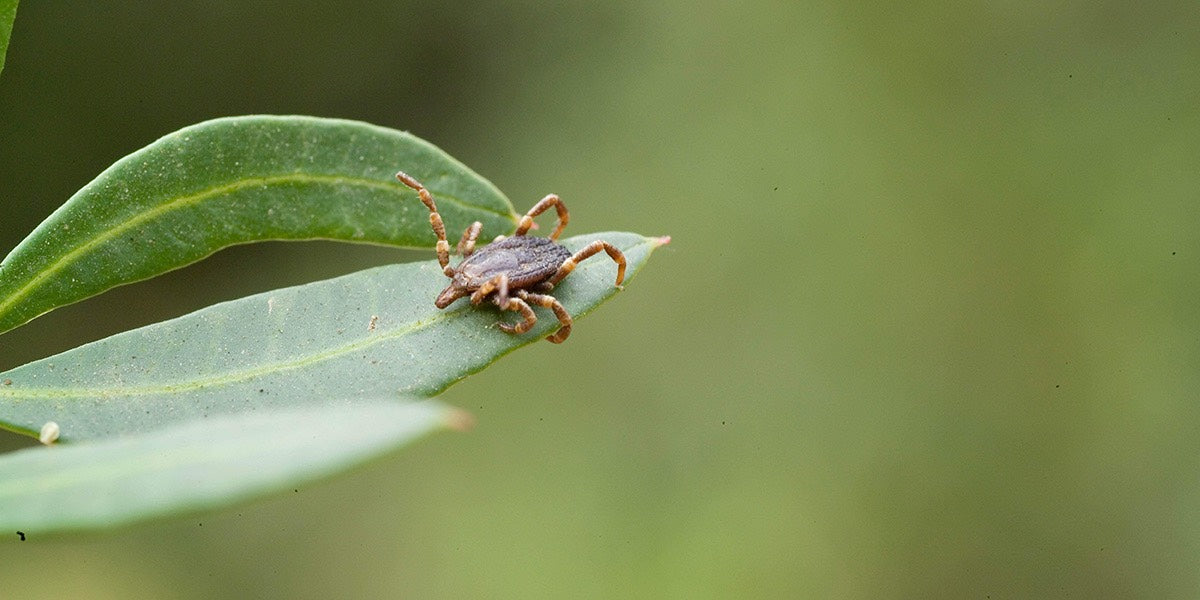
Previously, it was considered a typical travel disease from southern holiday regions, but today it is increasingly occurring here as well: New study figures show that babesiosis is spreading in Germany faster than previously assumed, with a clear focus along an axis from southwest to northeast Germany.
- Responsible vector on the rise: The common wood tick (Dermacentor reticulatus) can now be detected nationwide in all 16 federal states and is now one of the two most common tick species found on dogs.
- Rapid disease course: An infection with Babesia canis can prove fatal in dogs within a few days, even if only a small amount of the pathogen was transmitted. Typical signs are high fever, pale mucous membranes, and blood in the urine.
- Regional hotspots: Cases are particularly concentrated in Brandenburg, the Rhine-Main region, and northwestern Germany. Strikingly, numerous veterinarians report sick dogs that have never been abroad.
Together with our expert, the veterinarian and specialist veterinarian for parasitology Prof. Dr. med. vet. Norbert Mencke, we will introduce the common wood tick to you in more detail below, inform you about its appearance and distribution areas, the health risks posed by bites from common wood ticks, as well as effective prevention and protection measures with which you can largely rule out health risks for dogs, cats, and humans.
- Fact sheet of the common wood tick
- Where is the common wood tick found?
- The common wood tick: A danger to dogs and cats?
- How dangerous is the common wood tick to humans?
- Removing the common wood tick

Fact sheet of the common wood tick
The common wood tick, which is also called the meadow tick, painted tick, and winter tick, belongs to the genus of painted ticks (Dermacentor). It does not only infest pets such as dogs or cats, but also horses, cattle, sheep, and various native wildlife, e.g., deer, foxes, or wild boars. Humans are bitten very rarely.
Unfed female common wood ticks are about 3-5 millimeters large, male ticks are slightly smaller. Overall, the common wood tick is significantly larger than the common wood tick (Ixodes ricinus), the best-known and by far the most widely distributed species of hard ticks in Europe.
Adult common wood ticks mate, like other hard ticks, exclusively on the host. The female's blood meal lasts up to eight days. After that, the female tick falls off the host and lays 3,000 to 4,500 eggs. The entire development from egg through the larval and nymph stages to the next generation of adult ticks takes 1-2 years. If no suitable host is found, the red common wood tick can survive for up to a year without a blood meal. It often lurks in unmowed meadows and can easily survive even harsh winters.
Generally, larger wildlife, but also grazing animals such as horses, cattle, and sheep, are ideal hosts for this tick species. However, the eyeless common wood tick cannot actively hunt, choose particularly attractive hosts, or pursue its victims. Instead, like other native ticks, it finds a location that is as sheltered from the wind as possible and waits there until a suitable host comes to it and ideally takes it with. Often, hungry ticks are simply brushed off by their hosts or only let go at the right moment to get directly into the warm fur from their hiding place.
Where is the common wood tick found?
The common wood tick has spread further and further in Germany and beyond in all of Europe during recent years. Unlike the common wood tick, which usually occurs in a blanket fashion in forests and on green spaces near forests, the distribution of the common wood tick is usually locally limited.
The common wood tick prefers open forest areas, floodplains, and meadow areas near forests. It is also frequently found on fallow, long-grass meadows that are loosely interspersed with bushes and trees. There it lurks on stems, leaves, or the blades of tall grasses until a suitable host animal comes near, onto which it can drop and hold on to the hair. Before biting, ticks often crawl around on the host for quite a while to find a spot that is as thin-skinned as possible but well vascularized for blood-sucking.
Occurrence of the common wood tick in Germany and Europe
The main distribution areas of the common wood tick are found especially in the south and east of Germany, e.g., in
- Baden-Württemberg,
- South Hesse,
- Saxony,
- Brandenburg,
- Saxony-Anhalt,
- Saarland, as well as
- eastern Rhineland-Palatinate
However, in recent years, findings have been reported in all federal states with land area and in Berlin.
In Eastern Europe, common wood ticks are widespread, as are they in southwest England and cooler, higher-altitude regions in the Mediterranean, such as southern France and Corsica. The common wood tick also feels at home in Atlantic-influenced climate zones such as Portugal and northern Spain.

Appearance of the common wood tick
The common wood tick is characterized by its size and appearance. The striking marbling on the dorsal shield, which covers the entire back of the male tick and is limited to part of the dorsal shield in females, makes it easily recognizable. Compared to the common wood tick, which has a more uniform brown body color with a significantly darker to black dorsal shield, the common wood tick presents itself in an unusual variety of marbling for ticks, from light gray to brown and even reddish tones. This creates the characteristic, almost colorful appearance, for which the common wood tick also owes its alternative name "painted tick".
Another distinguishing feature is the shape: While the common wood tick is rather rounded, common wood ticks often have an elongated body. In addition to the size and pattern, the reddish-brown legs are also striking. These features are also easily recognizable to laypeople who only know pictures of the common wood tick but have never encountered a "real" specimen. However, the exact identification of a tick or tick species is only necessary in exceptional cases, such as when it comes to documenting individual findings, distribution, and risk areas. In case of suspicion of an infection or "tick disease" such as Lyme disease or babesiosis, it is not the ticks but their victims that are specifically tested for corresponding pathogens or antibodies in the blood.
The common wood tick: A danger to dogs and cats?
The common wood tick can transmit diseases that can be dangerous for both pets and humans. To prevent infections, there is no better method than the avoidance of tick bites through repellent products, which keep ticks and other blood-sucking parasites (e.g., fleas) away from dogs and cats all year round with regular application.
Common wood ticks and dogs
Dogs are generally susceptible to tick bites, and there are also tick diseases that can become particularly dangerous for dogs. If a common wood tick has bitten your dog, check the puncture site regularly for redness, inflammation, and other skin reactions after tick removal. If you notice symptoms in your dog in the first two weeks after a bite from a common wood tick, such as fever, loss of appetite, lethargy, or joint pain, have them checked by the veterinarian immediately.


Risks for the dog
Babesiosis is caused by single-celled parasites that attack red blood cells and can lead to life-threatening diseases and severe consequential damage in dogs. The pathogens are also transmitted to dogs by common wood ticks, but the risk of severe courses or permanent damage can be significantly reduced by early diagnosis and treatment. The same applies here: reliable prevention is better than treatment of the disease.

Repellent products: Preventing the common wood tick
Even a tick bite can lead to skin inflammation in dogs - and especially in those with pre-existing conditions and a weakened immune system - but also to serious health problems. However, the consistent application of an effective repellent is sufficient to reduce the risk of tick bites, infections, and serious diseases to a minimum through prevention.
For long-term repellent protection, choose either the ARDAP tick collar for dogs with a protective effect of up to 4 months or the ARDAP tick spot-on for dogs, which protects against ticks and other blood-suckers for around 4 weeks per tube. To avoid risks as comprehensively as possible, also check your dog regularly for ticks, especially after longer stays in nature. Before a walk, you can additionally treat particularly tick-prone areas such as paws, belly, neck, tail base, or chest with the ARDAP tick spray or tick powder for dogs and cats. With the ARDAP tick shampoo for dogs, you clean and refresh your pet's fur and enhance the repellent tick protection.

Common Wood Ticks and Cats
Cats can also be bitten by infected common wood ticks and thus become infected. But although free-roaming cats are exposed to the same dangers as dogs, tick bites in them less frequently lead to disease symptoms or severe courses. Nevertheless, there is always a risk of disease for cats and long-lasting consequential damage. This is something to reliably prevent.
With the ARDAP tick spot-on for cats or the tick collar for cats, you protect your pet long-term from tick bites and also reduce all associated risks to a minimum. Additionally, you can also treat particularly tick-prone areas on free-roaming cats with the ARDAP tick spray or tick powder for dogs and cats before letting your cat outside.
How dangerous is the common wood tick to humans?
The common wood tick is a carrier of rickettsiae and babesia. The transmission of the early summer meningoencephalitis (FSME) virus has also been proven. Since humans are only extremely rarely infested by the common wood tick, the transmission of the FSME virus to humans occurs through the common wood tick (Ixodes ricinus). In tick areas, especially in eastern Germany, both the common wood tick and the common wood tick occur. Symptoms such as fever, fatigue, and unclear cold symptoms after a tick bite should be taken seriously and clarified by a doctor. If you live in an FSME risk area, the health insurance also covers the costs of the FSME vaccination.

Removing the common wood tick
If you should find an attached tick on your pet due to a lack of prevention, the rule is: the faster the tick is removed, the lower the risk of disease transmission. Use the ARDAP tick hook or the proven ARDAP tick forceps with tweezers to remove ticks of any size safely and quickly.
To remove ticks with the tick hook, first select the hook of the appropriate size from the practical set of three. Slide it under the tick as close to the skin as possible and pull the parasite out straight and continuously.
Removal with the tick forceps is just as easy: Grip the tick directly behind the head and as close to the skin surface as possible, let the forceps clamp firmly, and then pull the tick straight out. Avoid crushing or bursting the body, as this increases the risk of infection. Twisting movements are unnecessary and may increase the risk of the head breaking off and remaining in the skin. Thoroughly disinfect the bite area after tick removal and monitor it for redness or signs of infection for a few more days.