The tropical giant tick Hyalomma is being sighted increasingly in Germany, Austria, and Switzerland. According to the RKI, up to 20 specimens are recorded in Germany each year; in Austria, the AGES confirmed the first find of the year in Styria at the end of April 2026. As an active hunting tick, it pursues hosts over several hundred meters – a crucial difference from the common wood tick at home.
Particularly critical: Hyalomma can transmit Crimean-Congo hemorrhagic fever (mortality up to 30%) as well as tick-borne spotted fever. In around 30% of the specimens examined in Germany, the spotted fever pathogen Rickettsia aeschlimannii was detected. Severe cases of illness have not been documented in this country so far – however, experts warn of a growing risk due to climate change.
Together with our expert, the specialist veterinarian for parasitology Prof. Dr. med. vet. Norbert Mencke, we will introduce you to the Hyalomma tick in more detail below and provide tips for optimal tick protection.
- Where does the Hyalomma tick come from?
- Effective protection against domestic tick species for your pet
- How likely is a Hyalomma population in Germany?
Where does the Hyalomma tick come from?
The Hyalomma tick originally comes from regions in Africa and Asia. It is typically widespread in the arid and semi-arid areas of these regions. However, these ticks also reach other parts of the world, including Europe, via migratory birds. Research shows that theoretically millions of Hyalomma larvae or nymphs can reach Europe with migratory birds every year. However, they must also find suitable host animals here and be able to overwinter in order to actually become established in Germany.
The fact that more and more specimens of this tropical tick species have been found in recent years does not mean that Hyalomma ticks will soon be among the domestic tick species in Germany. It merely indicates that as a result of climate change, tick species from warmer countries can also settle in temperate climate zones.
When was the Hyalomma tick first recorded in Germany?
Hyalomma ticks were first detected in Germany in 2015. In this year, one specimen was found on a horse. Since then, several finds have been recorded, especially in 2018, when seven specimens were discovered. The finds are mainly attributed to introductions by migratory birds, as Hyalomma ticks can remain attached to their hosts for up to four weeks. In addition, hot, dry summers (such as the summer of 2018) favor the spread of "new" tick species such as the Hyalomma tick, woodland tick, or sheep tick, which are less heat-sensitive and require less (atmospheric) moisture than the common wood tick.
Of the many species of Hyalomma ticks, two have been detected in Germany so far: Hyalomma marginatum and Hyalomma rufipes. Between 2019 and 2023, a total of 212 adult specimens were recorded – of which 132 were H. marginatum and 43 H. rufipes. H. marginatum is thus the significantly more common species; its distribution area also includes Southern Europe, while H. rufipes is originally native to Africa. Since dry and hot summers continue to increase in Germany, the living conditions for Hyalomma ticks are steadily "improving" here. Experts assume that the genus could eventually establish itself throughout Central Europe. Whether other species of the genus will appear in the future remains a subject of ongoing research.
By the way, you can help document the spread of the Hyalomma tick by reporting every such find. The best way to help science is to send the tick to the Robert Koch Institute. To do this, fix the parasite with transparent adhesive tape on a piece of paper and send this in a sealed envelope to:
Robert Koch Institute
ZBS 1 – "Tick"
Seestraße 10
13353 Berlin
The Robert Koch Institute (RKI) in Germany examines all submitted ticks for pathogens and documents their find locations. You can also send in other tick species that appear unusual to you or that you have never seen in this location before.

Specific appearance, size, and characteristics of the Hyalomma tick
There are several differences between the tropical Hyalomma tick and domestic tick species. For example, the tropical species is far ahead in terms of size: A fully engorged Hyalomma female can grow to a good 2 cm – twice as large as the common wood tick and also significantly larger than other large tick species such as the woodland tick or the sheep tick.
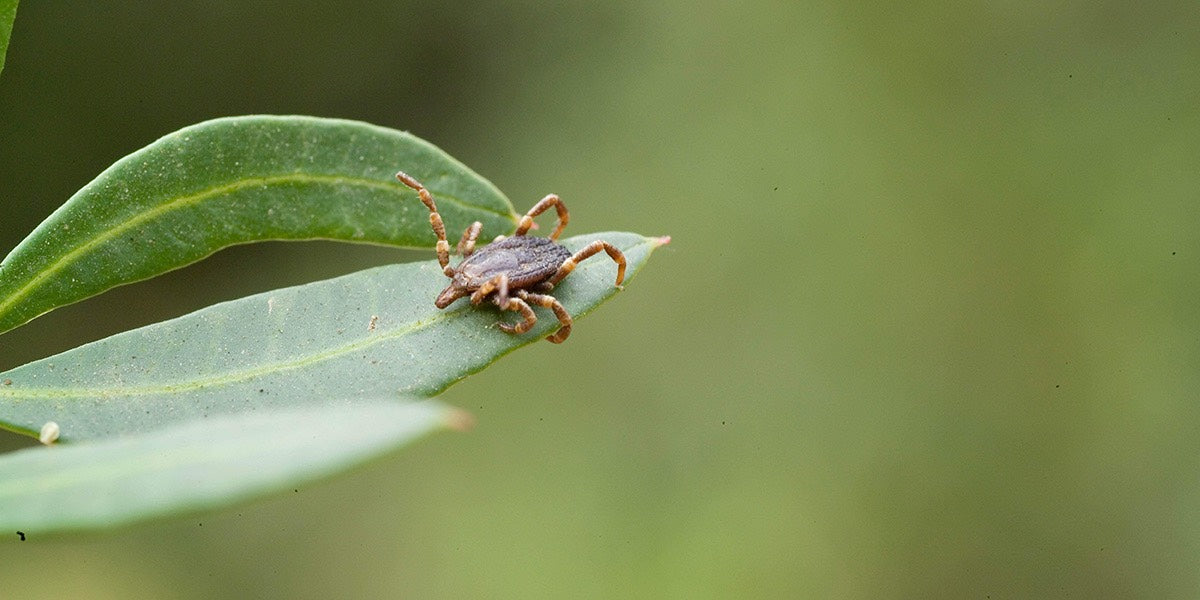
The most characteristic feature of the Hyalomma tick, however, is its legs with the striking brown-yellow stripes. These are clearly visible, especially on a light background. The body of the tropical giant tick is oval and slightly flattened. The base color varies depending on gender and nutritional status from light or dark brown to black. Some Hyalomma species have lighter spots on the dorsal shield, but the carapace is not conspicuously patterned or marbled like sheep ticks or woodland ticks.
The Hyalomma tick is a two-host tick. This means that the larvae and nymphs of this tick species develop on a host one after another. These are usually smaller host animals, such as birds and small mammals. Only in the adult (grown) stage do they preferentially infest larger mammals as a second host, which can also include humans and their pets. Domestic ticks, on the other hand, are three-host ticks, in which larvae and nymphs each seek their own hosts for development.
Not so easy to recognize, but also extraordinary are the eyes, from which the Hyalomma tick even gets its name: "Hyalomma" is the Ancient Greek word for "glass eye". With them, they can perceive their host animals at a distance of up to 400 meters, actively hunt and pursue – unlike the common wood tick and other domestic tick species that have no eyes and must wait patiently as pure "ambush predators" until a host animal passes by.
When hunting, the Hyalomma tick can reach a speed of up to 1m per minute. Of course, it is still much slower than a rider or walker with a dog, but fast enough to catch up with, for example, a grazing horse or a family having a picnic.
Ideally, the human and animal are then well protected from ticks. For example, humans through long pants, sturdy footwear, and long-sleeved shirts (precautions that, however, do not replace the conscientious checking for attached ticks), dogs and other pets through repellent products, which keep ticks and other parasites away or repel them.


Which pathogens can the Hyalomma tick transmit?
Hyalomma ticks are considered potential carriers (vectors) of pathogens, which can lead to tropical diseases in humans such as Crimean-Congo hemorrhagic fever (CCHF) and a variant of tropical tick-borne spotted fever. The Crimean-Congo virus has not been detected in the imported Hyalomma ticks so far, nor have bacteria, e.g. Borrelia Anaplasma or Babesia. However, several specimens harbored the bacterium Rickettsia aeschlimannii, which can potentially cause tick-borne spotted fever in humans.
According to current knowledge, Hyalomma ticks are especially dangerous for tropical livestock. As disease carriers for dogs, cats and other domestic and livestock animals in Germany, they have not appeared so far.
The greatest tick danger here is still posed by the common wood tick, by far the most common tick species in Germany. Its bites can lead to Ehrlichiosis, Babesiosis, Anaplasmosis, and numerous other diseases in dogs and cats. Humans in the risk areas should be vaccinated against FSME (early summer mening encephalitis) and carefully monitor every tick bite to rule out an infection with Borreliosis. If large-area skin redness (the so-called erythema migrans) appears around the bite site, it can be an indication of Borreliosis. In this case, please go to the doctor immediately to be tested and treated if necessary. However, the absence of erythema migrans is no guarantee that no Borrelia were transmitted. Therefore, after a tick bite, also pay attention to other symptoms such as fatigue, fever, cold symptoms, or allergic skin reactions.
Effective protection against domestic tick species for your pet
Regarding tick bites: Prevention is better than cure. The domestic ticks, above all the common wood tick, have no defining season. You should therefore protect your pet from tick bites all year round. For this, several effective products are available to you, which act as repellents, i.e., repel ticks.

Repellent products against ticks for the cat
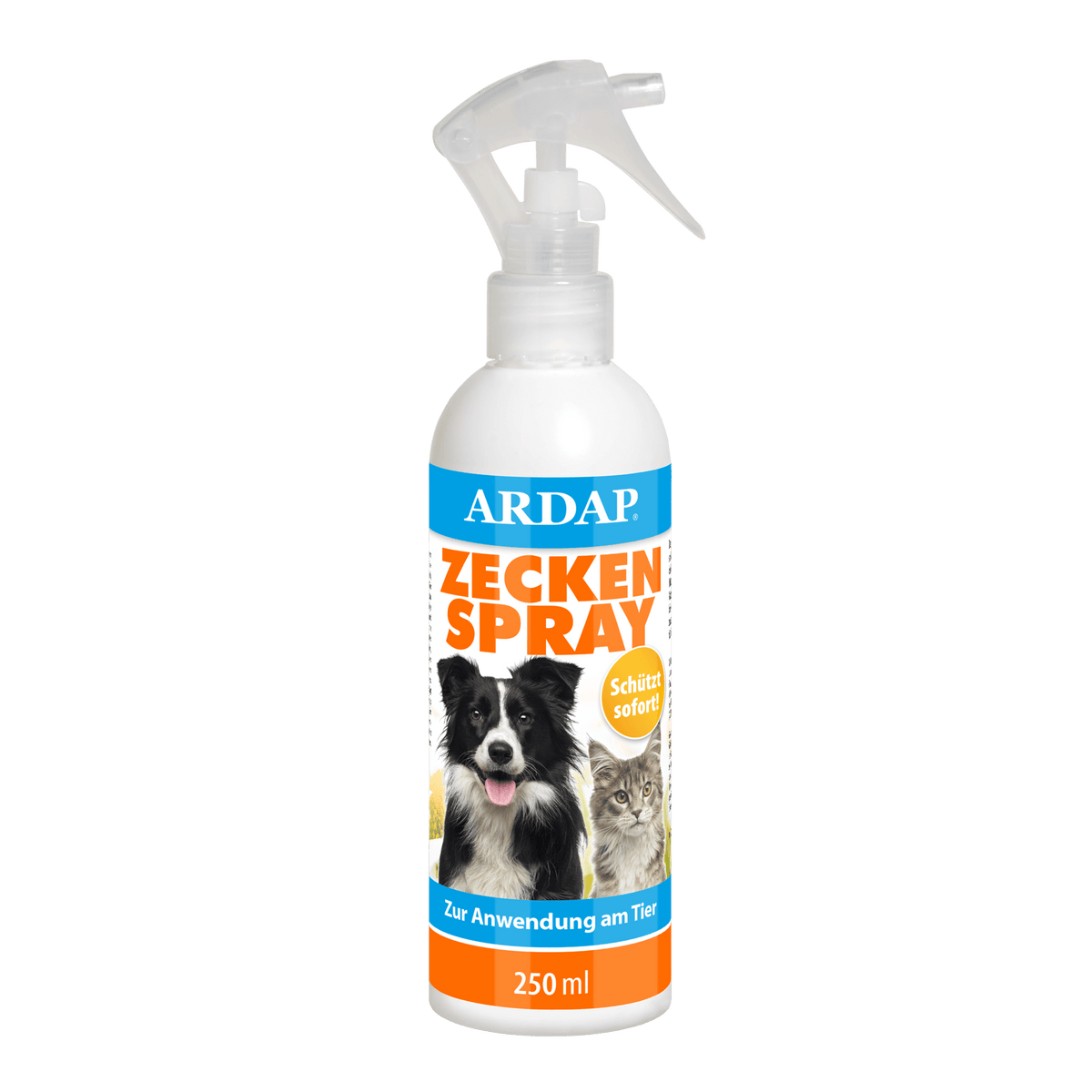
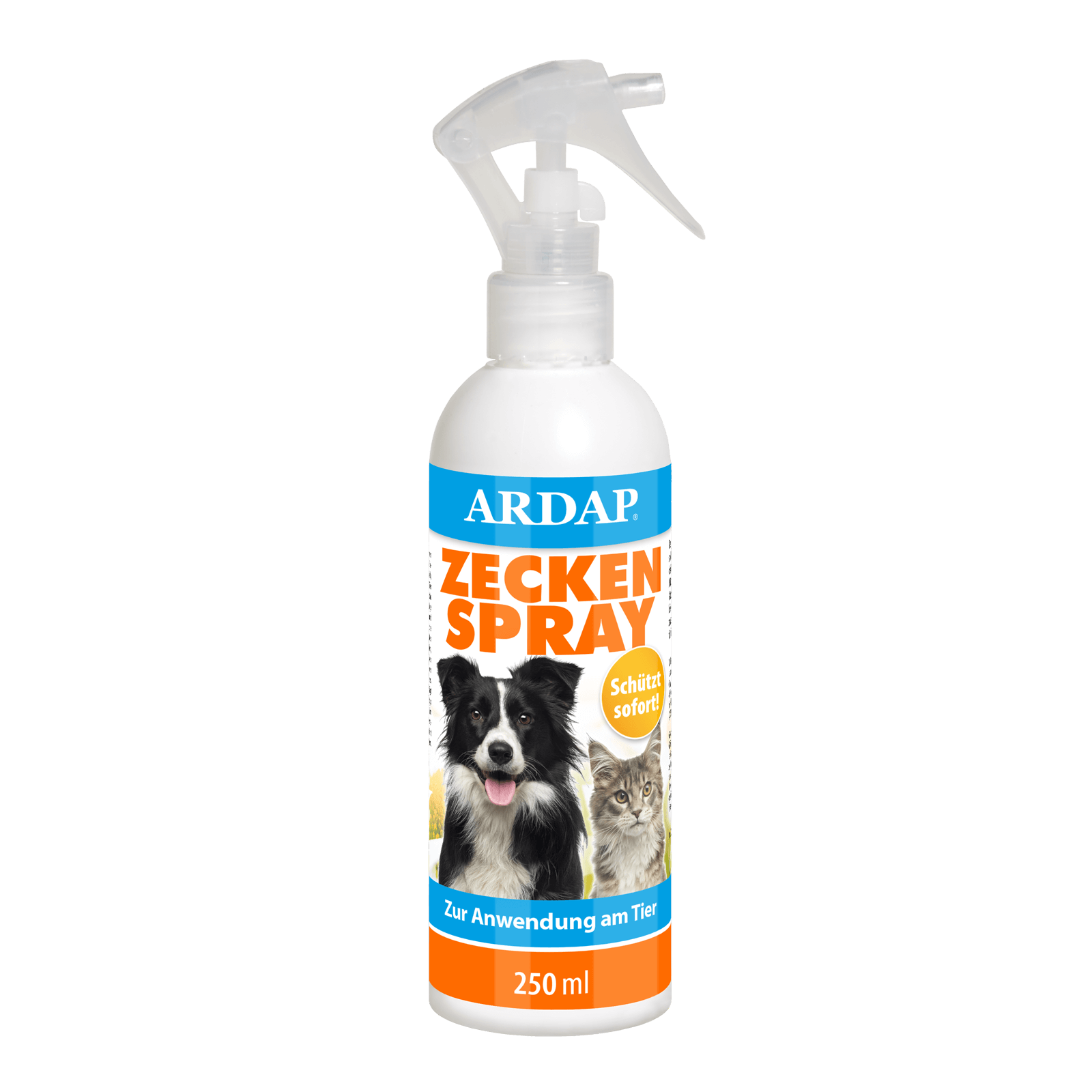
For optimal prevention, we recommend the ARDAP Spot-On for cats. Spot-Ons protect for up to 12 weeks per package and are particularly easy to apply. For free-roaming cats, it is alternatively worth using the ARDAP tick and flea collar for cats. On their adventures, the little paws are thus protected from ticks and fleas for up to 4 months. Additional protection, especially at areas preferred by ticks such as the base of the tail and paws, your cat also receives with the ARDAP tick spray or the ARDAP tick powder.

Repellent products against ticks for the dog
The ARDAP Spot-On for dogs offers up to 12 weeks of protection per package and, with the help of the active ingredient pyrethrum from the chrysanthemum, repels not only ticks but also other parasites. As an alternative to the Spot-On, the ARDAP tick and flea collar for dogs is available, which can be worn together with the normal dog collar.
For targeted protection of the neck, base of the tail, or paws, which are particularly prone to being infested by ticks, you can treat these areas before an outing with the ARDAP tick spray or ARDAP tick powder.


For dogs, the ARDAP tick shampoo for dogs is also recommended. Shampooing prevents ticks and other vermin and ensures a well-groomed, hygienically fresh coat.

The correct tick removal
If a tick is already firmly attached, you can remove it with the tick hook set, which can be easily attached to the key ring or the dog leash and is thus always at hand. Or you use the ARDAP tick forceps, which offers a practical 2-in-1 function thanks to the integrated tick hook as well as tweezers.
To use tick hooks or tick forceps safely on dogs and cats, calm your animal while you – e.g. while scratching at the same time – first expose the bite site. As soon as you have a good view of the tick, apply the tool. To remove the tick, grasp it directly behind the head and pull it out carefully. Avoid squeezing the tick body during removal, because this can allow germs to enter the body of the host.
In addition, always pull ticks straight out; ideally, they should not be twisted or “unscrewed” during removal. And don’t worry if the front part (mouthparts, “tick head”) breaks off and remains in the skin: This remnant usually poses no danger to your pet, as it is generally rejected by the body as a foreign object. In any case, disinfect the bite site and monitor it for a few days. If you notice unusual skin reactions or general signs of illness, make an appointment at the veterinary clinic to be safe.
How likely is a Hyalomma population in Germany
It is difficult to predict whether a Hyalomma population will become permanently established in Germany. According to the Robert Koch Institute, millions of Hyalomma larvae or nymphs could reach Germany every year with migratory birds. Nevertheless, only a few adult ticks have been found here so far. This suggests that the climatic conditions for a permanent Hyalomma population in Germany are not yet in place. This could change, however, if climate change leads to increasingly hot, dry summers and mild winters.