Our expert Prof. Dr. med. vet. Norbert Mencke informs you about the proper handling of wasp nests.
- Wasp nest - important information at a glance
- Remove a wasp nest? What is allowed?
- Conclusion
- Frequently asked questions
The nests consist of paper-like material made from shredded wood and saliva, are grey-brown in color, and grow quickly from golf ball to football size, with peak activity in August.
A wasp nest is used for only one season – from spring to late autumn; after that, only the young queen survives, and the empty nest can be safely removed in winter.
The relocation of a wasp nest may only be carried out by specialist personnel with suitable protective equipment and expertise, for example in the case of protected wasp species or construction work. Control is exclusively possible for the German or common wasp if there are compelling reasons – often it is sufficient to wait until the end of the season and natural death in autumn.
This invasive and aggressive species poses a threat to the ecosystem and is a real pest, therefore the Asian hornet and its nest should always be professionally controlled.
All wasps are protected by nature conservation laws; control is only tolerated in the case of acute danger from the common or German wasp, while the Asian hornet should always be urgently removed after consulting a pest control specialist.
Wasp nest - important information at a glance
For the proper handling of the wasp nest, it is important to first identify the wasp species. How do wasps use their nests and is it even necessary to remove them? We have answered the questions concisely for you.

Recognizing a nest of the German wasp and common wasp
The nests of the German wasp and the common wasp consist of a paper-like mass of shredded wood and saliva. They usually appear grey to brownish striped. In spring, only a young queen with the first eggs or larvae is in the still manageable nest. The nests then undergo a rapid development, the expansion takes place continuously. The nest may still be small as a golf ball in April and May, but already reaches a considerable size, approximately equal to a football, in June to July. The reason for this is the workers. As soon as they have hatched, they set about feeding the larvae and building the nest. For each new brood cell, an expansion of the outer shell with an additional layer is required. The circumference of the nest therefore increases quickly. The nests reach their maximum expansion stage in the high season in August. The nests of the German and common wasp can contain thousands of inhabitants. During this time, the flight activity and readiness to defend are also most noticeable.
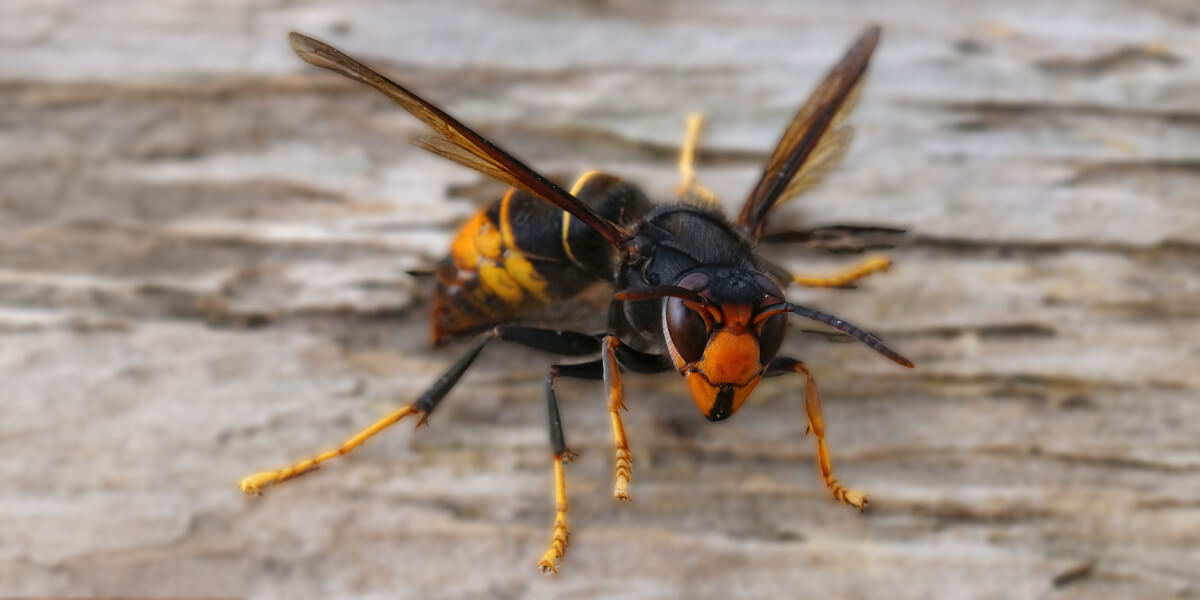
A special case is the aggressive Asian hornet (Vespa velutina): it forms significantly larger colonies with up to 2,000 animals per colony than, for example, the strictly protected, native European hornet (Vespa crabro) (max. 700 individuals). The Asian hornet builds its founding nests in similar places as native wasps – for example in eaves, roller shutter boxes or other protected cavities. Later it relocates to a secondary nest, which is usually located in the high treetops of trees.
How long do wasps use their nest?
In principle, every wasp nest is a disposable structure. The wasp colony is designed for one year. The founding takes place in spring by the young queen. With the onset of frost, the entire colony with all the insects in it dies, only the mated young queens overwinter. The wasps therefore only use the nest from spring to late autumn.
As soon as all the animals in the nest have died, the structure is left empty. Because the new young queens do not stay in the old nest to overwinter. Instead, they look for an individual hiding place. This can be, for example, a attic crevice, a wood pile or a compost heap. In the new year, they each found a completely new nest and colony. So no recolonization of old nests takes place.
As a homeowner, you can therefore assume that a wasp nest stands empty after winter. If you find an empty wasp nest in winter, you may of course remove it yourself. Wasps no longer stay here. You do not disturb the insects with this and remove empty nests that are already no longer functional for the animals.

Does every wasp nest have to be removed?
As explained above, wasp nests are only used for about half a year, i.e. over the spring and summer months. Depending on the location, a nest may be tolerated during this time, for example if it is sufficiently far away from the terrace or the house. This applies especially if it is about peaceful wasp species. A relocation of the German wasp or the common wasp can be considered if necessary. But you should leave this to a professional.
A control is tolerated in the case of the potentially aggressive wasp species common wasp and German wasp in the case of threat and after careful consideration of reasonable grounds. Here are above all the
- Location
- the degree of aggressiveness of the German wasp and the common wasp
- as well as the threat situation for your domestic environment
- decisive criteria.


Remove a wasp nest? What is allowed?
Just because there is a wasp nest, you may not simply relocate or even destroy it. Because many measures that interfere with the life of the wasps are not allowed. The legal regulations must be taken into account.
Reasonable grounds for controlling wasp nests
In principle, it must be noted that wasps as wild animals are protected by the Federal Nature Conservation Act. Even if control of the German wasp and common wasp is conceivable under certain conditions, reasonable and verifiable reasons must exist for this.
In this regard, it must be questioned whether the mentioned wasp species pose an acute health hazard, for example if allergy sufferers, infants or small children live in the household, whether the nest is unavoidably located in thoroughfares or living areas or whether structural measures are planned, which make relocation necessary. This includes, for example, a roof renovation or facade work. It is therefore always the individual case that must be examined. By the way, it is not enough here that the grandchildren occasionally visit.
This does not apply to the Asian hornet, which should basically be professionally controlled.

Professional relocation: Have the wasp nest removed
The relocation of wasp nests is a task for professionals. Advice from specialist personnel is indispensable, because, for example, the wasp species must be precisely determined. Pest control specialists look closely at the size of the colony and the location of the nest and can assess whether relocation is even possible, allowed and necessary.
Relocation or nest removal is demanding and by no means harmless. Wasps immediately adopt a defensive posture if someone approaches the nest. A professional pest control specialist is prepared for this. He knows at what time of day the relocation should ideally take place and at what time of year it should be carried out.
Do not under any circumstances do without support from professionals during relocation and do not underestimate the manual challenges of relocation. Professionals take flying wasps in an insect vacuum in a kind of capture box. They carefully detach the nests and transport them in a special box. In addition, the re-release at a suitable location must take place. A layman can hardly do all this on their own.
Observe safety measures
Even a shadow on the entrance hole can trigger a defensive behavior of the German or common wasp. It is therefore important to always maintain a safety distance of several meters from the nest and not to enter the flight path directly. Vibrations may also not be liked by the insects. You must therefore be particularly careful in the area around the nest.
Anyone who has to carry out unavoidable work near a wasp nest - such as cleaning a gutter - should basically wear protective clothing. A thick sweater and pants made of dense denim fabric may already be sufficient for this. Wear long pants and put on eye protection. Gloves are also recommended. You want to achieve with this clothing to reduce the risk of stinging as far as possible. It is also important to work in the cooler evening and morning hours. Then the flight dynamics of the wasps are at their lowest.
In addition, it is useful to mark the area around the wasp nest and delimit it with a corresponding barrier tape. This is especially important if children live in the household. You should also keep pets at a distance as long as the work continues. No one should accidentally approach the wasp nest.

Take targeted action against wasp nests
There are various ways to take action against wasp nests. One way is prophylactic defense, so that a wasp nest does not even get built near your house. If you know from previous years where wasps have built a nest before, prevent their resettlement specifically by treating such places preventively. If the settlement of wasps results in a verifiable danger situation, effective products from the specialist trade are available, which are used by professionals such as pest control specialists.
The ARDAP Repell Wasp Spray works repellently against German wasps and common wasps. This allows the targeted use of the product to prevent the construction of wasp nests already in spring. Ideally, the ARDAP Repell Wasp Spray can be used regularly starting in April. At this time, the young wasp queen is on the move and looking for a suitable place to establish the new wasp colony. At this point, when the nest has not yet been founded, the ARDAP Repell Wasp Spray proves particularly effective. The product works quickly and can be used also indoors in case of danger to repel.

If defense is not enough and a wasp nest already exists in your immediate vicinity, you can also consider the control of the German wasp and the common wasp in case of danger. However, reasonable grounds must exist for this if alternative measures show no success. Seek advice from a competent professional on this. The ARDAP Pro Wespenschaumspray is ideal for the application against wasp nests in hard-to-reach places and is successfully used by professionals. Wasp nests are sometimes not open, but can be found hidden in the roller shutter box, in crevices of house facades or at other hard-to-reach places. Thanks to the practical 2-in-1 spray bottle, targeted spraying of the product is possible here. The ARDAP Pro Wespenschaumspray is proven to also work against the Asian hornet and its nest, which is now established in our country.

The ARDAP Pro Wespen Powerspray is also suitable for the targeted outdoor use against the common wasp and the German wasp, as well as against the invasive Asian hornet and its nests. The application takes place, for example, on the terrace, on the balcony, on the roof of a carport, a garden shed or the roof overhang of the house. Thanks to the high-pressure spray jet and a range of up to four meters, the active ingredient reaches the nest from a reasonable distance and can also control individual wasps. The effect of the spray lasts up to two weeks.
Please keep in mind that in the case of an infestation by wasps, the advice of a competent person, such as a pest control specialist, should be sought.
Conclusion
If you discover a wasp nest at your house or in the garden, you should first remain calm. Wasps can be annoying, but they also have their important function in the ecosystem.
If reasonable grounds exist, relocation of the wasp nest by a professional is possible depending on the wasp species.
If it is the German wasp or the common wasp, control of the nest is also an option. But only in the case that an acute danger exists - for example because allergy sufferers or small children are threatened in the vicinity. Here the products for wasp control from the ARDAP Pro series help.
It makes sense to prevent nest building from the outset. The repellent ARDAP Repell wasp spray can help effectively here by creating an invisible barrier against the insects.
In any case: Do not panic and act deliberately. Seek professional, expert advice. Highly effective products from specialist retailers are then used for deterrence and control.
Frequently Asked Questions
What should you do if you have a wasp nest?
If you spot a wasp nest in your domestic environment, it is important to remain calm and keep your distance (at least 2-3 meters). Many wasp species are protected by law, so it is always necessary to first identify the wasp species before taking further measures. Never attempt to relocate the wasp nest yourself.
How do you get rid of a wasp nest?
In the case of a nest of German or common wasps, control (if there are reasonable grounds) can be carried out with ARDAP Pro products and is therefore tolerated. In the case of an Asian hornet nest, professional control is required after consulting a pest control specialist.
What happens if you do not remove a wasp nest?
If a wasp nest is not removed, it usually does not pose a permanent problem. The wasp colony dies out by October or November at the latest, as only the young queens survive the winter and establish new nests the following spring. The remaining empty nest can be removed easily and safely in winter.
However, leaving the nest in late summer – especially in August and September – carries certain risks: During this time, the colonies reach their maximum size of up to 5,000 wasps and show increased aggressiveness, which significantly increases the risk of being stung. In addition, the nesting material can cause minor structural damage if poorly positioned, for example in roof beams or facades.
How long is a wasp nest active?
A wasp nest is only active for one season, meaning from April to October. In spring, the queen begins building the nest. During the summer months from June to August, the colony reaches its peak activity and size. In autumn, from about September to October, the wasp colony finally dies out – only the young queens overwinter. The lifespan of a wasp nest is therefore about six to seven months, and it is not reoccupied the following year.