Our expert Prof. Dr. med. vet. Norbert Mencke provides comprehensive information about the different wasp species in Germany and helps you better distinguish potentially aggressive insects from their peaceful counterparts at first glance.
- Yellow-black striped in flight: The wasp
- Wasp species in Germany
- Useful yet harmful? Know and avoid the dangers posed by the German wasp and the common wasp
- Can wasps be controlled? What the law says:
- Repel or control German and common wasps? Only if there are reasonable grounds!
- Conclusion

Yellow-black striped in flight: The wasp
Wasps in the garden or around the house can exhibit very different behavior depending on the species – from harmless beneficial insects to nuisance visitors at coffee tables and even health pests. But how can you tell which wasp you are dealing with? We will help you identify the most common species and take the right measures in case of a documented threat.
Wasps at a glance
- Behavior varies depending on the species: from harmless beneficial insects to health-threatening visitors
- Pest control: Hunt insects such as mosquitoes and flies
- Pollinators: Contribute to biodiversity and the ecological balance
- Typically yellow-black in color, but some are almost entirely black
- Short-headed wasps (Vespula): greater distance between the eye and mouthparts
- Long-headed wasps (Dolichovespula): smaller distance between the eye and upper jaw
- The queen lays eggs, and the larvae hatch after a few days
- Workers feed the larvae protein
- Only young queens survive the winter
Appearance: Identifying wasps
Wasps are known for their yellow-black coloring, although some species can appear almost entirely black. Short-headed wasps (Vespula), which include the most widespread species, the German wasp and the common wasp, can be identified by their more pronounced distance between the lower eye margin and the base of the mandibles (mouthparts) and the typical color pattern on the yellow clypeus. In long-headed wasps (Dolichovespula), by contrast, the distance between the eye margin and the base of the upper jaw is smaller.
The wasp life cycle
After egg-laying by the queen, the first wasp larvae hatch after a few days. The workers feed the larvae a protein-rich slurry, thereby supporting the larvae's development until they pupate. How long the adult insects live depends primarily on their role in the wasp colony: queens generally live for one year, while the workers, like the drones, often live for only a few weeks.

Wasp diet
The preferred foods depend not only on the respective species but also largely on the wasp's life cycle. For adult insects, nectar, plant juices, honeydew, and the carbohydrates in our sweet treats are on the menu. The larvae, on the other hand, are fed a slurry made from insects and animal proteins.
The common and German wasps obtain carbohydrates and proteins particularly from our food on the dining table or at a barbecue. This may therefore classify these species as nuisances. In the case of, for example, allergy sufferers, infants or young children, these wasps can also pose a potential health risk.
The wasp colony
The queen is at the top of the wasp colony. She founds the wasp nest and lays her first eggs there. The larvae, workers, and drones in late summer develop here. The young queens are particularly important, as they only hatch at the end of summer, mate, and survive the winter as the only ones to do so. The wasp colony is therefore annual.
Identifying the wasp queen
The wasp queen is significantly larger than all other wasps in the nest and often measures 17 to 20 millimeters. She is easily recognizable by her longer and more robust abdomen. The young queens, which hatch at the end of the season in autumn, are slimmer and smaller by comparison and only reach their full size after overwintering. The established queen, who lives in the nest throughout the summer after successfully founding it, is virtually never seen outside.
Are wasps useful?
Wasps are important beneficial insects in the garden, in agriculture, and in the wild. Through their hunting behavior, they help reduce harmful insects, remove carrion, and act as pollinators. In doing so, they contribute to biodiversity and the ecological balance.
Wasp species in Germany
But which different wasp species actually live in Germany? We are in fact dealing with a great diversity of species that share similarities but also differ greatly.
The best-known wasps at a glance
- Common (European) wasp (Vespula vulgaris)
- German wasp (Vespula germanica)
- European wasp (Dolichovespula media)
- Saxon wasp (Dolichovespula saxonica)
Wasp families with several species:
- Paper wasps (Polistinae)
- Golden wasps (Chrysididae)
- Ichneumon wasps (Ichneumonidae)
Also belonging to the wasp family:
- Asian hornet (Vespula velutina var. nigrithorax)
- European hornet (Vespa crabro)

Common wasp (Vespula vulgaris)
The common or European wasp is the most common wasp species in Germany and likes to feed on cake and grilled meat. It prefers to build its nests near buildings. This species poses a potential health risk and behaves aggressively if it feels threatened. If there are reasonable and documented grounds, the defense and control of this species will be tolerated.

German wasp (Vespula germanica)
The German wasp is also very widespread in our country and occurs as a beneficial insect, a nuisance, and a pest. It builds large nests with up to 7,000 individuals and behaves aggressively if disturbed. The defense and control of this wasp species will also be tolerated in the event of a documented health risk.


Asian hornet (Vespula velutina var. Nigrithorax)
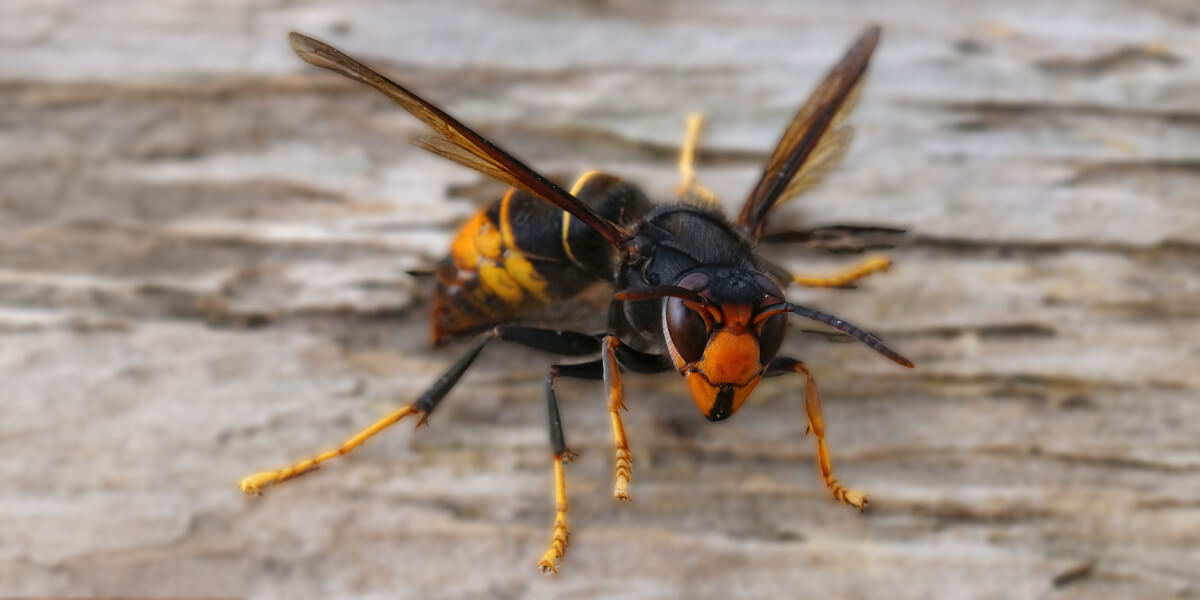
The Asian hornet actually originates from Southeast Asia and is therefore an invasive species in Europe, meaning it is not native to our country. This species can be very aggressive towards humans and threatens the populations of our native insect species, such as honeybees and wild bees. The Asian hornet should be controlled professionally, as it poses a real problem for the local ecosystem as well as for beekeepers' bees and agriculture (fruit and wine cultivation).

European hornet (Vespa crabro)
The European hornet belongs to the hornet family and, unlike its Asian relatives, is considered threatened with extinction in our country. It is therefore a particularly protected species and must not be controlled under any circumstances. With a body size of up to 35 millimeters, it is also the largest native wasp species.

European wasp (Dolichovespula media)
The European wasp is also called the “small hornet”. It is characterized by a rich dark red to black base color with narrow yellow stripes. Its habitat extends across the Northern Hemisphere, and it thrives in forests. It is peaceful and generally avoids being near humans.

Saxon wasp (Dolichovespula saxonica)
The Saxon wasp forms small colonies of up to 300 individuals. It can easily be mistaken for the common wasp. However, unlike this species, the peacefully living Saxon wasp poses no threat, and control is therefore not necessary.

Paper wasps (Polistinae)
The paper wasp family includes several species of slender, long-legged wasps that belong to the so-called hornet family. Their trailing legs are a characteristic feature when they are in flight. They are considered peaceful and beneficial species. Most of the over 1,000 paper wasp species live in tropical regions, but seven species are also found in Central Europe. The common paper wasp found here (Polistes dominula) is very similar in color to the German or common wasp.

Golden wasps (Chrysididae)
Unlike social wasps, golden wasps belong to the solitary species. This means they are loners and do not live in colonies. None of these species, some of which are threatened with extinction, pose a threat to humans. There are approximately 120 golden wasp species in Central Europe. They can be identified by their metallic-colored sheen and their small, compact body. Although golden wasps are biologically classified as wasps, they differ significantly from the German or common wasp, especially in appearance.

Ichneumon wasps (Ichneumonidae)
The black or dark-colored Ichneumon wasps form a huge family of more than 30,000 species within the Hymenoptera order. They have a long ovipositor, which they use only for laying eggs. Their larvae feed parasitically on other insect larvae. These small, slender insects are considered industrious biological pest controllers.
Useful yet harmful? Know and avoid the dangers posed by the German wasp and the common wasp
Wasps are useful. However, you should also keep the potential risks posed by the widespread German wasp and the common wasp in mind:
- Health risks
- Dangerous stings: Allergic reactions: swelling, pain, and in extreme cases, anaphylactic shock
- Particularly risky: stings in the mouth, throat, or esophagus (choking hazard!)
- Hygiene risks
- Germ transmission: Can spread pathogens and mold spores that may cause gastrointestinal illnesses
- Food contamination: Transfer of germs to food and drinks
- Structural damage caused by wasp nests
- Nesting in roller shutter boxes, roof trusses, and facades
- Feeding on decaying wood, insulation material, and electrical wiring

Building damage caused by wasp nests
German and common wasps can pose dangers to building structures. This affects, for example, the wooden structures of roof trusses or the roof covering. Wasps often use roller shutter boxes as nesting sites and eat through porous and decaying building materials on facades and masonry. Wooden building components are particularly affected, as wasps need wood to build their nests. They also feed on insulation and even electrical wiring, posing a fire hazard.
Hygiene and health pest
German and common wasps are considered hygiene pests, especially in the catering and food retail sectors, such as bakeries, because they can spread pathogens and mold spores.
They are also health pests: the wasp venom from painful stings can cause serious shock reactions in allergic individuals. Young children, older people, and vulnerable individuals are particularly at risk. In view of this health hazard, control may be justified on a case-by-case basis.
Food contamination
German and common wasps are attracted to both waste and our food, such as cakes, fruit, and drinks, and can spread germs this way. Food and drinks should be covered, and wasps should be kept away from food to prevent contamination.

Allergic reactions to stings and stings in critical areas
Symptoms, i.e., reactions to a wasp sting, include:
- rapidly onset pain
- redness
- sometimes massive tissue swelling.
Stings in the mouth cavity, throat, and esophagus are therefore particularly dangerous. For allergic individuals, removal and control by the authorities are therefore tolerated.

Can wasps be controlled? What the law says:
Whether wasps may be controlled on a case-by-case basis depends primarily on the respective wasp species. In principle, all wild animals, including insects, are protected by the general protection of the Federal Nature Conservation Act[1]. Some wasp species are also subject to special species protection under the Federal Species Protection Ordinance[2].
Some wasp species may therefore not be controlled, including the following:
- European hornet
- Scorpion wasps
- Golden wasps
- Field wasps
- German wasp
- European hornet
Control is tolerated only for the German and common wasp if there is a health hazard in the form of an allergy or other verifiable reasons.
The Asian hornet is so problematic for the local ecosystem and agriculture that it should be controlled professionally, e.g. by a pest control company.
German wasp and common wasp: repel or control? Only if there are reasonable grounds!
Control, removal, and relocation of wasps may be permitted under certain circumstances if there is a reasonable ground. This must be clarified beforehand to be on the safe side. Ideally, you should consult a knowledgeable person beforehand, such as a pest control company.

What are reasonable grounds for repelling and controlling German and common wasps?
For the species already mentioned—German and common wasps—control is tolerated if there is a reasonable and verifiable ground. However, it is not enough for the wasps to merely be a nuisance or for the grandchild to visit every few weeks.
The following grounds may be accepted:
- an allergy hazard
- a danger to infants and young children (living at the location)
- a danger to older or weakened persons (living at the location)
- massive impairment or damage to the building structure
- as well as an immediate danger in the living area (e.g. damage to electrical wiring).
In the case of the Asian hornet, professional control is generally recommended.
Precautions when dealing with wasps
When dealing with wasps, you should always remain calm. Hectic movements in the immediate vicinity of the nest and towards it are of little help and unnecessarily provoke the insects. Always keep your distance and wear protective clothing if control at or near the nest cannot be avoided. Contact a professional in advance and seek professional advice from a knowledgeable pest control company before taking action yourself.

Repelling wasps
Specialist retailers offer suitable products for repelling German and common wasps. These sprays can also be used specifically to prevent these wasps from building nests.
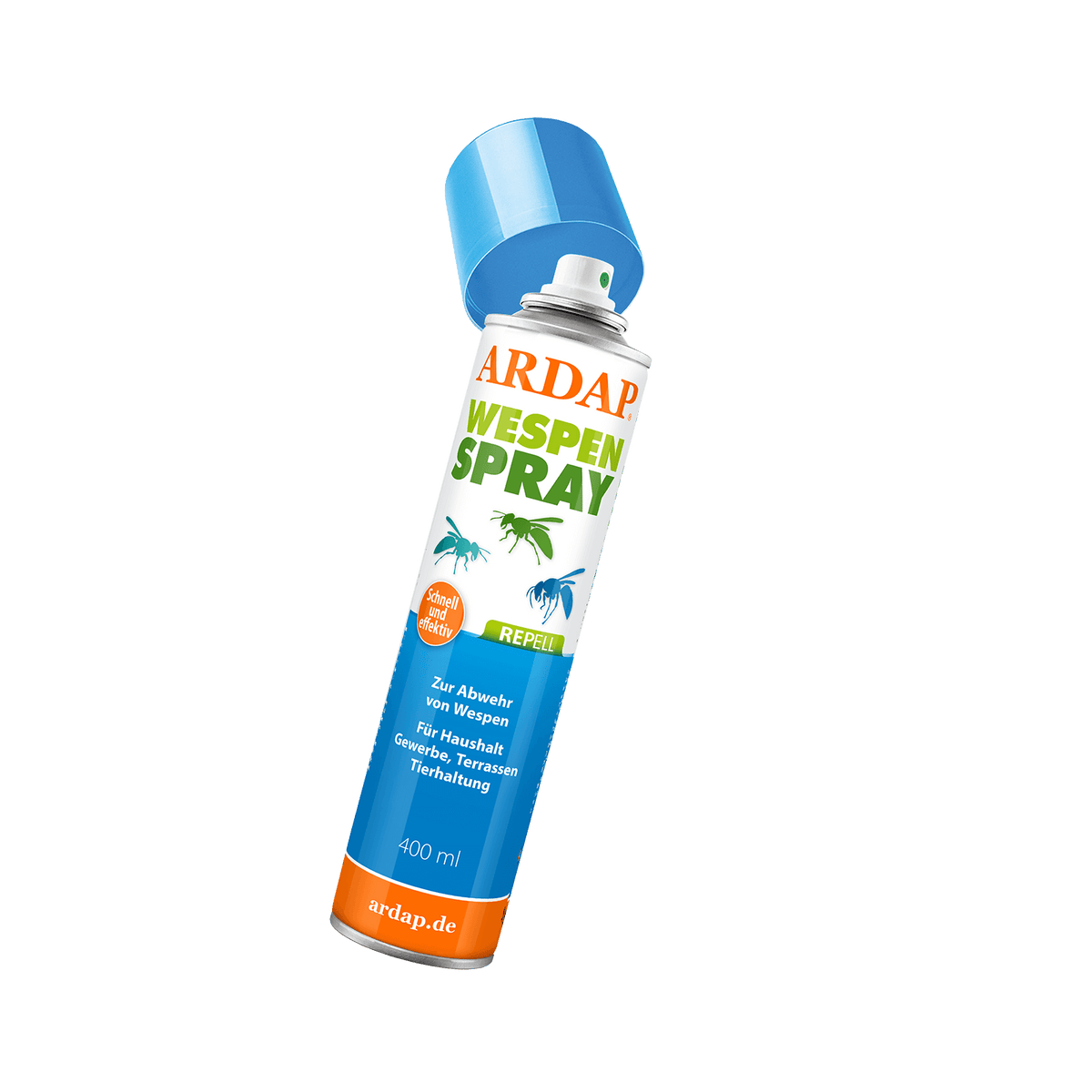
With the ARDAP Repell Wasp Spray, wasps can be repelled quickly and effectively. It is best to spray this repellent regularly where the insects prefer to stay or where you suspect wasps may soon come to build nests in the spring. This targeted prevention can contain the problem from the outset.
Reliably captured
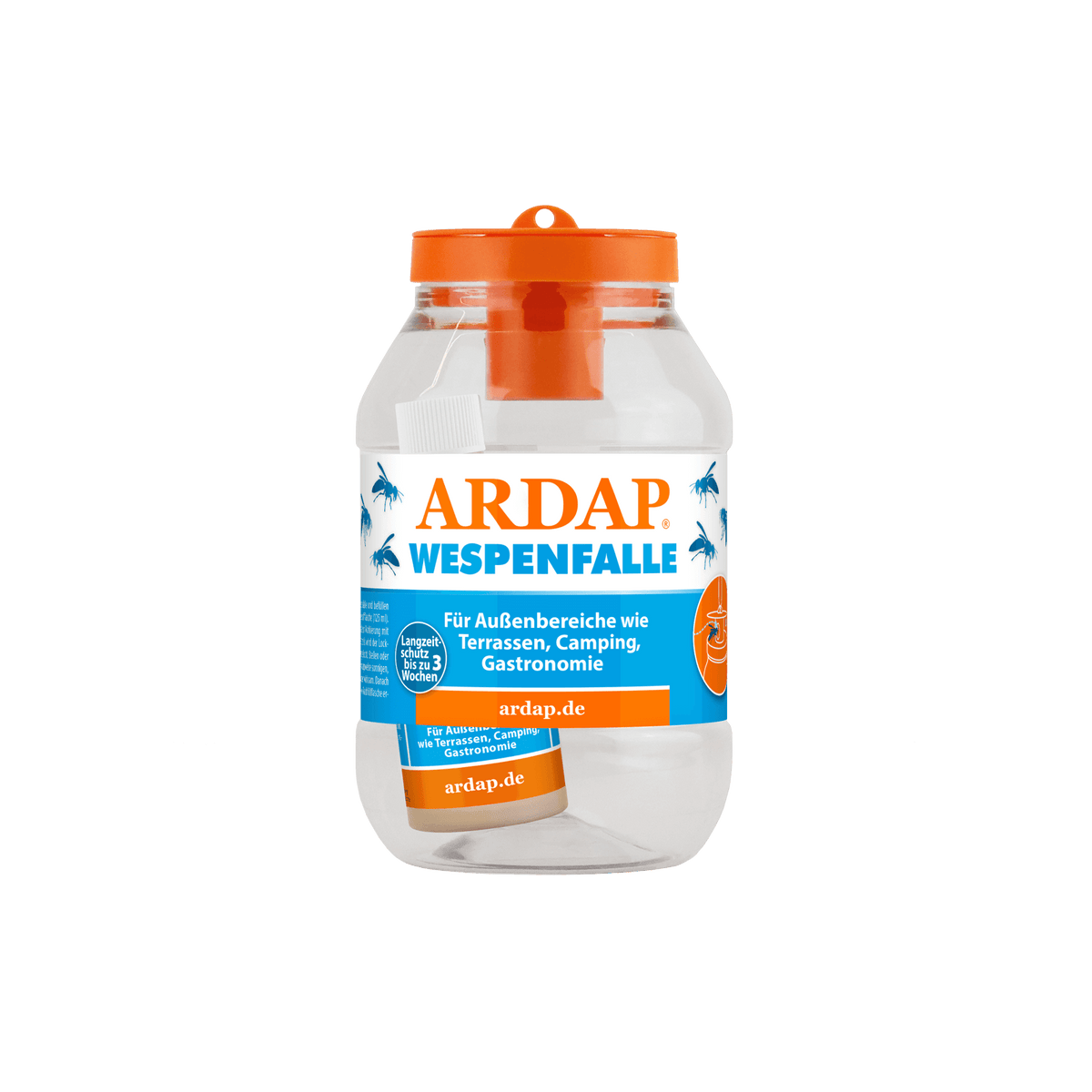
One proven way to deal with a wasp infestation is to capture the insects. The ARDAP Wasp Trap is available for this purpose. It can be used to quickly and specifically capture German and common wasps in the event of a threat. The highly effective special attractant of the ARDAP Wasp Trap is designed to specifically attract these insects and guide them through the entry opening into the interior of the trap. Once the animals have entered the trap, they cannot escape due to the design. The attractant is particularly long-lasting and retains its attractive effect for a period of up to three weeks. After this time, it is recommended to equip the trap with a new attractant bottle and reactivate it. Before opening the trap, always make sure that the wasps inside are no longer alive.

Sprays against wasp nests and wasps
If there are compelling and verifiable grounds, action against wasp colonies may be necessary. If a hidden wasp nest needs to be reached, the ARDAP Pro Wasp Foam Spray can be used with its practical spray nozzle. This product is ideal for hard-to-reach places, behind roof coverings, or in roller shutter boxes.
If action against aggressive wasps and their nest is required from a greater distance of up to four meters, the ARDAP Pro Wasp Powerspray is also suitable. Both products are intended for outdoor use, such as on terraces or balconies, and have also been tested for their effectiveness against the Asian hornet.
Always read the instructions on the product before use, wear protective clothing, and seek advice from a knowledgeable person, such as a pest control company.
Conclusion
Germany is home to a wide variety of wasp species, most of which are peaceful and beneficial to our ecosystem. However, the common wasp and the German wasp, and especially the Asian hornet, can pose considerable dangers if they settle in our domestic environment. These insects are after our food and may even attack if they feel disturbed. ARDAP offers effective products that allow you to defend yourself against these three species in a health-threatening situation. Choose ARDAP Repell for quick and effective repelling. If control may be considered after weighing up the possible reasonable grounds and can no longer be avoided, the products from ARDAP Pro are suitable.