Our expert Prof. Dr. med. vet. Norbert Mencke explains why wasp allergy is so dangerous and what sufferers can do.
- Wasp allergy – recognizing and correctly interpreting symptoms
- The best protection against wasp allergy: avoiding stings
- Controlling wasps - what is allowed?
- First aid measures for wasp allergy
- Immunotherapy (desensitization): long-term treatment of wasp allergy
- Conclusion
Non-allergic people usually only experience local swelling and itching, while allergic people can show systemic reactions with skin redness, hives, or itching on the palms and ears. In severe cases, a life-threatening anaphylactic shock due to massive histamine release threatens, causing shortness of breath and circulatory failure.
Hectic movements and provocation should be avoided, food and drinks should always be covered, and distance should be kept from nests. In the event of an allergy and danger from the German or Common wasp, protective clothing and targeted products against wasps from ARDAP can be used.
Wasp venom allergy sufferers should always carry an emergency kit with an adrenaline auto-injector and antihistamine. In case of stings in the mouth or throat or signs of shock, call the emergency doctor immediately; the sting site should be cooled in any case, but not tied off.
A hypothesensitization with purified wasp venom can gradually accustom the immune system to the allergens and prevent severe reactions in the long term – it must only be carried out under medical supervision.

Wasp allergy - recognizing and correctly interpreting symptoms
Perhaps you are wondering how you can even recognize a wasp allergy. In order for you to react appropriately to a wasp sting, it is necessary to be able to recognize and correctly interpret the symptoms. We will help you with this.
Why is an allergy to wasp venom so dangerous?
Normally, a wasp sting is a locally limited matter. Immediately after the sting, the affected person feels a stinging or burning pain. This is followed by a reddened swelling and intense itching as soon as the initial burning subsides. Within a few hours, these symptoms usually subside on their own. In some cases, the reactions can also last for several days. The crucial thing, however, is that it is a local event around the sting site and not the entire body is affected. And that is exactly what looks completely different in allergic people. In allergic people, wasp venom does not cause a locally limited reaction, but a system-wide immune reaction. For this reason, wasp venom is so dangerous for sensitized people. The problem is therefore not the amount of venom, but the massive immune system reaction to it.
What are the signs of a wasp allergy?
In the case of a wasp sting allergy, the body does not only perceive the venom as a local injury, and it also signals it. Crucial here are all warning signs that go beyond the sting site. For example, this leads to itching in the palms or in the ears. Symptoms such as hives (Urticaria) or a redness (Flush) spread over the entire body are also possible. This is caused by the explosive release of histamine and other vasoactive (blood vessel-influencing) substances. This leads to a dilation of the superficial blood vessels, and that within seconds. Now more oxygen-rich blood flows into the skin, which leads to visible redness. The slight swelling is due to the increased vessel permeability. As long as the allergens and mediators circulate, these symptoms can recur in waves. [1][2][3]
Warning: Danger to life: Anaphylactic shock
If an anaphylactic shock occurs, the allergic reaction turns into a life-threatening crisis. The breathing and circulation are significantly affected by this. The crisis is triggered by the venom proteins meeting IgE antibodies. Since the latter are distributed throughout the body, the dreaded systemic reaction occurs. The vessels dilate and become more permeable, plasma seeps into the tissue and there is a collapse of venous return and blood pressure. The heart practically pumps into a vacuum. Shortness of breath and oxygen deficiency arise. The affected person can also lose consciousness. Such an anaphylactic shock therefore has the effect of a landslide of symptoms. [4][5][6]
The best protection against wasp allergy: avoiding stings
The correct handling of a wasp allergy consists in not letting a wasp sting happen in the first place. And for that, it is useful to understand the behavior of these insects. Because they frequently only sting species like the German wasp and the Common wasp, which are known for their aggressiveness. The animals usually do not attack on their own, but as a reaction to a threat. And they perceive it especially when we threaten their nests, cause vibrations near the nests, or strike at the animals. Exactly that you should refrain from doing, so as not to provoke the insects. If wasps are present, you should therefore refrain from hectic actions. If you stay calm, a lot has already been achieved and the probability of a wasp sting that can trigger a wasp allergy should drop significantly. Also make sure to avoid contact with the wasps from the outset. This includes that you cover food such as the cake platter and the grilled meat. Do not attract the wasps with sweet foods or drinks.

Controlling wasps - what is allowed?
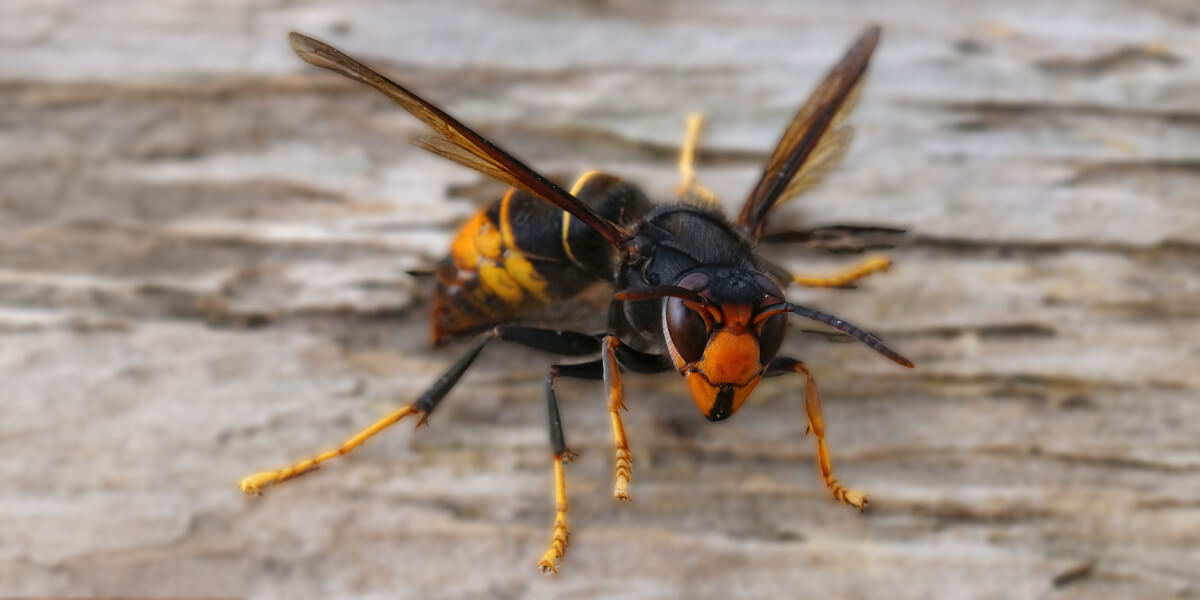
If wasps represent a demonstrable danger, they may be controlled, provided, after consulting with a knowledgeable person, it is ensured that it is the German wasp or the Common wasp. In the case of the Asian hornet, the advice of a pest controller should be sought. Please bear in mind that for other wasp species, control is not necessary and is therefore also strictly prohibited by the legislator. We show what is possible.

Spray range up to 4 meters
Highly effective insect spray against wasps & nests
Also works against Asian hornets, German and Common wasps
To the productKnow and observe safety precautions
Especially for people with a wasp sting allergy, it is important to protect yourself against a possible wasp sting. It is therefore best if allergic people keep as large a distance as possible from the insects. When it comes to taking targeted action against German wasps and Common wasps in the event of reasonable grounds, this should ideally be carried out by a person without a wasp allergy. But even for this, it is urgently necessary to wear suitable clothing, which serves as a protective barrier between the skin and the stinger. Here, long pants such as jeans and long-sleeved shirts made of thick fabric are suitable. A face protector is also recommended.
If you wish for a relocation of the insects, it is important to know that such activities basically belong in the hands of professionals such as pest controllers. This also applies especially to the removal of the nests of the Asian hornet. Otherwise, in everyday life, it belongs to the most important safety precautions to keep your distance and shield sensitive areas with window screens if necessary.

Targeted wasp deterrence
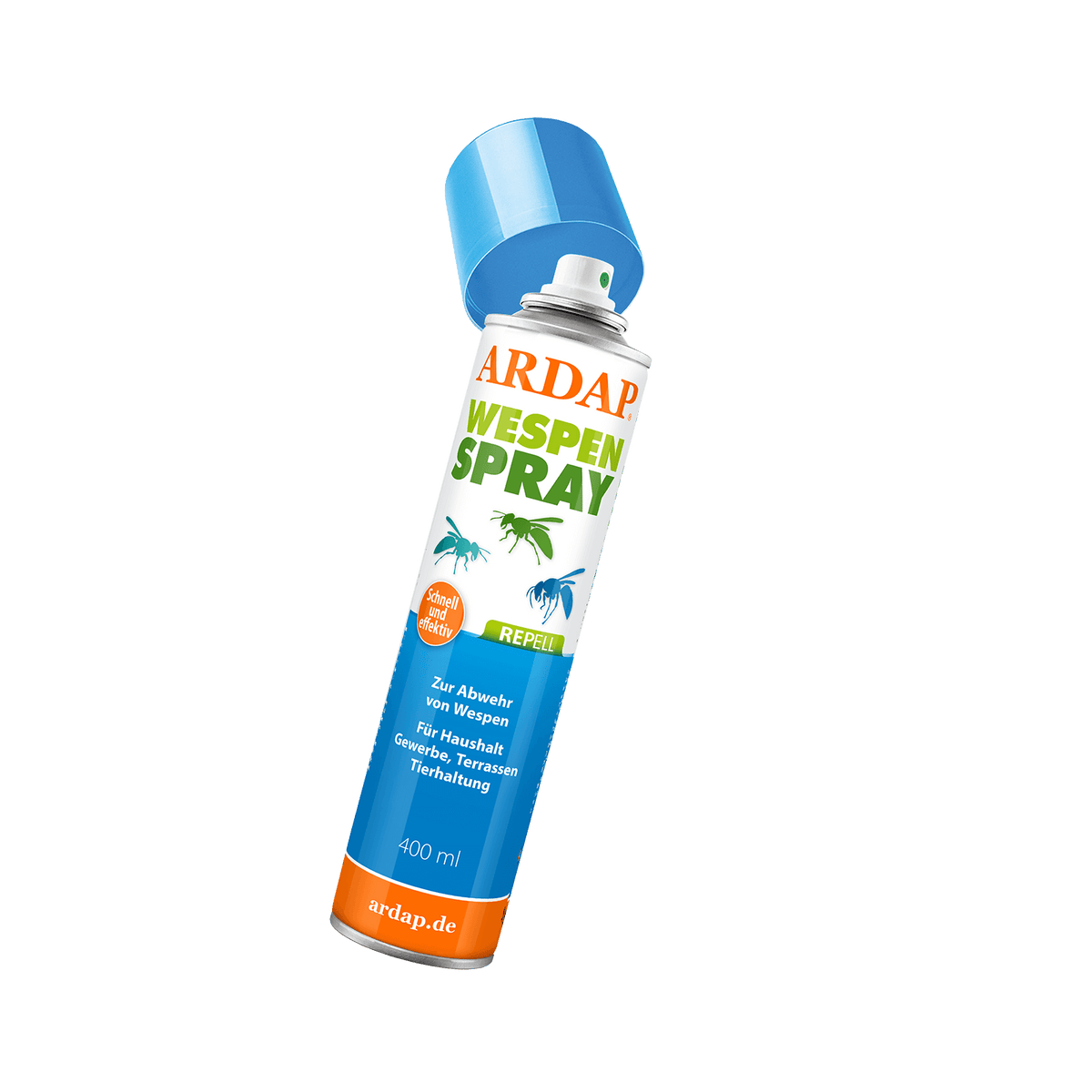
German wasps and Common wasps are often difficult to drive away. Where they have once established their nest, they stay there until the state dissolves in the fall. If you have to get rid of the insects for reasonable reasons, you should access suitable products from the specialist trade. With the ARDAP Repell Wespenspray, you repel wasps with fast and effective action. Ideally, you use it regularly in the spring. Repel the aggressive wasp species in time, they will not get the opportunity to establish a nest near your house or your apartment.

Effective wasp control
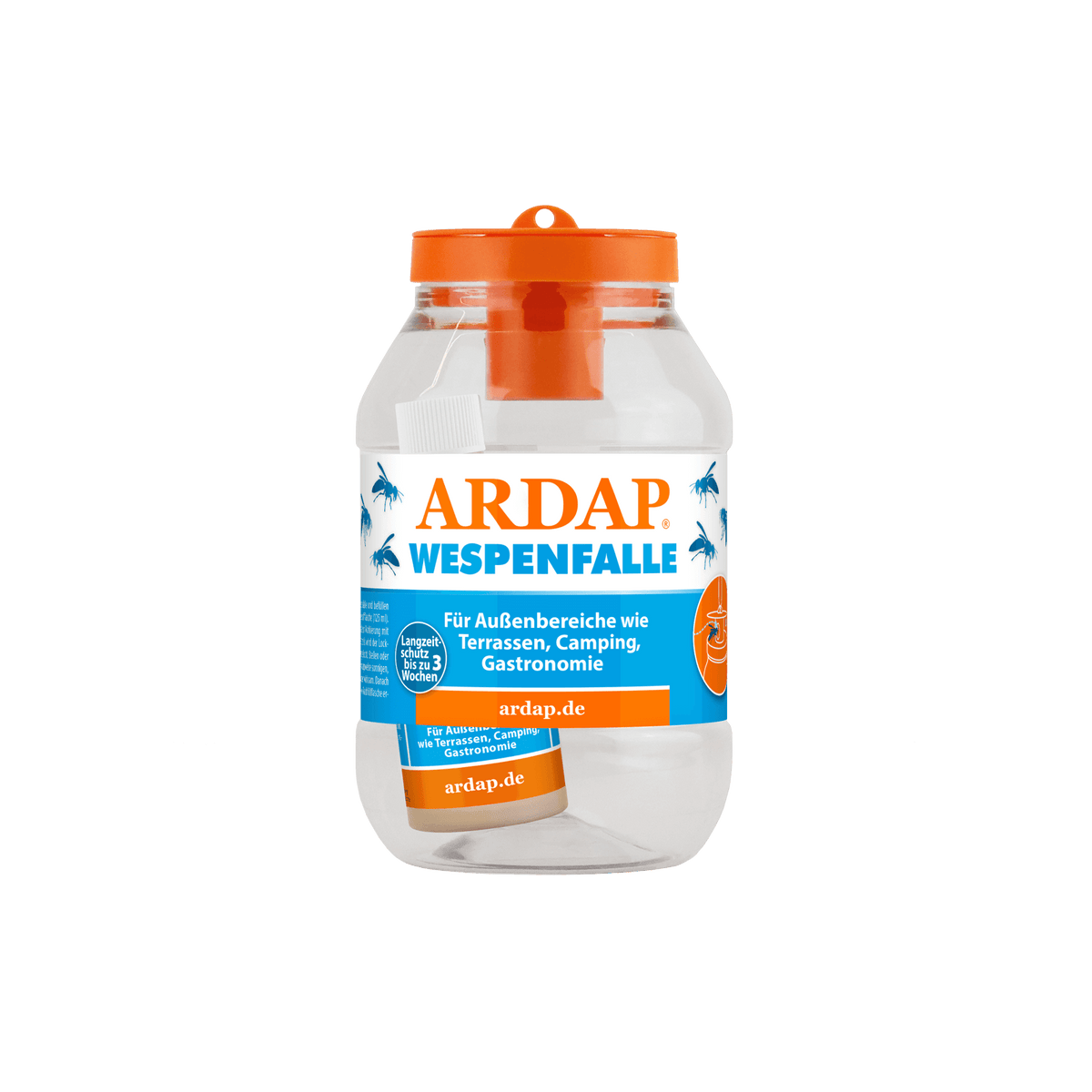
If deterrence of wasps is no longer possible, you should think about a permanent control of individual wasps and wasp nests. Please bear in mind that basically only the German wasp and the Common wasp as well as the Asian hornet may be controlled - and even that only if an acute danger situation caused by these insects (such as a wasp allergy) can be proven. Should this step be unavoidable, it is important to use insect products with proven effectiveness. For this, the ARDAP Wespenfalle is suitable. You place or hang this at a strategically sensible place outdoors. The wasps are then attracted by the bait in the trap and fly into the container, from which they can no longer get out on their own.
With the ARDAP Pro Wespen Powerspray and the ARDAP Pro Wespen Schaumspray, ARDAP offers two highly effective products, which are used by pest controllers, for the targeted control of an infestation by the German wasp, the Common wasp, as well as the Asian hornet. With the ARDAP Pro Wespen Powerspray, the insects and their nests can be targeted in case of danger from a distance of up to four meters. The product works immediately upon contact of the wasps with the spray and lasts up to two weeks.
If wasps nest in hard-to-reach places and cavities, the ARDAP Pro Wespen Schaumspray is recommended. It is ideally suited for this area because a thin spray tube is integrated, which also penetrates into roller shutter boxes, cavities, or behind panels.
Before using the listed wasp products, the advice of a knowledgeable person, such as a pest controller, should be sought to avoid errors and misunderstandings. Also always observe the instructions on the product and wear sufficient protective clothing.
First aid measures for wasp allergy
What should allergic people do if despite all precautions a wasp sting occurs? Prepare yourself in time and thus improve your chances of surviving the sting unharmed. We have compiled helpful tips for you.

Emergency kit for wasp allergy
An emergency kit for wasp allergy should contain the most important medications that you as an allergic person need for the initial treatment of the wasp sting. You can get this exclusively with a medical prescription at the pharmacy.
The Adrenaline Pen acts here like a quick lifesaver in an emergency. It contains adrenaline, a hormone that the body also produces itself to react in stress situations. However, in a severe allergy, the natural adrenaline release is not enough – therefore the hormone must be administered externally. The great advantage of the pen is that it is easy and quick to use: You stab it into the thigh (also possible through clothing), and the adrenaline is automatically injected.
As soon as the adrenaline is in the body, a quick effect takes hold: The blood vessels constrict, whereby the blood pressure rises again. At the same time, the cramped airways dilate, so that the affected person can breathe better. Also swellings in the face or neck recede, and the circulation stabilizes.
Experts recommend always having two pens with you. The reason: Sometimes one dose is not enough, or the emergency service takes longer to arrive. In addition, in panic, it can happen that the first pen is not used correctly – a second pen is then an important reserve. It is also important that the pens are regularly checked for their expiration date and replaced in time.[7][8]

In case of severe reactions, see a doctor immediately
The severity of the allergic reaction depends on various factors. This also includes the sting site. The tissue swells faster where the areas are more heavily blood-supplied. This includes, for example, the face, the neck, and the scalp. Stings in these places are particularly dangerous for allergic people and it can come to critical immune reactions even faster. Stings in the arms or legs, on the other hand, can be easily cooled and monitored.
Especially dangerous are stings in the mouth and throat area. This can easily happen if a wasp, for example, has flown into a drink can and accidentally gets into the mouth. Due to the soft mucous membrane tissue and the tight airway situation, a threatening swelling can occur very quickly. Here you should definitely consult a doctor or seek emergency medical care.
Immunotherapy (desensitization): long-term treatment of wasp allergy
In specific immunotherapy or desensitization, the affected person is first given purified wasp venom extracts in tiny amounts under medical supervision. The dose is then rapidly increased, resulting in what is known as a controlled exposure. This is intended to teach the immune system to no longer classify the allergens as a threat. This should prevent or at least significantly reduce the dangerous cascade following a wasp sting, preventing the dangerous systemic reaction. In this way, long-term treatment of wasp allergy is possible. Desensitization must be repeated. Speak to your family doctor or allergist about this.
Conclusion
A wasp allergy can be very dangerous. It causes a severe overreaction of the body to a wasp sting. In some cases, a life-threatening situation can develop. Therefore, it is often better not to accept the threat posed by aggressive wasps, but to take action against it. If people with a wasp allergy live in the household, this can be a reasonable reason to take action against the German wasp, the common wasp, and the Asian hornet. ARDAP offers professional, highly effective products that have also proven themselves in practical use by pest control operators. Rely on ARDAP Repell for targeted deterrence, while ARDAP Pro enables effective control to avert a demonstrable dangerous situation.
Frequently Asked Questions
How can you tell if you are allergic to wasps?
Whether you are allergic to wasps is indicated by local swelling of less than ten centimeters, mild itching, and redness that subsides within one to three days. In contrast, an allergy causes systemic reactions that can affect the entire body: skin rashes with itchy wheals (hives), breathing difficulties such as wheezing or a feeling of tightness in the throat, as well as circulatory problems with dizziness, nausea, or a drop in blood pressure, up to and including shock.
How quickly do you react allergically to a wasp sting?
Allergic reactions to a wasp sting usually set in very quickly – generally within minutes, and at the latest after about 30 minutes. The sooner the symptoms appear, the more severe the reaction usually is. Late reactions that occur only after several hours are rare, but can be noticeable, for example, through delayed swelling.
What does a wasp allergy look like?
In mild to moderate wasp allergy, widespread skin redness, itchy wheals all over the body, and swelling in the face, especially on the eyelids and lips, occur frequently. Some affected people also suffer from nausea or vomiting. A severe allergic reaction (anaphylactic shock) is characterized by acute shortness of breath, laryngeal swelling, circulatory collapse, or unconsciousness – in this case, it is a medical emergency. Call the emergency doctor (112) immediately and use the adrenaline pen if available.What helps quickly with wasp allergy?
In an emergency involving a wasp allergy, an adrenaline auto-injector must be injected into the outer thigh immediately, and the emergency doctor must be called right away – even if the symptoms improve after the injection. Antihistamines and corticosteroid preparations such as prednisolone can also be taken. For milder reactions, cooling the sting site (e.g. with a cloth and ice cubes), Fenistil gel against itching, and elevating the affected body part help slow the spread of the venom.