If you would like some background information on wasp stings to help you better assess the danger, we have comprehensive information for you. We also explain which products can really help in the event of danger when dealing with German wasps and common wasps.
Our expert Prof. Dr. med. vet. Norbert Mencke explains wasp stings and the associated dangers.
- Simply striking: Key facts about wasp stings at a glance
- What happens when you are stung by a wasp?
- First aid after a wasp sting?
- When there are good reasons: Deterring and controlling wasps
- Play it safe: Avoid wasp stings
- Conclusion
- Frequently asked questions
Only female wasps have a modified ovipositor that serves as a stinger, which they can use multiple times. It is used both to paralyze prey and for defense.
Wasp venom consists of a cocktail of enzymes, peptides, and amino acids that causes cell damage, pain, and itching, and can also attract more wasps through alarm pheromones. Local reactions after a sting usually subside after 24 hours.
In allergic individuals, wasp venom can cause severe systemic symptoms, even life-threatening anaphylactic shock. Stings in the mouth and throat are particularly dangerous, as they can cause choking due to swelling and airway obstruction.
Stay calm, cool the sting site, and do not scratch it; antihistamines or hydrocortisone cream can relieve discomfort. Allergic individuals should keep an emergency kit handy and call for medical help immediately in serious cases.
Wasp stings can be avoided by staying calm, covering food, and wearing protective, long clothing. If there is a justified danger (e.g. for allergic individuals), repellent or control products from ARDAP may be used (only against German or common wasps), while nest relocation for all wasp species should be left exclusively to professionals.
Simply striking: Key facts about wasp stings at a glance
Wasps can sting multiple times and inject venom into the victim's body. Many wasps are peaceful and therefore rarely sting. This is not the case with the German wasp and the common wasp, which can behave aggressively when threatened. We have concisely summarized all the key facts about wasp stings for you.
The wasp stinger: Anatomy
The wasp's venomous stinger is actually a modified ovipositor. This is also the reason why only females have such a defensive stinger. The organ is hidden in a stinger chamber on the abdomen and consists of three movable elements. Two stinging bristles move along a central stinger groove, similar to saw blades. Powerful muscles in the abdomen drive the stinger.
Function of the wasp stinger
Wasps use their stinger to hunt insects. They use it to paralyze or kill prey. Unlike a bee's stinger, the wasp stinger is smooth, making it ideal for stinging insects. The wasp stinger thus serves an important function in hunting. Wasps rely on prey to later feed this protein-rich food to their larvae. Another function is defense. When predators attack the wasp nest, the insects are able to defend themselves thanks to their stinger. This means that they will also attack people if they approach and disturb the nest.
Special features of the wasp stinger
One of the special features of the wasp stinger is that the animals release alarm pheromones with it. This happens when they sting or deliberately spray venom. Even tiny amounts of the pheromone are enough to mobilize other workers in the nest to attack. In this way, an effective group defense can be organized.
It is also interesting that mason wasps (including hornets) pull the stinger out again afterwards. This enables reuse. This is different with honeybees. Their stinger remains in the victim's skin, which leads to the death of the adult bee. In principle, the use of the wasp stinger and the consequences of a wasp sting are part of normal behavior when foraging and defending themselves.
Composition of wasp venom
Wasp venom consists of various enzymes, peptides, biogenic amines, as well as alarm and signaling molecules. The enzymes break down cell membranes and are intended to facilitate the spread of the venom. The peptides in particular contribute to the sensation of pain, while the biogenic amines are responsible for immediate pain with itching and vasodilation. The alarm and signaling molecules, in turn, mark the wasps' target and serve to recruit more workers. In principle, this is therefore a cocktail containing a wide variety of substances. [1][2][3][4]

What happens when you are stung by a wasp?
In the event of a wasp sting, various reactions can be expected. These affect the area of the skin around the sting site and possibly the entire body, which is particularly relevant for allergic individuals.
Local reaction
A stinging pain occurs within the first few seconds after the sting. This is followed by a wheal-like redness (erythema). In the first few minutes after the sting, fluid flows from the capillaries or fine blood vessels in the upper layer of the skin into the tissue. A typical tense swelling develops, which can be very painful and cause intense itching, even though it usually does not pose a major health risk. In healthy people, it should subside on its own within 24 hours.
Allergic reaction
In people who react allergically to wasp stings, the potential danger is very different. In this group, the venom can trigger a reaction throughout the entire body. The swelling at the sting site is then larger and lasts longer. The problem with allergic individuals is that their immune system views certain protein building blocks in the wasp venom as foreign. The release of such messengers as histamine leads to vasodilation and swelling of the airways. In extreme cases, this can lead to respiratory and cardiac arrest and thus to a genuine emergency.

First aid after a wasp sting?
If you have been stung by a wasp, the right reaction is crucial. We will show you what the first measures are and how you can relieve the pain.
Keep (it) cool
The most important advice for a wasp sting is to first stay calm. For example, scratching the sting site is useless. In this situation, panic increases the pulse and blood pressure, and the venom can circulate even faster through the tissue. On the other hand, cooling the affected area is one of the sensible first aid steps.
Antihistamines or hydrocortisone cream
The application of an antihistamine (anti-allergen) is obvious in the event of a wasp sting, because itching is primarily triggered by histamine. In many cases, a gel is sufficient. However, antihistamines cannot prevent a severe allergic reaction. A hydrocortisone cream also reduces local inflammation and is more effective than antihistamines.
For allergic individuals: Always carry an emergency kit
Allergic individuals in particular should prepare well for a wasp sting and equip themselves with an emergency kit. In addition to an antihistamine and hydrocortisone cream, this should also include an adrenaline auto-injector [5]. This can stop a drop in blood pressure within seconds, as well as airway swelling and possible circulatory failure. You should also pack a second auto-injector for a second dose or as a backup.
Allergic reaction? Call an emergency doctor!
Do not take an allergic reaction lightly. Assess the situation and call an emergency doctor if in doubt, who can provide rapid assistance. This is because in allergic individuals, a wasp sting can develop into a life-threatening situation within minutes. For example, the non-linear course of anaphylaxis can be insidious. Breathing difficulties, for instance, can occur suddenly.

When there are good reasons: Deterring and controlling wasps
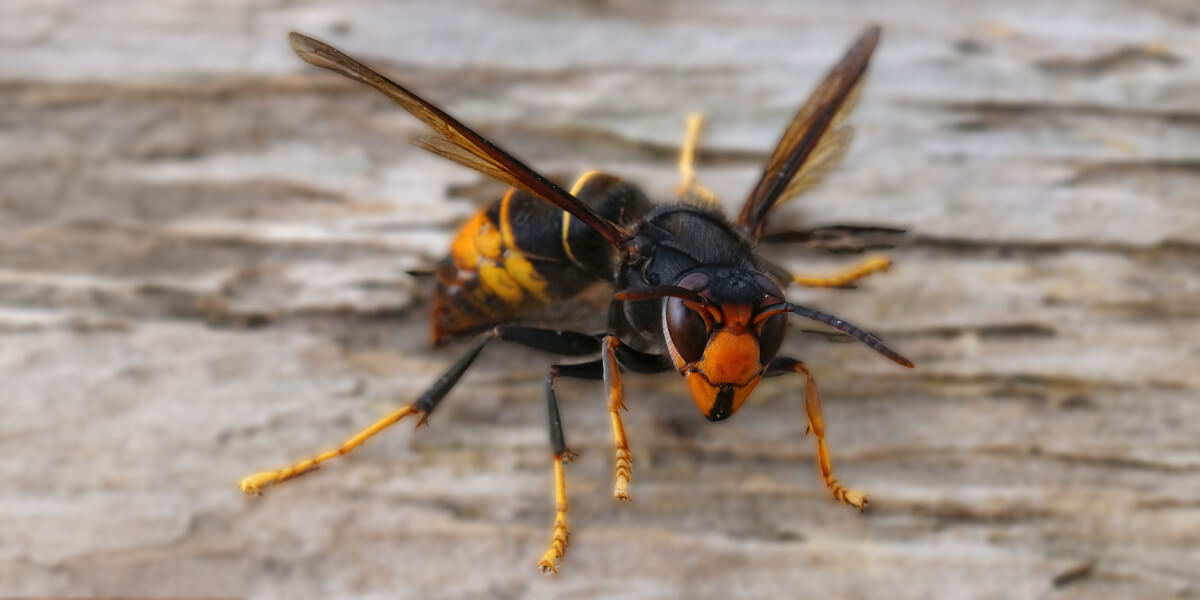
Species such as the German wasp and the common wasp, as well as the Asian hornet, are potentially dangerous to humans and can behave aggressively. These are precisely the species that, when there are good reasons, may be controlled as the only wasp species allowed to be controlled.
But what could such a reason look like? For example, you may control German wasps and common wasps if there is a risk to allergic individuals. This is obvious because this group of people is particularly vulnerable to wasp stings. However, a danger to young children, older or weakened individuals can also provide such a reason. These two wasp species can sometimes even pose a danger to buildings, because they can cause structural damage over time. An immediate fire hazard in residential areas arises if the wasps eat through electrical wiring. All these reasonable reasons must be verifiable. However, the use of wasp control products is only permitted as a last resort.However, the situation is different with the Asian hornet. This invasive species from Asia significantly threatens the native ecosystem in Germany and Europe. It poses a real problem, especially for wild and honeybees, and thus for agriculture in fruit and wine-growing regions. The professional control of the Asian hornet is therefore permitted and is also carried out by pest control companies using products from ARDAP.


Play it safe: Avoid wasp stings
Would you like to know how to avoid a wasp sting in everyday life? We will share some tips with you and introduce suitable products for containing a plague of German wasps and common wasps.
Always pay attention to your own safety
Relocating, deterring, or eliminating wasps is far from a simple task. The insects are defensive and do not like it at all when we intrude on them. Assume that some wasps will attack you and therefore always pay attention to your safety. You may not necessarily need a stingproof overall like the professionals use. But protective clothing in the form of long trousers (e.g. jeans) and a long-sleeved shirt made of thicker fabric, as well as protection for your hands and face, is sensible. This is especially true when you are working on a ladder. Because if you experience stinging pain, you are more likely to fall. Also when controlling wasps with products from specialist retailers (e.g. with the ARDAP Pro Wasp Powerspray), you should wear protective clothing and always pay attention to the instructions on the product or from a knowledgeable contact person beforehand. If controlling the wasp nest is not an option due to the lack of a threatening situation, it may be possible to have the nest relocated. Please bear in mind that the relocation of wasp nests when there are reasonable reasons must always be left to a professional.

Good deterrence protects
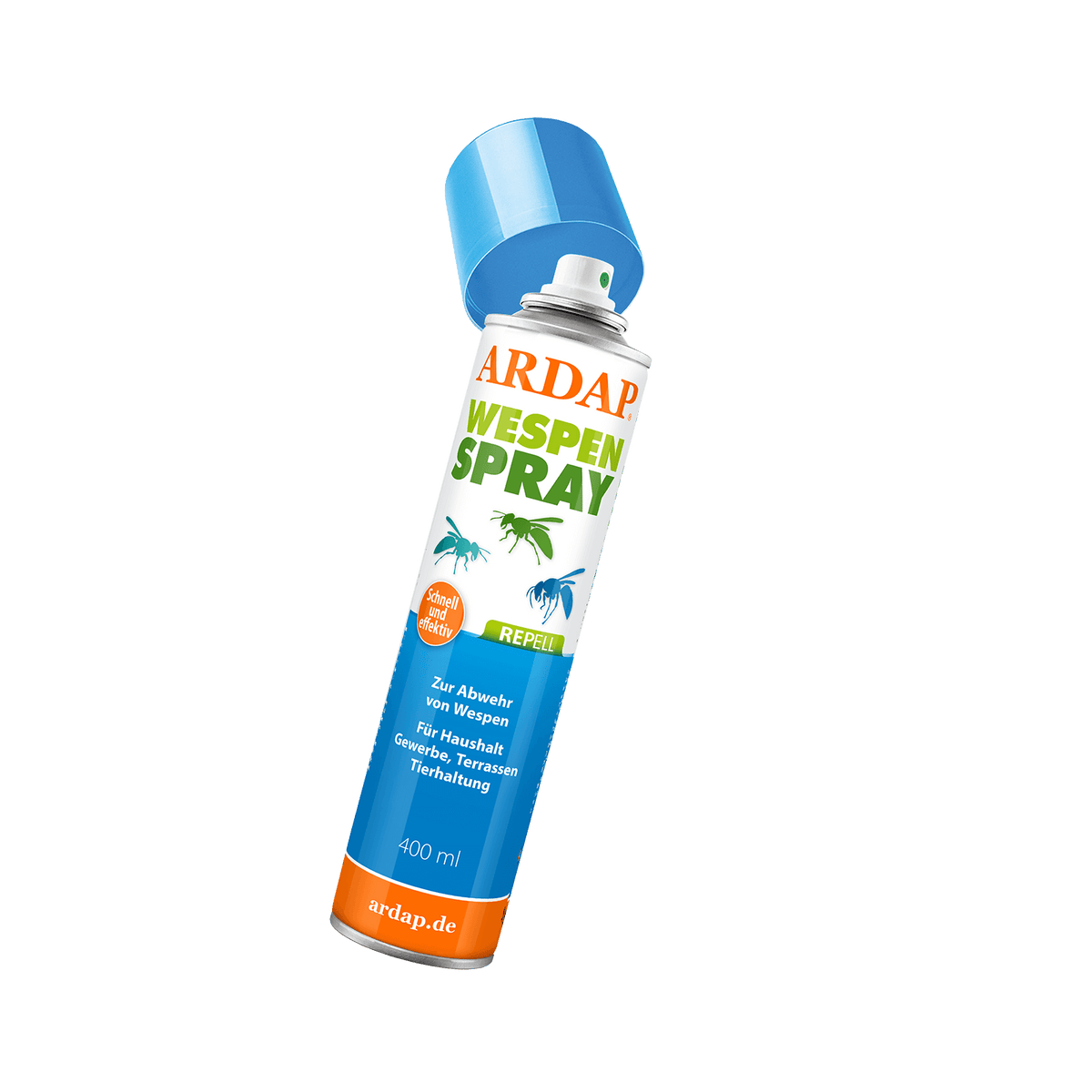
Deterring German wasps and common wasps specifically means protecting yourself from wasp stings. That is why it is so important to prevent them and take the necessary measures in good time. The ARDAP Repell Wasp Spray is suitable for this task. Use this product regularly if you want fast and effective deterrence. This ensures that there is no close contact with the animals, which drastically reduces the probability of a sting. Wasps often sting when we frantically reach out to grab or hit them, or when we step on the insects. If you consistently treat the domestic environment with the ARDAP Repell Wasp Spray, such dangerous encounters will not occur in the first place. This product can also prevent nest building near houses.
Highly effective products against wasps
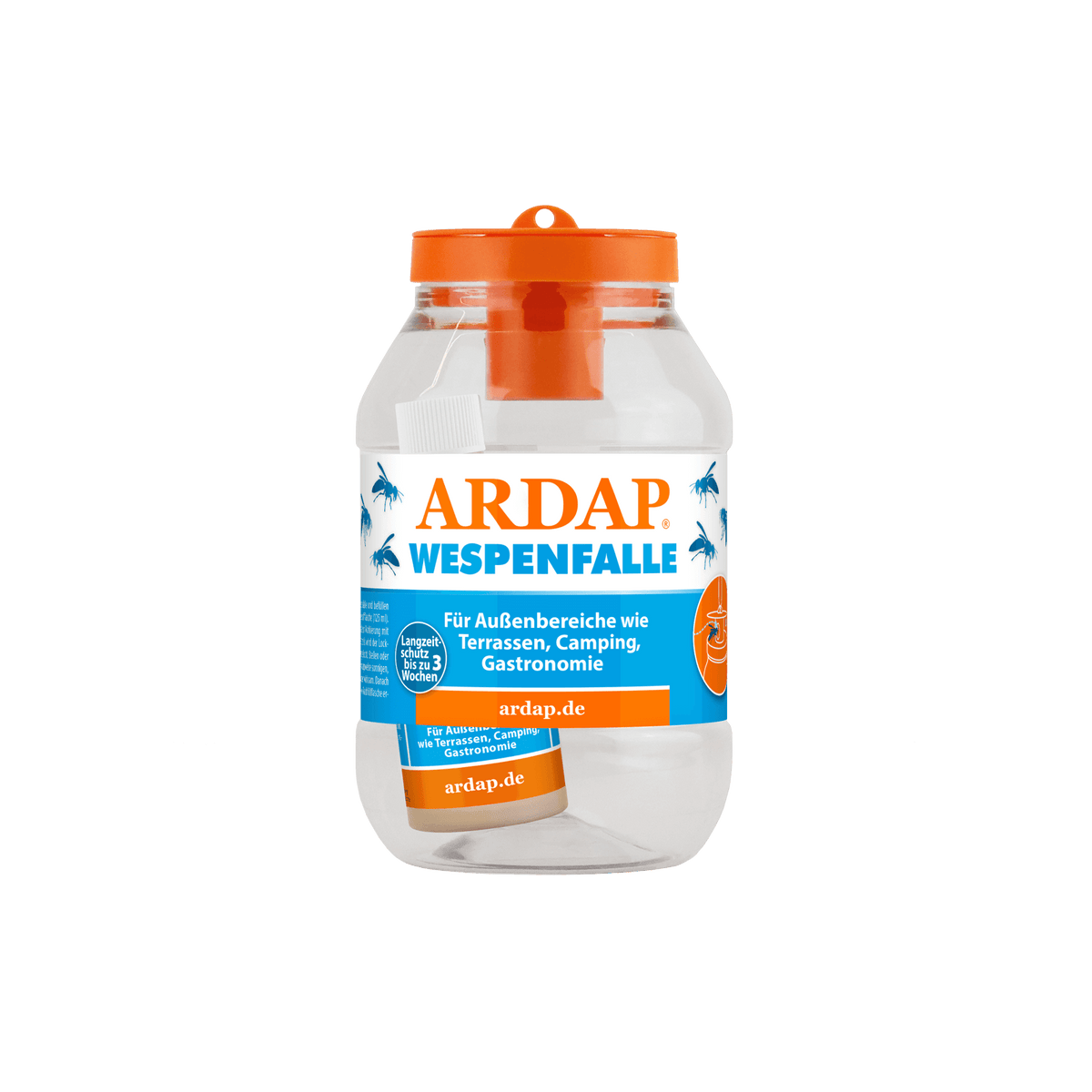
If you are an allergic individual or in the event of further, concrete threats, and you want to reliably eliminate the risk of a wasp sting and the resulting dangers, you may control the insects in individual cases. ARDAP offers several solutions for this, all of which are characterized by their high effectiveness. You may use these only against the German and common wasp when there are good, verifiable reasons. The ARDAP Wasp Trap works rather passively against wasps. The trap is placed in a suitable outdoor location. The attractant draws wasps in. Once they have entered the container, they can no longer escape the trap. If individual wasps, the Asian hornet, or wasp nests at great heights or in hard-to-reach areas are to be controlled specifically, the ARDAP Pro Wasp Powerspray and the ARDAP Pro Wasp Foam Spray are available.

The ARDAP Pro Wasp Powerspray is characterized by a spray range of four meters. This allows nests to be targeted and treated from a distance. The ARDAP Pro Wasp Foam Spray, on the other hand, is ideal for hard-to-reach areas. The 2-in-1 spray head is perfect for treating surfaces and, thanks to the practical spray tube, also allows for targeted penetration into hard-to-reach nests – whether in blind box housings, cavities, or behind panels.
Both products work immediately and last for a period of two weeks. They can be used anywhere outdoors, including on the patio or balcony.
Before using the listed wasp products, you should always seek the advice of a qualified person, such as a pest control professional.
Conclusion
Wasp stings can be very painful. And even though they heal on their own in most cases, caution is advised. Some people do not even know that they are allergic to wasp stings because they have never been in that situation. For allergy sufferers, however, the consequences can be dramatic. It is therefore absolutely sensible to invest in defense early on or to keep products on hand that allow you to carry out an effective control of dangerous wasps. ARDAP offers everything that is needed for this.
Frequently Asked Questions
What should you do if you are stung by a wasp?
If you are stung by a wasp, first aid measures are crucial:
- Remove the stinger (if present, e.g., with bees).
- Cool (wrap ice cubes in a cloth, use cold water).
- Disinfect to prevent inflammation.
- Apply an antihistamine (e.g., Fenistil gel) against itching.
- In case of an allergy (shortness of breath, dizziness, rash) → call emergency services!
How quickly does wasp venom work?
Wasp venom usually works immediately and lasts for up to 48 hours:
- Immediately: Pain and local swelling occur within seconds.
- After 10–30 minutes: Redness and itching intensify.
- After 24–48 hours: Peak swelling (can last up to 3 days).
Where do I get stung by wasps most often?
There are many common areas for wasp stings:
- Hands/fingers (when swatting them away).
- Feet (when walking barefoot).
- Face/neck (when eating or drinking).
- Arms (by accidentally getting them caught)
- Mouth/throat (emergency – danger of choking!).
How long does it take for wasp venom to break down?
The body normally breaks down wasp venom within 2–3 days. Residual inflammation can be noticeable for up to 1 week.
How long should a wasp sting hurt?
A normal pain reaction to wasp stings lasts from the first few minutes after the sting up to itching and swelling for a few days, after which redness often remains:
- Acute pain: A few minutes to hours.
- Itching & swelling: 1–3 days.
- Redness: Can last up to 1 week.