It is important to be able to distinguish between the different species, as the best-known German hornet and the common hornet can sometimes pose a serious health threat, while bees and bumblebees are peaceful neighbors.
Our expert Prof. Dr. med. vet. Norbert Mencke explains the difference between hornets, bees and bumblebees and shows solutions for dealing with the different insects correctly.
- Hornet, bee or bumblebee? Recognizing the differences between the insects
- Preventing and avoiding dangers from hornets - what does the law say?
- Effective products from specialist retailers against hornets
- Conclusion
- Frequently asked questions
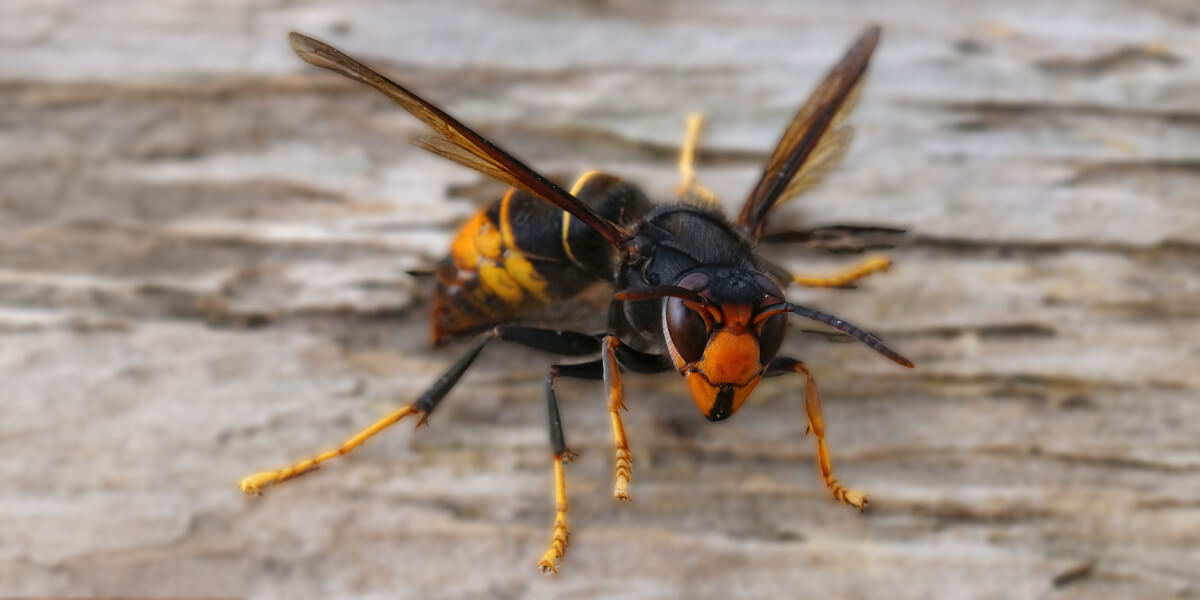
Hornets have a slim wasp waist, are smooth and black-and-yellow striped, while bees are rounded, hairy and matte in color. Bumblebees are larger, fluffy and buzz with a deep sound.
Hornets hunt insects for their larvae and prefer sugar for themselves. Bees and bumblebees are pure herbivores, collect exclusively nectar and pollen and are important, particularly industrious pollinators.
Hornets build paper-like nests from wood pulp, bees create wax combs in cavities and bumblebees make soft ground nests from moss, grass or animal hair.
Hornets can sting multiple times with their smooth stinger, bees only once due to the barbs on the stinger and die afterwards, while bumblebees are very peaceful and only sting in emergencies.
Only the German and common hornet may be controlled in case of danger and for a demonstrable, compelling reason, while bees and bumblebees are strictly protected.
Generally, food and drinks should always be covered, remain calm, and avoid hectic movements. Bees and bumblebees are protected insects and may neither be driven away nor controlled. Only for hornets: in case of an acute threat by the German or common hornet, repelling or control ARDAP products can be used.
Hornet, bee or bumblebee? Recognizing the differences between the insects
The German and common hornet, bees (honeybees and wild bees) and bumblebees are eusocial insects. They care for their young and act as beneficial insects in various places in our ecosystem. However, only bees produce the honey we know.
For a reliable identification of the species, it is crucial to know the other features that differ from one another.
Look closely: Appearance
Even their appearance shows how different hornets, bees and bumblebees actually are. The table illustrates what you should pay attention to:
| Feature | German hornet | Common hornet | Bee | Bumblebee |
|---|---|---|---|---|
| Body shape, appearance | slim-elongated; distinct wasp waist, yellow head shield with 1-3 black dots | slim-elongated; distinct wasp waist, yellow head shield with black anchor pattern | rounded-compact | round, short and compact |
| Size (worker) | 11-14mm | 12-16mm | 11-15mm | Length, depending on species 8-21mm |
| Coloration | black-yellow striped | black-yellow striped | matte brown-yellow to grey | dark base color with broad yellow, white or orange-red bands |
| Hairiness | sparsely hairy | sparsely hairy | densely hairy | dense and fluffy hairy |
| Stinger | without barbs | without barbs | with barbs | without barbs |
| Wing and leg position during flight | flat | flat | hind legs often hang visibly down | wings circle at high speed and create vortices that provide lift |
Downloadable table
Different behaviors and diets
Honeybees and wild bees are busy flying from blossom to blossom and collecting nectar and pollen. Their pollination service for plants is indispensable. In winter, bees huddle closely in their hive and feed on their stored honey.
Bumblebees are also extremely active and efficient pollinators, whose daily routine is dominated by foraging, brood care and nest defense. Their rhythm depends on the weather, season and their role in the colony.
Bees and bumblebees are therefore absolutely worthy of protection.
Hornets are both pollinators and hunters and, depending on the need and life cycle of the hornet, have relied on plant juices in the adults or protein-rich prey as food for the larvae. Only their young queen hibernates after mating in the preceding year, usually in tree stumps or other protected crevices.
In hornets and bumblebees, the entire colony dies with the start of winter except for the young queens. They are thus always annual.
Hornets are also generally worthy of protection. The common and German hornet may and should only be controlled if there is a demonstrable case of danger (e.g. for allergy sufferers or small children in the household).

Nest building and colony formation
Bees build their nests from self-produced wax, which they shape into perfect hexagonal honeycomb cells. These elaborate constructions are typically found in protected cavities such as tree or ground cavities (eusocial wild bees) or hives provided by beekeepers for honeybees.
A bee colony can comprise thousands of workers and uses its nest over several years, storing valuable honey reserves for winter. We use the honey, while beekeepers provide the honeybees with food for the winter.
Bumblebees work quite differently: They build their nests from wax, which they combine with soft materials such as moss or leaves. Their brood cells appear more irregular and spherical compared to honeycomb. Bumblebees prefer hidden ground cavities, such as abandoned mouse nests or dense clumps of grass.
Their colonies remain significantly smaller than bee colonies with 50-600 animals and exist for only one season - only the mated young queens hibernate to found new nests the following spring.
Hornets, such as the German and common hornet, in turn show a completely different nest-building behavior. They use self-made paper as building material, which they obtain by chewing wood fibers. From this, they form characteristic rounded combs, which are surrounded by a protective paper shell. These nests are frequently found in cavities such as attics, roller shutter boxes or ground cavities.
Hornet colonies can, depending on the hornet species, comprise up to 7,000 individuals and defend their nest particularly aggressively. Unlike bees, only the young queens hibernate here.
These differences in nest building reflect the different life strategies: bees with their highly organized permanent hive, bumblebees with their short-lived but cold-tolerant nests and hornets with their efficient paper constructions. Each of these building methods is optimally adapted to the respective lifestyle of the animals. The nest of bumblebees and hornets is only used for one season.

One-time or repeat offender? The stinger
The stingers of bees and hornets differ visually. Bees have a stinger with barbs. This gets stuck and tears off from the abdomen, which is why bees can only sting once. The stinger remains in the skin with the torn stinging apparatus, including the venom gland and muscles. The bee does not survive the stinging. But even after the insect dies, the detached stinger apparatus (the "venom pump") of the bee continues to pump venom into the wound automatically. This mechanism is intended to ensure that the venom is injected as deeply as possible and is considered an evolutionary protection against nest raiders.
Bumblebees, like hornets, also possess a defensive stinger, which serves for defense and is used for nest protection. In contrast to bees, the bumblebee stinger has no barbs and therefore does not get stuck.
Hornets also have a smooth stinger, which they can pull out again after use. Therefore, hornets can sting multiple times.
It is also important that in hornets, bees and bumblebees only the females have a stinger. Male drones do not have a stinger.

Preventing and avoiding dangers from hornets - what does the law say?
Nature and species protection of hornets, wild bees and bumblebees:
- All hornets, wild bees and bumblebees are subject to general nature conservation.
- Wild animals may not be disturbed, captured or killed without cause.
- Almost all hornet, wild bee and bumblebee species have special species protection – therefore no control is allowed!
- Only the German and common hornet may be controlled under certain conditions.
Control of the German and common hornet only in case of danger:
- German and common hornets may only be controlled for a reasonable reason (e.g. threat to allergy sufferers, small children, building damage).
- Every control measure must be proportionate – the danger situation in the individual case decides.
Safety measures:
- Always wear protective clothing, especially near nests (risk of aggression!).
- Seek advice from a knowledgeable person (e.g. pest control).
- Have a hornet nest relocated/removed by professionals.
The German hornet and the common hornet can behave very aggressively and can certainly pose a health risk. In this respect, these species may be repelled or controlled if reasonable reasons exist, such as the protection of allergy sufferers.

Knowing good reasons
Although you may control species that are not specially protected, such as the German and common hornet, you must not proceed indiscriminately, but there must be good reasons for the measure. Because generally, you may neither disturb, capture, injure nor kill wild animals.
But when is there a reasonable reason for control? Here, the risk of allergy is particularly noteworthy. Because for allergy sufferers, a hornet sting can even be fatal in extreme cases. But also a threat to infants, small children, weakened or elderly people in the household or a danger to the building fabric can justify control. This always depends on the individual case and should be carefully weighed.
Your own safety comes first
Anyone operating near hornet nests should definitely think about their own safety. Hornets behave aggressively when someone approaches their nest. Wear sufficient protective clothing, a face mask is also recommended. You should leave measures such as the relocation of nests to a professional who can plan the procedure accordingly. Generally, it is advisable to seek advice from a knowledgeable person such as a pest control expert beforehand.
Effective products from specialist retailers against hornets
For the repelling of the German hornet and common hornet and their control in case of danger, you should rely on professional, proven effective products from specialist retailers. This will quickly achieve the desired results. Consult a knowledgeable person before using the products listed below.

Sprays with repelling effect
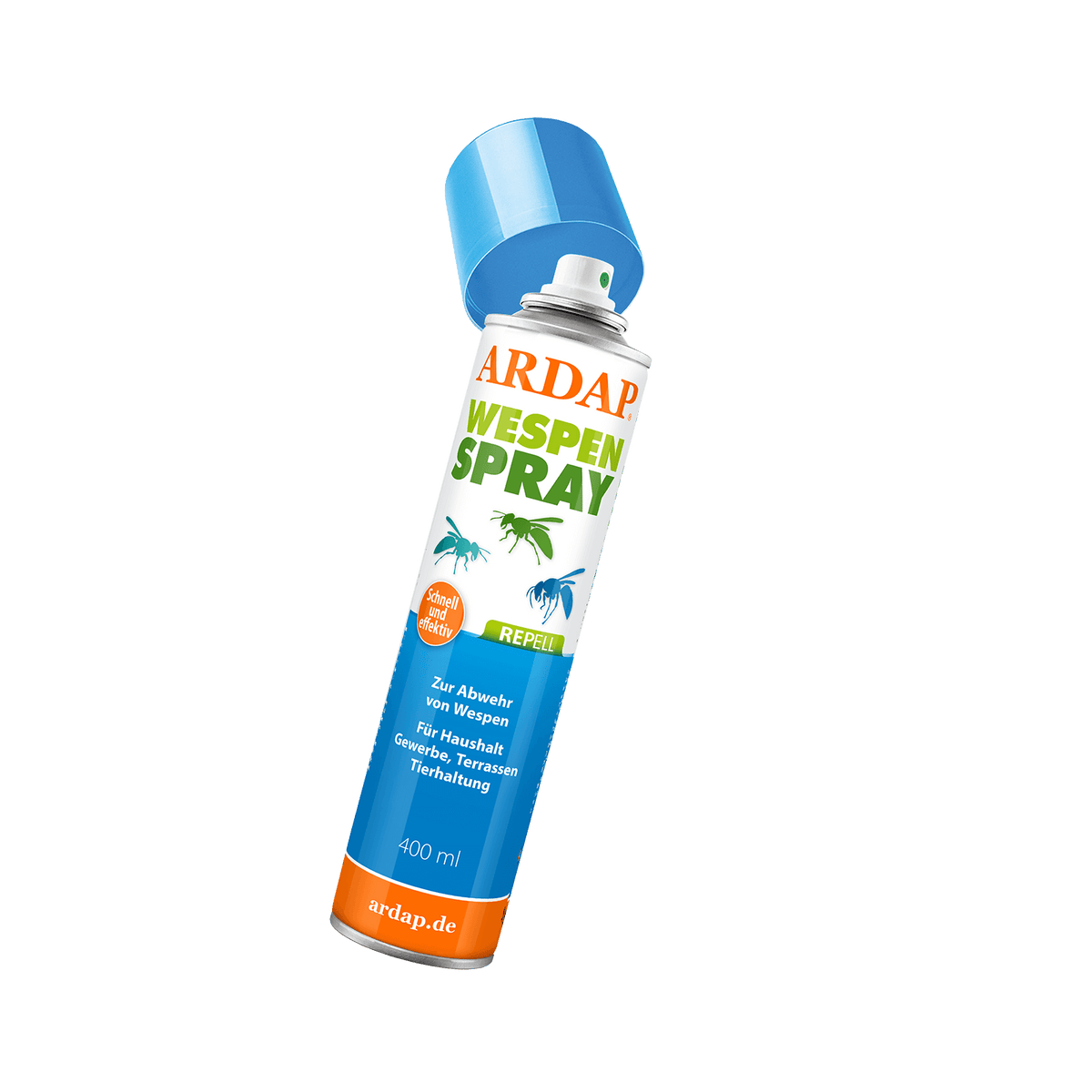
The first step in dealing with hornets is repelling. Sometimes it is enough to work with repellent hornet products and keep the animals away from your own house and dinner plate in case of danger. The ARDAP Repell hornet spray can repel individual hornets and prevent the construction of a nest if it is sprayed regularly, e.g. on roller shutter boxes, cavities in the house facade or similar. This can be particularly helpful in spring when hornets are looking for a suitable nesting place. Use is possible on the terrace, balcony or also on window and door frames. Never use the product against protected species such as European hornets, hornblower hornets, European hornetmoths, dagger hornets or European hornets, but only in a demonstrable case of threat by the common or German hornet.
Effective hornet traps
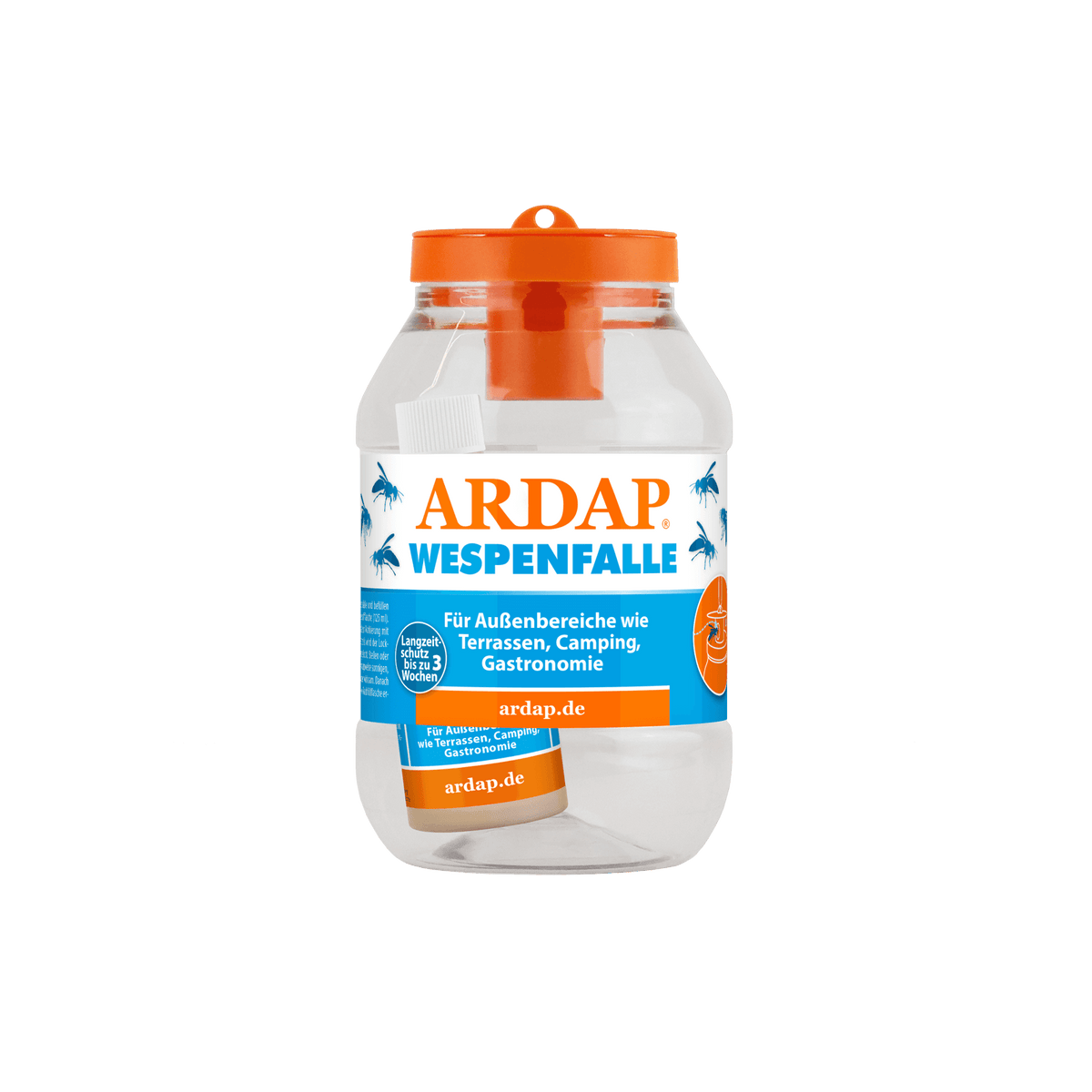
The ARDAP Wasp Trap provides a passive solution to the threat posed by common wasps and German wasps. This is a reusable plastic container equipped with an entry opening and an attractant. The scent is designed to attract wasps into the trap, from which they cannot escape. You can place the ARDAP Wasp Trap anywhere outdoors where these insects pose a hazard. Depending on the size of the patio, it may be worth setting up several traps. The long-term protection lasts up to three weeks. Please note that this product is not designed for indoor use. Use it on the patio, while camping, or in the catering industry. The wasp trap can be reused, and you can purchase the refill as a pack of two.

Professional Sprays for Controlling Wasp Nests and Wasps
Sometimes deterrence alone is not enough to control a dangerous infestation of German wasps or common wasps. The ARDAP Pro range therefore includes additional products that can help you deal with wasp infestations. For example, if nests are located in cavities, roller shutter boxes, wall crevices, or other hard-to-reach areas, the ARDAP Pro Wasp Foam Spray can be used. Thanks to the 2-in-1 spray nozzle, hidden nests in cavities can be reached effectively and accurately. The spray works immediately against individual wasps and nests and lasts up to 2 weeks in sheltered areas.
If the nests are exposed and easier to reach, and you need to deal with them from a distance, the ARDAP Pro Wasp Power Spray is the right choice. The Power Nozzle distributes the product from a distance of up to four meters. It can be used outdoors, on the patio, or on the balcony. Always remember to wear protective clothing when using it. Wasps can quickly become aggressive if someone approaches their nest. You should also seek the advice of a qualified person before use.
Conclusion
There are not only major differences between German wasps and common wasps, bees, and bumblebees in terms of appearance or behavior. The assessment of the danger could not be more different. You must not control bees. The same applies without exception to bumblebees. The situation is different with German wasps and common wasps, as these insects can pose a serious health risk to some people. It is therefore important to know exactly which species you are dealing with so that you can adapt your actions accordingly. Our information should make it easy to tell them apart. If there are reasonable and verifiable grounds and controlling German wasps and common wasps is permitted and necessary, ARDAP Repell products for deterrence and ARDAP Pro products for control are available from specialist retailers.
Frequently Asked Questions
What is the difference between bees and wasps?
The differences between bees and wasps lie in their appearance, diet, and defensive and attacking behavior involving their sting:
- Appearance:
- Bees: Hairy, rounder body, brownish-yellow.
- Wasps: Smoother, slimmer body with distinctive black-and-yellow warning colors.
- Bumblebees: Even hairier, larger, and plumper than bees.
- Diet
- Bees & Bumblebees: Vegetarians (nectar, pollen).
- Wasps: Omnivores (insects, fruit, meat, sweets).
- Sting
- Bees: Lose their stinger when they sting and die afterwards.
- Wasps: Can sting multiple times.
- Bumblebees: Can sting but are very peaceful.
Are wasps a threat to bees?
Yes, wasps can pose a threat to bees as predators and may affect them to some extent (selectively):
- Asian hornets (Vespa velutina) specifically hunt honeybees.
- European wasps are more likely to prey on weak or solitary bees.
Can wasps and bees mate?
No, wasps and bees do not mate! They belong to different families (Apidae vs. Vespidae) and are genetically incompatible.