Our expert Prof. Dr. med. vet. Norbert Mencke has compiled some interesting facts about wasps for you here.
- The wasp
- Are wasps protected by nature conservation laws?
- How long do wasps live?
- What do wasps eat?
- Are wasps useful? Why?
- Why don't wasps produce honey?
- How do wasps overwinter?
- When do wasps die?
- Conclusion

The wasp
Wasps (Vespinae) are fascinating insects of great importance to our ecosystem. For example, they contribute to natural pest control, clean nature of carrion, pollinate various plant species, and are part of the food chain. Unfortunately, we often view these animals as threatening. This is understandable, as certain species can also act as pests in a variety of ways.
It is right and important to familiarize yourself with the peculiarities of wasps - and also very interesting. Here we inform you about interesting facts about wasps:
Are wasps protected by nature conservation laws?
Yes, wasps are generally protected by nature conservation laws, just like all wild animals. The basic protection regulations for this are derived from the Federal Nature Conservation Act (BNatSchG)[1] and apply nationwide.
However, the control of non particularly protected species (which include especially the German and the common wasp) and their nests is tolerated, provided there are reasonable grounds. It is therefore essential to distinguish the wasp species accurately and to always keep the Federal Nature Conservation Act or the Federal Species Protection Ordinance[2] in mind when taking action against wasps, and in case of doubt, to consult the nature conservation authority. The official responsibilities vary depending on the federal state. Usually, the Lower Nature Conservation Authority of the district administration or the city is the right contact point.

Which wasps are subject to special species protection?
Protected winged insects are found in the Federal Species Protection Ordinance (BArtSchV)[2], which also includes various wasp species.
The following species may not be controlled:
- Bees and bumblebees (all native species)
- European hornet
- Mason wasps (all native species of the genus Bembix)
- Common mason wasp (all native species of the genus Cimbex)
- European hornet (small hornet)
- Red wasp
- Parasitoid wasps
- Gold wasps
- Field wasps
Targeted repulsion and control is possible in the event of threats or, on the other hand, reasonable grounds for the German wasp, the common wasp and the Asian hornet. However, in advance, you should always first seek the advice of a competent person, such as a pest control specialist.
How long do wasps live?
Wasp colonies such as the European hornet native to Germany, which includes the common wasp (Vespula vulgaris) and the German wasp (Vespula germanica) or also the European hornet (Vespa crabro), are basically annual. This means specifically that the old queen dies in late summer and the previously hatched and mated young queens overwinter to found new nests the following year, around April. The queens therefore live for a maximum of one year. It is different for the workers. These sterile females survive for about 12 to 22 days. Hornets live significantly longer, with 20 to 40 days. The males or drones live for only a few weeks. It therefore depends crucially on the role in the colony on how long a wasp lives.

What do wasps eat?
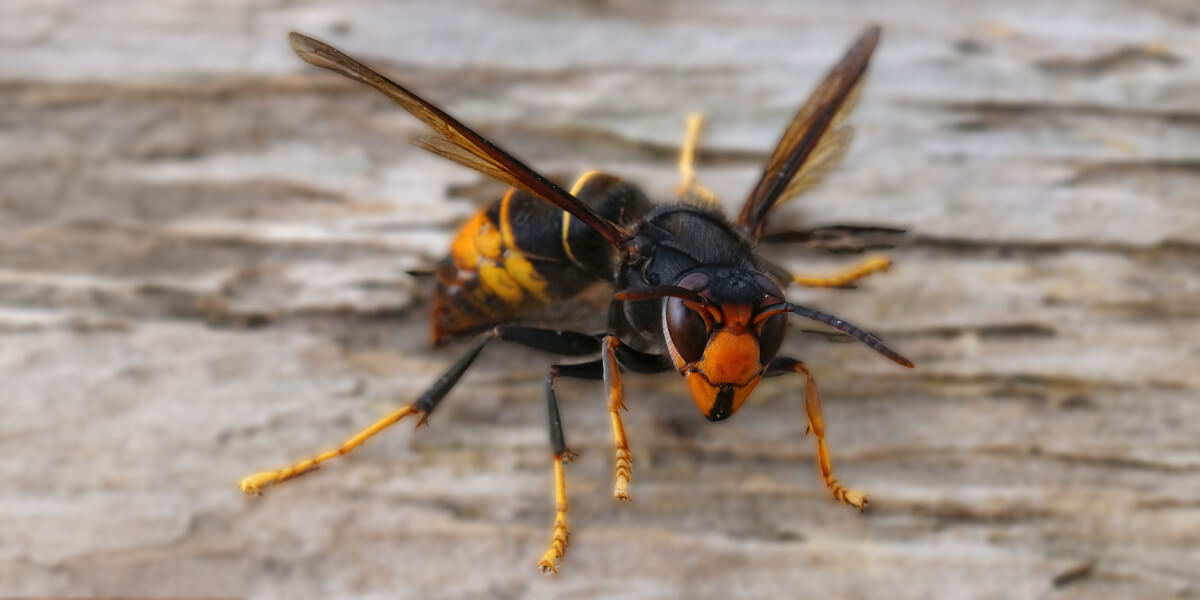
Wasps use different food sources. This depends on which species it is and what stage of development the animal is in. For example, with the German wasp, the demand for carbohydrates is particularly high in late summer. The animals cover this with nectar and plant sap - they are also interested in sweet foods such as fruit, jam, lemonade, ice cream, or cake. This is exactly the time when the insects like to pay us a visit and are annoying. As food for the larvae, in turn, is a paste made of insects and animal protein. Therefore, our grilled meat is also an interesting food source that wasps like to fly over. The same applies to the common wasp. The European hornet, also called the small hornet, also feeds on honeydew, and the European hornet on fallen fruit. The extremely aggressive Asian hornet acts as a predator of insects, especially honeybees, and as a scavenger. It also eats fruit and grapes and can therefore cause severe damage to fruit and wine cultivation.
What do wasp larvae eat?
The feeding behavior of wasp larvae deserves a closer look. In this stage of development, proteins are crucial for the animals. While adult wasps need sugar, the larvae are served a pure protein menu. This comes, for example, from captured insects. The workers kill insects such as flies, mosquitoes, or even other wasp species and process them into a food paste that they can transport in their crop. Back in the nest, they regurgitate this paste and feed the larvae with it.

Are wasps useful? Why?
Wasps are beneficial insects and provide an indispensable service to our ecosystem. This includes the reduction of harmful insects, which is important for maintaining the ecological balance. The German and common wasps each need thousands of flies, mosquitoes, and other insects as food for their colony. The European hornets have an even higher demand. Pest populations can thus be kept small, which is important in agriculture, for example. In addition, wasps act as a kind of environmental police and clean nature of carrion and overripe fallen fruit, thus, for example, preventing the development of rot. They are also pollinators and thus promote biodiversity. In addition, the wasps themselves are, of course, also prey for other animals. Examples include birds, bats, or spiders. For example, the strictly protected bird, the bee-eater (Merops apiaster), feeds on them. The wasps therefore contribute to the interconnection of the food chains. That is why you must proceed very carefully and in any case inform yourself beforehand when it comes to the removal of nests or even just individual specimens.
Why don't wasps produce honey?
Honey production is an overwintering strategy of the bee, which wasps are not dependent on. The old wasp queen, together with the workers and the drones, dies during the period from late summer into autumn. The wasp colony therefore does not experience winter. Only the young queens overwinter alone in protected places in cold torpor. So it is not necessary at all to produce energy in reserve, for example in the form of honey. In addition, wasps do not have the physiological prerequisites for honey production. For example, they have no honey stomach with the corresponding enzymes, as is the case with honeybees. Adult wasps can cover their energy needs alone from sweet plant juices or fruit.

How do wasps overwinter?
In wasps, only the mated young queens overwinter as solitary animals. At the end of autumn, they find a suitable place for this, for example in wood piles. It is crucial that it is a dry, frost-proof, and dark shelter. The young queens carry the sperm in themselves, which is crucial for laying eggs the following year. They have built up a sugar-containing fat and glycogen cushion to survive. All other animals in the colony die before winter.
With the falling temperatures, a young queen then slows down her metabolism. She enters cold torpor (Diapause) and can withstand even the deepest temperatures of up to minus 19 degrees Celsius. Unlike honeybees, wasps do not lay up supplies. The queens live alone on the stored energy reserves. The winter rest then ends, for example, with the German wasp at the end of April. The mated females wake up and look for a suitable place for the new nest building.
When do wasps die?
In wasps, a real mass die-off occurs towards the end of the year. During the period from about September to November, but at the latest with the first severe frost, the wasp colony dies with the exception of the freshly mated young queens. The workers basically die due to old age. The drones die even earlier. They die shortly after the mating flights, around August to September. After mating, they starve or freeze to death. The old queen, in turn, dies because she is no longer fed by the workers. Exactly when the colony collapses also depends on how harsh the winter is and how early it starts.

Conclusion
Viewing wasps merely as annoying summer guests is too narrow. The insects are very useful and perform many important tasks in the ecosystem. Nevertheless, certain wasps can often seem threatening to humans and dangers - depending on the wasp species - cannot be ruled out.
You should therefore be able to recognize common, aggressive wasp species, such as the German or common wasp. Here, in justified cases and when reasonable grounds exist, such as with allergy sufferers or a danger to children, it is tolerated to take action against the insects with a repellent, spray, foam or traps. The deciding factor for intervention is that the health of humans or the building fabric is actually endangered by the presence of the wasps, as can be the case with the appearance of the German and common wasps as well as the Asian hornet. For this, ARDAP has the right products ready with the product series ARDAP Repell and ARDAP Pro. Seek the advice of a competent person or pest control specialist before use and always observe the safety instructions on the products.