Our expert Prof. Dr. med. vet. Norbert Mencke knows what to do about wasps in roller shutter boxes.
- What’s buzzing? Wasps in roller shutter boxes
- How to repel wasps from roller shutter boxes
- Conclusion
- Frequently asked questions

What’s buzzing? Wasps in roller shutter boxes
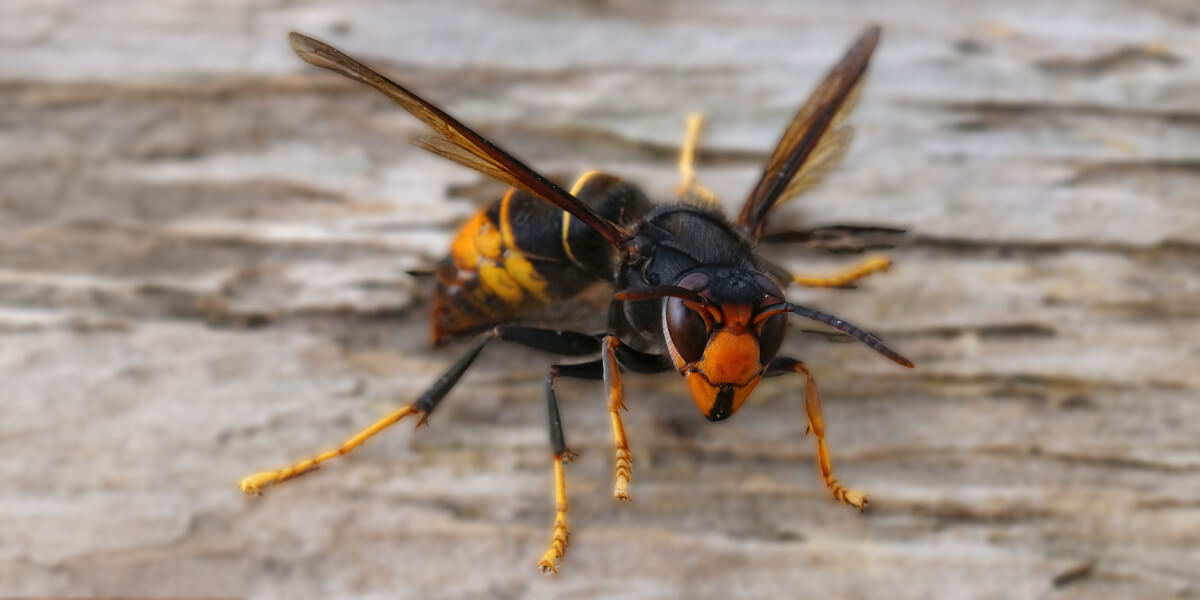
Wasps in roller shutter boxes are usually German wasps (Vespula germanica) or Common wasps (Vespula vulgaris), and sometimes the Asian hornet (Vespa velutina var. nigrithorax)—and they can make quite a racket. Is the wasp infestation an immediate danger to you and those around you, for example, because you are allergic to wasp venom or have small children at home? If so, you need to consider what action can be taken. In most cases, the source of the annoying buzzing will not go away on its own.
Why do wasps nest in roller shutter boxes?
The development of a German or Common wasp colony depends crucially on the young queen finding an optimal location for building a nest. The same is true of the aggressive and increasingly widespread Asian hornet. Our roller shutter boxes are often an appealing nesting option for these insects. Flying insects can easily get inside. Even tiny openings or cracks are enough. Wind, sun and rain are not a concern in this location, and young queens quickly recognize this as a major advantage. For nest-building, it helps if exposure to external elements can be minimized as much as possible.
Proximity to human dwellings also plays a role. Buildings usually radiate heat, which benefits wasps and their offspring. This means they need to expend less of their own energy to warm the nest. There are also plenty of food sources close to people. This reduces the distances wasps need to fly each day in search of food.
Roller shutter boxes also generally offer enough room for the colony to expand. This can happen quickly and without disturbance, as the insects are also safe from predators inside the box. The design of the roller shutter box itself makes it easy for them to attach their papery nest. This makes building and expanding the nest easier.
So if you find wasps in your roller shutter box, expect them to multiply quickly and any potential problems to grow. If this poses a serious threat to you and your home, it is essential to reduce the risks to your health or the building’s structure.


Are wasps in roller shutter boxes dangerous?
Wasps in roller shutter boxes make a lot of noise and are an unpleasant surprise to begin with. But that is not all. Wasps can become a real source of danger to residents.
German and Common wasps, like Asian hornets, do not tolerate disturbance, and anyone who approaches their nest can quickly become the target of an aggressive attack. Sometimes even vibrations are enough to put the insects in a defensive posture and make them use their stingers. It is therefore not a good idea to approach a roller shutter box occupied by wasps.
Many true wasps—especially German and Common wasps—are also attracted to the food and drinks we consume. This makes them a nuisance. However, they can also spread pathogens and mold spores, making them a hygiene pest as well. They also pose various health risks. The most notable are their sometimes very painful stings. These are usually not serious for healthy people, but the situation is different for people with allergies. This group may experience a life-threatening anaphylactic shock. Stings in the mouth, throat or esophagus can even pose a risk of suffocation. Wasps can also damage the building structure.
The Asian hornet also poses a serious threat to the local ecosystem, as it feeds primarily on honeybees, wild bees and bumblebees, which can then no longer carry out their important pollination work adequately. For this reason, the Asian hornet is also a threat to agriculture and fruit and wine growing.
Given these real dangers, controlling these three species may be justified in certain circumstances. In the case of German or Common wasps, the Federal Nature Conservation Act[1] requires legitimate, substantiated reasons (such as an allergy or a specific danger); only then is control permitted. There is no requirement for compelling personal reasons to control the Asian hornet; it can generally be controlled. It is advisable to seek advice from a qualified professional beforehand (for example, a pest controller).
How to repel wasps from roller shutter boxes
Have you found wasps in your roller shutter box and, after weighing up the legitimate reasons, can no longer expose yourself to the dangers these insects pose? Then it is time to take action. Here is what to do.

Repellent sprays for wasps
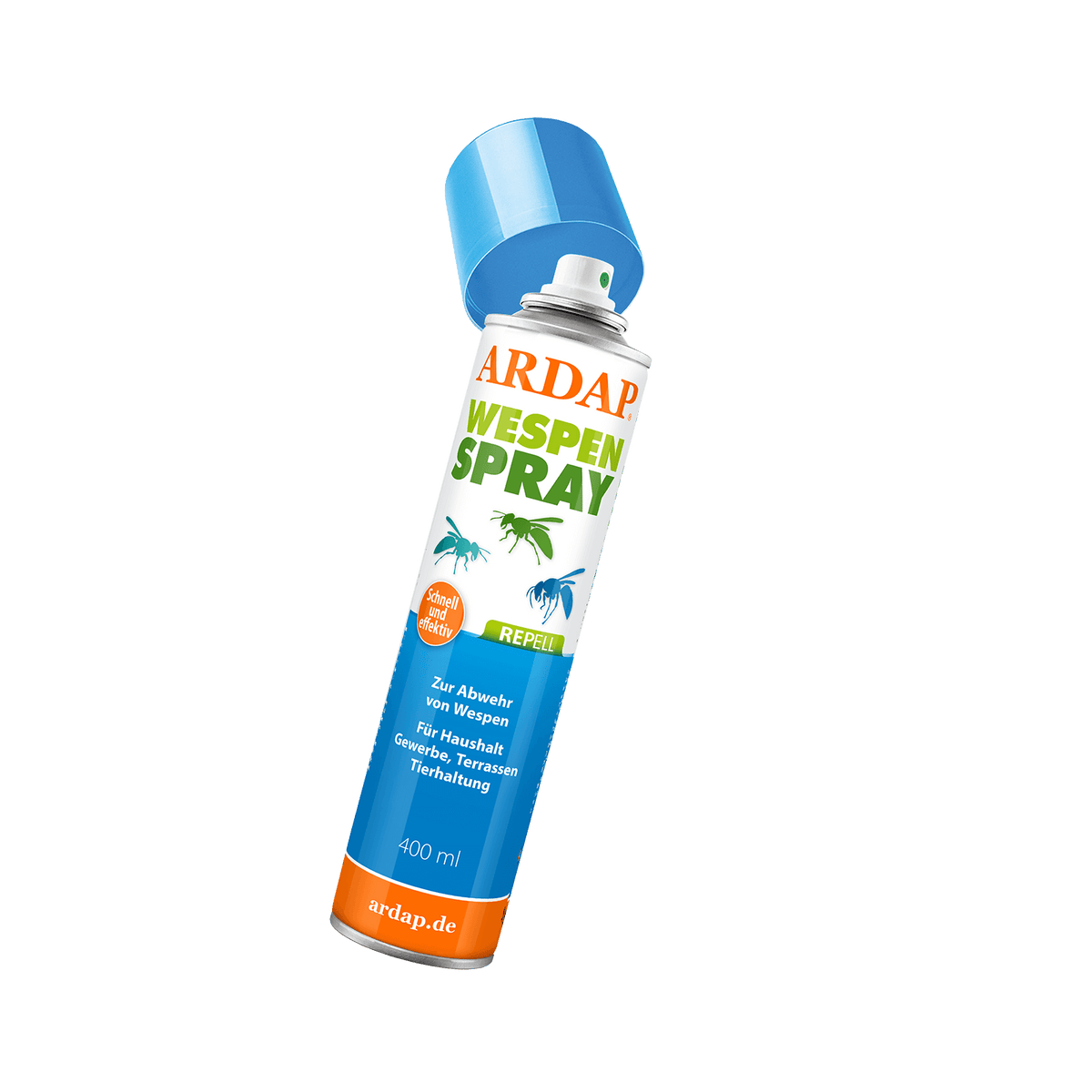
The most effective way to deal with wasps in roller shutter boxes is to repel them in good time—that is, before they settle in—so the insects do not choose the location in the first place. Using repellent sprays is particularly recommended in spring, when young queens of German and Common wasps, as well as Asian hornets, are looking for suitable places to build their nests. For example, apply ARDAP Repell Wasp Spray regularly at potential entry points to the roller shutter box, covering all gaps and openings. As a preventive measure, this can often make all the difference. You can also use the spray if you suddenly see individual wasps nearby.
ARDAP Repell Wasp Spray is characterized by its fast action and high effectiveness. It helps you repel wasps approaching the roller shutter box. It can also be used indoors as a repellent.
Please remember that under the Federal Species Protection Ordinance[2], none of the products presented here may be used against protected species such as potter wasps, mason wasps, club-horned sawflies, scoliid wasps or the European hornet. Always follow the instructions on the product before use.

Effective treatment of cavities
If wasps are frequently appearing in a roller shutter box and this poses a threat, for example, to people with allergies or small children, it is high time to arrange for them to be controlled. If you regularly see wasps in or around the roller shutter box, you should assume that a nest has already been built or that the insects are building one in spring. The likelihood that this will rapidly worsen potential problems is therefore real.
If valid reasons make it unavoidable to control German wasps, Common wasps or Asian hornets in a roller shutter box, pest controllers also use specialist foam sprays available from specialist retailers, which are particularly effective in reaching narrow, awkward spaces.
The contents of ARDAP Pro Wasp Foam Spray spread quickly through the cavity once applied. The foam also controls wasps immediately and continues working for up to two weeks in a roller shutter box protected from the weather.
The handy 2-in-1 spray tube on ARDAP Pro Wasp Foam Spray makes it especially easy to reach inside the roller shutter box. It also allows you to apply the product precisely behind covers.

Targeted treatment of the surrounding area
When there are legitimate, substantiated reasons, German and Common wasps, as well as Asian hornets, can be controlled using specialist wasp sprays. Pest controllers use these products to target the threat. ARDAP Pro Wasp Power Spray is designed to control both the wasp species mentioned above and their nests. Its immediate effect then lasts for up to 14 days. The product can be sprayed from a distance of up to four meters, allowing you to maintain the recommended distance from the aggressive insects while also accurately reaching nests high above.
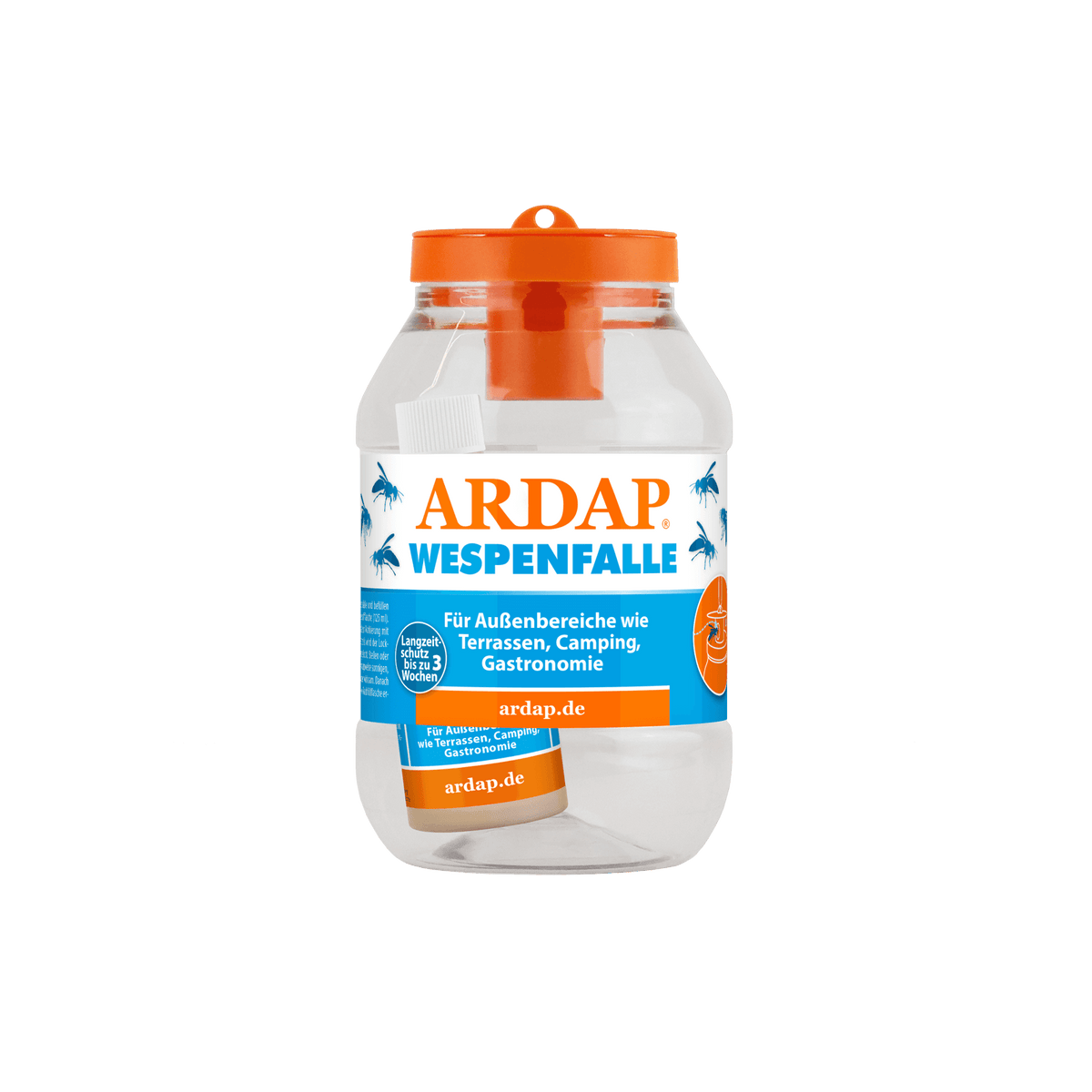
ARDAP Wasp Trap is a practical addition for controlling individual wasps. A special attractant lures the insects through the entrance into the trap, from which they cannot escape. This product provides a long-lasting effect of up to three weeks. The trap can generally be used anywhere outdoors near the roller shutter box.

Have a wasp nest professionally relocated
Removing or relocating an occupied wasp nest is only permitted if there is a demonstrable threat to people and no other solution is possible. If these conditions apply in your case, consider how the relocation should be carried out. It should always be preceded by a thorough assessment by a qualified pest controller or another suitable professional. They need to determine which wasp species is involved and how large and accessible the nest is. A qualified professional will decide whether relocating and removing the nest from the roller shutter box is appropriate and feasible.

Relocation should take place when most of the insects are in the nest. This is usually early in the morning or late in the evening. Wearing suitable protective clothing during relocation is essential. The new location should be far from residential areas, such as at the edge of a forest or another remote, suitable place.
Conclusion
Remember that wasps, like all other wild animals, are generally protected under the Federal Nature Conservation Act[1]. The Federal Species Protection Ordinance[2] contains additional regulations and lists of specially protected species. Control may be considered only for German and Common wasps and the Asian hornet, and only if there are legitimate reasons that you can substantiate.
ARDAP offers the right products for dealing with German and Common wasps in a roller shutter box where there is a demonstrable threat. ARDAP Repell products are suitable for targeted, preventive deterrence, while the ARDAP Pro range is designed for control.
Frequently asked questions
How long do wasps survive in a roller shutter box?
- A wasp colony lives for just one season (April to October).
- After summer, all the workers die; only the young queens overwinter.
- Without a nest, individual trapped wasps may survive for a few days to several weeks, depending on the temperature and access to food.
How do you remove wasps from a roller shutter box?
- If there are legitimate, substantiated reasons, German and Common wasps, as well as Asian hornets, can also be controlled using specialist wasp sprays.
- The removal of inhabited wasp nests is only permitted if there is a demonstrable danger to humans and no other solution is possible. Relocation should always be carried out by a pest control professional.
Which wasp nests in the roller shutter box?
Most common species that nest in roller shutter boxes:
- German wasp (Vespula germanica) – yellow and black, with three dots on the head shield.
- Common wasp (Vespula vulgaris) – similar, but more aggressive; anchor-shaped marking on the head shield.
Both prefer dry, dark cavities such as roller shutter boxes or attics.
Can wasps chew through a roller shutter box?
No, wasps cannot bite through wood or plastic. However:
- They use existing cracks or ventilation slots to enter.
- During nest building, nest material (e.g. chewed wood) may fall down.