Our expert Prof. Dr. med. vet. Norbert Mencke will tell you how German wasps and common wasps can be deterred and how to effectively deal with the Asian hornet, and what you should keep in mind.
- Deterring wasps - what is allowed, what should you keep in mind?
- What you need to know about wasps and species protection
- Deterring wasps - where do the insects become a danger?
- Conclusion
- Frequently Asked Questions
Deterring wasps - what is allowed, what should you keep in mind?
Should a wasp repellent against the German wasp or common wasp be used, or should an Asian hornet nest be controlled? Then it is essential to check beforehand under what conditions this may even be possible.
Legal regulations
Wasps are protected by nature conservation laws[1] and may only be deterred in justified exceptional cases. Control is permitted exclusively for the German wasp (Vespula germanica) or the common wasp (Vespula vulgaris) - and only then if there is a demonstrable dangerous situation. For the Asian hornet (Vespa velutina), control is generally permitted and should be carried out after consulting a specialist.

Reasonable grounds
The recognized reasonable grounds for controlling the above-mentioned wasp species include:
- an acute danger to allergy sufferers
- a threat to young children, infants, older or weakened persons living in the household
- a danger to the building fabric, if wasps are causing damage
A reasonable ground should always be demonstrable. It is not enough if, for example, grandchildren are visiting for one day.
Pay attention to your own safety
Always proceed with great caution when deterring wasps. The German wasp or the common wasp and the Asian hornet can become aggressive if they feel attacked, e.g., when people approach their nest. Wearing protective clothing is therefore essential. This includes a thick, long-sleeved top (e.g., shirt), long trousers, sturdy footwear, and ideally also face protection.
What you need to know about wasps and species protection
The basic and nationally uniform protection provisions for wild animals – and thus also for wasps – are derived from the Federal Nature Conservation Act (BNatSchG). In addition, species threatened with extinction such as the European hornet, mason wasp, horntail wasp, and European hornet are particularly strictly protected. These are subject to the additional requirements of the Federal Species Protection Ordinance (BArtSchV), which, as a special legal regulation, specifies and tightens the protection status of wild animal and plant species. The special protection includes, among other things, a ban on catching, injuring, or killing these animals or damaging their breeding and resting sites.
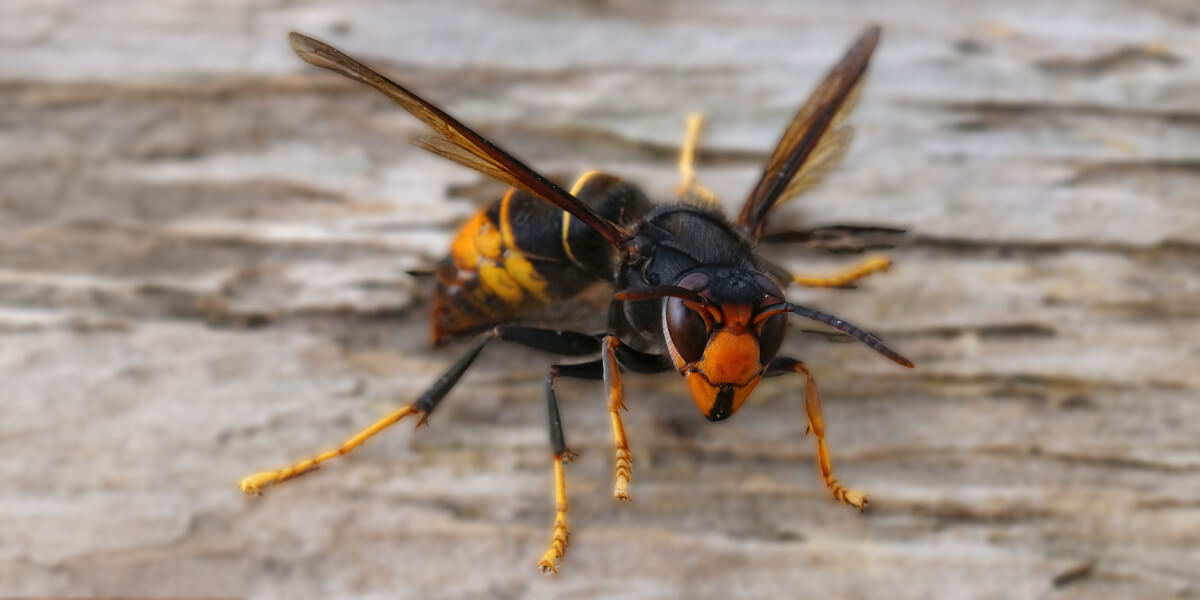
The situation is different for the German wasp (Vespula germanica) and the common wasp (Vespula vulgaris): Although they are generally protected, they may be controlled if reasonable grounds exist – for example, if people are endangered or to ward off health risks. The invasive Asian hornet (Vespa velutina) enjoys no special protection, and its spread may be actively and professionally contained due to the threat it poses to native species.
Seek the advice of a knowledgeable person in advance if you want to deter wasps specifically.

Deterring wasps - where do the insects become a danger?
Wasps are generally beneficial animals and should only be deterred or controlled if they pose a concrete danger to people or buildings. In some situations, the presence of German or common wasps can become particularly problematic – especially if they settle and stay in the immediate vicinity of living areas, terraces, or other sensitive locations such as a climbing frame or sandbox.


Deterring wasps in roller shutter boxes
Roller shutter boxes are ideal nesting sites for wasps – especially for the German and common wasp. The protected, dry environment offers perfect conditions for building nests and raising offspring. But what is practical for the insects can become a problem for residents: Aggressive defense of the nest and possible building damage often make intervention necessary for vulnerable groups of people.

Deterring wasps in house walls
If you notice wasps regularly flying in and out of your house wall, this usually indicates a hidden nest behind the facade. Before you act, you should carefully analyze the situation to avoid unnecessary risks and find the best solution.
Track the flight path of the wasps to narrow down the exact nest location. They often fly purposefully to a specific spot, e.g., a gap in the masonry or a ventilation shaft. Make sure whether it is harmless species (e.g., field wasps, Saxon wasps, or common wasps) or aggressive species (such as German wasps or common wasps).

Deterring wasps - with products from specialist retailers
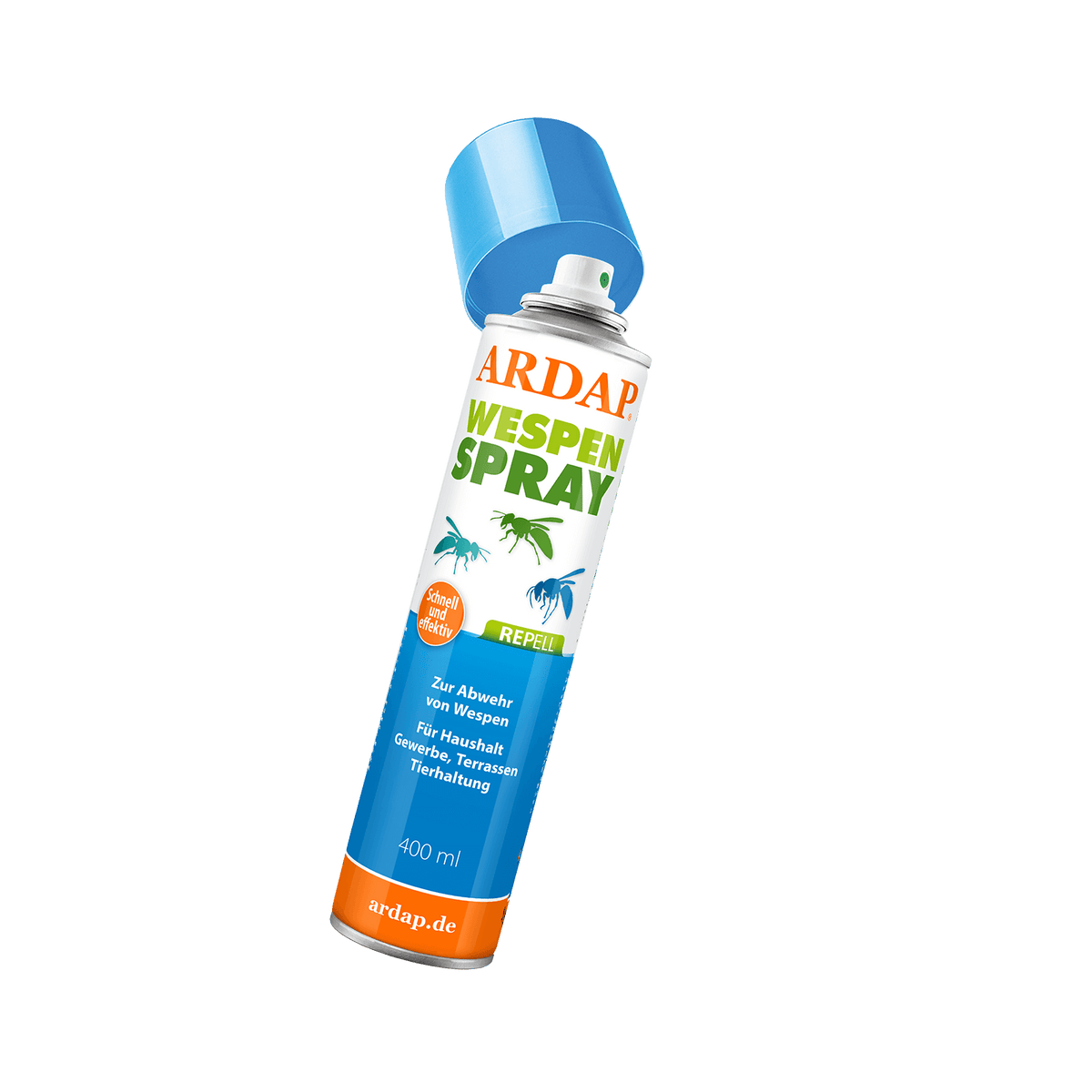
If wasps become a danger, you can use the ARDAP Repell Wespenspray to regularly spray possible nesting sites such as roller shutter boxes or access points in house walls early in spring, when young queens are looking for suitable nesting opportunities. This can effectively prevent the insects from settling and force them to look for another place to build their nest.
If the wasps have already built a nest that poses an acute threat, special sprays can help control it. Thanks to the 2-in-1 spray bottle, the ARDAP Pro Wasp Foam Spray is particularly suitable for hard-to-reach nests and thus works specifically and highly effectively in cavities and hiding places. The ARDAP Pro Wasp Power Spray, on the other hand, has a large range of up to four meters and is therefore ideal for distant, free-hanging nests, such as under roof overhangs.

Please always keep in mind that there must be reasonable and demonstrable grounds for deterring and controlling the wasps. You should also consult a knowledgeable person, e.g., a pest control professional, in advance.
Conclusion
Before measures are taken against wasps, it should first be checked what species of wasp it is, and the legal framework must be followed. In Germany, many wasp species are protected - especially the European hornet and certain field wasp species may generally not be controlled or killed. In the case of the German wasp and common wasp, there are, however, exceptions: In case of acute health danger, for example if allergy sufferers live in the household or the nest is located in a heavily frequented area, deterrence or control may be tolerated.
If the Asian hornet is sighted, action should be taken immediately in consultation with a knowledgeable person; here, professional control is necessary to protect biodiversity and honeybees.
Particularly critical areas are roller shutter boxes and house walls, for which ARDAP provides highly effective products that are also used by pest control professionals. By acting responsibly and observing the legal requirements, conflicts with wasps can be resolved sensibly without endangering species protection.
Frequently Asked Questions
What deters wasps immediately?
If young queens are looking for nesting opportunities in spring, deterrent sprays such as the ARDAP Repell Wespenspray can be used to spray possible nesting sites such as roller shutter boxes or access points in house walls. This deters wasps and preventively prevents them from settling.
How do I quickly get rid of wasps?
Immediate measures for annoying wasps:
- Distraction feeding: Place overripe grapes 5-10 m away
- Close windows or install fly screens
- Cover food (especially meat and sweets)
- Stay calm – avoid hectic movements
In case of danger from wasps, a deterrent spray such as the ARDAP Repell Wespenspray can also be used to effectively deter the insects.
How can I keep wasps away permanently or control them?
- Seal cavities (roller shutter boxes, attics) in winter
- Special wasp deterrence with repellent sprays
- If reasonable grounds exist, the German wasp and common wasp can be controlled in case of a demonstrable dangerous situation with
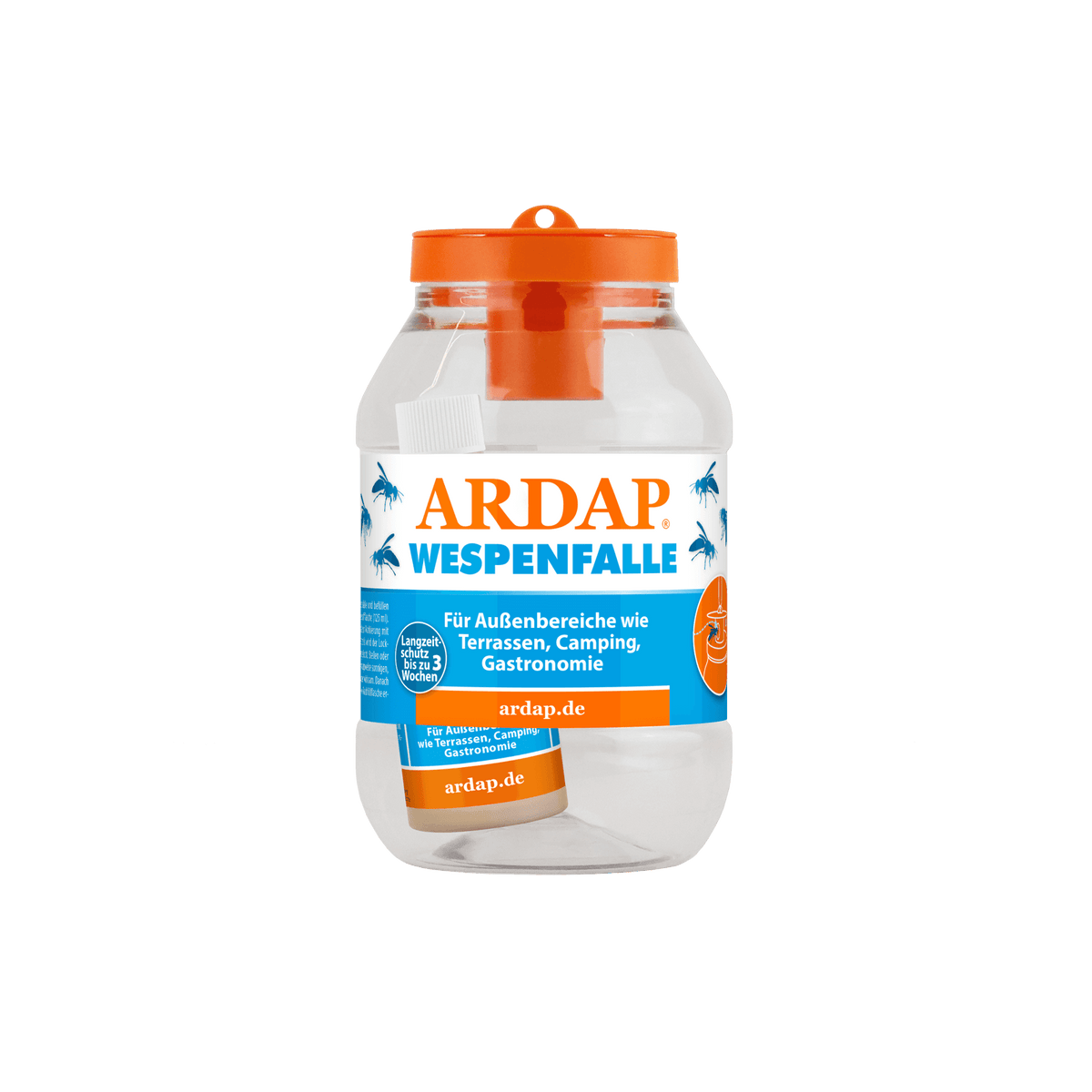
- Wasp traps
- Wasp sprays for control from specialist retailers