Our expert Prof. Dr. med. vet. Norbert Mencke tells you why you should under no circumstances close the wasp entrance hole and what can be done instead.
- Close the wasp entrance hole? What does the law say?
- Which wasps nest in cavities?
- Does it make sense to close the wasp entrance hole?
- Possible dangers of closing the entrance hole
- Take targeted action: Keeping the wasp entrance hole in mind
- Conclusion
- Frequently asked questions

Close the wasp entrance hole? What does the law say?
From a legal perspective, wasps, like all animal species, enjoy general protection under the Federal Nature Conservation Act (BNatSchG)[1].
In principle, it is therefore not permitted to catch, disturb, relocate, or even kill wild animals. This also means that you must not harm the insects by destroying the nest or blocking access to it. The legislator considers native wasps to be important beneficial insects in the ecosystem and therefore pursues the goal of comprehensive protection.
Only the German and Common wasps may be repelled and controlled, and also only if there are verifiable, reasonable grounds. The Asian hornet should be professionally controlled where proven. In advance, advice should be sought from a knowledgeable person, such as a pest control professional, and the further course of action discussed.
Which wasps nest in cavities?
Have you discovered a wasp nest in the masonry, roller shutter box, or in another cavity? Then you should first check which wasp species it is. Wasps differ considerably in their behavior, which is also reflected in their choice of nesting site. Therefore, the question arises which wasp species nest in cavities at all. We have looked at the species commonly found in Germany for you:
| Wasp species | Nesting site | Behavior | Control permitted? |
|---|---|---|---|
|
German wasp (Vespula germanica) |
underground in mouse and mole tunnels; roller shutter boxes; attics and similar building gaps or cavities | form very large colonies with up to 8,000 workers; determined nest defense; nuisance until August (interest in sweets) | in the event of reasonable grounds and an acute threat: yes |
|
Common wasp (Vespula vulgaris) |
full cavities for ground and wall cavities; behind facades; under roofs and in attics | large colonies with up to 12,000 individuals; aggressive when the nest is disturbed; seeks human food | in the event of reasonable grounds and an acute threat: yes |
| European hornet (Vespa crabro) |
tree cavities; birdhouses; roller shutter boxes; attics | no interest in sweets; rather peaceful; pronounced nest defense behavior | no |
|
Saxon wasp (Dolichovespula saxonica) |
small nests on roof trusses or roof battens; hedgerow cavities; birdhouses | small colonies of up to 300 individuals; very peaceful; only become aggressive when the nest is directly disturbed; show little interest in human food | no |
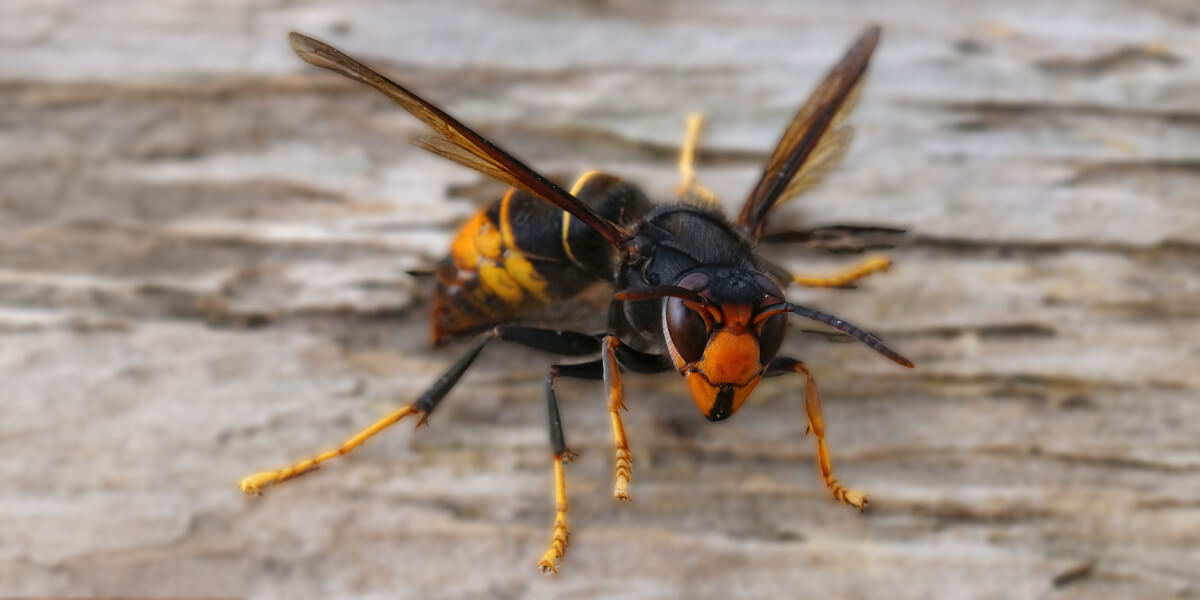
Important to know: Of the few wasp species that nest in our domestic environment at all, repelling or control is permitted only in the event of a demonstrable danger and exclusively in the case of the German and Common wasps. The Asian hornet must be controlled professionally. However, it only builds its primary nest with the queen and first workers under roof overhangs and in our garage. The secondary nest, populated by the wasp colony with up to 2,000 individuals, is located mostly at a great height in treetops.


Does it make sense to close the wasp entrance hole?
Would you like to close the wasp entrance hole and thus make the nest unusable for the insects? Or do you intend to make the entrance to the masonry or roller shutter box inaccessible to the insects?
This measure will generally do more harm than good. Because the wasps will usually not take this lying down. The trapped animals frantically search for an exit and put the entire colony into a state of extreme defensiveness via alarm pheromones. The insects are now significantly more aggressive and the risk of stinging increases sharply. It is better not to provoke the animals and not to expose yourself to unnecessary danger.
You can even exacerbate the existing problems by sealing the nest or closing the entrance, because wasps can gnaw through insulation, plaster, and even wood. This creates additional holes and damage to the building fabric.

Possible dangers of closing the entrance hole
Dangers at a glance:
- Aggressive defensive reaction
- Wasps instinctively defend their nest. If access is blocked, they desperately try to find a new exit – in doing so, they become panicked, aggressive, and sting more frequently.
- Even closed entrance holes, such as in masonry or roller shutter boxes, can panic the animals.
- This is particularly dangerous for allergy sufferers, children, and also for our pets.
- Nest sealing leads to alternative routes
- Instead of disappearing, wasps often gnaw through insulation, wood, or wall gaps to get outside.
- Consequence: Damage to the building and possibly wasps inside the room.
Anyone who wants to close the wasp entrance hole should be aware that the consequences of such an intervention can indeed be critical. In addition to aggressive behavior of the animals, it can also happen that a diversionary flight leads returning foragers into your living spaces because they can no longer use the blocked entrance hole. With their strong mandibles (mouthparts), the trapped wasps simultaneously begin gnawing from the inside on any material that blocks their way outside. This can even cause short circuits if cable bundles are located near the nest.
Take targeted action: Keeping the wasp entrance hole in mind
If a real threat situation exists due to the emergence of the German or Common wasp in your domestic environment, it is important to take appropriate measures. As we have shown, closing the wasp entrance hole is not a good idea. Fortunately, the specialist trade has professional products available that can provide effective solutions to your problem.
Before nest building begins: Targeted prevention
It is best if you prevent them from building a nest in your immediate domestic environment in the first place. For this purpose, repellent sprays are available to you that can specifically prevent the insects from settling in preferred locations in advance.
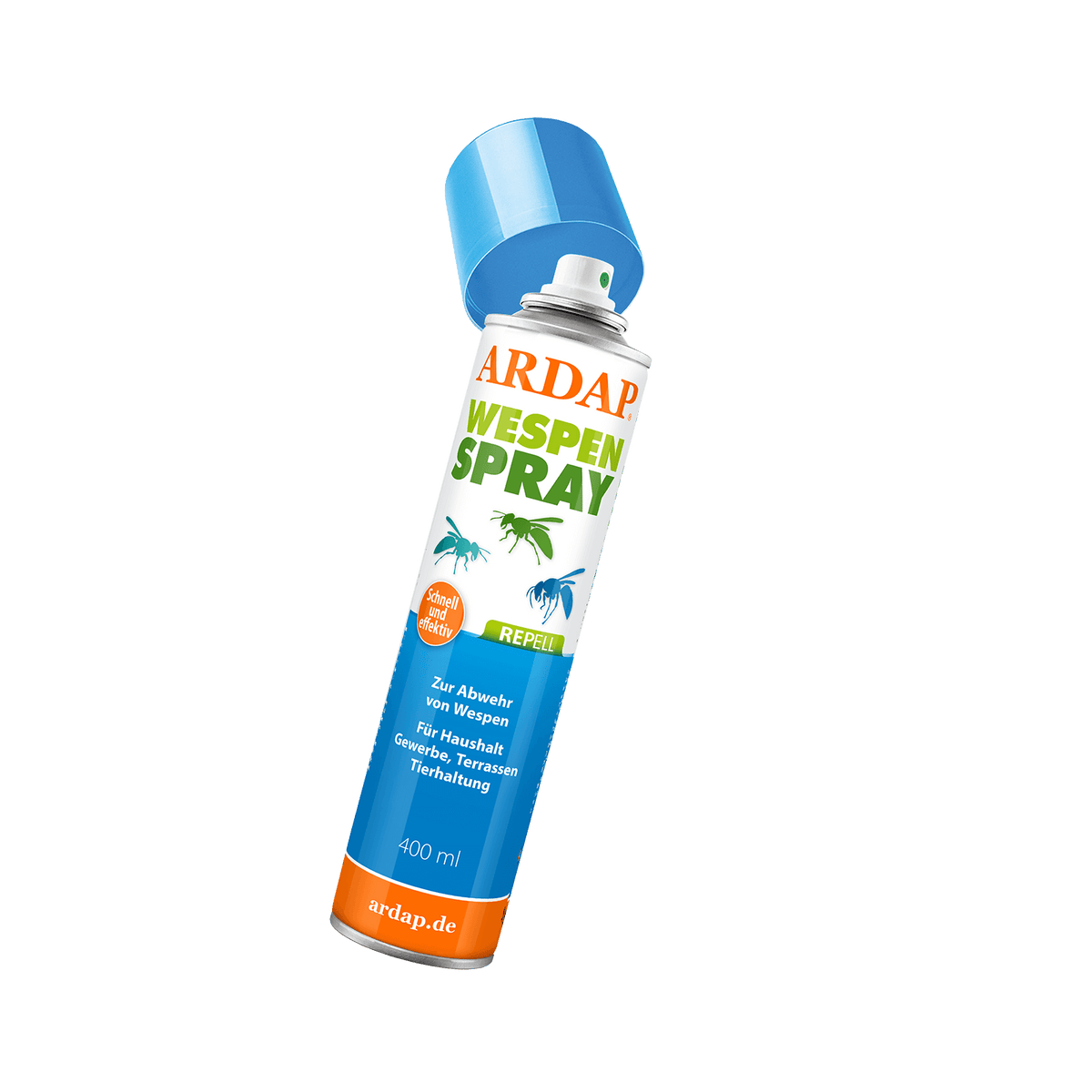
The ARDAP Repell Wasp Spray is used for repelling and enables precise spraying of the active ingredient Chrysanthemum contained within. Application is possible in the household, on the terrace, or on the balcony. Wherever the wasps may be located, this repellent aid ensures a quick and effective defense and can thus prevent nest building. Spray potential wasp nesting sites regularly to keep the insects away.
Control sprays for targeted spraying of the entrance hole
If you are a vulnerable person being harassed by individual German or Common wasps, or if they have already built a nest at your place, use a special spray with which you can carry out control measures during the threat situation. Please remember with these products that you may not use them against protected species such as the European hornet, carpenter bee, hornet, or European hornet.
Control is basically only permitted for the German and Common wasp and also only when these insects pose an immediate danger to humans. In the case of the Asian hornet, professional elimination is basically conceivable, because this species poses a problem for the ecosystem and many native species. It is recommended to seek the advice of a knowledgeable person here. Also pay attention to the instructions on the product and always follow the safety precautions.

With the ARDAP Pro Wasp Foam Spray, individual German and Common wasps as well as their wasp nests can be controlled in the event of an acute threat. The foam does not seal the entrance hole, but distributes the active ingredient precisely via the special 2-in-1 spray head and is particularly suitable for hard-to-reach places and cavities. This is ideal if the nest is located, for example, in a roller shutter box, behind panels, or on terrace steps. This is a product that has also proven itself with pest control professionals, which has been able to prove its effectiveness against the Asian hornet and its nests in scientific experiments. Expect an immediate effect that lasts up to two weeks in weather-protected areas.

With the ARDAP Pro Wasp Powerspray, targeted, highly effective control of the German or Common wasp and their nests is also possible. This product is specially designed for outdoor use, for example on the terrace or balcony. This agent also works immediately and permanently for up to two weeks. It can be sprayed precisely from a distance of up to four meters. This is particularly helpful if the nests are elevated or hard to reach.
Follow precautions for your own safety
If there are reasonable grounds and you have to approach the wasp nest or the entrance hole for control purposes - without sealing it! - you should seek the advice of a knowledgeable person in advance. This primarily includes pest control professionals who can professionally inform you about the further course of action.
As soon as you approach the German or Common wasp with the intention of control, suitable clothing should definitely be worn. A thick shirt and long pants represent the minimum protective clothing to protect yourself from stings in case of emergency. A face shield and sturdy footwear are also recommended. But the right timing is also important. In the late evening and early morning, the animals are sluggish and therefore less dangerous. During the sunny midday hours, however, the flight activity is higher and the aggressiveness is stronger. You should define a safety radius of several meters that other residents and pets may not enter for their own safety.
Conclusion
Dealing with nests of German or common wasps requires a responsible and legally compliant approach – it is important not to unnecessarily endanger the animals or yourself. A common mistake is attempting to seal the entrance hole of the nest or the masonry or the roller shutter box. This is not only counterproductive, but can also be risky: wasps react extremely sensitively to such disturbances. If their access is blocked, they become restless, frantic, and in the worst case, aggressive. Fortunately, there are highly effective alternatives.
For quick deterrence, the ARDAP Repell Wasp Spray is recommended, which keeps wasps away through the active ingredient Chrysanthemum. If control is necessary and legally permitted, the ARDAP Pro Series offers proven solutions for the reliable removal of individual wasps and their nests.
Frequently Asked Questions
What happens if you seal the access to the wasp nest?
- Wasps become aggressive, look for alternative exits, and can thus enter the house.
- Trapped wasps die slowly – this leads to odor nuisance from rotting insects.
- The nest is not abandoned, but the wasps continue to try to break out.
Does it make sense to close the wasp entrance hole?
No, because you can even worsen existing problems by sealing the nest or the entrance, because wasps can gnaw through insulation, plaster, and even wood.
What can I do if wasps start building a nest?
- With deterrent sprays such as ARDAP Repell, it can be prevented in advance that wasps settle in the domestic environment and build nests.
- If settlement has already occurred, in the presence of reasonable grounds and a demonstrable danger, a special spray, e.g. the ARDAP Pro Wasp Foam Spray or the ARDAP Pro Wasp Power Spray can be used to actively carry out control in a threatening situation.
What happens to the wasps if you control a wasp nest?
- Workers die within a few days.
- The queen usually does not survive and does not found a new nest.
Which wasps nest in cavities?
In Germany, social paper wasps (Vespinae) mainly use cavities for nest building. The most common species are:
- German wasp (Vespula germanica)
- Common wasp (Vespula vulgaris)
- Hornet (Vespa crabro)