We introduce the German wasp, the common wasp and the European hornet, and together with our expert Prof. Dr. med. vet. Norbert Mencke, explain the difference between these interesting insects.
- German wasp and common wasp or European hornet? Interesting differences - not just in size
- Benefits and harmful effects
- Repelling and controlling wasps in case of acute danger - what the law allows
- Effective products for repelling and controlling wasps
- Conclusion
- Frequently asked questions
German and common wasps are 11–16 mm long, black and yellow striped and have clear wings, while European hornets are significantly larger, with a reddish-brown head, brown body, yellow and black abdomen and brownish wings.
German and common wasps form large, adaptable colonies (up to 7,000 individuals) and often live near people, where they can react aggressively if disturbed. European hornets are more shy, live in smaller colonies (up to 700 individuals) and prefer woodland areas; all species disband their nests in autumn.
Hornet venom is not more toxic than that of wasps or bees, but may be perceived as more painful, possibly due to the larger quantity. Both wasps and hornets only sting when they feel threatened – therefore, hectic movements and nest disturbances should be avoided.

German wasp and common wasp or European hornet? Interesting differences - not just in size
If you want to know whether a particular insect is a German wasp, a common wasp or a European hornet, it is important to look closely. Because besides size, other features also reveal which species you are dealing with.
At a glance: What wasps and the European hornet look like
The table shows which distinguishing features are important for wasps and the European hornet:
| Feature | German and common wasp | European hornet |
|---|---|---|
| Basic colour | bold, yellow-black striped | head and thorax red to reddish-brown, abdomen yellow-black |
| Queen size | up to 20 mm | up to 35 mm |
| Worker size | 11–16 mm | 18–25 mm |
| Wings | clear, transparent | subtly tinted (brownish) |
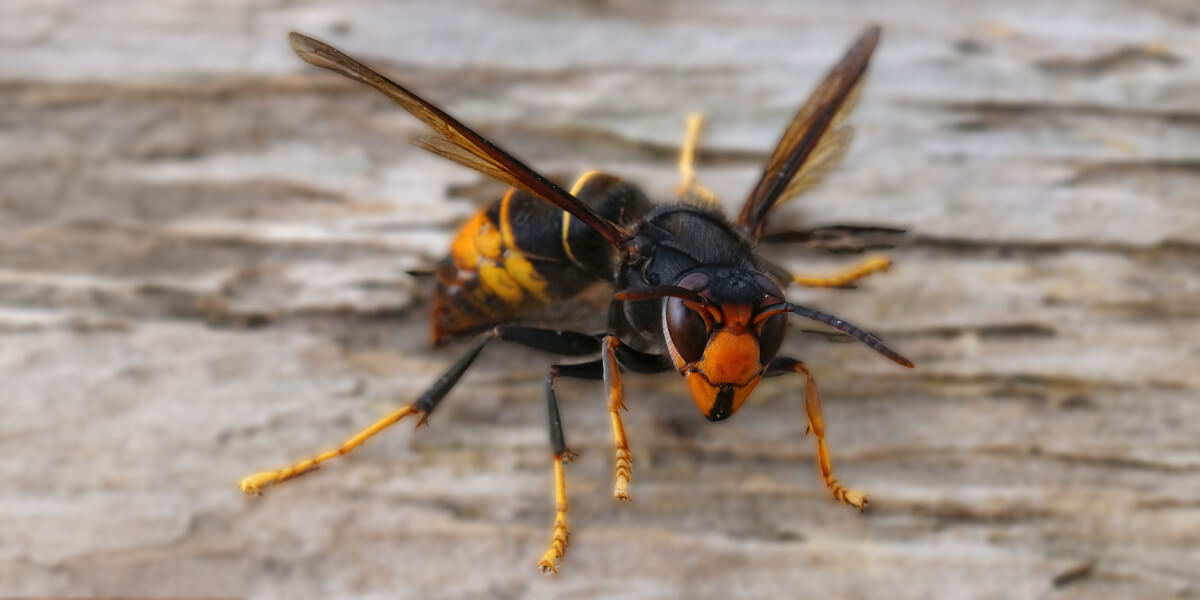
The Asian hornet (Vespa velutina) is an invasive hornet species that originally comes from Southeast Asia. It is spreading ever further in Europe and hunts honeybees, alarming beekeepers. Unlike the European hornet, it is slightly smaller and predominantly black with orange markings on the abdomen and yellow leg elements. Professional control measures are absolutely necessary and desirable here to protect our ecosystem.
Occurrence and breeding of wasps and hornets
Wasp species such as the German or common wasp are practically found throughout Europe and into East Asia. In Germany, they are found nationwide and live in cities as well as in open landscapes and forests. In April, the overwintered mated queen leaves her hiding place and founds the new wasp colony. The same applies to the European hornet (Vespa crabro). However, it is considered more of a forest species and is more widespread there. In our country, the Vespa crabro is even the largest native mason wasp.
Different behaviours and lifestyles
For the German and the common wasp, it is typical to found huge colonies. They are highly adaptable and therefore often spread quickly close to people. This distinguishes them from the European hornet, which tends to remain in the forest and lives in smaller colonies. In terms of the annual cycle, however, the differences are much smaller. Nest founding takes place in spring and nest development reaches its peak in late summer. In autumn, the colonies are then disbanded again. While wasp nests are active with up to 5,000 workers in high summer, their number remains significantly more limited with the European hornet with up to 700 workers.

Benefits and harmful effects
Wasps occur as beneficial insects, nuisances and also pests. It is therefore good to know the different species exactly to be able to assess whether they bring us benefits or whether a danger may even arise from them.
Beneficial insects?
In fact, both wasps such as the German wasp and the common wasp as well as the European hornet are beneficial insects. Wasps (Vespula), for example, carry out biological pest control by exterminating flies, mosquitoes and aphids in large quantities. The European hornet (Vespa crabro), on the other hand, focuses more on larger insects as prey, such as horseflies, moths and other larger insects. Where these mason wasps occur, greater biodiversity can generally be expected. These animals also take on important tasks for pollination and are, of course, themselves part of the food chain. It is not for nothing that wasps are protected by general nature conservation and European hornets are additionally protected especially in the species protection ordinance[1][2].

Comparison of wasp and hornet venom
Since hornets are significantly larger than wasps, it quickly gives the impression that their sting must also be more toxic. But this is not true. In fact, the toxic effect of the stings is approximately comparable. However, it is possible that hornet venom is perceived as more painful due to a different composition and larger quantities. Nevertheless, the health risk is not higher because of this. Because per milligram, hornet venom is even less toxic than that of wasps. So you do not need to be particularly afraid if you encounter a hornet. Allergic individuals should, however, be careful in any case, because the sting could potentially trigger a life-threatening anaphylactic shock.
Peaceful or aggressive?
German wasp and common wasp like to come near people due to food and quickly develop intrusive and aggressive behaviour there. With the European hornet, however, flight is the preferred strategy when the animals encounter people.
However, if the animals feel threatened near their nests, defensive reactions and stings can occur with both wasps and hornets. This is a behaviour of the animals that we trigger with our own actions.

Repelling and controlling wasps in case of acute danger - what the law allows
You may not simply control the common and German wasp just because they are a nuisance. There must always be a reasonable reason such as a health hazard. With the European hornet, however, the situation is very clear: You must under no circumstances control them, because they are a threatened species under the special protection of the Federal Species Protection Ordinance[2].

When are there reasonable grounds to control wasps?
Control is exclusively permitted for the German wasp or the common wasp. However, only if so-called reasonable grounds for control exist. This does not include the fact that the wasps are simply a nuisance and go for your cake.
A reasonable ground for controlling these wasps can be, for example, a danger to allergic individuals. This also applies if there is a danger to older or weakened persons or to infants and toddlers living in the immediate vicinity. You can also potentially justify the control with the danger that wasps pose to the building fabric of the house. Possible dangers in the living area include the gnawing of electrical wiring (fire hazard). Please keep in mind that you must also be able to substantiate these reasons. Seek advice from a competent person, such as a pest control company, before taking action.


Pay attention to your own safety
If action must be taken against the German wasp or the common wasp, calm should be maintained above all else. Hectic movements do not help and only make the animals wild. It is especially important not to shake the nest. The insects react sensitively to such disturbances. Also think about protective clothing. It can never be ruled out that the wasps may still decide to attack and sting. In this case, it is better to wear a shirt and trousers made of thick fabric. Also wear a face mask and sturdy footwear when approaching the insects. This way, you offer the wasps as little surface area for attack as possible.
Effective products for repelling and controlling wasps
Once the German or common wasp has started to settle near the house, it is difficult to drive them away. If there is an acute danger to you from this settlement, it is possible to take action against the population with highly effective products from specialist retailers, because the chances of success with them are also the most reliable. We introduce suitable wasp products for you. In principle, there must be reasonable and verifiable reasons for repelling and controlling the wasps. Please seek the advice of a competent person, e.g. a pest control company, in advance.

Repellent sprays
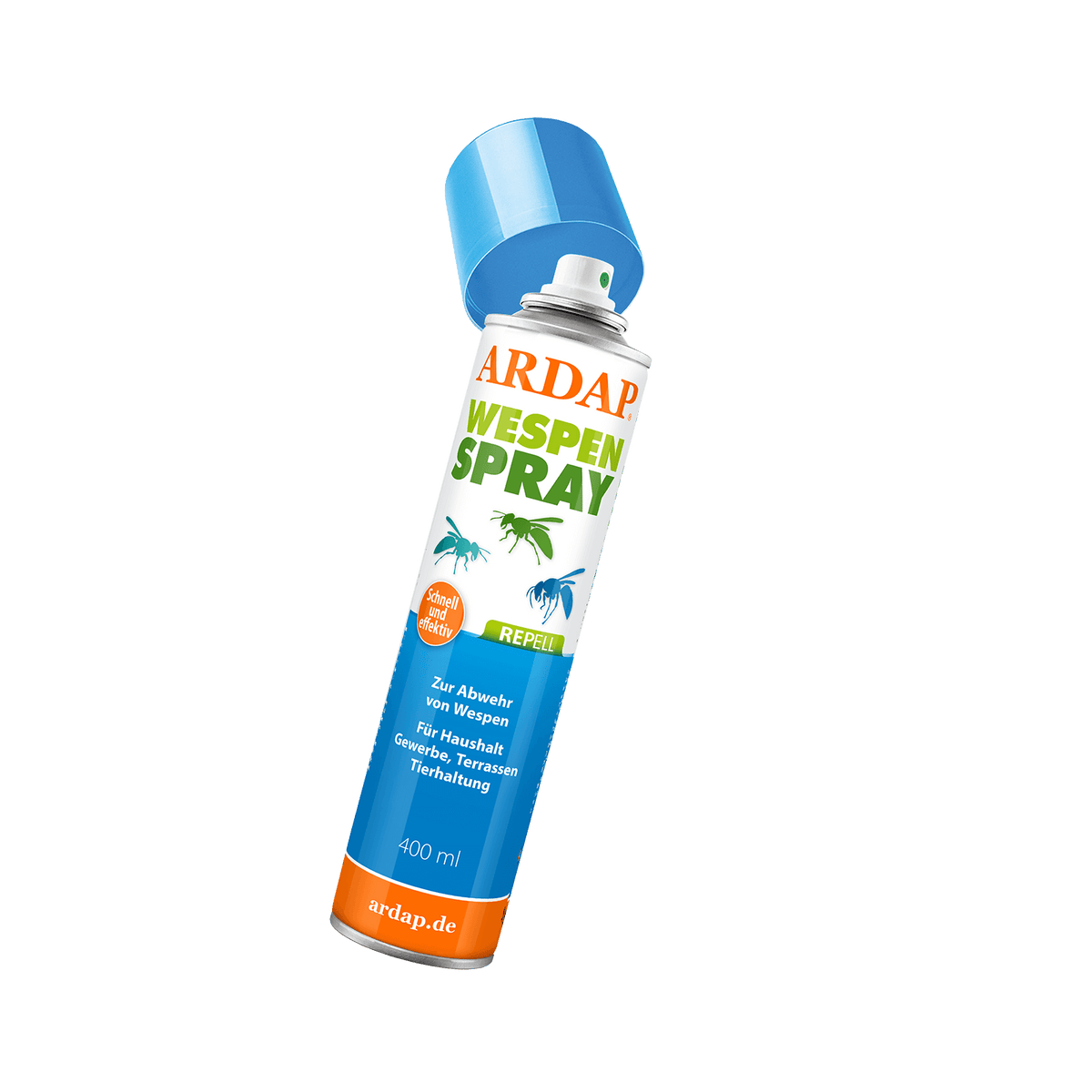
Both the German wasp and the common wasp can be very intrusive and quickly pose a serious threat through aggressive behaviour. The ARDAP Repell Wasp Spray is recommended due to its fast and effective repellent effect. It keeps the insects away and can also be used in the household and thus indoors if necessary. For example, spray it regularly on doors and windows as well as other entrance areas so that the wasps cannot enter the house in the first place. This product is excellent for repelling. Areas that are also interesting to wasps as potential nesting sites can also be sprayed regularly with it, so that no nest is built near you in the first place.

Targeted capture
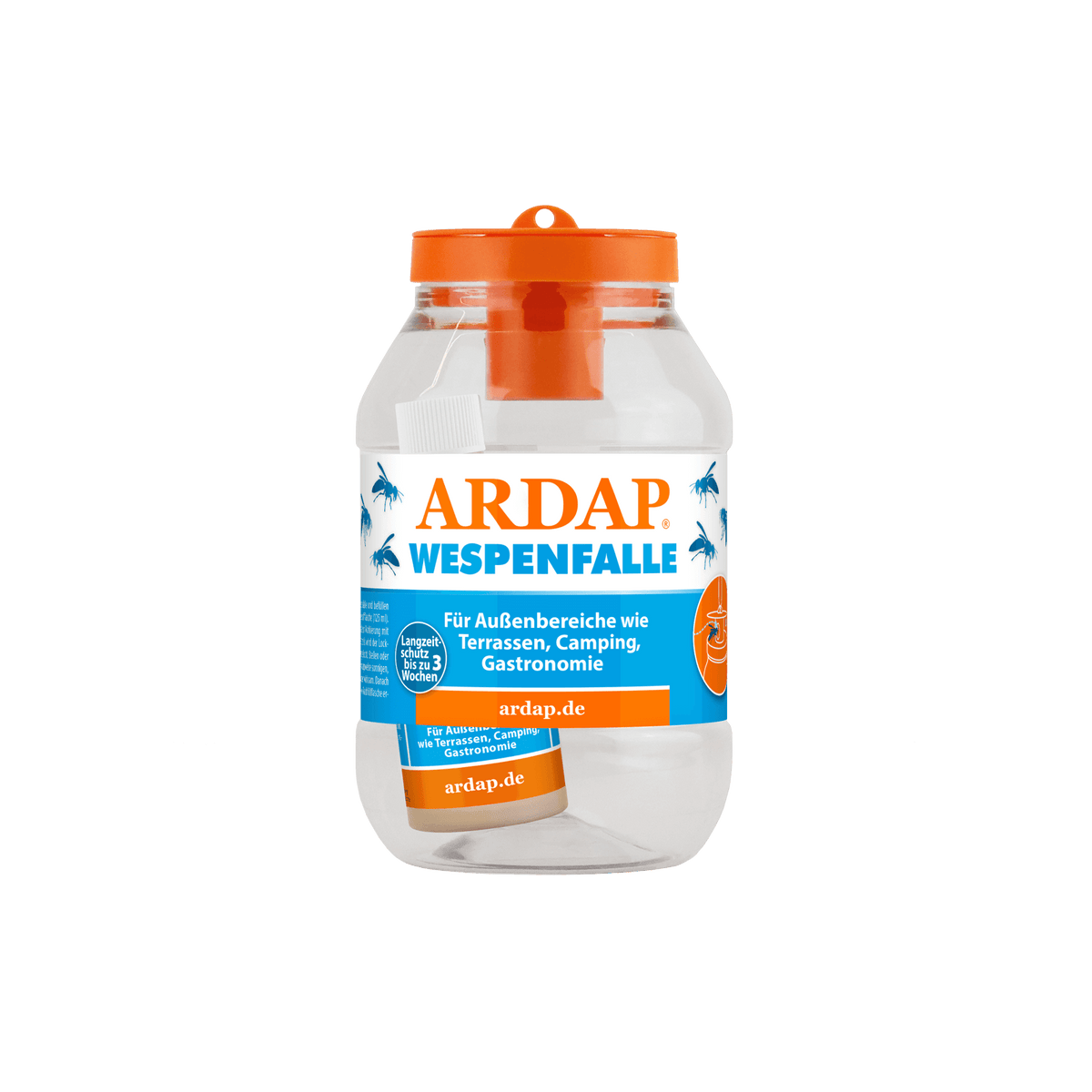
For outdoor use, wasp traps are also an option if reasonable grounds exist. They are suitable if the wasps become a danger on the terrace or while camping. The ARDAP Wasp Trap attracts German wasps and common wasps with a special attractant, traps them in the trap, and offers long-term protection for three weeks. The product enables the fast and effective capture of the animals. Thanks to practical refillers , a replenishment with attractant is possible. Make sure there are no more live wasps in the trap before emptying it.

Sprays for controlling wasp nests and wasps
In case of an actual, acute health hazard from the German or common wasp as well as from a nest settlement in your immediate domestic environment, special sprays for controlling the insects can also be used. With the ARDAP Pro Wasp Foam Spray and the ARDAP Pro Wasp Power Spray, highly effective products are available. The ARDAP Pro Wasp Foam Spray is equipped with a practical 2-in-1 spray head. The foam reaches even hard-to-reach places, such as behind facades or in roller shutter boxes via the spray tube.
The ARDAP Pro Wasp Power Spray is suitable for use from a distance of up to four meters. This allows the recommended distance to the nest to be maintained. Both products work immediately and control wasps and their nests.
Conclusion
Are wasps and European hornets approaching your garden? This is no reason to panic. In most cases, these animals are less problematic than you might think. However, the German wasp and common wasp can become highly aggressive and pose a danger to some people—in such cases, control measures are tolerated on a case-by-case basis after weighing reasonable and verifiable reasons. The European hornet is a peaceful beneficial insect and must not be controlled. This is why it is so important to know how to tell them apart so that you can properly assess the danger. If control measures for German or common wasps are necessary and tolerated, the highly effective products ARDAP Repell and ARDAP Pro from specialist retailers are available.
Frequently Asked Questions
Are hornets as aggressive as wasps?
No, hornets are significantly more peaceful than wasps!
- Hornets (Vespa crabro) rarely attack without provocation.
- Compared to the German wasp or common wasp, they are less prone to conflict.
- They are only dangerous when nests are disturbed (approaching within 3 m), if they become trapped (e.g. in clothing), or if they are blown at (CO₂ makes them aggressive).
What is the difference between wasps and hornets?
The difference between wasps and hornets is primarily evident in their size, lifestyle, and coloration.
- Wasps form large colonies (up to 7,000 individuals) and often nest near humans, while hornets live in smaller colonies (max. 700 individuals) and prefer forests.
- Hornets (queens: up to 35 mm, workers: 18–25 mm) are larger than wasps (queens: up to 20 mm, workers: 11–16 mm)
- Hornet coloration: head and thorax red to reddish-brown, abdomen yellow and black, wings brownish.
- Wasp coloration: boldly striped yellow and black
What do hornets do to wasps?
Hornets are predatory and kill wasps:
- Wasps are food for hornet larvae
- Nest competitors: hornets drive wasp colonies out of their territories
- A hornet colony can eat up to 500 g of insects per day—including many wasps!
Can wasps and hornets live together?
No—wasps and hornets do not live together because they are competitors:
- Hornets dominate their territory and drive away wasps.
- Wasps avoid hornet nests (flight distance approx. 5–10 m).