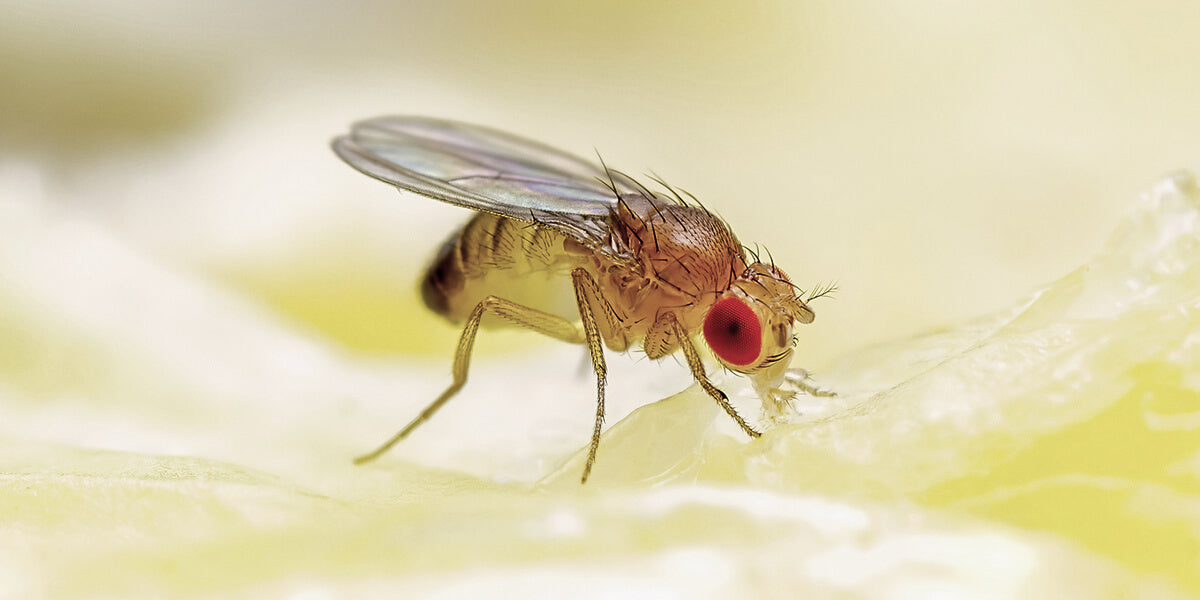
Our expert Prof. Dr. med. vet. Norbert Mencke, a specialist in veterinary parasitology, will help you deal with an outbreak of what may seem like flies on house plants and in potting soil.
- Small flies in the potting soil and they are not fungus gnats? Warning: This is the fungus gnat!
- Why small black flies in potting soil and flower pots?
- Treating potting soil, getting rid of fungus gnats
- Controlling fungus gnats. What to do against small black flies?
- Conclusion
Small flies in the potting soil and they are not fungus gnats? Warning: This is the fungus gnat!
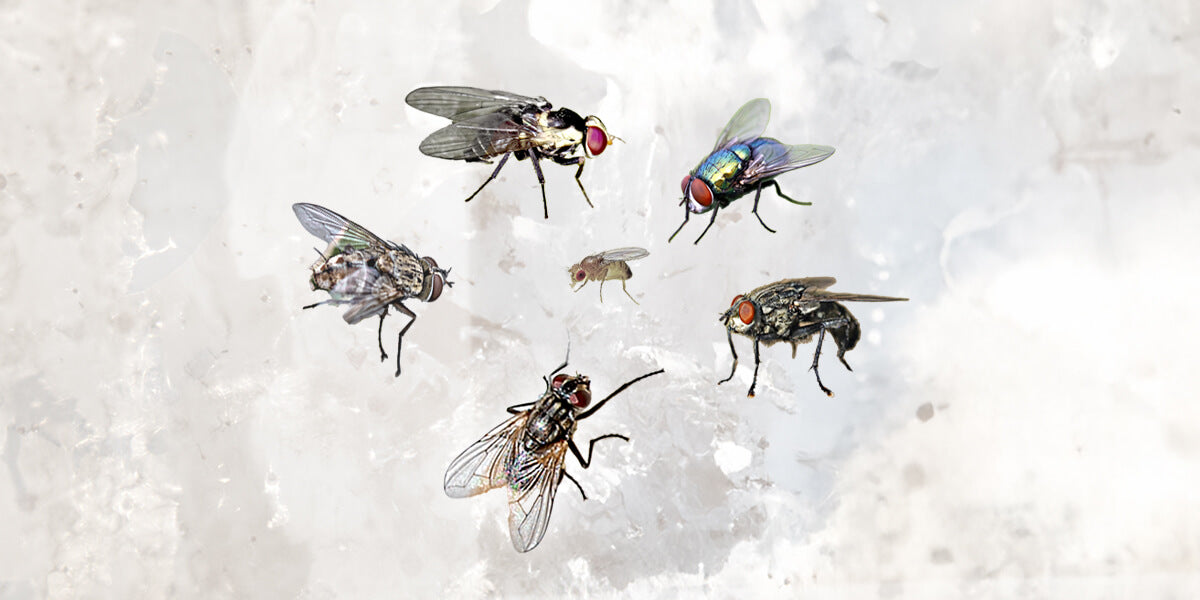
What small black insects are flying around my flower pots? In most cases, they will either be fungus gnats (Agromyzidae) or the following species, which is often mistakenly identified as a fly: the widespread fungus gnat (Bradysia impatiens). This is because fungus gnat larvae feel very comfortable in moist potting soil and develop into adults there. We will take a closer look at these creatures so that you can correctly assess the effects of the infestation.
| Feature | Fungus gnat | Fungus midge |
|---|---|---|
| Class | Insects | Insects |
| Order | Diptera (true flies) | Diptera (true flies) |
| Suborder | Nematocera (gnats) | Brachycera (flies) |
| Family | Sciaridae | Agromyzidae |
| Species in Europe | >600, e.g. Bradysia impatiens | >900, e.g. Phytomyza horticola |
| Size | 1–7 mm | 2–3 mm |
| Body | slender, elongated, dark grey to black | compact, black or brown with a yellowish pattern |
| Legs | long | long |
| Wings | elongated, cloudy, smoky grey-black | elongated, transparent, partially mottled |
| Flight | drunken, staggering, hovering | straight |
| Reproduction | 200 eggs per female, in moist potting soil | 200–400 eggs per female, laid into plant leaves with an ovipositor |
| Larvae | grey-white, black head, live in potting soil, feed on roots and fungi on the roots | yellowish-white, transparent, live in plant leaves, mine, feed on plant sap and leaf tissue |
| Damage | Feeding damage to roots, impaired water and nutrient uptake, resulting in yellow, wilting leaves on the plant | Damage to leaves, impairing photosynthesis and dehydrating the plant, transmission of plant viruses |
Download the table
Biology of the fungus gnat
The fungus gnat, also known as the mourning fly, belongs to the family Sciaridae within the order Diptera (true flies) and the suborder Nematocera (gnats). This means it is not a true fly. But like many fly species, fungus gnats are also highly successful in their distribution and can be found worldwide. Over 600 species are known in Europe alone. It is therefore completely normal to find these insects in your home. If necessary, this species can even survive under extreme external conditions. For example, its habitat extends far north and south of the Arctic and Antarctic Circles. Some species live exclusively in caves. You can encounter a fungus gnat virtually anywhere on this planet, which makes these insects fascinating.

Appearance and characteristics of the fungus gnat
Fungus gnats are true tiny creatures. Their slender bodies reach a length of only one to seven millimeters, and their legs are long, similar to those of gnats. This sometimes makes them barely noticeable as a problem. Their delicate body structure is also characterized by their dark, slightly smoky to transparent-looking wings. The body color of these small creatures is grey-black and very dark in any case. These insects owe their name to this dark coloration; they are, so to speak, dressed in mourning clothes. The larvae, on the other hand, are whitish-transparent with a black head. The flight behavior of this species is also striking.
Fungus gnats seem to stagger or hover and generally fly very slowly. This may also remind one a little of a funeral march. These insects are certainly not very dynamic.
Reproduction and lifespan of the fungus gnat
Fungus gnats appear especially when we water the potting soil and it is properly moist. This improves the conditions for these insects to develop and they reproduce very quickly. This is because a single female can lay up to 200 eggs in a very short time. They use the potting soil for this purpose. The larvae then live just below the soil surface and feed on the roots of the plants. The intensive feeding phase lasts about two weeks. This is followed by pupation, which also takes place directly underground. From egg to adult fly, the development cycle takes about three to four weeks. The lifespan of the adult fly, on the other hand, is only about one week.
Why small black flies in potting soil and flower pots?
When small flies, which are actually fungus gnats, appear around the flower pot, the question arises about the causes. In fact, we are sometimes to blame ourselves through our behavior for the rapid spread of a population of these insects. Here you will learn the background.

How do mini-flies get into the potting soil?
In the simplest case, the potting soil is already infested with fungus gnats when you place the pot in your home and the potting soil was not allowed to dry sufficiently. The eggs and larvae were therefore already in the soil when you brought the potting soil home. This is how fungus gnats can be easily introduced. This is indeed the most common way that infestations occurs. However, it is also possible that the fungus gnats migrated from outside. House plants on the balcony can be affected. The adult flies come in through the window or balcony door and lay their eggs in the potting soil. Damp potting soil is particularly attractive to the insects. So if you water too much and the soil is too moist, you may be responsible for the problem yourself.
How to recognize an infestation of fungus gnats
If creatures that look like small black flies are visible on the potting soil or hovering around the plants, this is a clear sign of infestation. Also take a little soil in your hand and check if there are small, white larvae directly under the surface. You can also take a wooden stick and loosen the potting soil a little with it. The glassy-looking larvae should then be visible.
A special warning sign is weakening plants. If they already look diseased, root feeding may be present. Yellow, wilting, and drooping leaves can indicate this. Now you should act quickly and check whether fungus gnats are actually responsible for the problem.


Damage caused by fungus gnats
Fungus gnats appear primarily as plant pests, and for humans, these plant pests are a nuisance but not dangerous. Especially the root feeding by the larvae is a problem that you should urgently address. This is because damage to the root system often does not stop there. The damaged roots can serve as an entry point for fungi and bacteria, thereby enabling secondary infections. This weakens the plant further, making it increasingly susceptible to further diseases. The impaired roots are also impaired in their function and can only absorb water and nutrients to a limited extent. This has a negative effect on further plant growth. Therefore, an infestation of fungus gnats requires urgent action.
Treating potting soil, getting rid of fungus gnats
It goes without saying for any plant lover that you need to get rid of the fungus gnats as quickly as possible. But what is the best way to do this? We will tell you which measures really help.
Isolate infested plants
You should place infested plants in a separate location away from the (still) healthy plants. Fungus gnats quickly colonize the potting soil of neighboring pots, and the infestation takes on increasingly dramatic proportions. This would make effective control of the plague considerably more difficult. You can also control an isolated plant much more easily and determine whether the number of insects is reduced. If you want to prevent further damage and ensure success in the control, you should therefore isolate the affected plant as quickly as possible.
Reduce moisture in the potting soil
Fungus gnats love moisture. Therefore, it is always a good idea to reduce the moisture in the potting soil so that it does not act like a magnet for the insects. Humus-rich and moist soil provides ideal conditions for egg-laying. Dry soil, on the other hand, hinders the spread of this fly species. If you water less, the larval population should already be reduced by this alone. And other pests and pathogens will also spread less if you water more sparingly and do not overdo the moisture in the flower pot.
Sterilize potting soil
Sterilizing the potting soil is one of the particularly effective measures against fungus gnats. After all, it is always possible that newly purchased potting soil is already contaminated with eggs and larvae. If you sterilize the soil, you ensure that you do not introduce any problems. In addition, you can also get rid of other pathogens and pests from the outset in this way. You may even improve the growing conditions for the plant with this measure. One of the simplest methods is to put the potting soil in the oven at over 100 degrees Celsius.

Replace potting soil
If you suspect that the potting soil may be contaminated, you should perhaps simply replace it. This is, of course, an effective measure because you thereby eliminate all the fly eggs and larvae at once that are in the soil. However, the measure is also very time-consuming. This is especially true when a large number of house plants are affected. You should also replace the soil even if the plants are already severely damaged. Because with new soil, a faster recovery is possible.
Controlling fungus gnats. What to do against small black flies?
If you want to deal with the infestation of fungus gnats professionally, the specialist trade has the right products ready for this. The key is to completely eliminate the infestation and prevent a re-infestation. This is the best way to protect your plants.

Spray flower pots with repellent spray
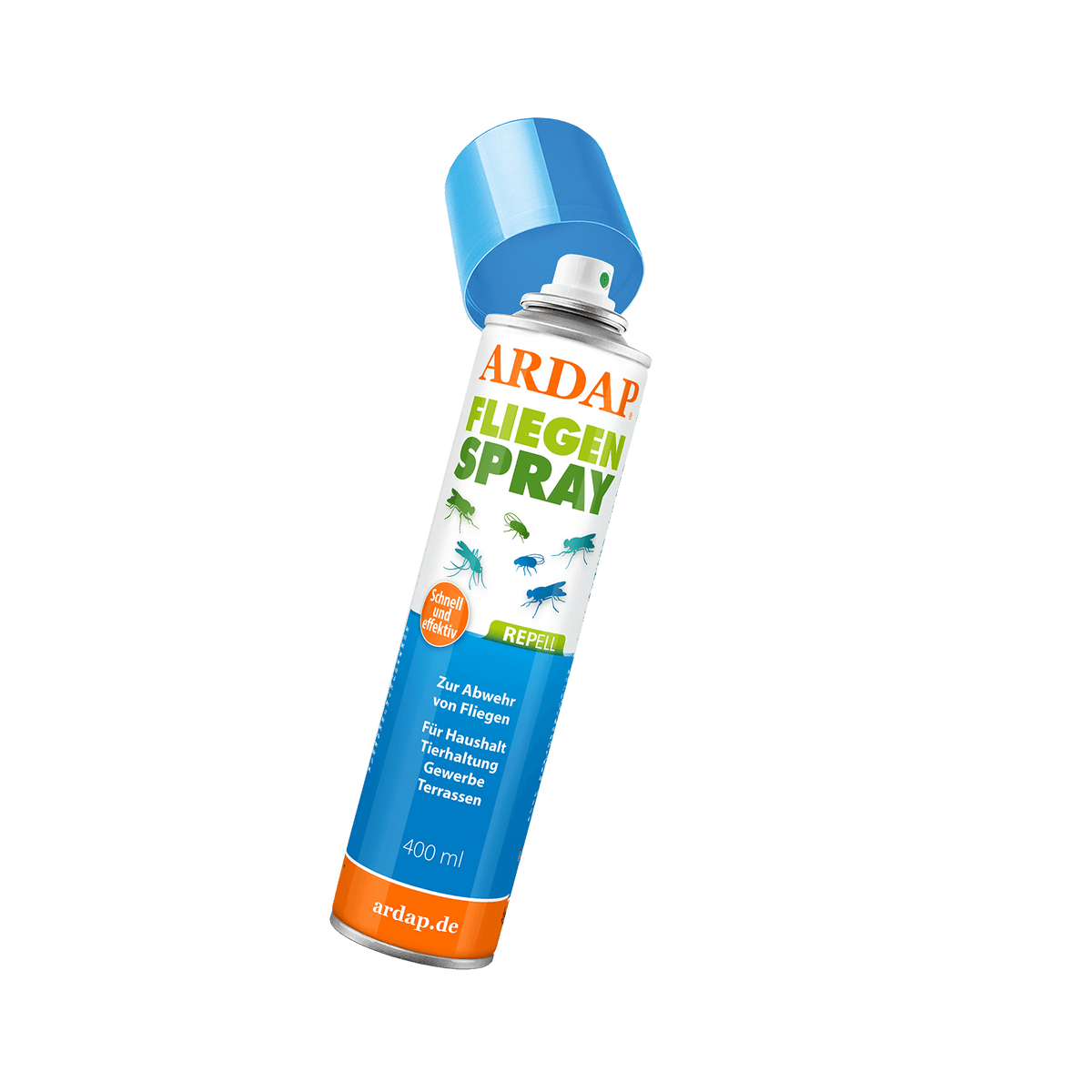
Since fungus gnats hang around the flower pots above all, it makes sense to take action right there. A repellent spray such as the ARDAP Repell Fly Spray ensures that the insects flee and are reliably repelled around the flower pot. Use is also possible outdoors, for example on the terrace. In addition, the ARDAP Repell Fly Spray can also be used against many other fly species.

Uncompromising: Control fungus gnats directly
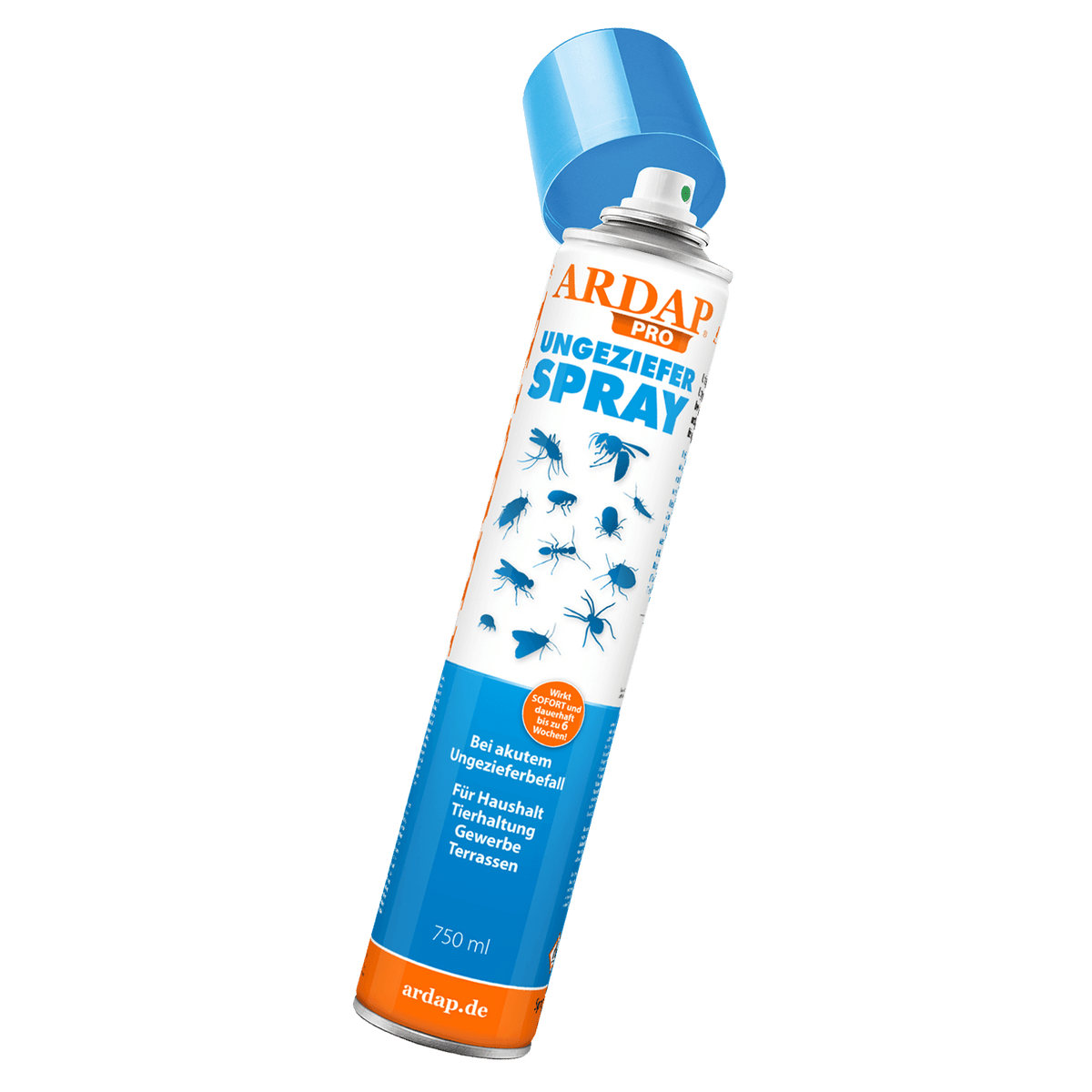
If the infestation is already too severe, you should proceed directly to the long-term control of fungus gnats. Even when using appropriately suitable sprays, it applies again that you can spray the pots, the soil, and the windowsill that come into contact with the fungus gnats. The ARDAP Pro Pest Control Spray offers you the advantage of effectively controlling fungus gnats in the long term for a period of up to 6 weeks. This product is ideal whenever you discover many fungus gnats on and around your plants, i.e. a severe infestation that allows no further delay. The good news is also that this remedy works equally well against other fly species and other pests such as ants or silverfish.
Conclusion
Fungus gnats, or mourning flies, are not dangerous to humans. They do not sting and they do not bite. Unlike other flies, there is no direct health hazard here. And yet they can represent a huge problem in our homes, because these small insects can almost inevitably lead to damage to the plants in the flower pot. Here, the roots are particularly affected by the larvae. It is therefore advisable to repel fungus gnats early if possible. The ARDAP Repell Series helps you with this. In the event of a severe infestation, the ARDAP Pro Products will help you to control fungus gnats in the long term.