Our expert Prof. Dr. med. vet. Norbert Mencke, a specialist in veterinary parasitology, can help if small flies spread throughout your home.
- What are they? Small flies in the home
- Are small flies in the home and house dangerous?
- Getting rid of and controlling small flies in the home
- Conclusion
- Frequently asked questions
Small flies in the home are usually fruit flies, small house flies, fungus gnats or scuttle flies. They are attracted by food scraps, warmth and moisture.
Fruit flies occur particularly frequently in the kitchen, reproduce rapidly and are attracted by fermenting fruit. They can contaminate food with germs.
The small house fly is considered a hygiene and health pest, as it carries germs from waste into the home and can contaminate food or surfaces.
Fungus gnats and their larvae primarily damage houseplants by feeding through the leaf tissue and weakening the plant.
Scuttle flies (often confused with small flies) lay their eggs in moist potting soil, where the larvae damage the roots and can severely affect plants.
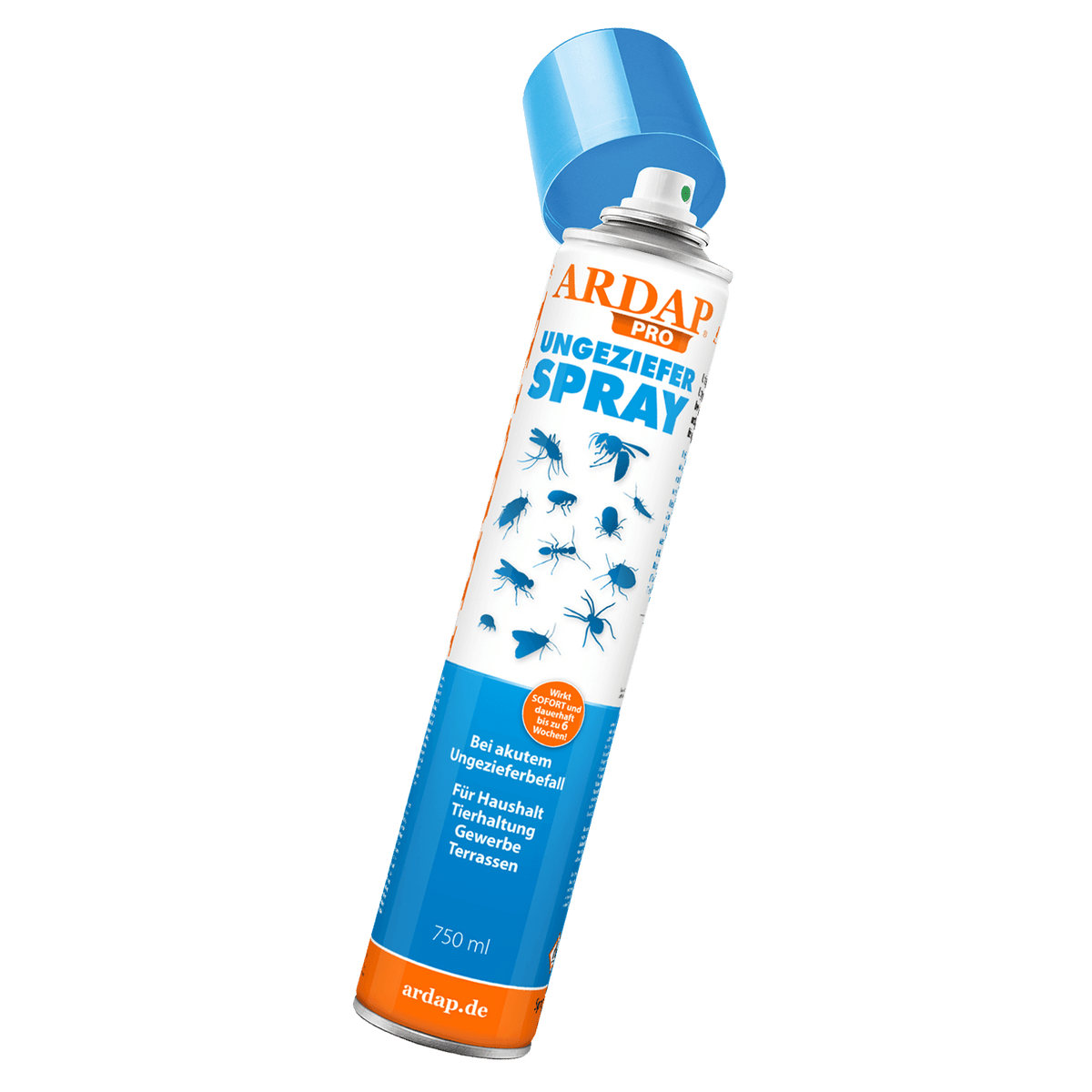
Professional products from specialist retailers such as ARDAP Repell or special products for specific species such as the ARDAP fruit fly trap help repel small flies in the home. ARDAP Pro is used for the targeted control of particularly harmful fly species.
What are they? Small flies in the home
Have small flies gathered everywhere in your home, and you cannot explain where they came from? Such infestations with tiny, mostly dark-colored insects are not uncommon. This is because flies often feel right at home in our homes, as there is food to be found here. Warmth and moisture further encourage the problem.
Which small flies enter the home?
- Fungus gnats
- Fruit flies
- Small house flies
- Scuttle flies
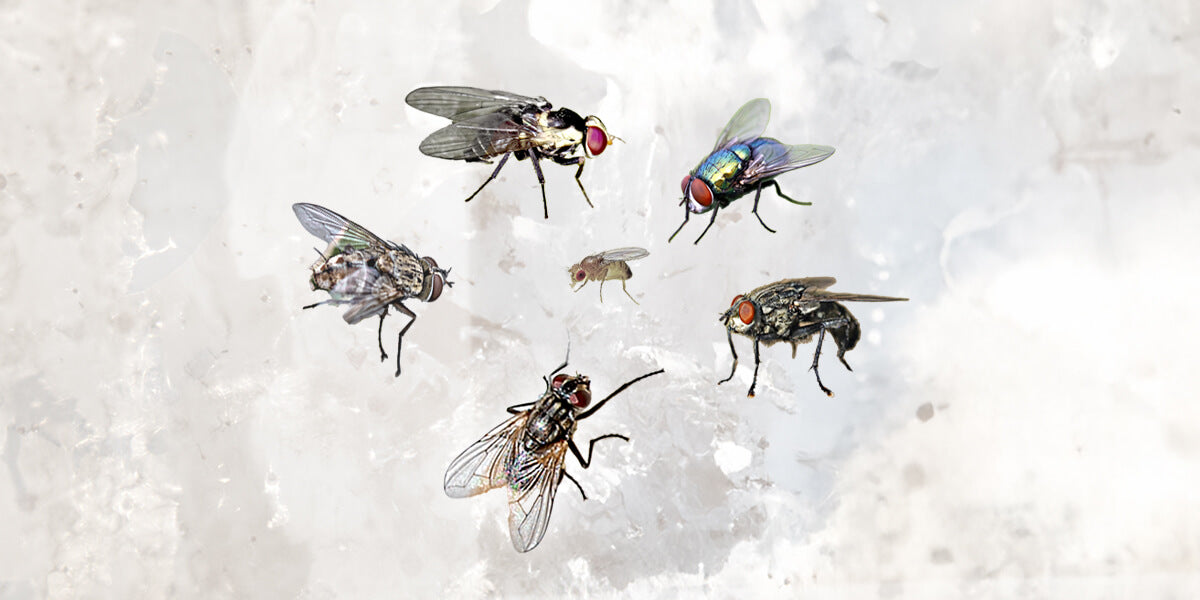
In principle, there are three small fly species that enter our homes. These are the fruit fly, the small house fly, the fungus gnat, and additionally a type of midge often confused with small flies, the scuttle fly.
So if tiny insects are buzzing around the fruit bowl, the kitchen area, or around our plants, or are slowly stumbling through the room, they are likely one of these species. We will help you tell them apart.

Fruit flies: Infesting our fruit bowl
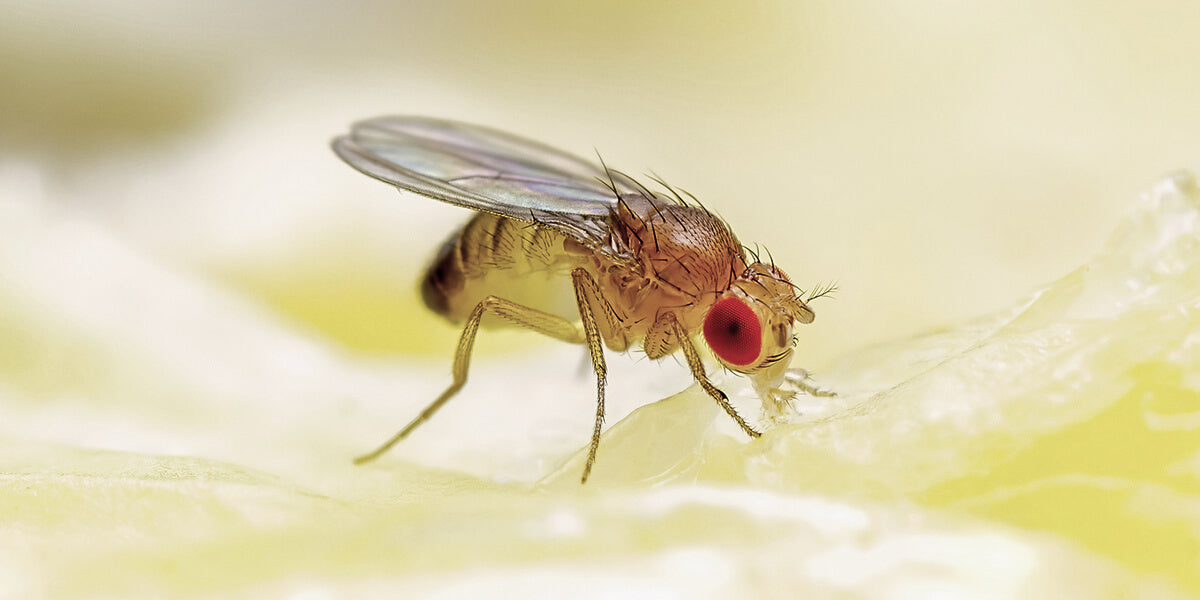
Fruit flies are among the most common pests in the kitchen or in storage rooms. They prefer to circle fruit bowls and leave our fruit alone to eat. They are tiny, measuring two to four millimeters. It is especially their large red eyes that stand out in this species. The scientific name of these insects is Drosophila melanogaster. These flies appear in large numbers especially in summer and can detect even the smallest traces of organic material. It is therefore hardly surprising that they eventually find their way into our homes and houses. Although they only live for a few weeks, it is their high reproduction rate that nevertheless allows fruit flies to thrive and spread rapidly. A female lays hundreds of eggs in overripe or fermenting fruit, ensuring that fruit flies soon appear everywhere. This is not a pleasant experience. You should act quickly to prevent the infestation from getting out of hand.

Small house fly: I come from outside the stable
The small house fly (Fannia canicularis) is found anywhere there is enough organic material for the larvae to develop. This includes agricultural businesses with livestock, but also around our homes in organic waste bins and composting systems, where the small house fly finds the right breeding ground. The adult flies then enter our homes, also in search of food and breeding sites. The small house fly is no less a nuisance, but also a hygiene and health pest than its larger relative, the large house fly, and therefore has no place in our homes, especially in the kitchen, bedrooms, and bathroom.

Fungus gnats: Dangerous to our plants
Fungus gnats (Agromyzidae) are only 2–3 millimeters long, but pose a major threat, especially to our houseplants. Adult fungus gnats are usually gray, brown, black, or yellow with a compact body and have transparent wings. Overall, they are very unobtrusive and hardly noticeable. They feed on plant sap and use their mouthparts to pierce and suck the leaves of the plant. Their larvae are even more destructive. After a female has inserted tiny eggs into the leaves with an ovipositor and the larvae have hatched a few days later, they immediately bore through the leaf. In doing so, they eat the leaf tissue and leave light, tunnel-like tracks known as “mines.” This is an unsightly sight, and for the plant, it also means disrupted nutrient and water transport as well as inhibited photosynthesis. If action is not taken quickly, the entire plant can die.

Scuttle flies: A midge is not a fly
If small black flies are in the home and are found especially near house plants, they are likely scuttle flies (Bradysia impatiens)—and these are not flies at all. Scuttle flies (Sciaridae) are a family of two-winged insects (Diptera) and belong to the suborder of midges (Nematocera). In everyday language, however, we often refer to them as scuttle flies, and they also look very similar to flies. These insects are only a few millimeters long and have a slender body with long legs. Compared to fruit flies, scuttle flies are darker and look more like midges, even though they are not mosquitoes. Moist potting soil serves as a breeding ground for these animals. And this is also the biggest problem that arises from an infestation with this species. Their larvae feed on fungi (caused by waterlogging) around the roots of the plants and thus also damage the roots. Scuttle flies are mainly a nuisance to us humans, but they pose a real danger to our plants. This problem should definitely be addressed!

Works quickly and effectively
For repelling flies
For households, animal keeping, businesses, patios
For use on windows & doors
To the productDistinguishing small flies in the home: Who is who?
Using a few characteristics, you can reliably tell fruit flies, small house flies, fungus gnats, and scuttle flies apart. For example, the fruit fly is slightly larger than the scuttle fly and has a rather compact body instead of a delicate one. Scuttle flies are almost black, while fruit flies are yellowish-brown with a dark abdomen. The differently colored eyes are also interesting. The fruit fly stands out with its distinctly red compound eyes, while the eyes of the scuttle fly are dark. However, the eyes of these insects are generally very small and sometimes barely visible. The narrow wings of scuttle flies often lie flat like a roof. The wings of fruit flies, on the other hand, are broader and more clearly visible when they move.
Adult fungus gnats are about 2–3 mm very small and often inconspicuously colored—usually black, gray, or yellowish, sometimes with a slight metallic sheen. They have transparent or slightly milky wings with a reduced vein structure, as well as a slender body with short legs and antennae. The larvae are cream-colored or yellowish and only a few millimeters long.
The small house fly is about 5 mm long and has a yellow to dark brown abdomen. The thorax is brownish-gray with three black longitudinal stripes. The abdomen often shows indistinct light gray spots or bands, giving it a rather inconspicuous appearance.
Its flight behavior is particularly characteristic: The small house fly moves with a typical hovering flight, during which it often appears to "stand" in the air or fly in tight circles—completely different from the direct flight style of the large house fly. It rests with its transparent wings slightly spread back. The relatively large, dark compound eyes and the often dangling dark legs complete its appearance.
| Characteristic | Fruit fly | Small house fly | Fungus gnat | Scuttle fly |
|---|---|---|---|---|
| Class | Insects | Insects | Insects | Insects |
| Order | Two-winged insects (Diptera) | Two-winged insects (Diptera) | Two-winged insects (Diptera) | Two-winged insects (Diptera) |
| Suborder | Flies (Brachycera) | Flies (Brachycera) | Flies (Brachycera) | Midges (Nematocera) |
| Family | Drosophilidae | Fanniidae | Agromyzidae | Midges (Nematocera) |
| Species in Europe | >200, e.g. Drosophila melanogaster | about 80 species, e.g. Fannia canicularis | >900, e.g. Phytomyza horticola | <600, e.g. Bradysia impatiens |
| Size | 2–4 mm | 4–6 mm | 2–3 mm | 1–7 mm |
| Body | compact, light to dark brown, often with yellow markings, sometimes with dark bands on the abdomen; red eyes | compact, dark gray to brown, three black longitudinal stripes on the thorax, adhesive pads on the 5th tarsomere | compact, black or brown with a yellowish pattern | slender, elongated, dark gray to black |
| Legs | normal | normal | strikingly long | strikingly long |
| Wings | transparent, spotted | transparent | elongated, transparent, partially spotted | elongated, clouded, smoky gray-black |
| Flight | hovering | straight | straight | dancing, stumbling, hovering |
| Egg-laying | 300–500 eggs per female, in fermenting fruit/vegetables | about 500–2000 eggs per female, preferably in compost, manure, organic material | 200–400 eggs per female, into plant leaves via an ovipositor | 200 eggs per female, in moist potting soil |
| Larvae | whitish, slender; feed on overripe, fermenting fruit, fruit juices | yellowish-beige, fringed; feed on decaying substances, organic material | yellowish-white, transparent, live in plant leaves, mine, pierce plant juices | gray-white, black head, live in potting soil, feed on fungi and roots |
| Damage | rapid spoilage of fruit and vegetables, contamination with microorganisms | hygiene and health pest, carrier of germs | damage to leaves, thereby reduced photosynthesis and dehydration of the plant | root feeding damage, thereby wilting leaves on the plant |
Download the table
Are small flies in the home and house dangerous?
The damage caused by small flies at a glance:<7p>
- Fungus gnat larvae bore through plant leaves, disrupt photosynthesis and can permanently damage young or weak plants.
- Scuttle fly larvae live in moist potting soil and damage plant growth by feeding on roots. An infestation should definitely be prevented.
- Fruit flies can contaminate food with microorganisms and thus accelerate its spoilage.
- The small house fly is a hygiene and health pest, as it can transmit bacteria such as salmonella and fungal spores to food.
Small flies are not always dangerous to us humans, depending on the species. Unlike many other fly species, fungus gnats and scuttle flies do not usually transmit dangerous pathogens. Nevertheless, these insects are a nuisance because they damage our plants. Fruit flies, on the other hand, can very well contaminate our food with microorganisms and thus cause it to spoil more quickly.
The small house fly can cause even more serious problems, although its main issue lies in the hygiene area. For example, they can transmit bacteria such as salmonella as well as fungal spores to food.
It is therefore always a good idea to take action at the first appearance of small flies in the home and stop them from breeding. Here we take a closer look at the damage they cause.

Works immediately and lasts for up to 6 weeks
For acute pest infestations
Ideal for households, pet owners, businesses and patios
Go to productDamage caused by fruit flies
Fruit flies do not sting or bite. They also do not damage our furniture or textiles. Their presence is mainly a nuisance, and problems arise when they land on our food. Fermenting substances strongly attract fruit flies, and it is always possible for germs to stick to their legs. If they spread these microorganisms on our food, it can - especially during the summer months - spoil more quickly. The problem naturally increases with the spread of the population. After the larvae hatch, it takes approximately eight to ten days for a fly to become an adult. Even if you only notice a few small flies in your home at first, the infestation can expand massively in no time. To keep flies away effectively, you should not waste any time. Those who act prudently take immediate action. This is how you ensure the best possible hygiene in your home.

For reducing fruit and vinegar flies
Long-lasting effect for up to 6 weeks
Suitable for all rooms
Insecticide-free, highly effective attractant
Go to productDamage caused by fungus gnats
Unlike fruit flies, the fungus gnat does not pose a hygiene risk. Instead of our food, fungus gnats have their sights set on our plants. And the risks associated with this are considerable. This is because the larvae of this species live in the potting soil and directly under the surface. They attack the plant roots for food. In doing so, massive damage is caused to the fine roots, which can have a wide range of effects. Eventually, for example, the uptake of water or nutrients is restricted. This results in growth disorders and wilting leaves. In extreme cases, the plant can even die. This must be prevented at all costs. If you notice small flies in the home, you should check whether the potting soil is already affected. The larvae have a whitish colour and appear partially transparent. Such an infestation should not be tolerated, especially in the pots of young plants.

Damage caused by leaf miners
Leaf miners can cause considerable damage to plants, especially through the feeding activity of their larvae. The tiny larvae eat through the inner tissue of leaves, leaving behind characteristic, winding tunnels – so-called mines. These signs of damage are not only visually striking, but also impair the vitality of the plants. The feeding reduces the photosynthetic capacity of the leaves because the chlorophyll-containing tissue is destroyed. In severe infestations, the leaves often turn yellow, dry out and fall off prematurely. Young plants or already weakened specimens can be particularly and permanently damaged by this.
While adult leaf miners themselves do not cause any damage, they can quickly build up large populations by laying eggs. Without countermeasures, this can lead to infestation waves that permanently weaken your plants.

Damage caused by the common housefly
The common housefly is a hygiene and health pest. The imago, the adult fly, sits on excrement as well as decomposing organic material. The female lays her eggs here and comes into contact with pathogens in the process. The fly then carries these germs into our homes and living spaces and can thus contaminate surfaces and food.
Getting rid of small flies in the home and controlling them
You now have small flies everywhere in the house and want to take effective action against them? We will help you with this and provide the background knowledge that is now essential. After all, a successful defence against flies is certainly no coincidence, but the result of a systematic approach. With the help of highly effective and professional products, fly infestations should soon be a thing of the past.

Defending effectively
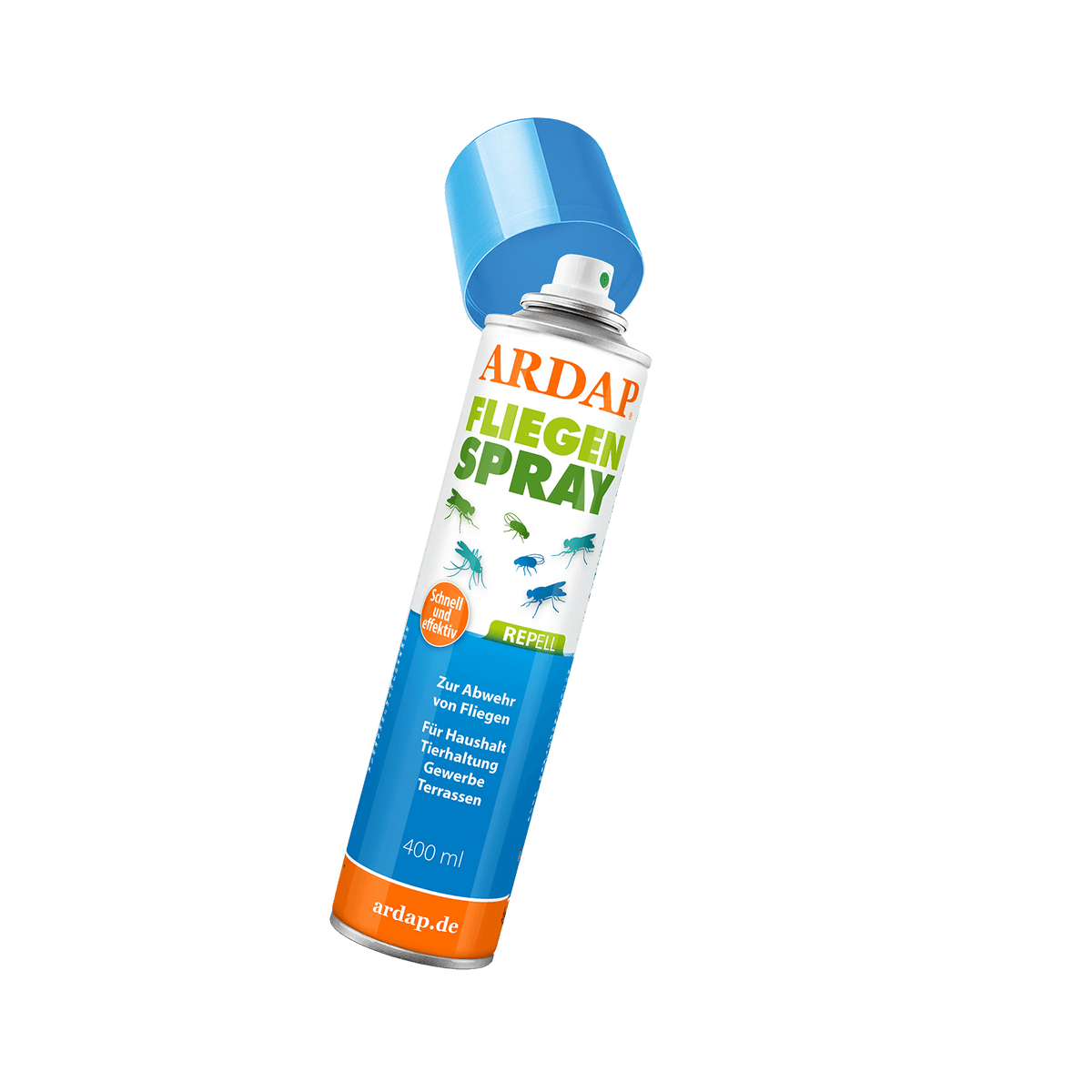
When defending against small flies, you should take a targeted approach. It is important to identify the entry points into the house or home and prepare these areas accordingly. If you take consistent action here, you can prevent an infestation or at least limit it. Of course, the windows and doors are particularly important. Through these, fruit flies, common houseflies, leaf miners and fungus gnats enter the interior, especially in summer. Here, it is important to create a barrier. For this purpose, use the ARDAP Repell fly spray and benefit from the fast and effective action of this product. It was specially developed for defending against flies and can be sprayed very precisely on all window and door frames as well as window sills.

Caught: Setting up a fruit fly trap
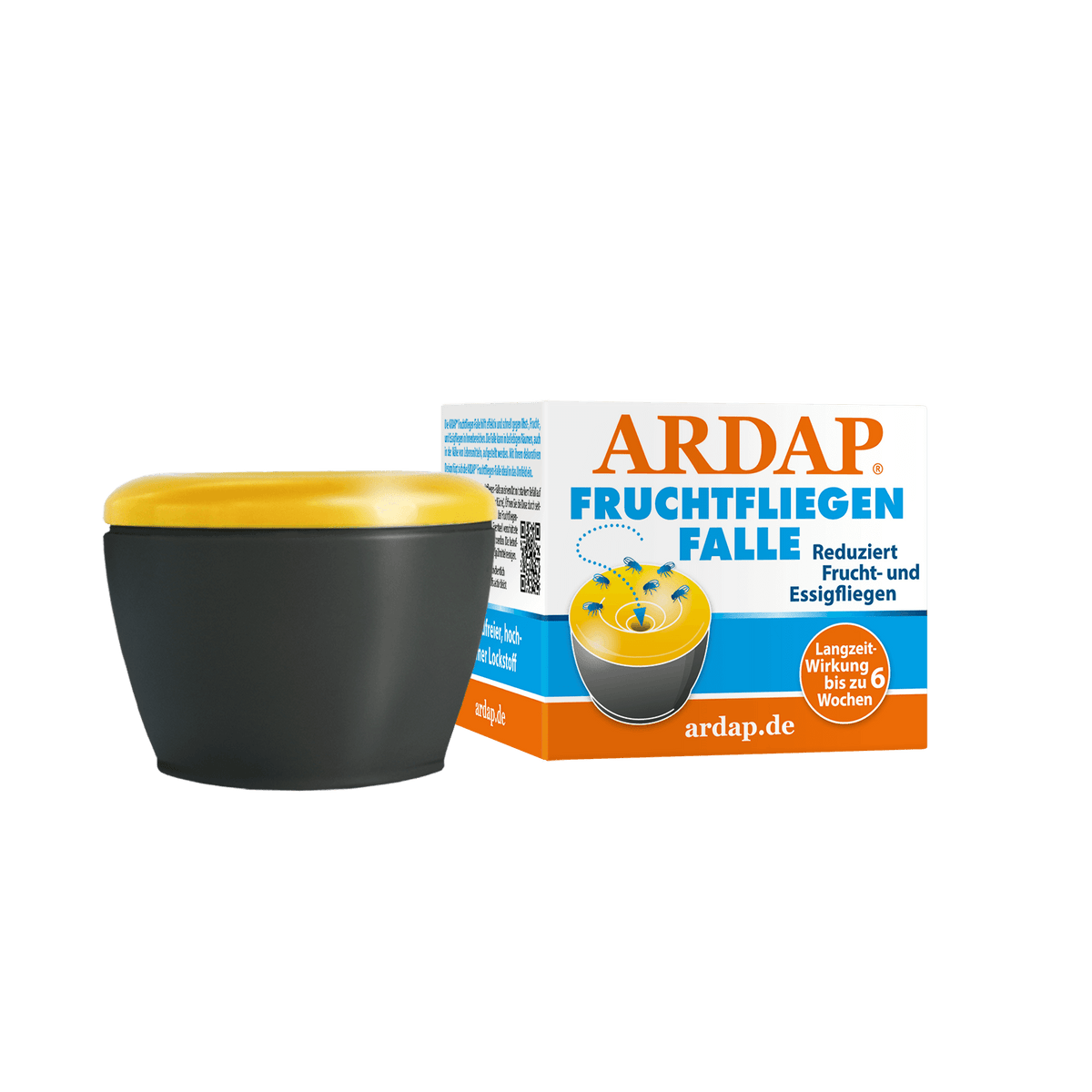
For fruit flies, another option can also be used: a special trap. Here, the insects' excellent sense of smell becomes their downfall. This leads them directly into a fly trap that is equipped with an attractant. This method simply requires placing the trap in a suitable location, e.g. in the kitchen near the fruit bowl. It is also advantageous that it is a hygienic form of control, for example compared to a fly swatter or fly screens. The ARDAP fruit fly trap was specially developed for the effective control of fruit flies. It is suitable for all rooms, and its effect lasts for six weeks. Since the trap is decoratively designed, it blends in inconspicuously with its surroundings. Please remember that the ARDAP fruit fly trap is intended only for fruit flies, not for fungus gnats. For the latter, use the ARDAP sprays.

Fly traps for outdoor use
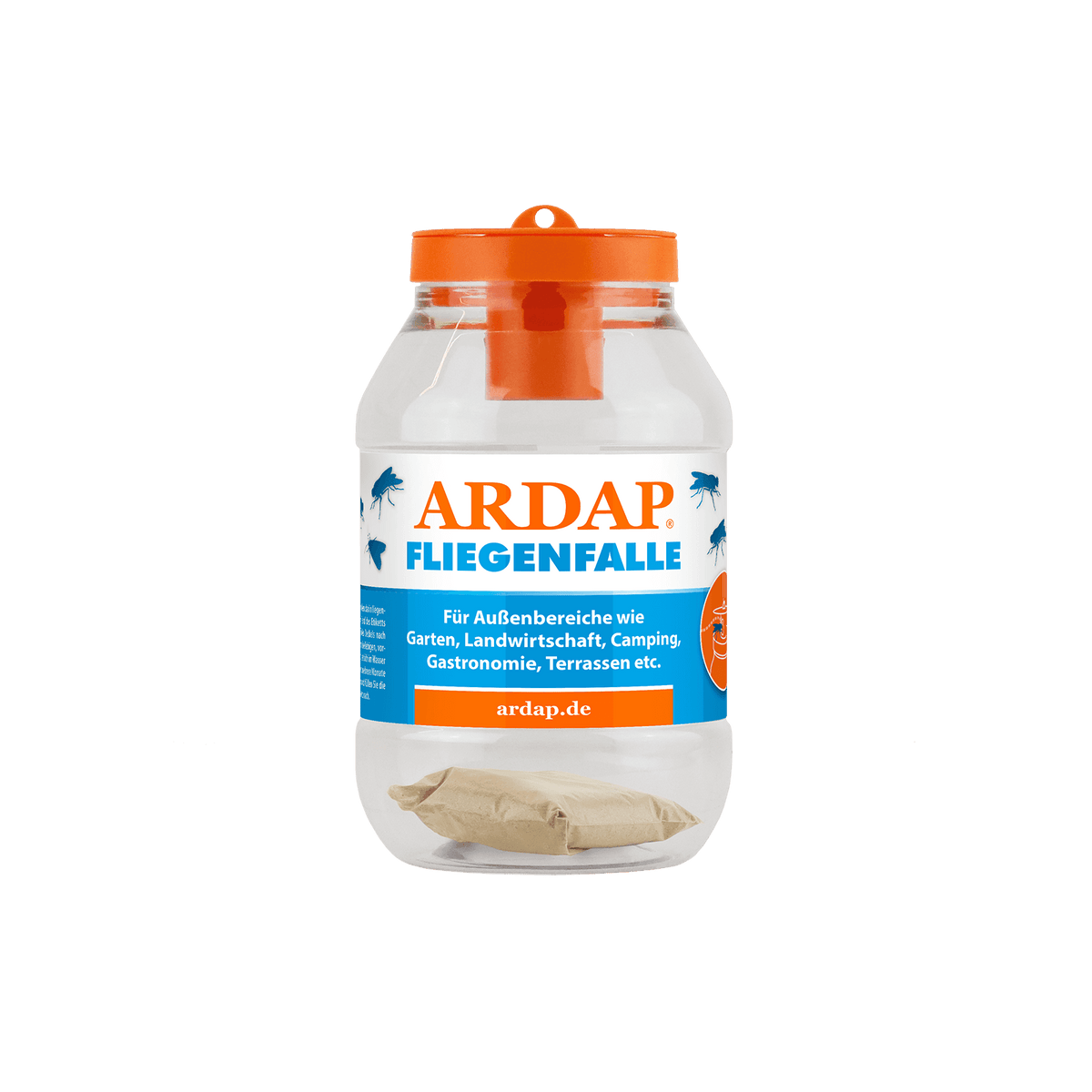
To effectively prevent hygiene and health problems caused by the common housefly, it is best to prevent it from entering our homes in the first place. The ARDAP fly trap was specially developed for outdoor areas such as patios and balconies, but also for camping. The special attractant specifically attracts the flies, so that they fly into the trap - from which they cannot escape.

Enough is enough! Control pests directly
If you want to control an infestation of fruit flies, common houseflies, leaf miners and fungus gnats in the long term, you need a suitable product with corresponding effectiveness. Spray the ARDAP Pro pest control spray on the small flies' favourite places, e.g. on window frames and window sills or around flower pots. However, make sure that food, in particular, does not come into direct contact with the product. The ARDAP Pro pest control spray works immediately and helps you stop an infestation as quickly as possible and for up to 6 weeks if the small flies have already spread extensively - an excellent solution you can rely on.
Conclusion
Small flies in the home can be a real nuisance. They are mainly annoying, they are everywhere and very persistent. This is because their behaviour is always programmed to search for food, and they make use of what they find on the fruit plate or in the flower pot.
The common housefly, unlike the fruit fly and the fungus gnat, is also a real hygiene and health pest and should therefore be consistently controlled like its relative, the large housefly, in the home or preferably before it enters the home.
And even though leaf miners or fungus gnats do not pose a health risk to us, we still need to deal with the problem. Once the population has spread, these small flies can eventually become a considerable mental strain or a real problem for our plants. The proven products from ARDAP help you to free your home from flies and other pests and vermin.
Frequently Asked Questions
How do I get rid of small flies in the home?
Use ARDAP products specifically to control small flies in the home quickly and effectively: The ARDAP Pro pest control spray can be sprayed specifically on all contact surfaces of the flies and controls them immediately upon landing and for a duration of up to 6 weeks. For fruit flies, the ARDAP fruit fly trap, specially developed for this insect, is recommended, which works for up to six weeks and can be used hygienically in the kitchen or in the living area next to the fruit bowl.
Why do I have so many small flies in the home?
The main causes of many small flies in the home are unpackaged food, fruit bowls, waste and damp potting soil – these provide perfect breeding grounds for fruit flies, common houseflies and fungus gnats, depending on the insect. Especially in the summer, flies frequently enter the home through open windows and doors. The products from ARDAP against flies help to repel or control small and also large flies.
How can you get rid of small flies?
A systematic approach is most effective for getting rid of small flies again: Remove the food sources of the respective fly species and set up barriers at the entry points. With the ARDAP Repell fly spray, you keep flies away reliably by spraying window frames and doors and prevent them from entering the house. If small flies are already in your surroundings, they can be controlled immediately and permanently for up to 6 weeks with proven products such as the ARDAP Pro pest control spray. Especially for fruit flies, setting up the ARDAP fruit fly trap next to fruit plates is recommended.