- What exactly are silverfish?
- Ghost silverfish – the mysterious primitive insect
- Damage caused by ghost silverfish
- Are ghost silverfish hygiene pests?
- What works against silverfish also works against ghost silverfish!
- Conclusion
What exactly are silverfish?
Silverfish are ancient insects that are distinguished by their scale-covered bodies and their three long tail filaments. They belong to the Lepismatidae family and have undergone hardly any changes in their appearance since their emergence more than 300 million years ago.

For this reason, biologists also refer to silverfish as primitive insects. Various species occur in our homes:
- Silverfish (Lepisma saccharina): known for their preference for damp environments such as bathrooms or kitchens. They need a humidity level of over 70% to survive.
- Paper silverfish (Ctenolepisma longicaudatum): larger than silverfish and often found in dry archives or libraries.
- Firebrat (Thermobia domestica): loves temperatures above 30 °C and therefore often settles in boiler rooms or near ovens.
- Comb silverfish (Ctenolepisma lineata): rarer, but also found in Europe. They are more robust and can survive at lower humidity levels.
Ghost silverfish (Ctenolepisma calva) stand out from other silverfish species due to their preference for dry, warm environments and their pale, translucent appearance, from which they also owe their name.
Ghost silverfish – the mysterious primitive insect
Ghost silverfish and other silverfish belong to the oldest land-dwelling insects and are therefore also often called primitive insects. Their evolutionary history dates back around 300 million years, but they have hardly changed during this time. In addition, they are synanthropic – the term used for animals that occur exclusively in the vicinity of humans – which is why their original natural habitat is now difficult to determine or is unknown.
Appearance and special features
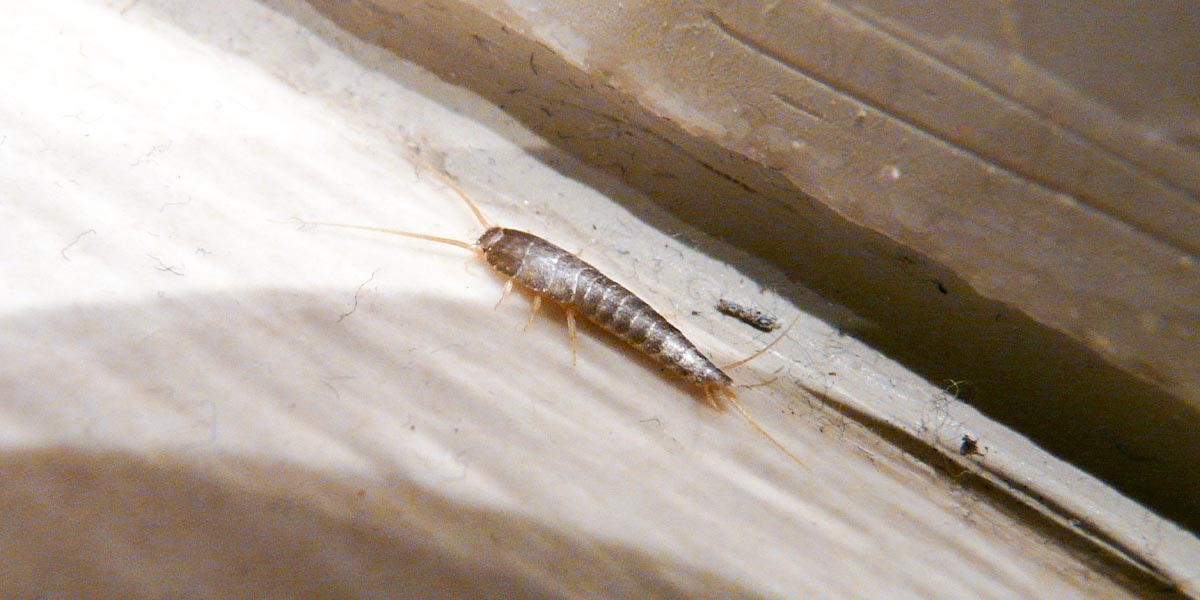
Ghost silverfish are very light, almost translucent, and have a faint sheen. The species also owes its name to this slightly "ghostly" appearance. With a body length of up to 8 mm, they are on average slightly smaller than their relatives, but their characteristic appearance (spindle-shaped, segmented body, two long antennae at the front and three long filaments at the rear) makes them clearly recognizable as silverfish at first glance.

Image: The ghost silverfish (Ctenolepisma calva) from Chemnitz, Saxony, Germany. Author: Bushnest , licensed under CC BY-SA 4.0, via Wikimedia Commons
Silverfish do not mate, but reproduce through an indirect process in which the males lay spermatophores, which the females take up. This indirect method of reproduction reflects their long evolutionary history, as they have retained a very primitive reproductive system. Their ability to lay many eggs in hidden places and their adaptability to various conditions make them persistent pests.
Occurrence and distribution
Silverfish are found worldwide, except in Antarctica. Although ghost silverfish are still rare in our latitudes, they are being introduced more and more frequently through global trade, especially through goods imported from warm, relatively dry countries. Pleasantly warm, dry spaces such as warehouses, attics, ceiling voids, or hiding places behind furniture in living areas offer them favorable conditions for living and reproduction. However, moisture and extreme cold significantly shorten their lifespan.
Due to their preference for warmth (comfortable temperature 20-30 °C) with comparatively low relative humidity (40-50%), ghost silverfish differ significantly from moisture-loving species such as native silverfish. They are therefore also not an indication of mold growth, an increased risk of mold, or overly damp walls or rooms.

Works quickly and effectively
For repelling silverfish and ghost silverfish
For kitchens, washrooms, bathrooms, basements
To the productLifestyle and diet
Ghost silverfish feed on starchy materials such as adhesives, paper, skin scales, or textile fibers. Their ability to survive even with a sparse food supply makes them persistent intruders. In case of need, they can survive for several weeks without food.
Like all silverfish species, exotic ghost silverfish are also very mobile. They can slip through the smallest cracks and crevices or hide behind baseboards or furniture. Many modern living spaces offer ghost silverfish ideal living conditions. They usually enter the home with imported goods or their packaging. In large buildings, e.g., libraries, schools, or multi-family homes, they can move from one area to another through cracks and gaps, ventilation shafts, and pipe systems.
Damage caused by ghost silverfish
Ghost silverfish in the home pose no danger to health and are not directly harmful to humans, domestic animals, or livestock. Silverfish do not bite, sting, or scratch, they do not suck blood, and they do not transmit diseases. However, they leave feeding damage, for example on books, wallpaper, or textiles.
Especially in households or public buildings with valuable materials, ghost silverfish can become dangerous. If the infestation is not detected and stopped in time, economic, cultural, and other damage can occur, for example through the damage or destruction of documents, cultural property, or collectibles.
Are ghost silverfish hygiene pests?
Ghost silverfish are not considered classic hygiene pests, as they do not transmit pathogens and do not directly endanger health or hygiene. Nevertheless, their presence, especially in kitchens, pantries, or near food, can be perceived as unpleasant, disgusting, and disturbing. They are often only noticed when their traces, such as tiny dark fecal crumbs or transparent or shiny scale fragments, become visible on shelf surfaces, cabinet tops, etc. Although ghost silverfish themselves do not spread germs, they can damage materials, especially packaging, which comes into contact with food.

Are ghost silverfish material pests?
Ghost silverfish are material pests and can cause considerable damage to various materials. Like other silverfish, they feed on starchy and protein-rich substances that can be found in almost all households and commercial areas. Their menu includes, among other things:
- Books and pictures: Ghost silverfish can metabolize cellulose, the main component of paper, into sugar using special enzymes. Even easier to digest and therefore particularly desirable are rich mixed products such as old book glue, photographic paper, organic binders in paints, or starchy adhesives in bookbindings, binders, and packaging. When nibbling on paper surfaces or coatings, silverfish leave characteristic feeding marks in the form of small, irregular holes or grooves. Archive collections, libraries, and collections stored in dry and dusty rooms are particularly at risk.
- Wallpaper and wallpaper paste: Wallpapered walls not only offer ghost silverfish good hiding places but also a tasty mix of cellulose, starch, and other organic substances (e.g., proteins and fats in dust, skin scales, and other deposits on the wall coating). Silverfish can damage wallpaper by making themselves at home under the wallpaper, eating the adhesive between the wall and the paper, or nibbling holes in the paper.
- Textiles: Natural fibers such as cotton, linen, or silk are also readily eaten by ghost silverfish, especially when they are "enriched" by sweat, skin scales, or other organic substances.
What works against silverfish also works against ghost silverfish!
Ghost silverfish enter the home through human activities. Regular inspection and careful cleaning are crucial to prevent them from being introduced. If ghost silverfish do appear, targeted repellents or insecticides/insect control products help stop the infestation.

Lifestyle and diet
Ghost silverfish feed on starchy materials such as adhesives, paper, skin scales, or textile fibers. Their ability to survive even with a sparse food supply makes them persistent intruders. In case of need, they can survive for several weeks without food.
Like all silverfish species, exotic ghost silverfish are also very mobile. They can slip through the smallest cracks and crevices or hide behind baseboards or furniture. Many modern living spaces offer ghost silverfish ideal living conditions. They usually enter the home with imported goods or their packaging. In large buildings, e.g., libraries, schools, or multi-family homes, they can move from one area to another through cracks and gaps, ventilation shafts, and pipe systems.
Damage caused by ghost silverfish
Ghost silverfish in the home pose no danger to health and are not directly harmful to humans, domestic animals, or livestock. Silverfish do not bite, sting, or scratch, they do not suck blood, and they do not transmit diseases. However, they leave feeding damage, for example on books, wallpaper, or textiles.
Especially in households or public buildings with valuable materials, ghost silverfish can become dangerous. If the infestation is not detected and stopped in time, economic, cultural, and other damage can occur, for example through the damage or destruction of documents, cultural property, or collectibles.
Are ghost silverfish hygiene pests?
Ghost silverfish are not considered classic hygiene pests, as they do not transmit pathogens and do not directly endanger health or hygiene. Nevertheless, their presence, especially in kitchens, pantries, or near food, can be perceived as unpleasant, disgusting, and disturbing. They are often only noticed when their traces, such as tiny dark fecal crumbs or transparent or shiny scale fragments, become visible on shelf surfaces, cabinet tops, etc. Although ghost silverfish themselves do not spread germs, they can damage materials, especially packaging, which comes into contact with food.
Are ghost silverfish material pests?
Ghost silverfish are material pests and can cause considerable damage to various materials. Like other silverfish, they feed on starchy and protein-rich substances that can be found in almost all households and commercial areas. Their menu includes, among other things:
- Books and pictures: Ghost silverfish can metabolize cellulose, the main component of paper, into sugar using special enzymes. Even easier to digest and therefore particularly desirable are rich mixed products such as old book glue, photographic paper, organic binders in paints, or starchy adhesives in bookbindings, binders, and packaging. When nibbling on paper surfaces or coatings, silverfish leave characteristic feeding marks in the form of small, irregular holes or grooves. Archive collections, libraries, and collections stored in dry and dusty rooms are particularly at risk.
- Wallpaper and wallpaper paste: Wallpapered walls not only offer ghost silverfish good hiding places but also a tasty mix of cellulose, starch, and other organic substances (e.g., proteins and fats in dust, skin scales, and other deposits on the wall coating). Silverfish can damage wallpaper by making themselves at home under the wallpaper, eating the adhesive between the wall and the paper, or nibbling holes in the paper.
- Textiles: Natural fibers such as cotton, linen, or silk are also readily eaten by ghost silverfish, especially when they are "enriched" by sweat, skin scales, or other organic substances.
What works against silverfish also works against ghost silverfish!
Ghost silverfish enter the home through human activities. Regular inspection and careful cleaning are crucial to prevent them from being introduced. If ghost silverfish do appear, targeted repellents or insecticides/insect control products help stop the infestation.
To prevent material damage, regular cleaning and thorough vacuuming of cracks, baseboards, and gaps are recommended. Archive and storage rooms should be kept as dust-free as possible to minimize the food sources of ghost silverfish. Sensitive materials stored at a relative humidity below 40% and temperatures below 20 °C are less susceptible to infestation. Books, photos, documents, or textiles can be kept in airtight boxes or plastic wrap to protect them from silverfish.
Shoo, silverfish! Target repelling ghost silverfish
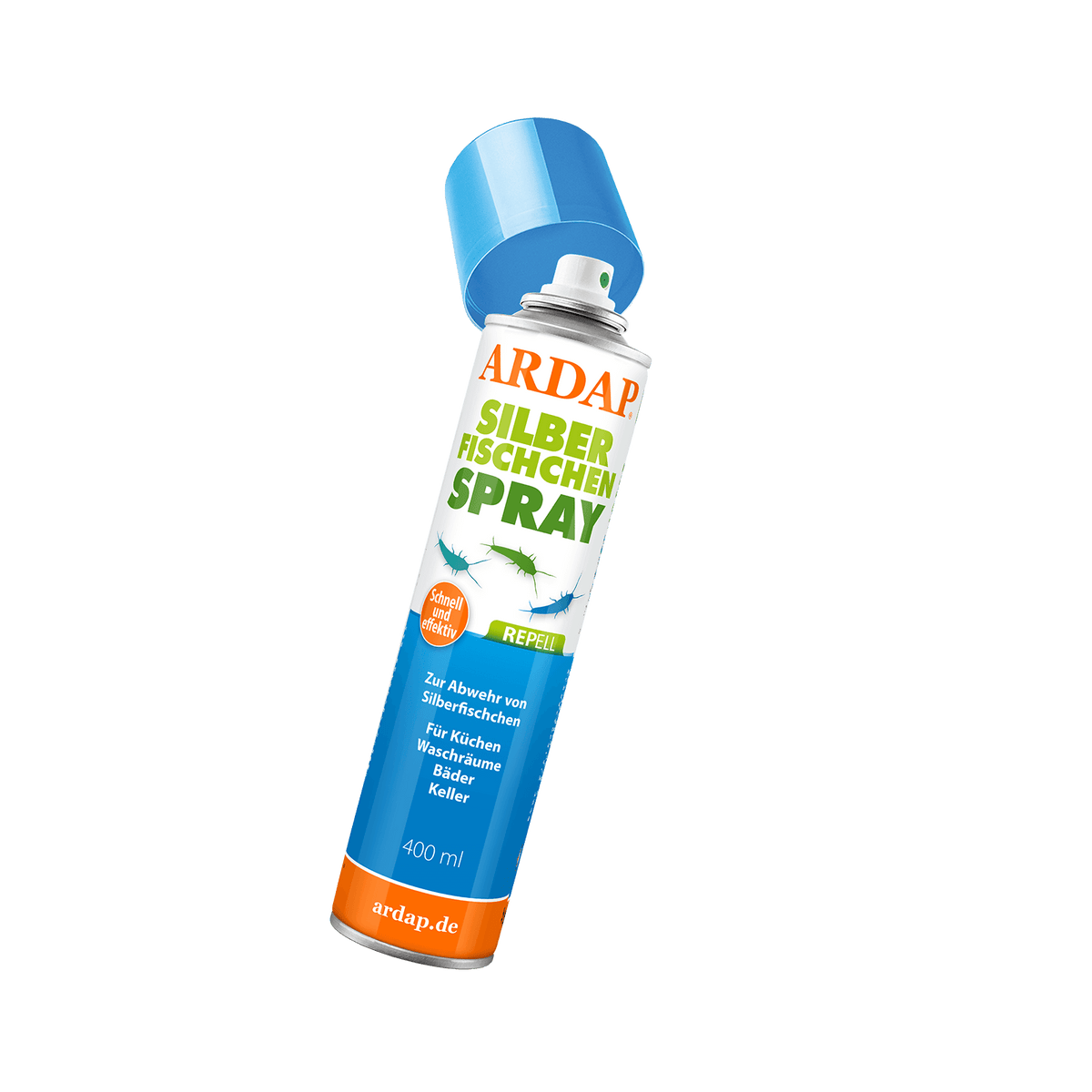
Repellents work by releasing substances that are unpleasant and deterrent to insects (e.g., silverfish, cockroaches, fleas) and arachnids (e.g., ticks, mites), so that unwanted pests avoid the treated areas. The ARDAP Repell Silverfish Spray is a proven and effective means for repelling silverfish. The spray is based on the active ingredient pyrethrum from the chrysanthemum and is ideal for use in living spaces, kitchens, bathrooms, washrooms, toilets, basements, warehouses, and storage rooms.

Ghostbusters! Effectively control ghost silverfish
A severe pest infestation usually requires the use of control products. With the ARDAP Pro series, you have access to various highly effective solutions for controlling ghost silverfish and many other pests in the home.

For acute silverfish and pest infestations
Controls all life stages such as eggs, larvae, and pupae
Works immediately and lasts for up to 6 months
To the productA fogger is suitable for fogging entire rooms and is therefore also called a room fogger or colloquially a flea bomb, pest bomb, or insect bomb. The term is due to the fact that the fogger sprays a fine active ingredient mist into the room after activation, which quickly disperses. The proven ARDAP Pro Fogger is a highly effective insecticide fogger with a long-term effect of up to six months. Thanks to its broad spectrum of action, it is also highly effective against cockroaches, fleas, ticks, mites, moths, spiders, and many other pests and nuisances, as well as their eggs and larvae. This makes it an ideal solution for comprehensive pest control in living spaces, commercial areas, or in animal husbandry, even in the case of ghost silverfish.

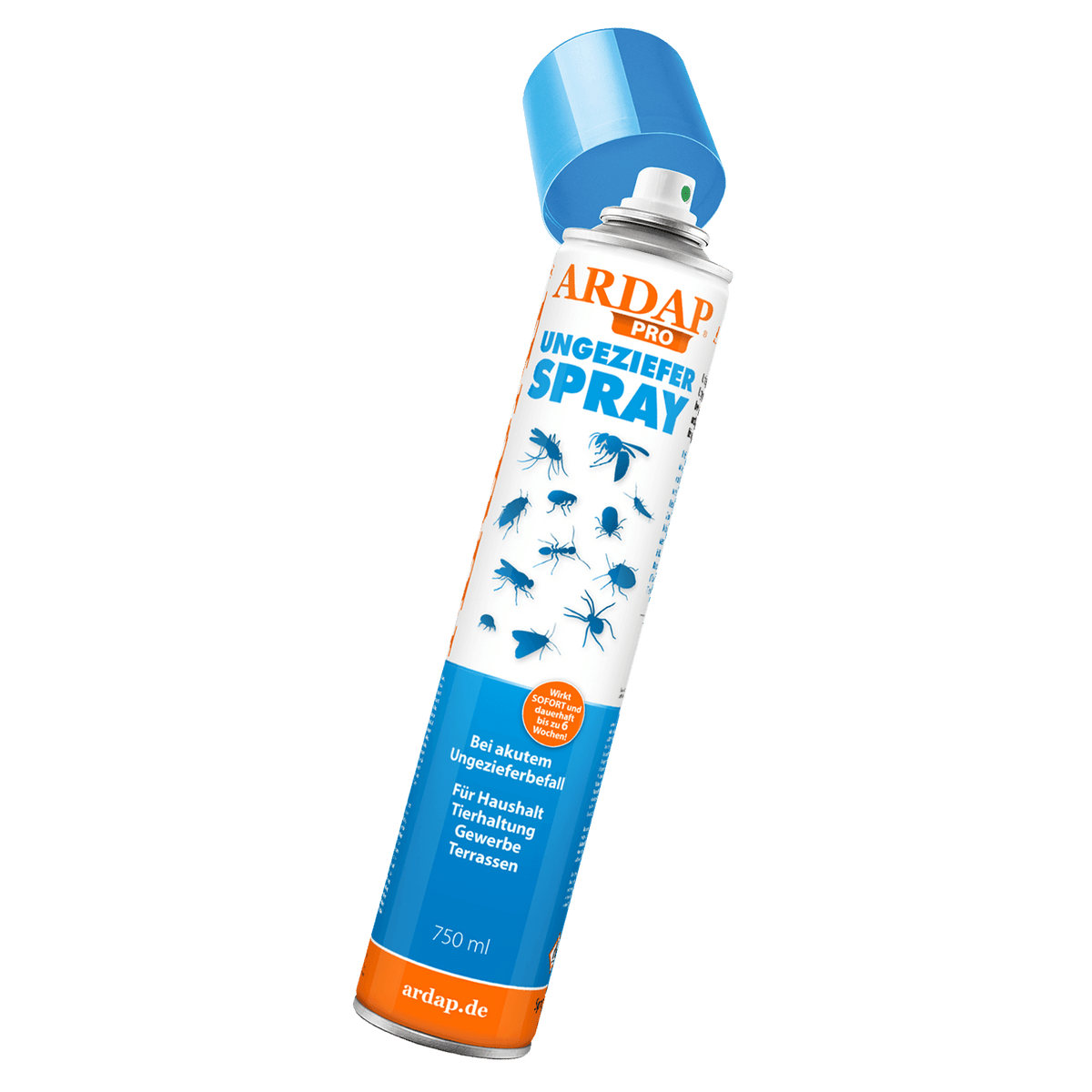
As other effective products for pest control, special sprays have proven themselves. With the ARDAP Pro Long-Term Flea Spray, you can not only get rid of fleas quickly again, but also control ghost silverfish and other silverfish species, cockroaches, as well as other annoying insects. The highly efficient spray has a long-term effect of up to six months and enables targeted spraying of cracks, crevices, wallpaper, and other areas where you suspect or have seen pests. The ARDAP Pro Pest Spray also specifically and long-term controls silverfish of all kinds.
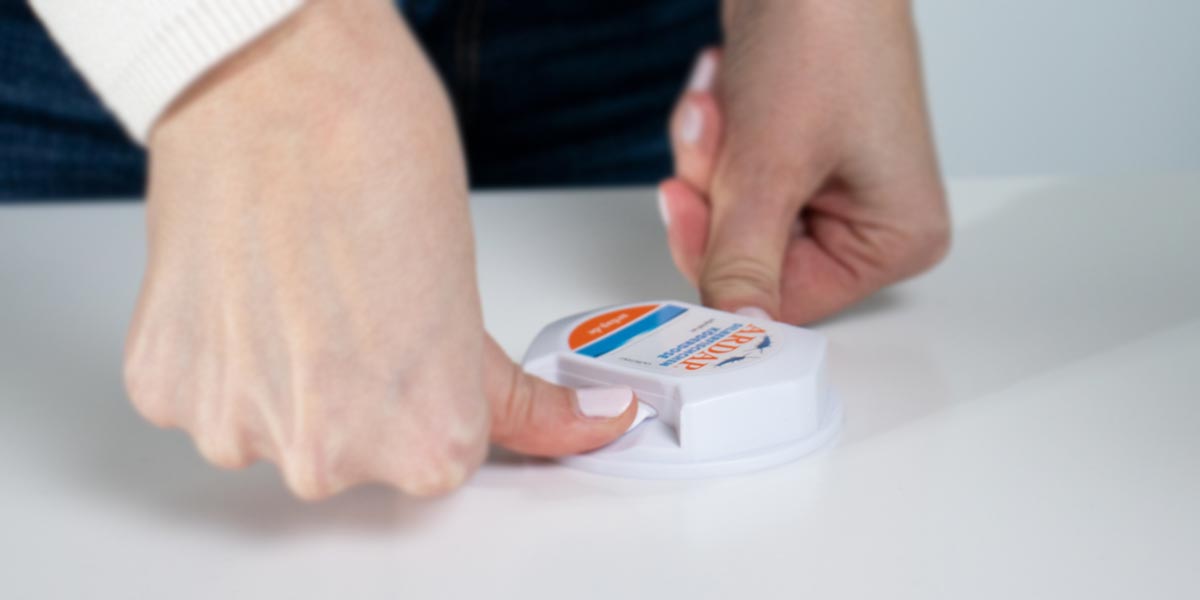
Setting up bait tins for insects is a highly effective, complementary measure for controlling ghost silverfish. The ARDAP Pro Silverfish Bait Tin is ideal for placing throughout the home. Thanks to the novel bait gel, it exerts a strong attraction on silverfish. The insects crawl into the tin, take up the gel along with the active ingredient, and carry it into their hiding places, where the bait quickly takes effect. This way, you can effectively control larger populations and prevent new silverfish from growing up in the long term.
Conclusion
Ghost silverfish come from warm and dry climate zones, but can also come to Germany through global trade. They usually enter the home with imported goods and their packaging material.
They are considered material pests that feed on starchy and protein-rich substances and can leave feeding marks and thus severe damage.
To repel these uninvited guests, repellent products such as the ARDAP Repell Silverfish Spray are recommended. For long-term control - especially larger accumulations – ARDAP Pro Products such as the fogger or the long-term flea spray, but also the silverfish bait tin, are suitable. This way, you protect your home comprehensively, safely, and in the long term.