- What exactly are silverfish?
- The biology of silverfish
- Silverfish: Occurrence in Germany
- Overview of silverfish species
- Pests or not: Please keep silverfish out of your home
What exactly are silverfish?
Silverfish belong to the insect family Lepismatidae and are found in almost all German households.
The unique appearance of silverfish has changed little over the course of their long evolutionary history – they have existed for more than 300 million years – because these ancient insects have always been extremely adaptable and resilient in this form. Silverfish are also synanthropic insects. Synanthropic animals are species that have lived in close proximity to humans or in human living environments for so long that it is no longer possible to clearly determine their place of origin or original habitat.

Although they are usually considered a nuisance and some species can also cause considerable damage to materials, silverfish are harmless to humans compared to other pests. The silverfish species found in Germany are silverfish (Lepisma saccharinum), paperfish (Ctenolepisma longicaudatum), firefish (Thermobia domestica), as well as comb silverfish (Ctenolepisma lineata) and ghost silverfish (Ctenolepisma calvum). In addition, there are other silverfish species that are not found in our domestic environment. And thus the vast majority of silverfish live freely, while only a relatively small number live with humans.
The biology of silverfish
Silverfish (Zygentoma) are found worldwide. They are everywhere – except Antarctica. Their silence, their special shine, and their unmistakable way of moving make them fascinating, albeit mostly unwanted, housemates. You almost never see them because they are nocturnal and instantly scurry away at the slightest disturbance or sudden light source.
The body length of an adult silverfish is 6 to 15 millimeters, depending on the species. The long antennae and tail filaments are often twice as long as the body itself. Under optimal conditions, silverfish can achieve an astonishing lifespan: silverfish, for example, can live up to 6 years, while ghost silverfish live even longer.
All silverfish are extremely adaptable. They do not need much and can survive even months without food. This survival strategy makes them difficult to get rid of without the right pest control products once they have found ideal conditions in the domestic environment.


General information
Because they have lived with us for so long, it is no longer possible to determine where the very first silverfish originated and what their original distribution area was like. They are considered unpretentious masters of adaptation and survival.
These agile ancient creatures can neither fly nor jump, but they are among the fastest runners among insects and can move forward at speeds of up to 3 meters per second. Their agility and aversion to light make it difficult to examine a live silverfish more closely or even catch it.
Silverfish do not have an organized community structure or division of labor, nor do they have nests like ants, for example. Instead, each animal acts on its own and follows its individual instincts. Nevertheless, it does happen that many silverfish gather in places with particularly favorable conditions and an abundant food supply and stay close together in aggregations, for example between a damp wall, as with silverfish, or paper wallpaper, as with ghost silverfish or paperfish.

Appearance
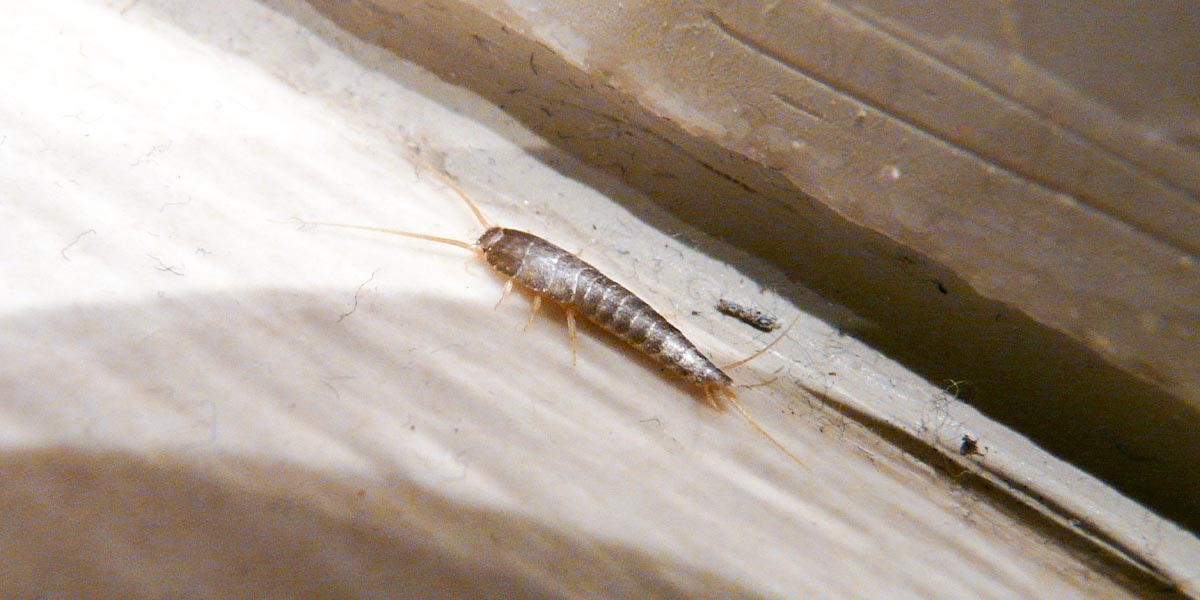
Silverfish have a slender, spindle-shaped body divided into segments, giving it a ribbed or “ringed” appearance. The characteristic shine, which is strongest and most noticeable in silverfish, comes from the countless microscopic scales covering the entire body. Two long antennae on the head constantly probe the surroundings. Three filaments at the rear end help the nocturnal insect to detect even the finest vibrations and air movements and to navigate safely without light and in narrow crevices. As the silverfish moves in small jerks or waves, the rear antennae sway slightly.
Special features
All silverfish reproduce through indirect mating. The process begins with a small courtship dance in which the male and female touch only with their antennae. Then the male lays a so-called spermatophore, a tiny packet of sperm, on the ground or attaches it to a filament. The female takes in this packet and is thus fertilized without further body contact. It lays the eggs in protected places, such as cracks and crevices, under baseboards, or in inter-floor spaces.
Silverfish eggs are very small, oval, and initially almost transparent, making them difficult to detect with the naked eye. Under optimal conditions, which depend on the needs of the respective silverfish species, the young hatch after about two to eight weeks. They already look like adult silverfish, but are initially colorless and only develop the species-typical, often shiny scales after several molts. Silverfish molt throughout their lives, even as adults. A trait that insects have otherwise lost. Overall, they reproduce relatively slowly. A larger infestation has therefore often existed for years and indicates permanently ideal living conditions for the respective silverfish species.
Silverfish: Occurrence in Germany
In Germany, various silverfish species occur, each with different preferences depending on the environment. Here is an overview of the species native to Germany:

Silverfish
Silverfish (Lepisma saccharina) are the best-known representatives of the silverfish. They love damp and warm environments such as bathrooms or kitchens. Silverfish do not cause direct damage, but are considered indicators of building damage associated with moisture and potential mold growth. Although they are not directly dangerous to humans, many people find their presence disturbing and unhygienic.

Paperfish
Paperfish (Ctenolepisma longicaudatum) are a feared silverfish species because they can cause considerable damage to books, documents, pictures, and cardboard, among other things. They prefer warm, dry environments and feel particularly comfortable at 20–30°C and around 50% relative humidity. Especially in archives, museums, and collections, they pose a serious threat. However, they can also cause serious problems in private households if they damage books, papers, and wallpaper, nibble on textiles, or settle in furniture crevices, storage rooms, and beds.

Firefish
Firefish (Thermobia domestica) prefer high temperatures and therefore like to live in areas that are constantly warm, such as boiler rooms or bakeries. When they occur as pests in bakeries, they can cause both hygienic and economic damage.
Comb silverfish
Comb silverfish (Ctenolepisma lineata) are less widespread in Germany. Like other silverfish, they feed mainly on cellulose- and starch-containing materials such as paper and cardboard, organic binders and adhesives, as well as dust, skin flakes, and other organic particles found in every household. Comb silverfish are very robust and survive even in less favorable environments.
Ghost silverfish
Ghost silverfish (Ctenolepisma calva) have so far only been found occasionally in Germany. However, they are increasingly being introduced through imported goods and may soon become one of the native silverfish species. The translucent, only faintly shiny ghost silverfish are slightly larger than other silverfish species, prefer dry, warm rooms, and can live up to 7 years.
You can find a tabular overview of silverfish species here.
Pests or not: Please keep silverfish out of your home
Even though silverfish are not directly harmful to human health, no one wants them in their home. They leave behind droppings and molted remains. In addition, paperfish or ghost silverfish can cause considerable damage to books, textiles, and wallpaper. Moisture-loving silverfish also frequently indicate moisture and mold problems, which must also be addressed to prevent health hazards and permanent damage to the building structure.

Reliable repelling
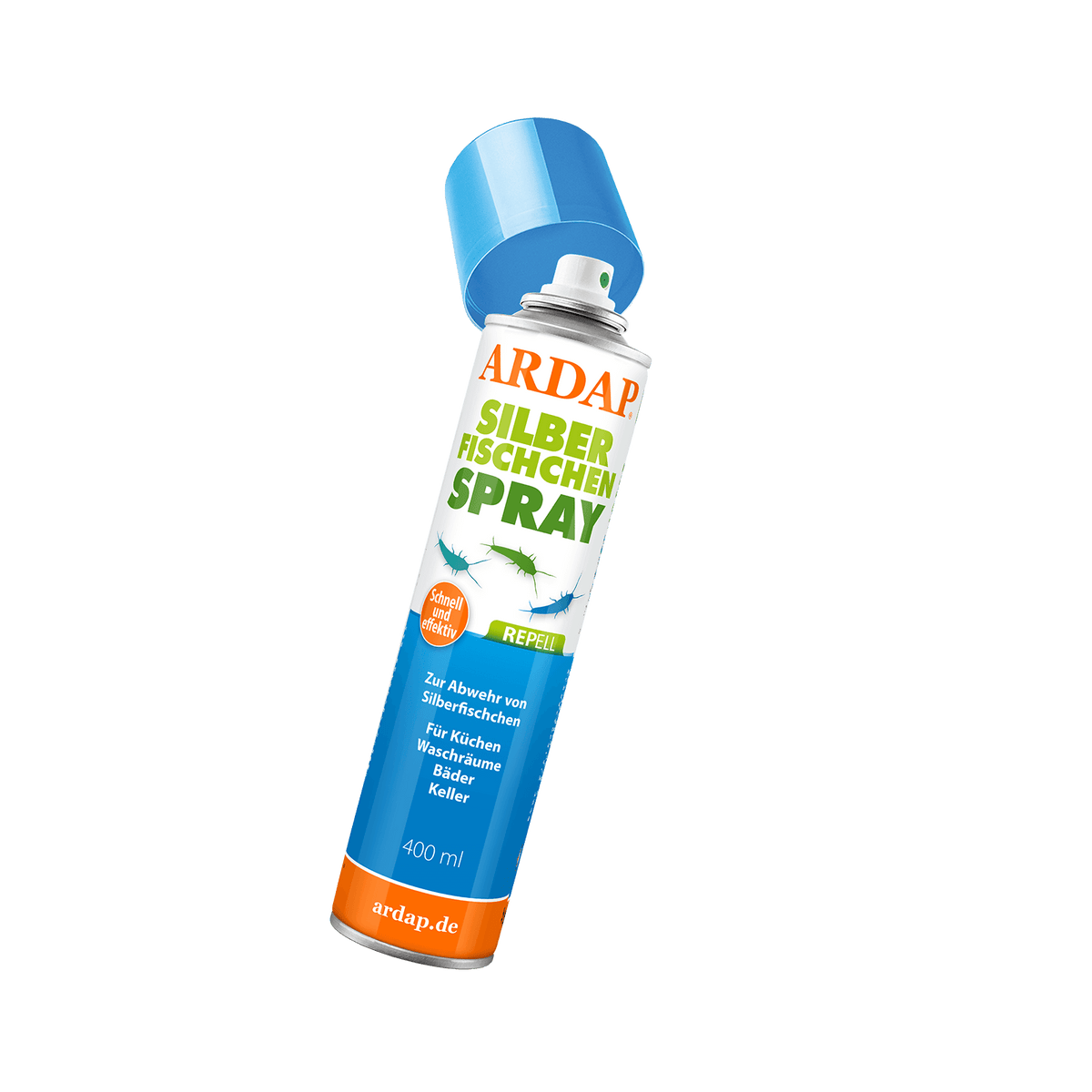
With the ARDAP Repell Silverfish Spray, you can repel various silverfish species and keep them away specifically. The spray works quickly, is easy to use, and is also ideal for the kitchen, bathroom, and living areas. The active ingredient pyrethrum from chrysanthemums deters the silverfish.
Effective pest control
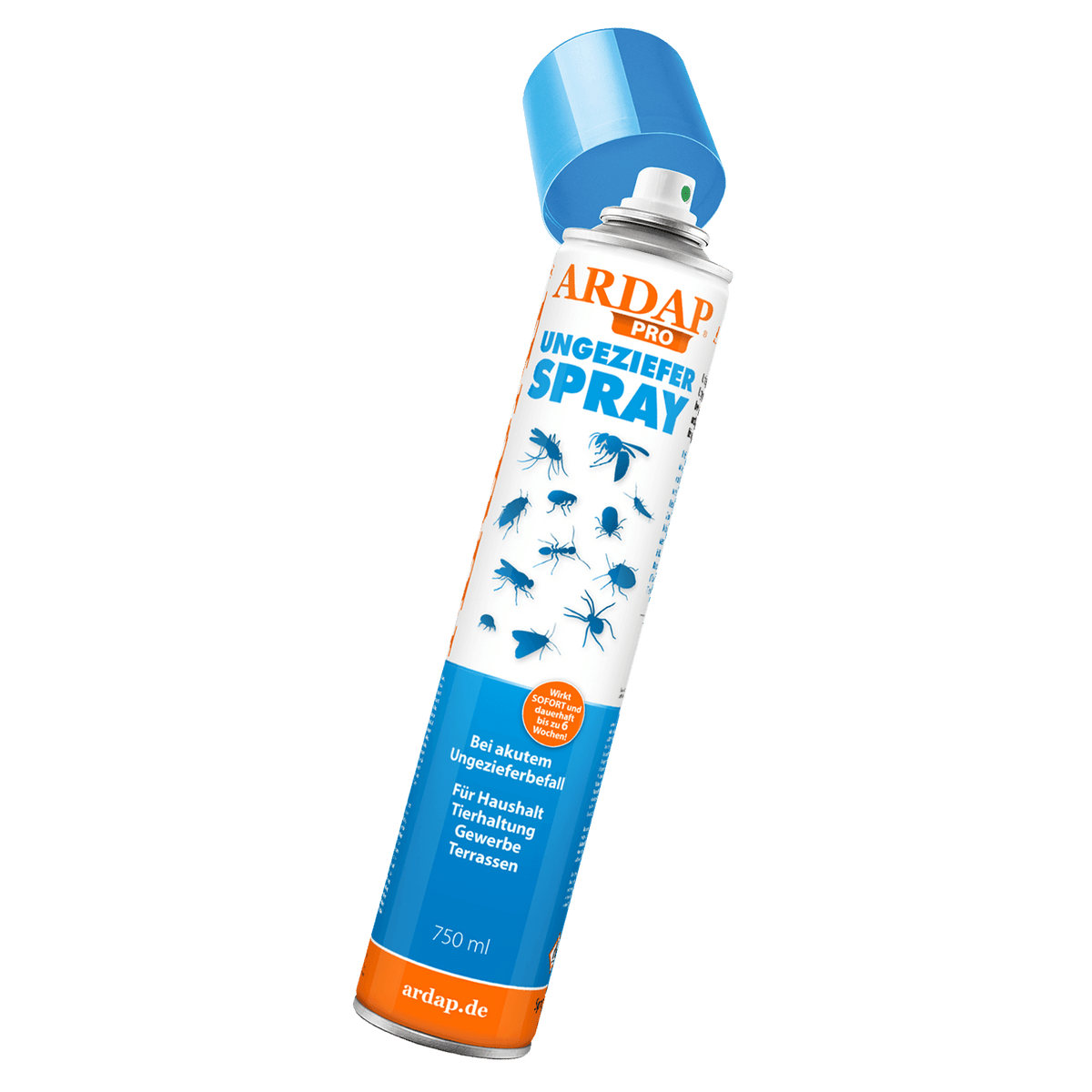
In the event of an infestation, the highly effective products from the ARDAP Pro product line come into play, which serve the targeted long-term control of the various silverfish.

Very attractive to silverfish
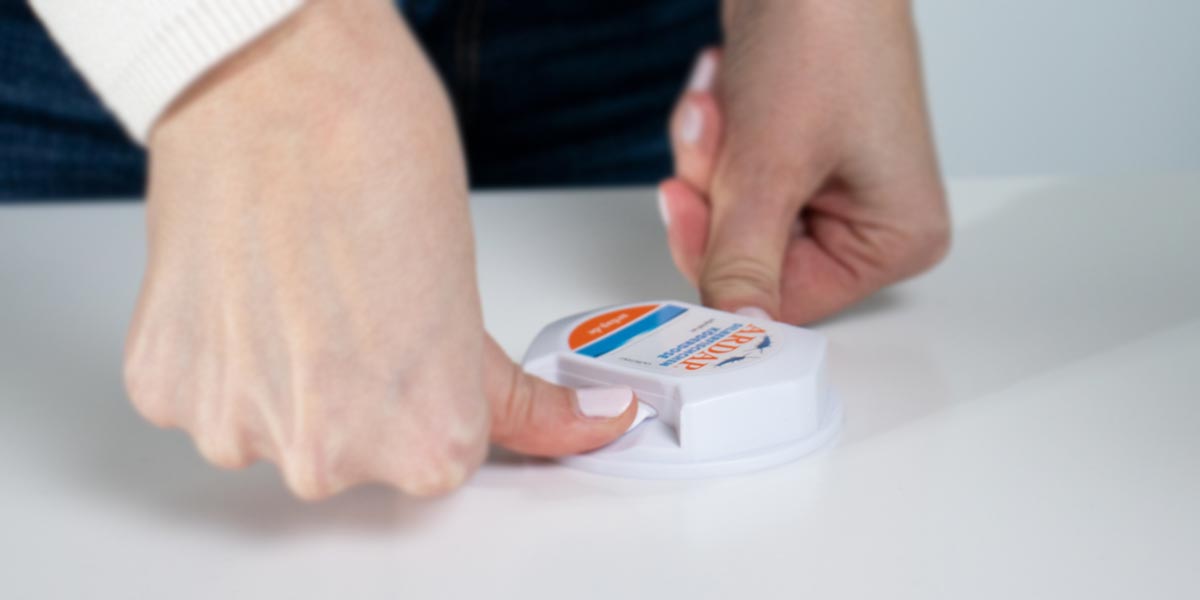
Although silverfish, unlike ants for example, do not live in colonies or nests, they also communicate with each other via pheromones even without an organized social structure. This promotes the aggregation of many individuals of the same species, especially in places with ideal moisture conditions and a good food supply. Special bait tubs therefore offer a good way to reach larger quantities of the insects even in their hard-to-reach hiding places. Thus, the ARDAP Pro Silverfish Bait Tub specifically attracts silverfish and also cockroaches, which take in the innovative feeding bait, carry it into their hiding places, and are then killed by the active ingredients contained within. The moisture-resistant bait tub is particularly practical for use in kitchens, bathrooms, living rooms, and basement rooms, where a clean application is important. The long-term effect of up to 3 months helps to reach the entire population and get rid of all pests. Thus, the ARDAP Pro Silverfish Bait Tub enables efficient control even in larger areas or with scattered populations.

Efficient solution for entire rooms
A so-called fogger mists an entire room at the touch of a button. With the ARDAP Pro Fogger, you have a highly effective product at hand with which you can control not only silverfish, paperfish, and the like, but also cockroaches, ticks, fleas, mites, lice, moths, and other vermin. In addition to the active ingredient permethrin, pyriproxyfen is also used here, which also serves as a growth inhibitor that controls silverfish at all stages. The long-term effect of up to 6 months is ideal for the comprehensive control of silverfish and other pests and prevents them from settling and spreading again. The fogger is suitable for both domestic and commercial areas and can also be used in animal husbandry.

Targeted and precise
An insect spray can be used particularly precisely and can therefore also be used to supplement other products such as a bait tub or fogger. The ARDAP Pro Household Pest Spray as well as the ARDAP Pro Long-Term Flea Spray control silverfish and other pests very specifically in hard-to-reach crevices, joints, baseboards, or wallpaper. Both products work long-term, while the long-term flea spray offers a broad spectrum of activity and a long-term effect of up to 6 months. By specifically spraying infested or at-risk areas (e.g., baseboards, floor joints), you reach and eliminate even well-hidden populations.