With the support of the experienced specialist doctor and parasitologist Prof. Dr. med. vet. Norbert Mencke, we offer you practical advice and proven product recommendations for the prevention and control of pests.
- What exactly are silverfish?
- Firebrats – the bakery pest
- Damage caused by firebrats
- Infestations in businesses must be controlled
- Conclusion

What exactly are silverfish?
Silverfish belong to the insect family Lepismatidae, which has remained largely unchanged for over 300 million years. They are wingless, light-averse, and prefer damp and warm environments. Well-known species include:
Common silverfish (Lepisma saccharina): especially in damp household rooms such as bathrooms or basements; they need at least 75% relative humidity to reproduce.
Paperfish (Ctenolepisma longicaudata): tolerates dryness and cooler temperatures; particularly likes to eat cellulose and starchy substances such as bookbinding glue, photo coatings, or wallpaper paste; a serious material pest when infested, e.g. in museums and libraries.
Comb silverfish (Ctenolepisma lineata): rarer than paperfish or common silverfish and also less studied.
Ghost silverfish (Ctenolepisma calva): exotic, translucent appearance; comes from warmer countries; is increasingly reaching Germany, mainly through international trade.
Firebrats (Thermobia domestica): resemble common silverfish. However, they are significantly better adapted to high temperatures and dry environments than their smaller, silvery relatives. Due to their preference for warm to hot areas, the firebrat has also earned its reputation as a bakery pest.

Firebrats – the bakery pest
Firebrats prefer to stay in areas that are consistently very warm (30-50 °C) and dry, such as bakeries, boiler rooms, and storage rooms. Because they feed mainly on starchy materials such as flour or paper, they not only pose a hygiene problem in bakeries but can also cause economic damage.
Since the small insects do not need much food and can fit into even tiny cracks and crevices, it is almost impossible to keep a bakery or similar production facility clean enough through cleaning alone so that no carbohydrate-rich residues such as flour or sugar residues can be found that serve as a food source for firebrats.

Innovative bait gel with a strong attractant effect
Reliably controls silverfish, paperfish, and firebrats
Works quickly and for up to 3 months
To the productAppearance and special features
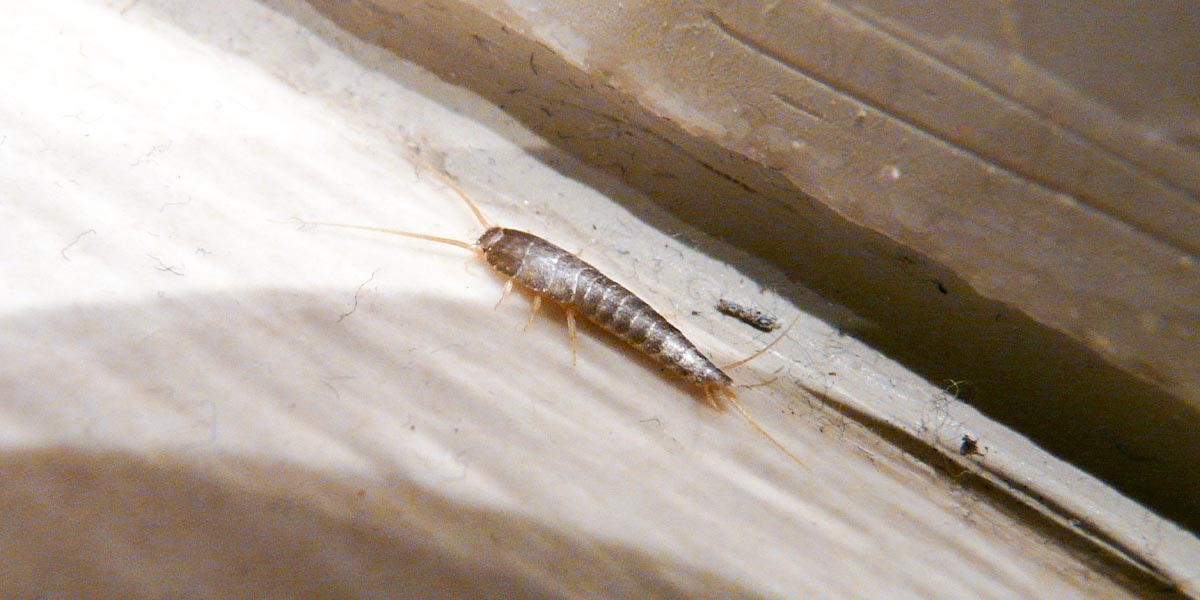
Firebrats have an elongated, scale-covered body, whose basic color is yellowish with black spots. They reach a length of about 10–13 mm without antennae. Each silverfish has two long feelers at the head end, which are about twice as long as the body. At the rear end, there are three tail filaments the length of the body with a serrated appearance. With these antennae, it feels its surroundings, perceives air and component vibrations very precisely, stays balanced while running and turning quickly, and can move and orient itself excellently even in complete darkness and narrow cracks and crevices.
Under ideal conditions, a firebrat can live to be three years old, which is not long compared to other silverfish species. For comparison: Common silverfish have a life expectancy of up to 6 years, ghost silverfish even up to 7 years, if they feel completely comfortable in their environment in terms of temperature, humidity, and food supply.

Like other silverfish, firebrats do not reproduce through direct, but through indirect mating. This transmission process, which largely avoids body contact, is typical for many prehistoric or primitive insect species. The mating dance of the silverfish is a fascinating, multi-stage process that combines chemical, tactile, and visual signals. First, the male releases attractants (pheromones) to attract a female. Without these chemical signals, it would be difficult for the little creatures, which prefer to stay in the dark and also do not build nests, to find mating partners at all.
As soon as a female is nearby, the male silverfish begins a dancing movement pattern. It moves back and forth or in circles and uses its long feelers to touch the female and check her readiness to mate. In addition, the male spins a fine sperm thread (spermatophore), which it lays down and can attach quite well to smooth surfaces, and gently pushes the female close to this seed packet while dancing. If the female takes up the spermatophore, fertilization becomes possible. After mating, the partners separate again. Later, the female silverfish lays the fertilized eggs in protected, warm places, from which tiny larvae hatch.
Occurrence and distribution
Firebrats originally come from tropical regions, but have spread worldwide. They are particularly found in bakeries, storage rooms, and other hot areas. An infestation often occurs through introduction via cardboard boxes or other materials. Compared to other insects, silverfish reproduce rather slowly. Since they also do not bite or suck blood or spread pathogens, a firebrat infestation is not a suddenly breaking out plague, as this can be the case with fleas, for example. However, since they pose a danger to businesses as hygiene pests, their appearance should call for quick action.
Lifestyle and diet
Firebrats are nocturnal, light-averse and, like all silverfish, very nimble and agile runners. At up to 3 m per second, the little prehistoric insects are so fast that it is almost impossible to watch them for long or catch them. They cannot fly or jump, but if necessary, they can also effortlessly run along the wall or ceiling.

On the firebrat's menu are starch- and sugar-containing substances such as flour, sugar residues, adhesives, coatings, organic binders, or also textiles. They can directly convert cellulose into sugar with a special digestive enzyme and therefore also eat paper and cardboard. In an emergency, they can also manage without food for months.
A firebrat can live up to three years old under favorable conditions. Female animals lay approximately 100 to 150 eggs during their lifetime – a comparatively slow reproduction rate for an insect. Depending on the temperature, it takes between 12 and 60 days until the baby silverfish hatches from the egg. No metamorphosis takes place in silverfish, i.e. the larva and imago of the insects look the same, making the identification of the developmental stages almost impossible.
The development of the offspring occurs fastest at temperatures between 32 and 41 °C. Therefore, firebrats can reproduce considerably faster in warm and damp environments such as bakeries, so that the population can increase sharply without effective countermeasures.
In a bakery, the environmental conditions for firebrats (Thermobia domestica) are almost ideal, which significantly accelerates their reproduction. The development time from egg to sexually mature animal takes only around 3 to 4 months (up to 12 months in cooler environments). In addition, a bakery often has a high humidity of 70% or more due to the baking processes, which favors the survival of the eggs and young animals.
Damage caused by firebrats
Firebrats cause material damage to food, packaging, and documents. In sensitive areas such as bakeries and other food production facilities, they can therefore pose a hygiene problem. In addition, the feeding damage caused by silverfish on starchy materials and packaging sometimes also causes economic losses in acute, severe infestations.
In libraries, archives, or museums, firebrats can also endanger the collections, but here paperfish, which prefer it cooler, are more frequently found and more feared.

Works quickly and effectively
For the prevention of common and firebrats
For kitchens, washrooms, bathrooms, basements
To the productInfestations in businesses must be controlled
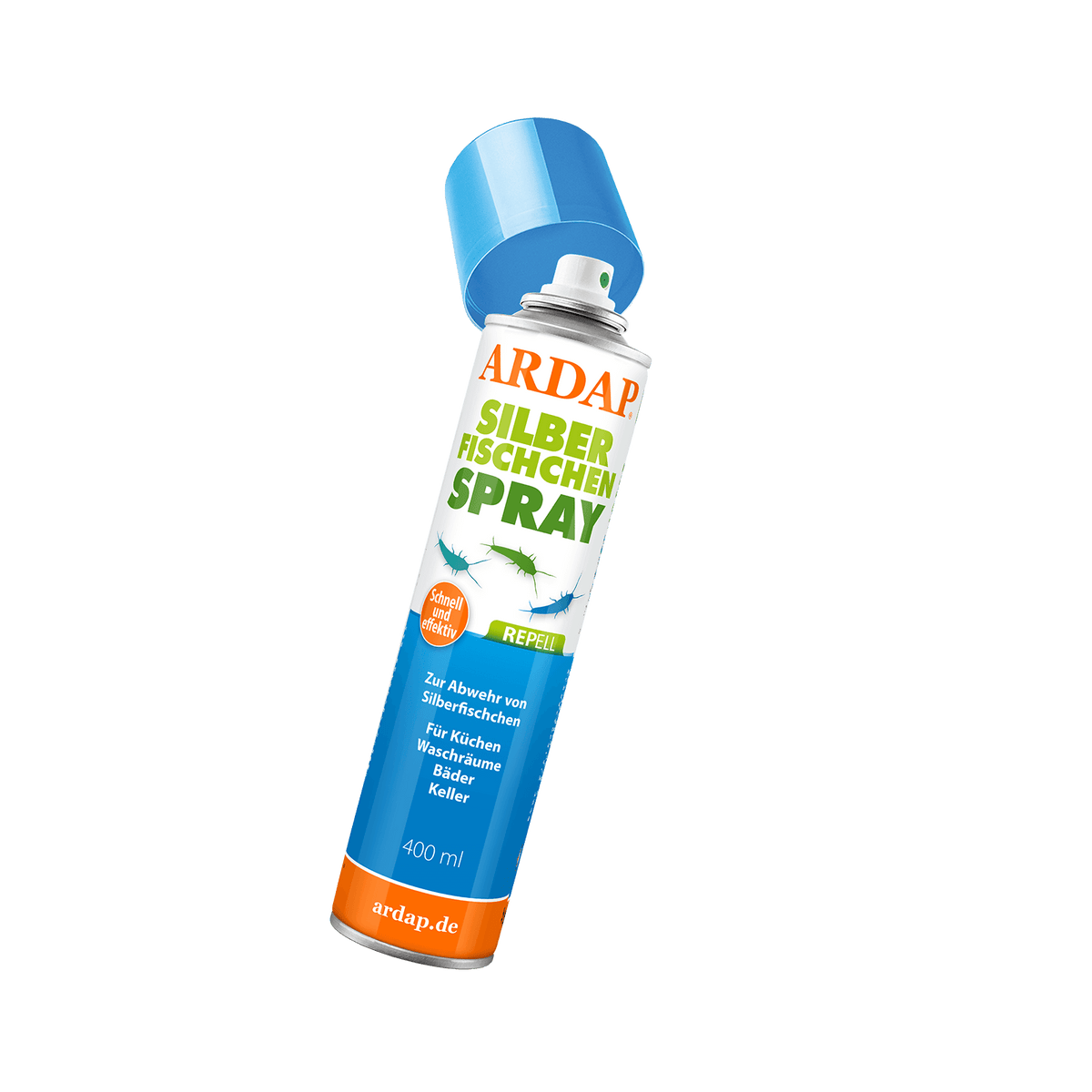
A few firebrats in the home are usually no problem. Here, firebrats can be quickly and effectively repelled with the help of the ARDAP Repell Silverfish Sprays. You probably won't even notice the tiny roommates. However, an acute infestation with firebrats in a business should be controlled immediately. Targeted measures can be carried out by you yourself with the help of the ARDAP Pro products.

Feeding bait
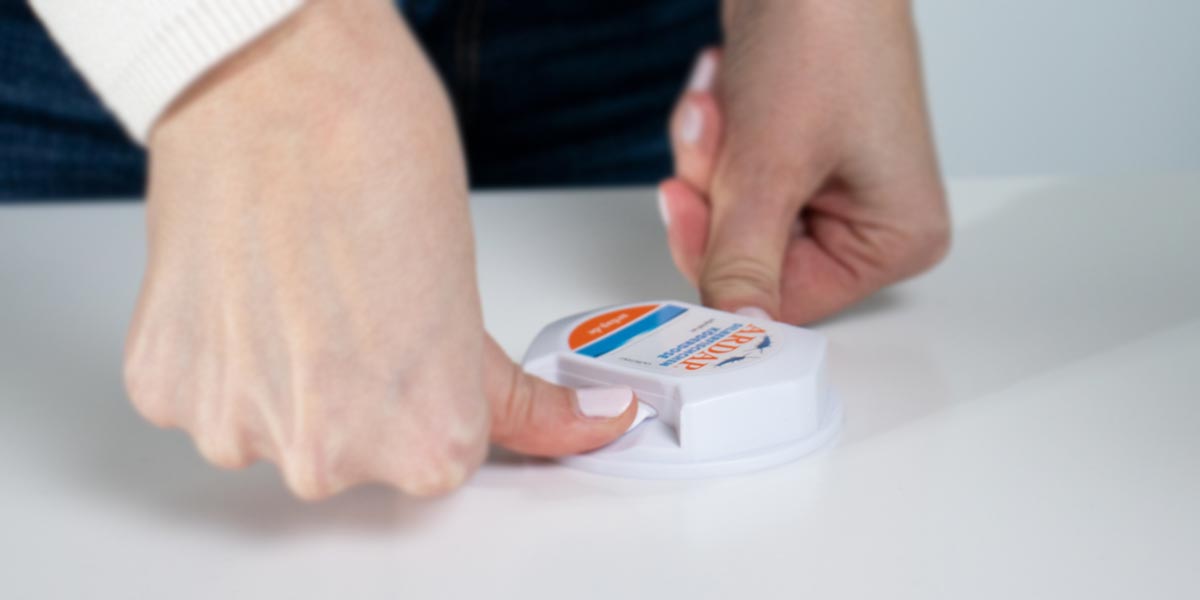
Bait tins for insects generally enable targeted control of pests without much effort. The ARDAP Pro Silverfish Bait Tin is a very efficient solution for the reliable control of firebrats and other silverfish as well as woodlice. Thanks to the strong attractant effect of the innovative bait, the insects run into the tin, take up the gel, carry it into their hiding place, and die shortly thereafter.
Unlike eusocial insects such as ants, which live in colonies and pass poison from bait tins into the nest, firebrats do not live in social groups and do not build nests. Instead, they communicate via pheromones, which can also lead to gatherings, so-called aggregations. In these groups, there is the possibility that other conspecifics are also killed by contact with the bait.
The application of the moisture-resistant bait tin is ideal for areas such as bakeries and kitchens as well as bathrooms, toilets, washrooms, storage rooms, or basements. The bait works quickly and with a long-term effect of up to three months.

Insecticide foggers
An insecticide fogger fogs the entire room at the push of a button. The ARDAP Pro Fogger is a highly effective remedy with which you can reliably control not only firebrats but also common and paperfish as well as woodlice and numerous other pests (fleas, ticks, mites, moths, spiders). With its versatility, it is ideal for use in domestic and commercial areas.
Thanks to the long-term effect of up to six months, the ARDAP Pro Fogger ensures long-term pest control in all developmental stages, even with large populations.

Pest sprays
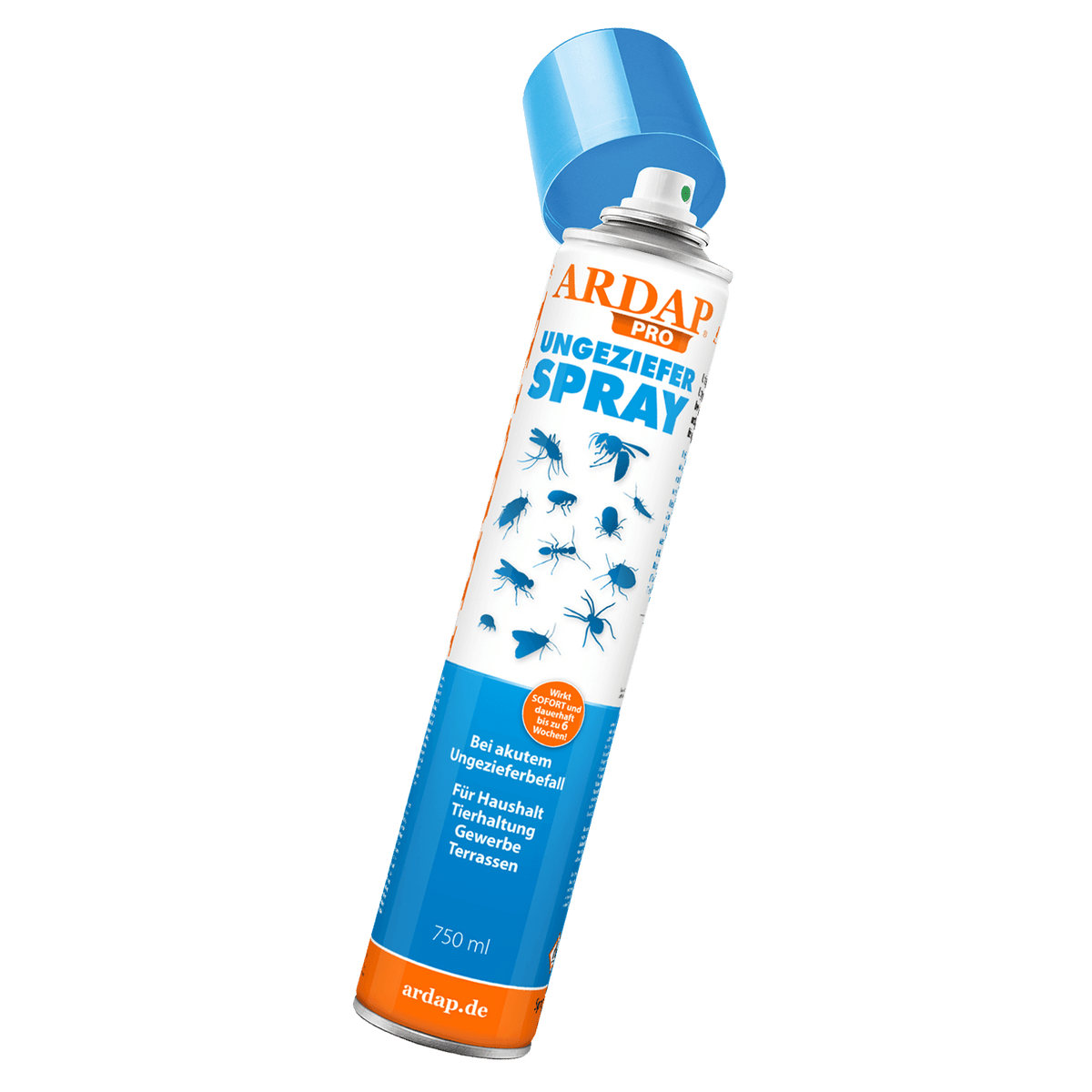
A spray offers a practical and efficient solution for pest control and stock control in living or working areas. The ARDAP Pro Pest Spray enables precise application, especially in hard-to-reach areas such as behind baseboards and on wallpaper, in floor cracks and joints, as well as along the baseboards. This makes this versatile insect spray equally excellent for controlling firebrats as well as common silverfish, paperfish, woodlice, as well as other unwanted insects and arachnids. In addition, by targeted spraying of popular hiding places with the ARDAP Pro Long-Term Flea Spray, pest control with a long-term effect of up to six months can be enabled. This reliably eliminates all developmental stages such as eggs and larvae of the silverfish.
Conclusion
Firebrats are yellowish-white, scale-covered insects with a body length of about 10 to 12 millimeters. They have long, thread-like antennae and three tail filaments at the rear end of the body. Their appearance resembles small, mobile silverfish, hence their name.
The insects prefer to feed on starchy and sugary materials. These include flour, paper, glue, and textiles. They also nibble on books, cardboard boxes, and food. Firebrats are also called "bakery pests" because they feel particularly comfortable in very warm environments, reproduce quickly, and can thus also pose a hygiene hazard there. This is therefore particularly critical for commercial businesses. With products from ARDAP Pro, you can control firebrats quickly and efficiently and specifically prevent the spread of infestation.