Together with our expert Prof. Dr. med. vet. Norbert Mencke, specialist veterinarian for parasitology, we are providing you with valuable tips for dealing with ticks on your pet.
- Taking quick action when ticks are found
- Removing ticks after they have attached
- The tick has been removed—now what?
Taking quick action when ticks are found
You want to remove ticks but don't know what to look out for? First of all, ideally, you should not let a tick go unnoticed on your pet's body. Even though that is easier said than done. It is important that, unless you have taken preventive measures with repellents, you check your dog, for example, immediately after every walk for ticks. Because the sooner the tick is removed, the lower the risk of the transmission of pathogens .

Actively searching for ticks: How do you know if you have a tick?
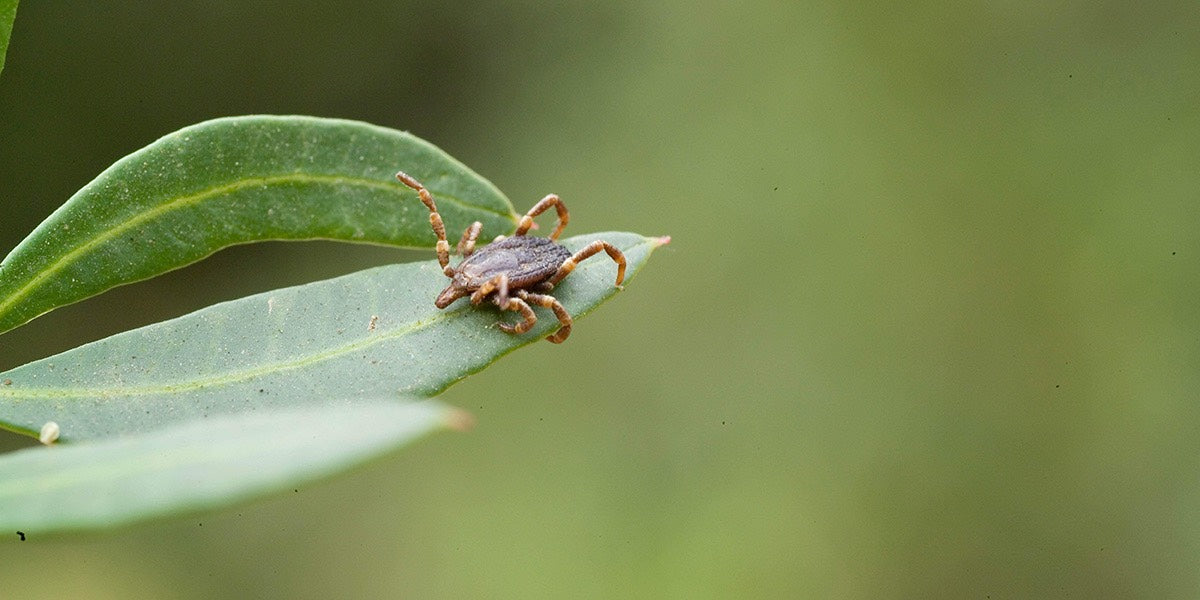
Ticks require a blood meal in all three developmental stages to develop. This means that larvae, nymphs and adults can all infest us and our pets. Larvae, in particular, are very small and therefore barely visible to the naked eye. Therefore, it may not be so easy to find out whether your pet has a tick and whether action is needed. In any case, it is advisable to check the body after a walk through meadows and forests and to make sure that your pet has not brought any of the parasites home with it. Search above all in well-vascularised areas with thin skin, such as the head, neck, shoulders and the armpit area. Ticks particularly like to attach themselves here.
Tick bite or tick sting?
Are you wondering whether ticks sting or bite? In fact, these parasites sting. With their mouthparts, ticks cut through the skin and create an opening for their proboscis. The term tick bite is therefore only used colloquially.
Can you wash ticks off?
If the tick has already attached itself, showering is not enough. If you discover a tick, therefore use a reliable tool such as the ARDAP tick hook or the ARDAP tick forceps to remove parasites reliably and, above all, safely from the skin.


Why should a tick be removed as quickly as possible?
Parasites can transmit pathogens such as the pathogen of Lyme borreliosis (also known as tick-borne borreliosis or tick-borne encephalitis (TBE). The longer the tick remains attached and takes its blood meal, the higher the risk that pathogens will be passed on to the host animal. In the worst case, a parasite infestation can lead to serious illnesses, such as meningitis. Therefore, if you do have a tick infestation, it is crucial that you act quickly.
Removing ticks after they have attached

Home remedies? Definitely not!
You will repeatedly read that ticks can be killed and removed, for example, by applying essential oils or alcohol. You should definitely avoid this. If ticks have already attached themselves to the skin, they can be removed with tick forceps or a tick hook. When oils or alcohol are used, the tick may release saliva and ingested blood into the wound in its death throes, thereby transmitting more pathogens.

Thorough removal with a tick hook and tick tweezers
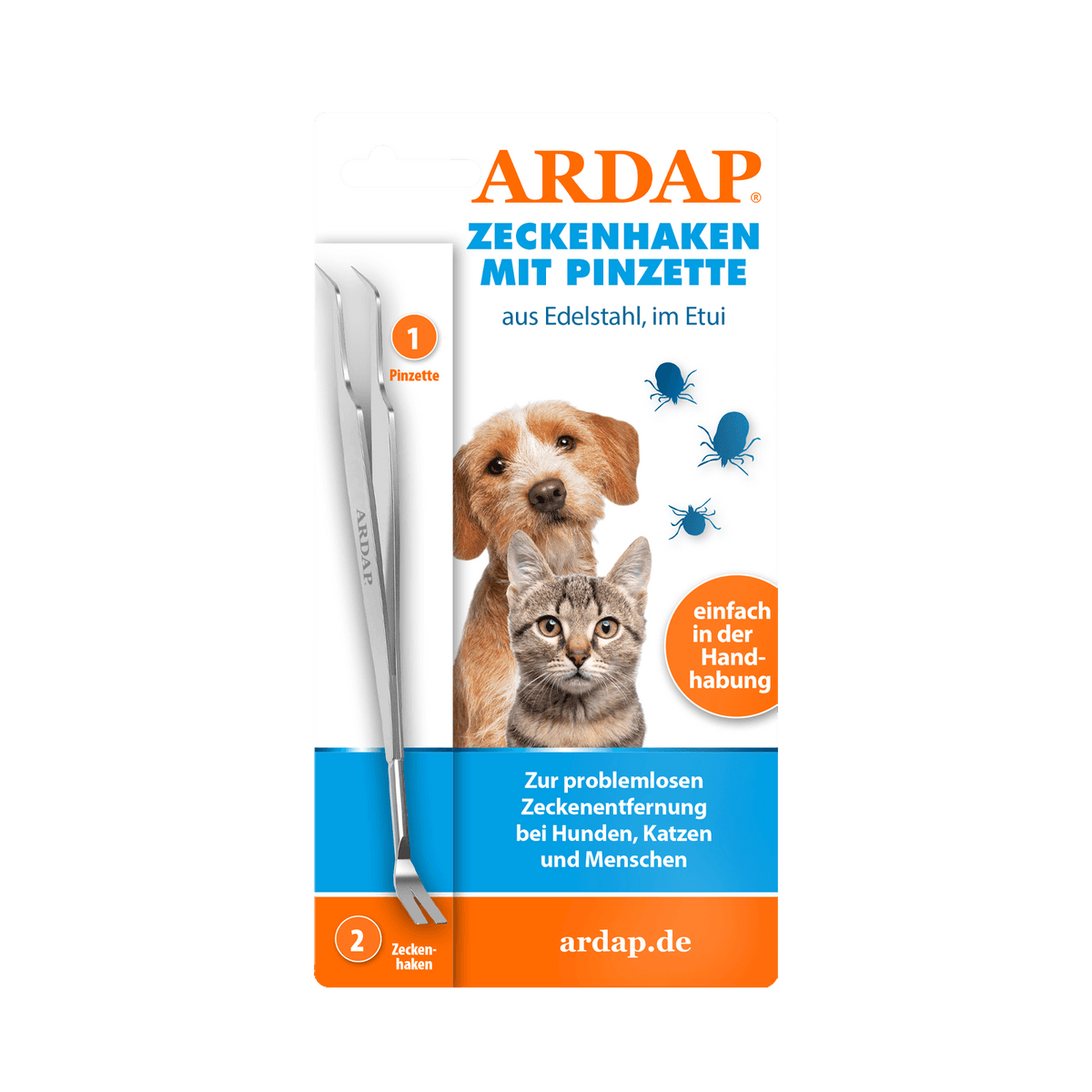
Several options are available for the effortless and thorough removal of ticks. You can use a tick hook or tick forceps with tweezers to remove the parasite specifically and gently from the skin. These are proven methods with a high level of safety. The ARDAP tick hook 3-piece set is suitable for removing ticks of any size. Easy and safe handling is the main focus here. You can even attach the hook to a keyring or dog leash and thus always have it with you when you are out and about. Simply slide the tip of the tool over the skin and under the tick. It is enough to lift the hook slightly to release the parasite from the skin. The ARDAP tick forceps with tweezers is particularly practical due to its 2-in-1 dual function. The sturdy stainless steel tick forceps thoroughly and completely pries out larger ticks, while the tweezers at the other end of the tool safely and reliably remove even the smallest ticks, but also foreign bodies such as thorns and splinters.
The correct technique: Pull or twist?
You may wonder whether you should pull the tick out or twist it out like a screw. Avoid twisting movements when removing ticks. This only increases the risk of crushing the parasite. And this increases the risk of pathogens entering the wound. You should therefore apply as little pressure as possible to the tick. It is better to pull the tick evenly away from the skin with a straight and smooth movement. However, do not pull too quickly and make sure that the parasite releases itself at the same time. This prevents, for example, the tick's mouthparts or its "head" from remaining in the skin.
What to do if the tick's head remains in the skin?
We colloquially refer to the front part of the parasite with the mouthparts as the tick's head. With this, the tick can cut through the skin of its host. To take its blood meal, which can last for days, the tick firmly anchors itself in the skin with a cement-like substance (also called cementum). Therefore, it occasionally happens during tick removal that exactly this mouthpart remains in the wound. But does this pose a danger? Usually not. Often you do not need to do anything else, because the body eventually rejects the tick's piercing apparatus on its own as a foreign body. The important thing is that you remove the tick at all.

The tick has been removed—now what?
You have removed the tick and want to know what happens next. We have put together some tips for you on how to properly dispose of the parasites and how to correctly care for the puncture site on your pet.
Properly disposing of the tick
You can roll the parasite up in paper and then, for example, crush it with a hard object. It is also possible to use 40% alcohol.
You can also send your find to the Robert Koch Institute. This not only allows new tick species to be discovered, but the RKI also examines all ticks sent in for pathogens and documents the locations where they were found, in order to always make the most accurate statements possible about the risk areas. To do this, fix the parasite to a sheet of paper with transparent adhesive tape and send it in a sealed envelope to:
Robert Koch Institute
ZBS 1 – "Zecke"
Seestraße 10
13353 Berlin
You should not flush the tick down the toilet or wash it down the sink. Because the parasites can easily survive in water for a long time and prove to be very resistant here.
Disinfect the puncture site and monitor it closely
After removing the tick, it is always a good idea to disinfect the puncture site. Afterwards, a skin care spray is recommended, which is specially adapted to the needs of your dog or cat, such as the Canosept Skin Care Spray for dogs or the Felisept Skin Care Spray for cats. With this measure, you support the regeneration of the skin after a pest infestation in a caring way.
In the next few days, you should continue to monitor the affected area. If possible redness does not recede, a consultation with a veterinarian may be necessary. You should also definitely visit the practice with your pet in case of symptoms of illness such as pain or fever.

Products for preventive use on the animal
Prevention is better than cure. You want to prevent a tick from attaching itself to your pet in the first place? Then you should opt for effective repellents with the active ingredient pyrethrum from the chrysanthemum flower. We present you with a selection of highly effective repellent products:
- ARDAP Spot-On for cats and ARDAP Spot-On for dogs: This is a highly effective product for external use. The liquid is dripped onto the animal's neck and then spreads over the entire body via the skin's oil film. One package contains three tubes, each providing protection for up to four weeks.
- ARDAP Tick collar for cats and ARDAP Tick collar for dogs: Simply put the collar on and your pet will benefit from repellent protection for up to four months.
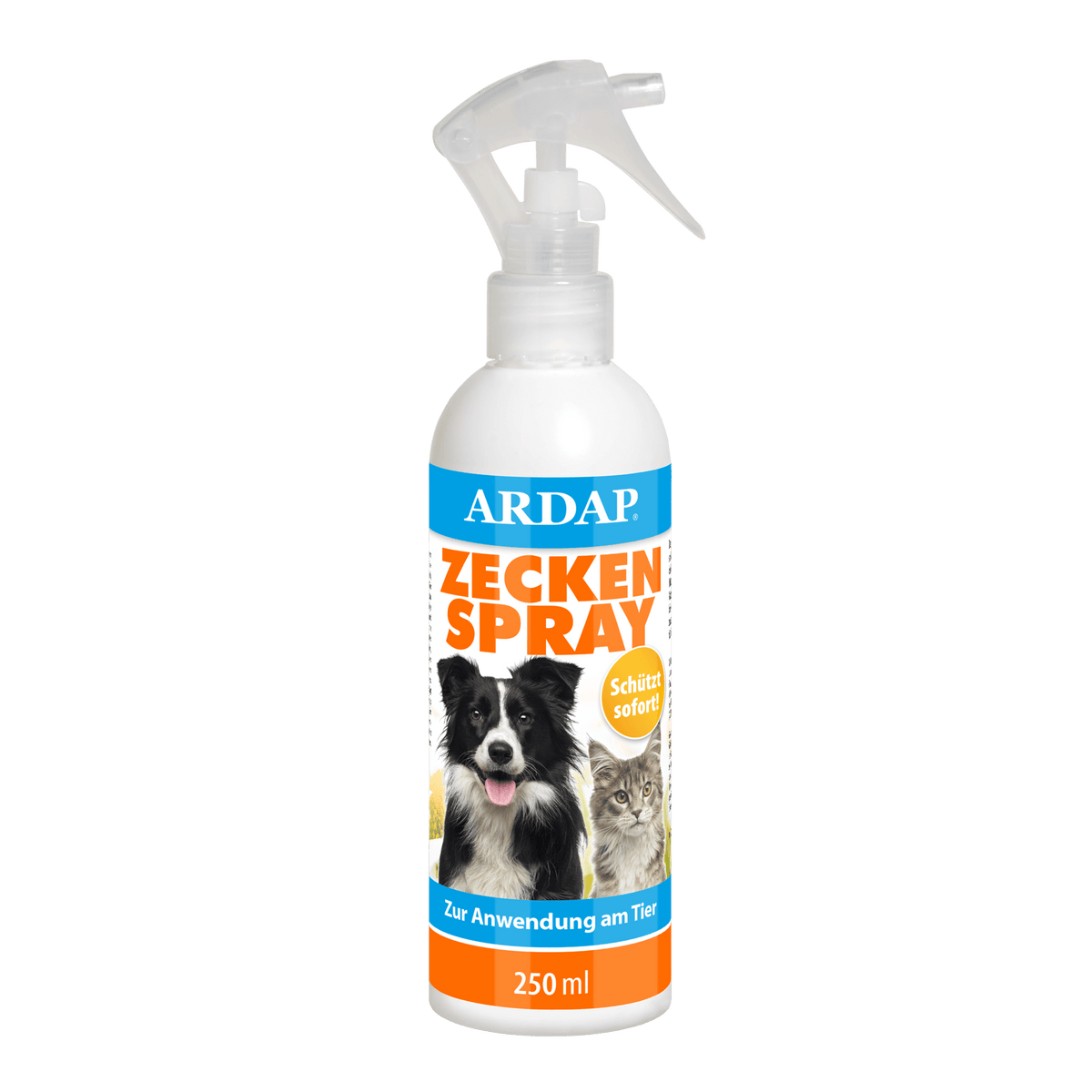
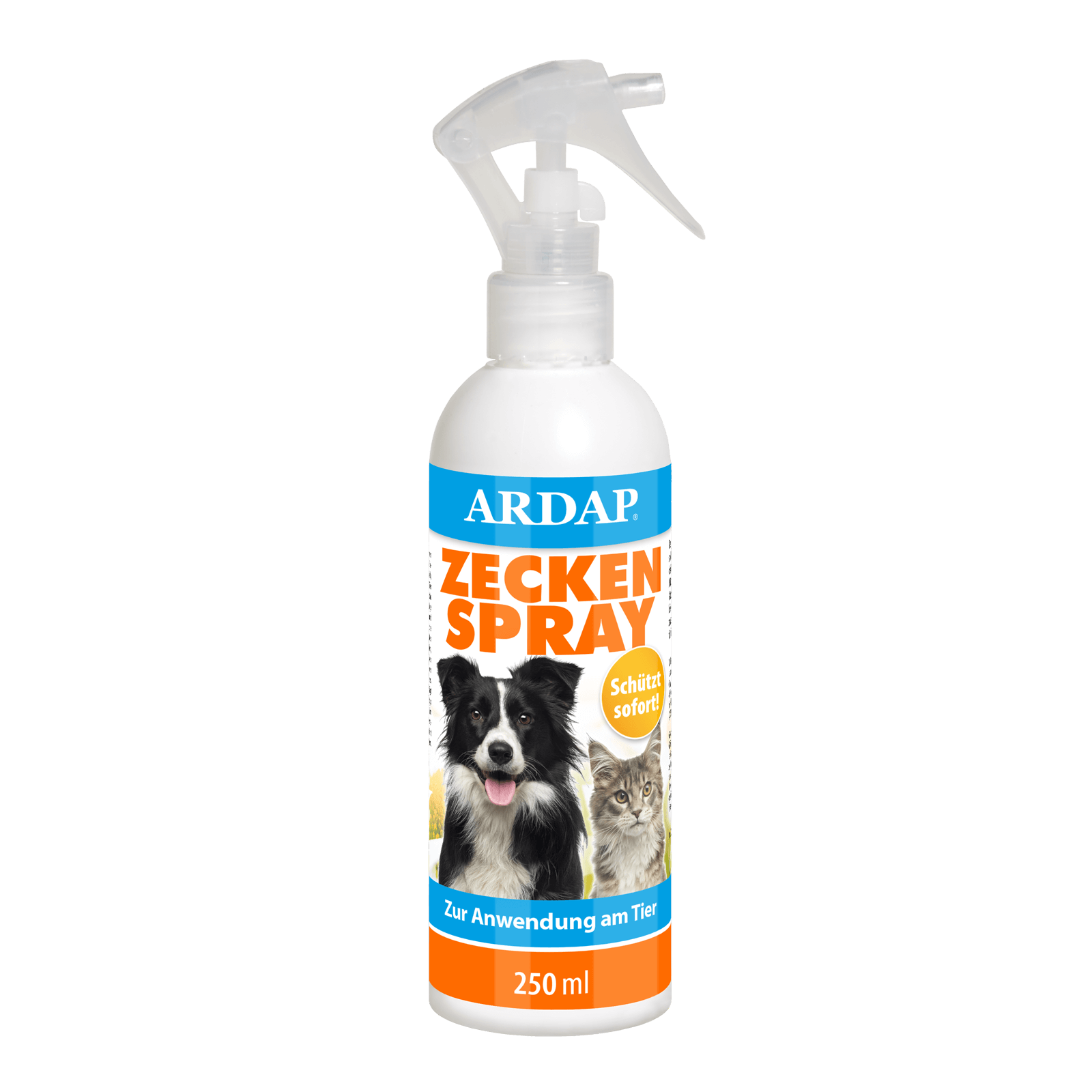
- ARDAP Tick spray: With this, you can quickly spray your dog or your cat additionally and get long-lasting protection for up to four weeks. This is useful as a complementary measure, for example, before a walk in the woods. Spray specifically the popular bite areas such as the neck, inner thighs or the base of the tail.
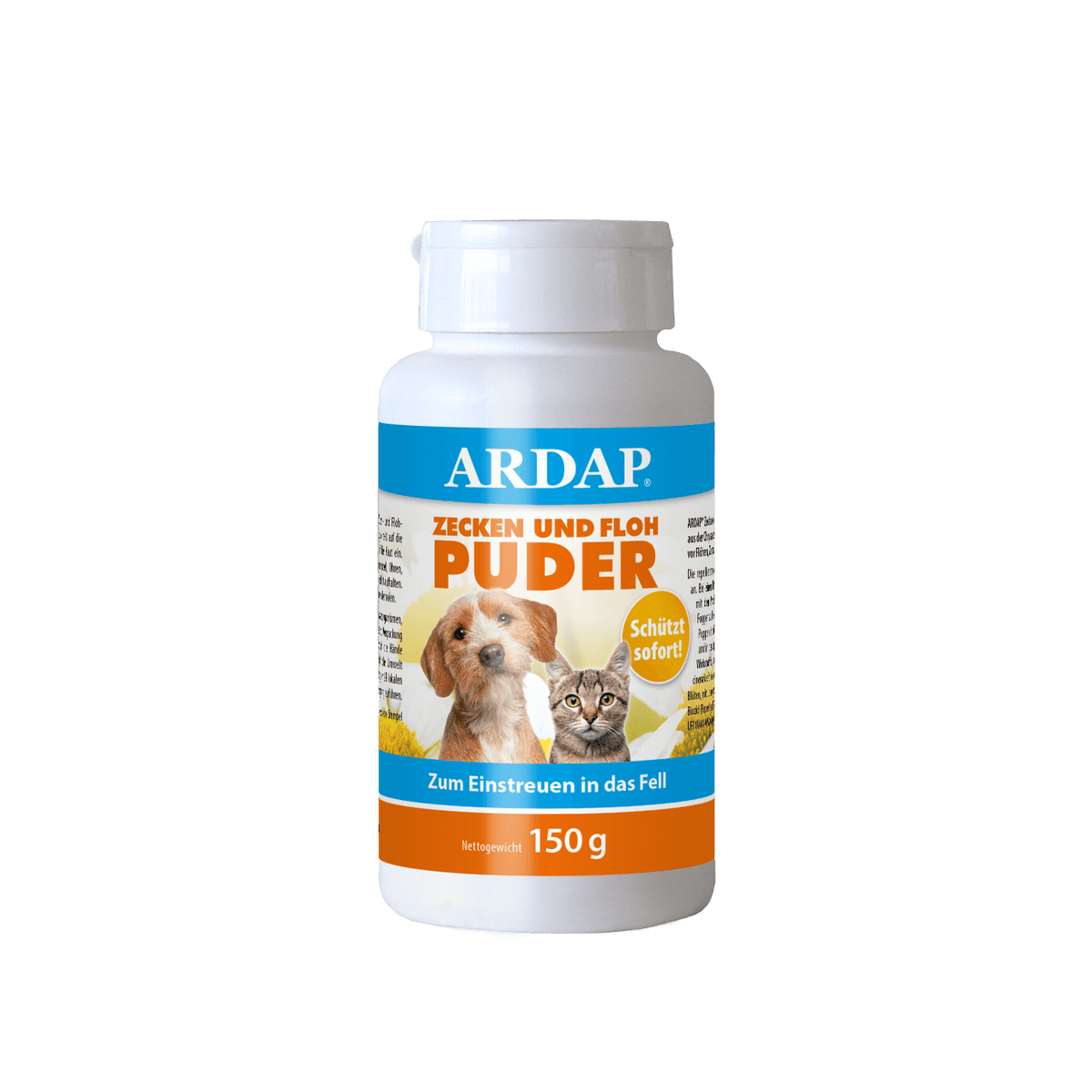
- ARDAP Tick powder for dogs and cats: This product is designed to be sprinkled into the fur and is therefore ideal for all animals that do not like the sound of spraying. Just like the spray, the powder can be used ideally for additional protection in popular bite areas.
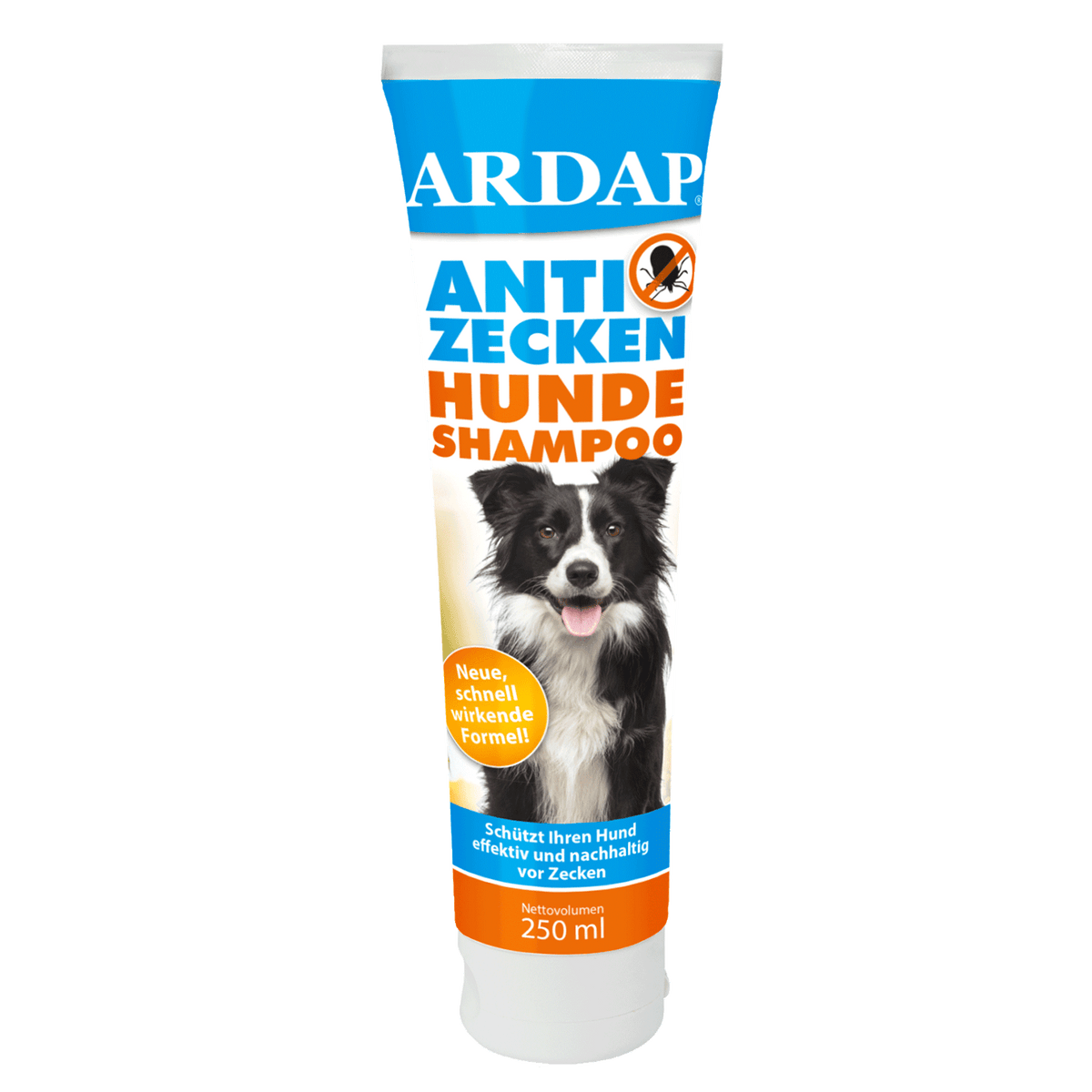
- ARDAP Anti-tick dog shampoo: The shampoo cleanses and cares for the dog's fur while also providing a repellent effect.