Together with Prof. Dr. med. vet. Norbert Mencke, our specialist veterinarian for parasitology, we are here to support you if your dog has ticks.
- Does my dog have ticks?
- What to do if your dog is restless during tick removal
- When to see a veterinarian
- Prevention is better than cure: Tick repellents for dogs
Does my dog have ticks?
If you want to remove a tick from your dog, you first need to be sure that it is actually this particular parasite. However, detecting ticks is actually quite simple. We will show you how to do it.

Systematically checking your dog for parasites: How to find ticks on your dog
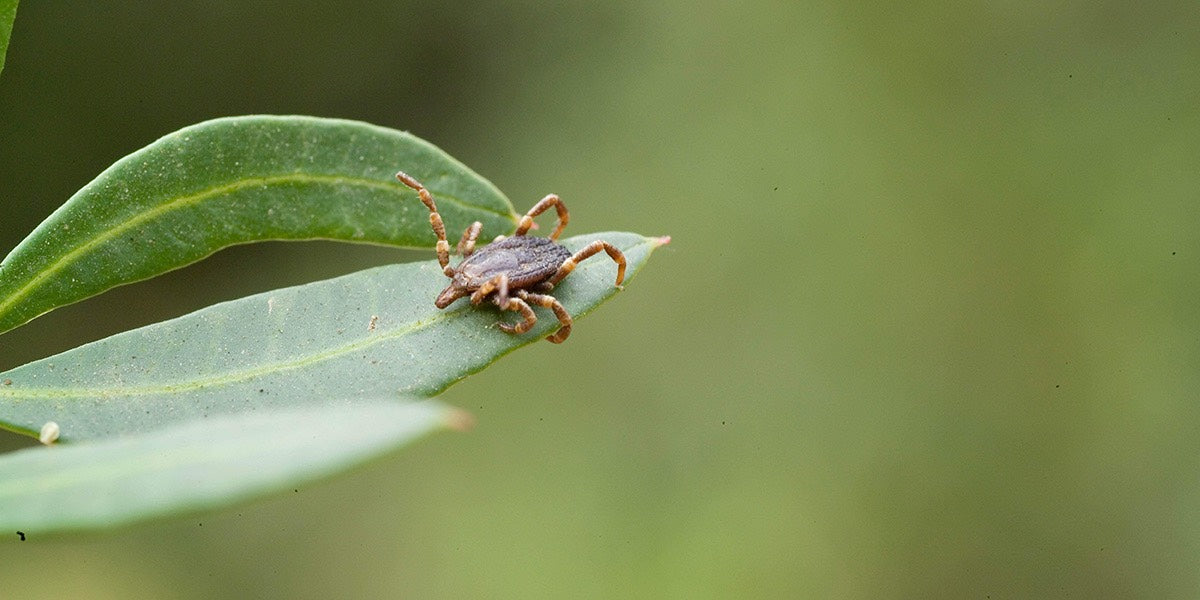
There are two problems when looking for ticks. Firstly, larvae and nymphs are particularly small and therefore barely visible to the naked eye. Secondly, many dogs have thick fur. This makes it difficult to reliably identify ticks attached to the skin.
The easiest way to discover ticks on your dog is during regular grooming. For example, you can regularly comb through your dog's fur with the ARDAP flea and dust comb, which will also help bring ticks to light. Engorged ticks can measure up to one centimeter and should therefore be immediately noticeable.
Contrary to the widespread belief that the warm summer months can be considered tick season, ticks can also pose a danger to animals and humans in winter due to the milder temperatures. Therefore, it is important to comb your dog regularly and check them for ticks all year round. Also run your flat hand over the fur and look for irregularities on the skin. If there is an infestation, you must act quickly and remove the tick. To prevent an infestation in the first place, you should use reliable products for preventative tick protection.


Preferred places for tick bites: Where do ticks bite dogs?
The tick moves quickly through your dog's coat and looks for the best body parts to attach itself to and subsequently feed on blood. In principle, however, ticks can be discovered anywhere on the dog's body. There are, however, places where ticks attach more frequently. These are usually well-vascularized, thin-skinned areas with little fur. This includes, among others, the head and ears, including the insides. You should also pay particular attention to the armpits, groin area, genital area, and between the toes.
Why remove parasites from your dog
In principle, you should act as quickly as possible in the event of a tick bite. The parasites can transmit pathogens to the dog, which can lead to serious illnesses and thus pose a real health risk. Ticks feed for several days, and the female tick of the common wood tick can feed for up to 14 days. Pathogens are transmitted to the dog during the blood meal. For example, Borrelia is only transmitted after 18-24 hours. This is in stark contrast to FSME viruses, which are transmitted immediately after attachment and feeding. In principle, this applies to dogs as well as to us humans: The sooner you remove the tick, the lower the risk of transmission.
Remove ticks successfully and safely
Removing ticks does not have to be difficult if you know how to do it. We present some methods and their chances of success so that you can orient yourself.
Stay away from home remedies
The use of home remedies for a tick infestation on your dog is strongly discouraged. Ticks must be removed mechanically, and any other method of killing ticks in the skin should be rejected and not used. In particular, the use of killing agents such as alcohol and nail polish increases the risk of infection, as the dying tick can still release its saliva and thus pathogens into the wound during its death throes.
Essential oils are also among the products found in many households that are frequently recommended in connection with tick removal. Here it should be noted that their effectiveness cannot be scientifically proven. Therefore, you are taking a very high risk if you rely solely on home remedies.

A good choice: Tick hooks and tick forceps
There are various tools available for removing ticks from dogs. These include the ARDAP tick hook, which is very easy to use. In the practical 3-pack, these are suitable for ticks of any size.
Another option is the use of the ARDAP tick hook with 2-in-1 function. The tick hook allows you to remove the parasites quickly and thoroughly. Thanks to the integrated forceps, even the smallest ticks can be removed from your dog's skin. In addition to removing the annoying parasites, the tick forceps are also suitable for foreign objects such as thorns or splinters.


Get the right technique: Please pull!
When removing ticks, you should always remove the parasite completely from the skin. This is also to prevent pathogens from entering the wound. Therefore, you should pull the parasite out slowly and steadily and not twist it out. When twisting it out, it is easy to crush the tick, causing it to release more saliva and thus transmit pathogens.
When using a tick hook, push the split tip of the hook over the skin and under the tick. Do not apply pressure and do not pull yet. It is enough to lift the hook slightly, and the tick should already come loose. With tick forceps for smaller parasites, simply grasp them with the instrument close to the skin and pull gently upwards. After removal, it is recommended to disinfect the area.
Half as bad: What if the "head" gets stuck?
We colloquially refer to the part of the parasite where the mouthparts are located as the tick head. When removing the parasite, you should try to prevent the tick head from getting stuck in the wound. Nevertheless, it is usually not a serious problem if you cannot remove all parts of the tick completely. In general, the dog's body will reject the tick's mouthparts as a foreign object after a certain period of time.
However, in some cases, the affected area with the stuck head part can become inflamed. In this case, you should see a veterinarian to prevent possible health consequences. A thorough disinfection of the puncture site can therefore help in all cases to prevent inflammatory reactions and support rapid healing.
What to do if your dog is restless during removal
Is your dog resisting the removal of the tick and refusing to stay still? In this case, you need to stay calm. We will show you how you can safely remove the tick even if your dog does not immediately cooperate.
Patience is key
If your dog does not allow you to remove the tick, you need to come up with a plan. Perhaps you can find a treat to distract your dog. Avoid hectic movements so that you do not stress your dog even further.
It is often helpful to have a second person assist you. This person can stroke and calm the dog while you pull the tick out. Ask your helper to hold the animal firmly during the procedure. Then you should be able to carefully remove the parasite from the skin.
The best tips at a glance:
If you know what to do, you can calm your dog down best during tick removal:
- Distract with treats
- Stroke and calm the dog
- Avoid hectic movements
- Have someone hold the dog
- Speak to the animal in a calm voice
- Keep them busy with toys
- Take a walk beforehand
- Massage the dog beforehand with a grooming glove
- Create a comfortable lying place with a soft blanket

When to see a veterinarian
Are you not confident in mechanically removing ticks from your dog? In this case, it may be sensible to visit the veterinarian. The important thing is that you find a solution that is optimal for your pet and that you feel comfortable with.
In principle, you should take your dog to the veterinarian if they show general symptoms of illness. Even if there has been an inflammation of the skin, caution is advised. It is better to have a professional assess this.
You should not ignore the following symptoms and should contact a veterinarian:
- The animal has no appetite
- becomes tired quickly
- Fever
- Inflammations that do not disappear on their own
Prevention is better than cure: Tick repellents for dogs
When treating tick bites, the rule is that prevention is always better than cure. We present some effective products with the active ingredient pyrethrum from chrysanthemum flowers, which you can use to prevent a tick infestation on your pet:
- Tick collar: With the ARDAP tick collar for dogs, you can provide reliable protection for up to four months.
- Tick Spot-On: As an alternative to the collar, the ARDAP tick Spot-On for dogs is available, which is also intended for external application. This product contains three tubes for direct application to the skin, which protect your dog against ticks for up to twelve weeks.
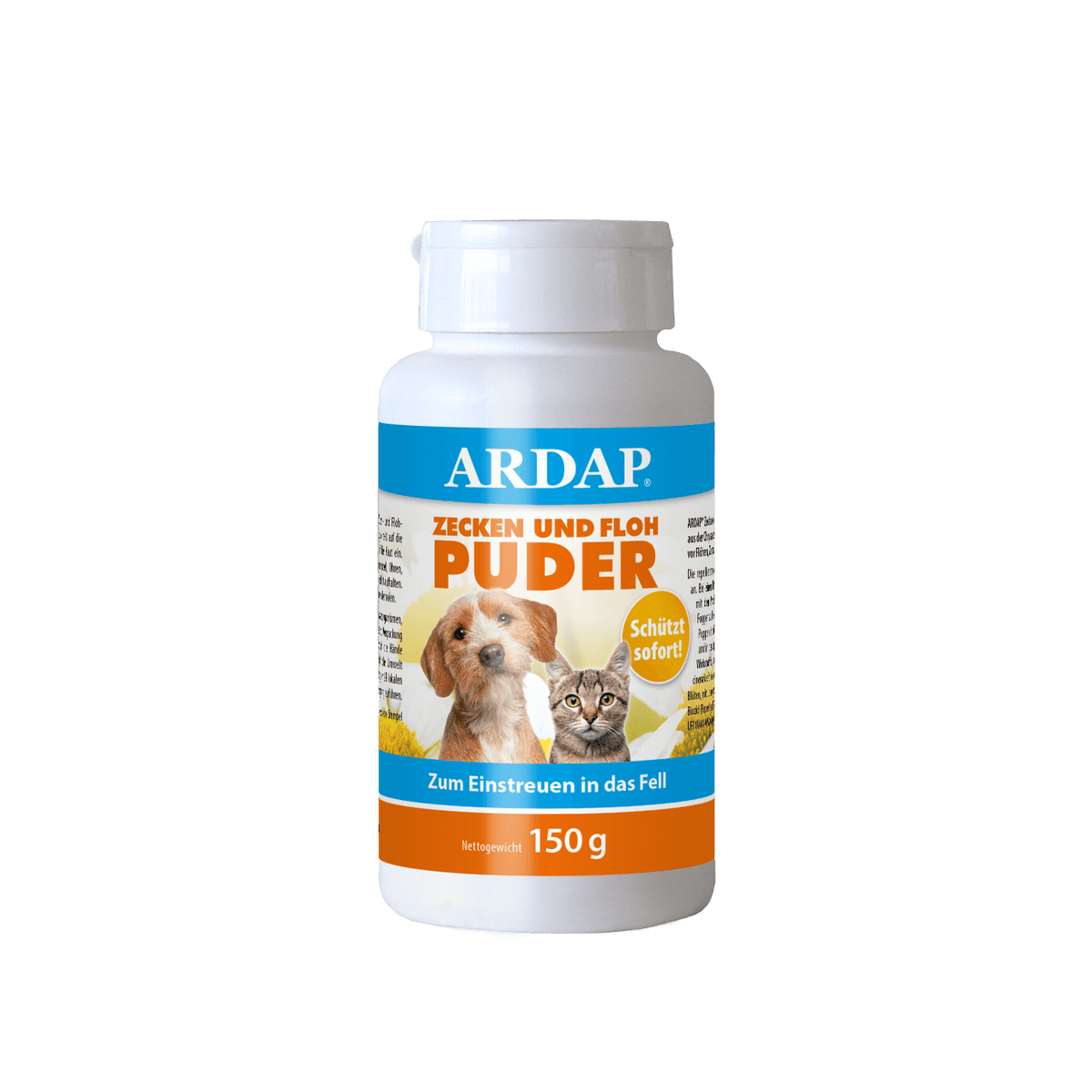
- Tick powder: With the ARDAP tick powder for dogs & cats, you get a product to sprinkle into the animal's fur. The product is based on pyrethrum and lavender oil. The repellent effect lasts for about one week and takes effect immediately after application.
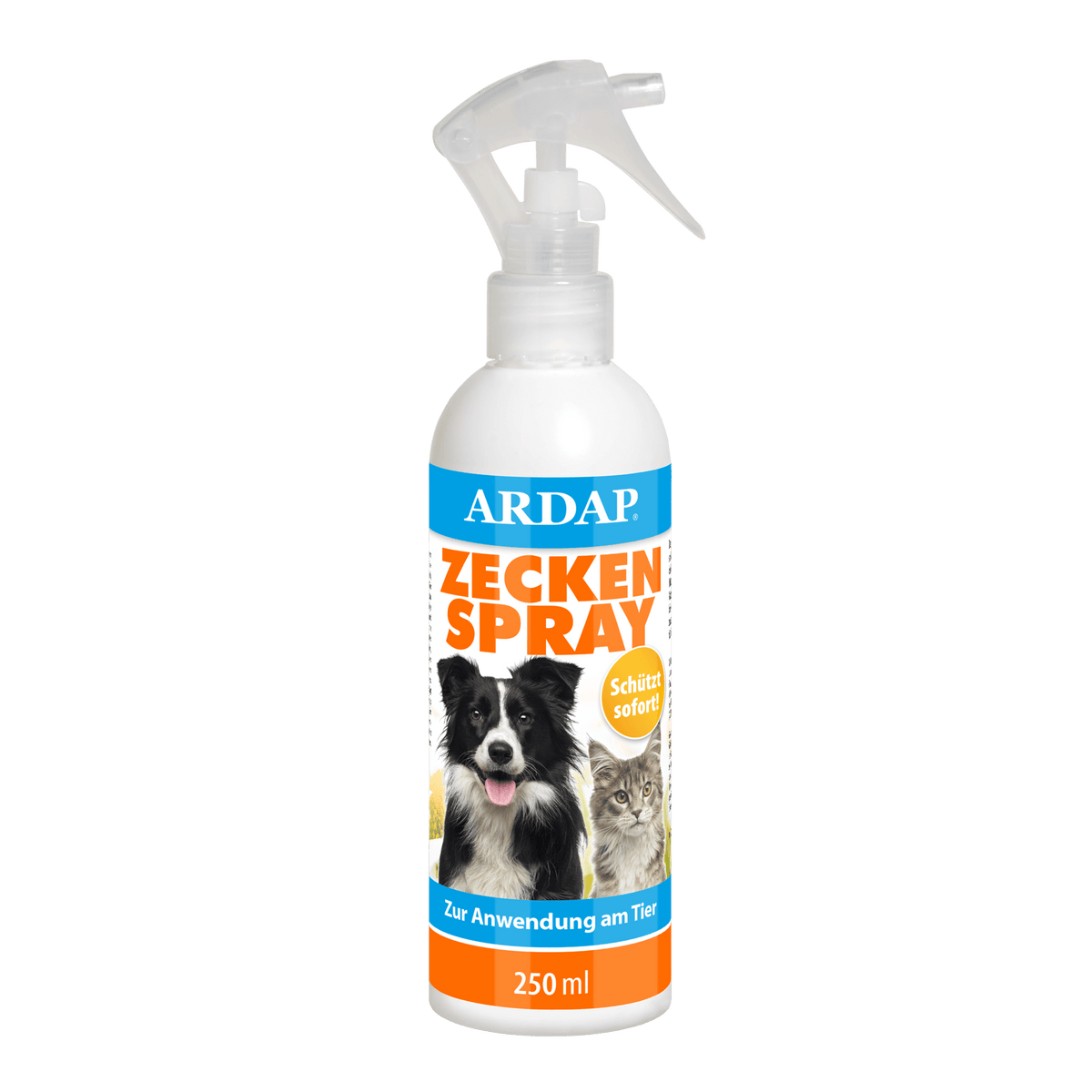
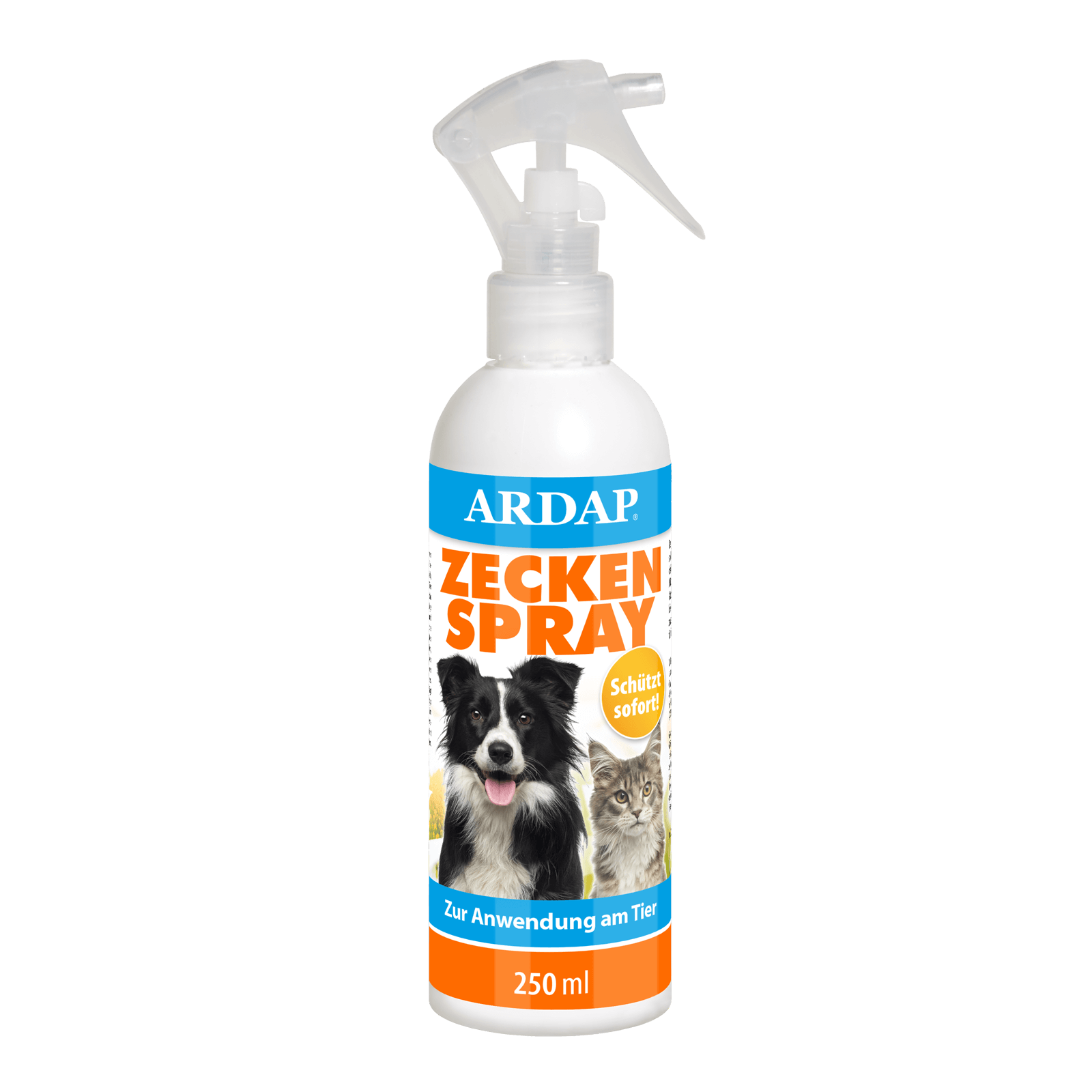
- Tick spray: The ARDAP tick spray offers long-lasting protection for up to four weeks. Here too, the active ingredients chrysanthemum and lavender oil are used. You spray the product on until the dog's fur is slightly damp.
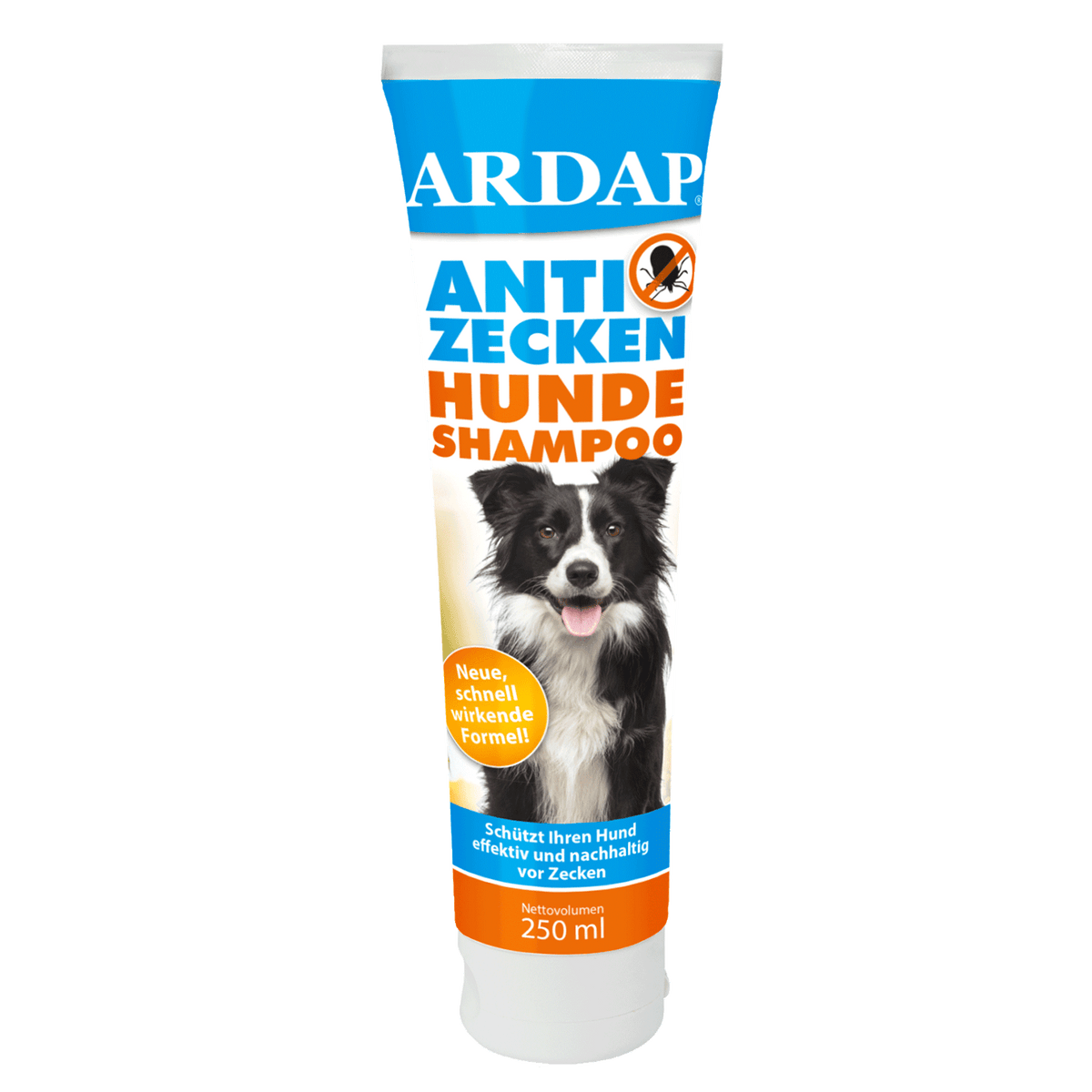
- Tick shampoo: The ARDAP tick shampoo for dogs provides effective protection against ticks and ensures a fresh and hygienic dog coat. You gently massage the product into your pet's fur with warm water.