With our expert, the specialist veterinarian for parasitology Prof. Dr. med. vet. Norbert Mencke, we have compiled the most important information here about tick protection for cats.
- Year-round tick protection also for cats?
- Repellents for protection against tick bites
- Good to know
- Conclusion: Prevention is the best protection

Year-round tick protection also for cats?
Tick protection is important not only during the warmer months. Ticks can also survive in winter, either by hiding well from the cold or, if there is no severe frost, simply by reducing their activity. Because it is getting warmer and warmer here, it is becoming increasingly important to take suitable protective measures all year round.
Ticks are lurking: almost everywhere and at all times
Ticks are widespread throughout Germany and are present in almost all regions, especially in heavily wooded areas and meadows with tall grass. They like to stay in damp and shady environments where they are protected from heat and dryness, e.g. on riverbanks and lakeshores as well as in wetlands. On hot, dry days, they must repeatedly retreat to sheltered places with higher humidity, such as under leaves or stones, so that they do not dry out. Nevertheless, they are much more active during the warmer months and feel comfortable in residential areas and cities as well, where they lurk in parks and gardens, on lawns or playgrounds. This means that even indoor cats, who are only occasionally allowed outside or on the balcony or always stay close to the house, can pick up a tick.
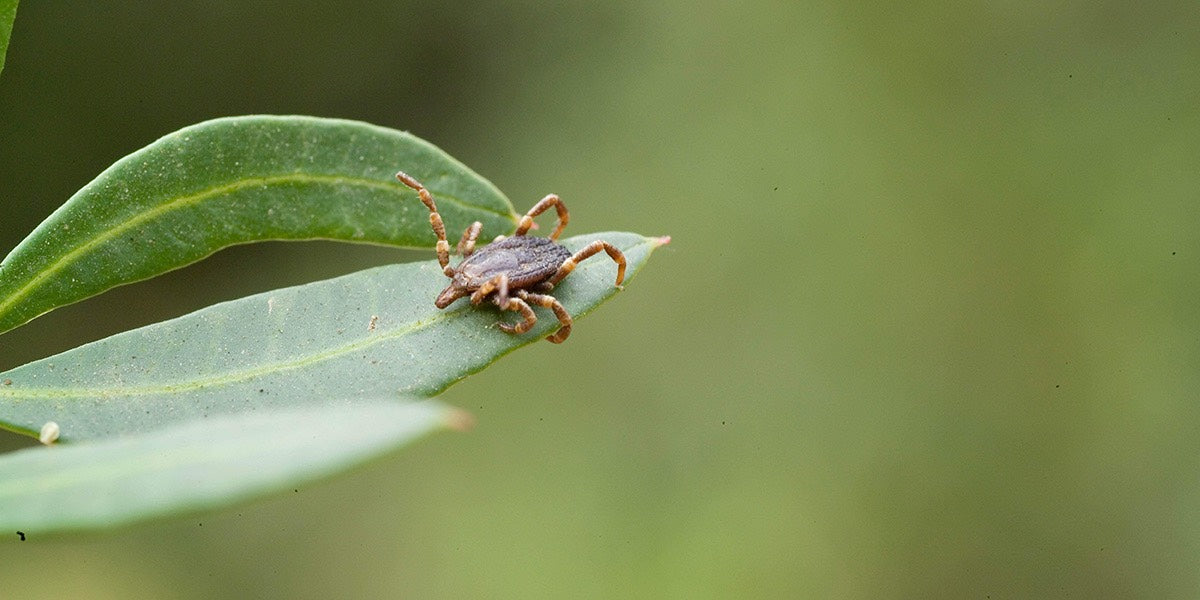
In regions with a temperate climate, the conditions for tick reproduction are ideal. To find a host and get a blood meal, the Common wood tick lurks everywhere it is damp and shady. The Wood tick can also be found in open areas. Ticks usually sit on a blade of grass or another low plant, where they are usually simply brushed off by passing animals and "collected" in this way. Eyeless ticks such as the Common wood tick cannot actively hunt, nor can they jump, fly or drop themselves from trees. Their strategy is therefore to wait patiently until a host – e.g. a cat – passes close enough by their ambush spot or settles there.
With the Haller's organ, a very sensitive organ on the first pair of legs, the tick perceives vibrations, temperature differences, CO₂ in the exhaled air, as well as shadows.
Ticks can transmit diseases as soon as they have bitten. Cats are also at risk of infection. But this does not happen nearly as often as with dogs or humans. For infectious pathogens such as Borrelia, Anaplasma, Mycoplasma or feline infectious anemia, ticks are potential carriers.

Free spirit meets pestilence: Free-roaming cats as tick taxis
Free-roaming cats are particularly at risk from ticks, as they often spend days outdoors in spring and summer and roam through gardens, parks and woods. You should therefore regularly check your free-roaming cat for ticks. When checking your cat, pay special attention to the areas of the body where the parasites like to attach. Ticks bite cats most frequently on the head, e.g. behind the ears or on the chin. But the neck, belly and the insides of the thighs are also popular, because the skin is very thin and well-supplied with blood here.
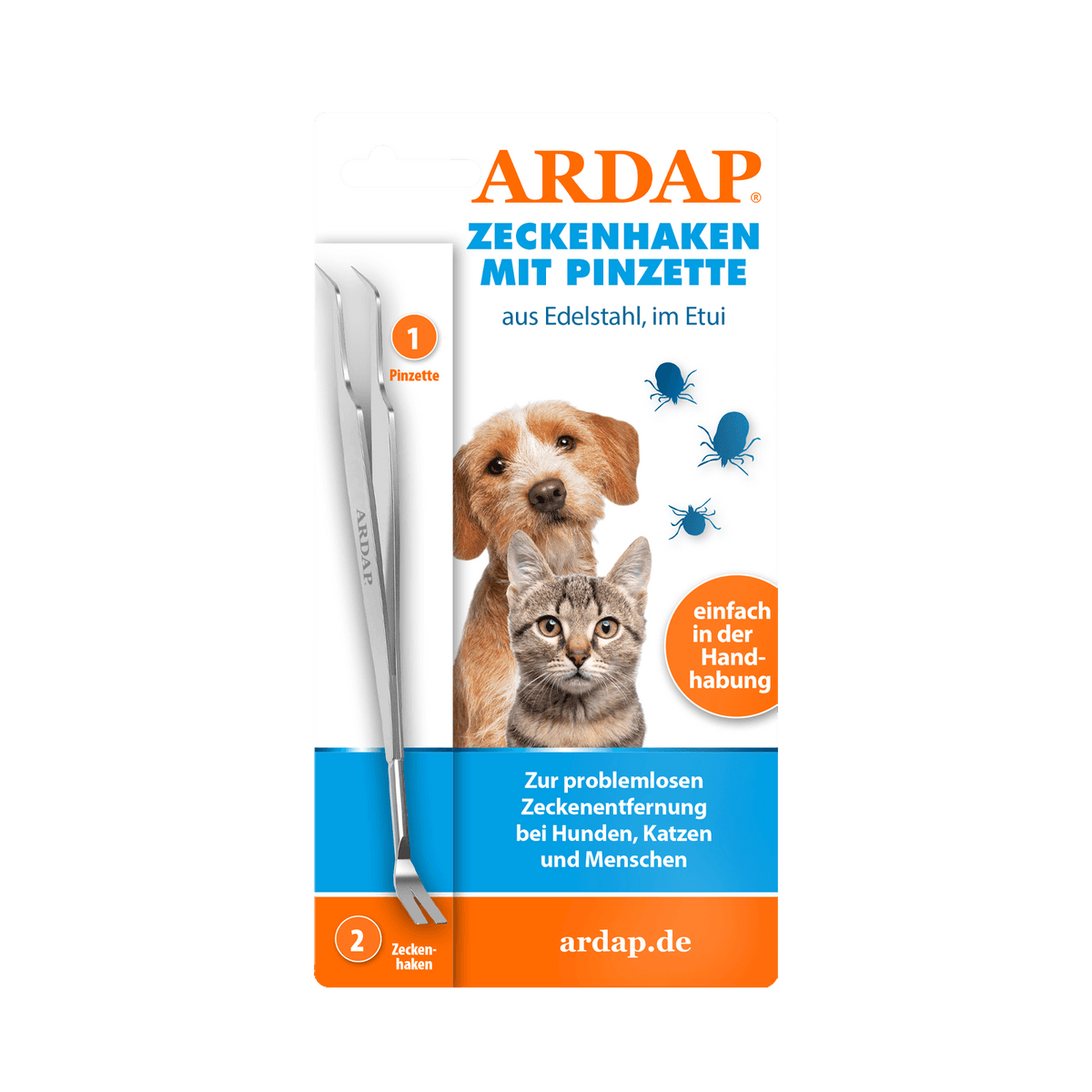
If your cat has a tick, quick action is required. Use a tick hook to remove the tick carefully and completely. The ARDAP Tick Hook Set offers three hooks of different sizes for the safe removal of any tick size. As a practical 2-in-1 tool, the ARDAP Tick Hook with Tweezers offers both a tick hook and tweezers that securely grasp and hold even the smallest ticks and are also excellent for removing thorns or splinters.
Ideally, however, the ticks do not bite in the first place. Preventive measures are therefore the optimal tick protection for your cat.

Repellents for protection against tick bites
For tick protection for pets such as dogs and cats, the regular application of tick repellents has proven particularly effective. Below, we introduce effective products from ARDAP with which you can reliably protect your cat from ticks all year round.
Spot-on for cats
The ARDAP Tick Spot-on for Cats with the active ingredient pyrethrum from the chrysanthemum is an efficient method to repel ticks. The product is applied directly to the skin on the cat's neck and provides protection for several weeks. The spot-on works quickly and not only prevents ticks from attaching to the cat, but also reliably repels fleas.
Applying a spot-on is very simple: First, part the fur on your cat's neck while stroking it to expose a small area of skin. Then apply the liquid directly from the small tube to the skin on the neck, where the cat cannot lick it off. In a multi-cat household, it is therefore important that the cats remain separated initially after applying the spot-on. After application, the product distributes itself through the natural skin oil film (not through the bloodstream) and protects the cat's entire body from tick bites. One pack provides up to twelve weeks of reliable tick and flea protection for your cat.

Tick and flea collar for cats
Alternatively, the ARDAP Tick Collar for Cats is an option. It continuously releases the active ingredient pyrethrum from the chrysanthemum, which distributes itself through the skin oil film (and not through the bloodstream) and reliably repels ticks and fleas. The collar provides protection for up to four months. Thanks to a safety mechanism, the collar detaches itself if it encounters greater resistance.
When putting it on, make sure that you can easily fit at least two fingers between the collar and the animal's neck. Excess length can be trimmed with scissors after putting on the collar.
Tick spray for cats
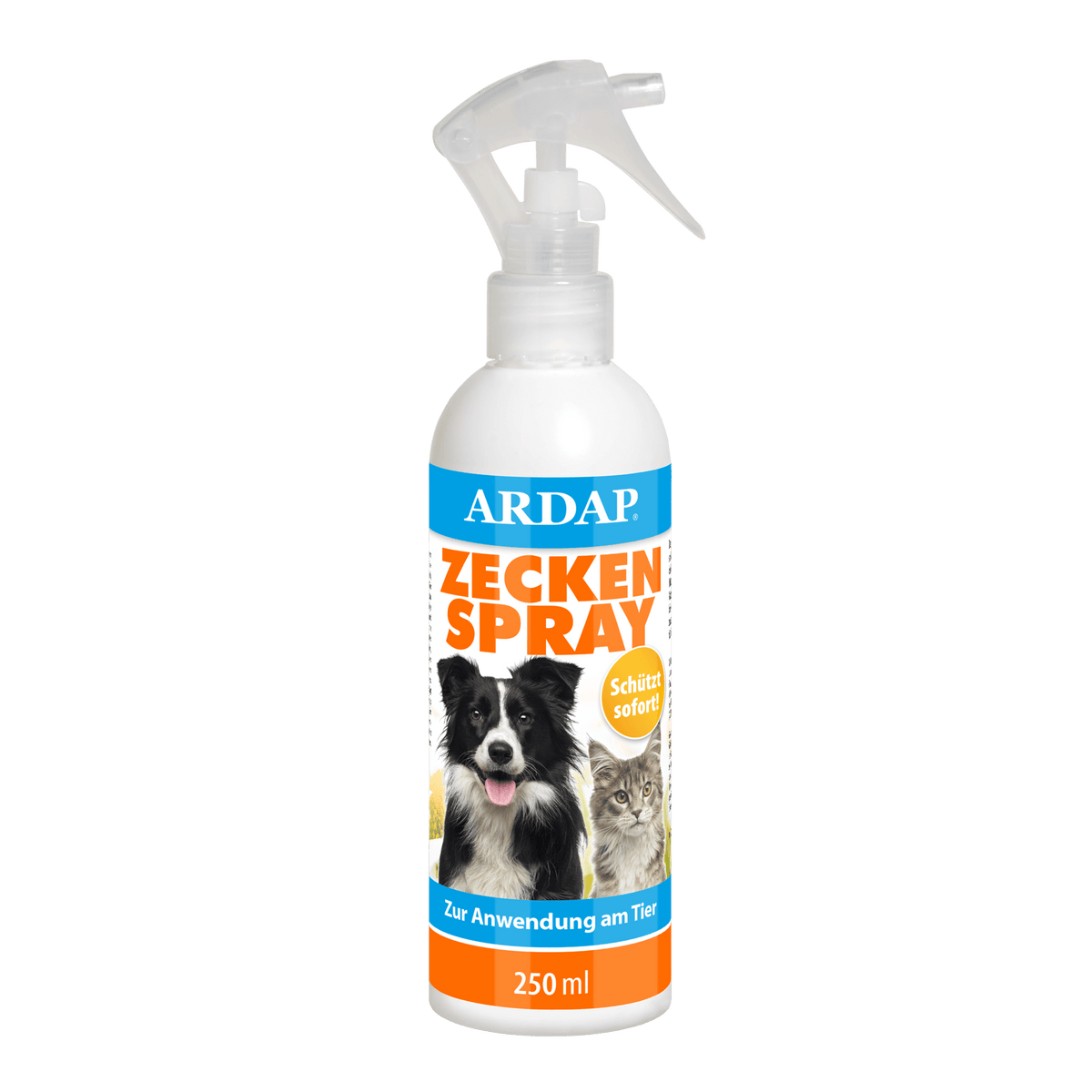
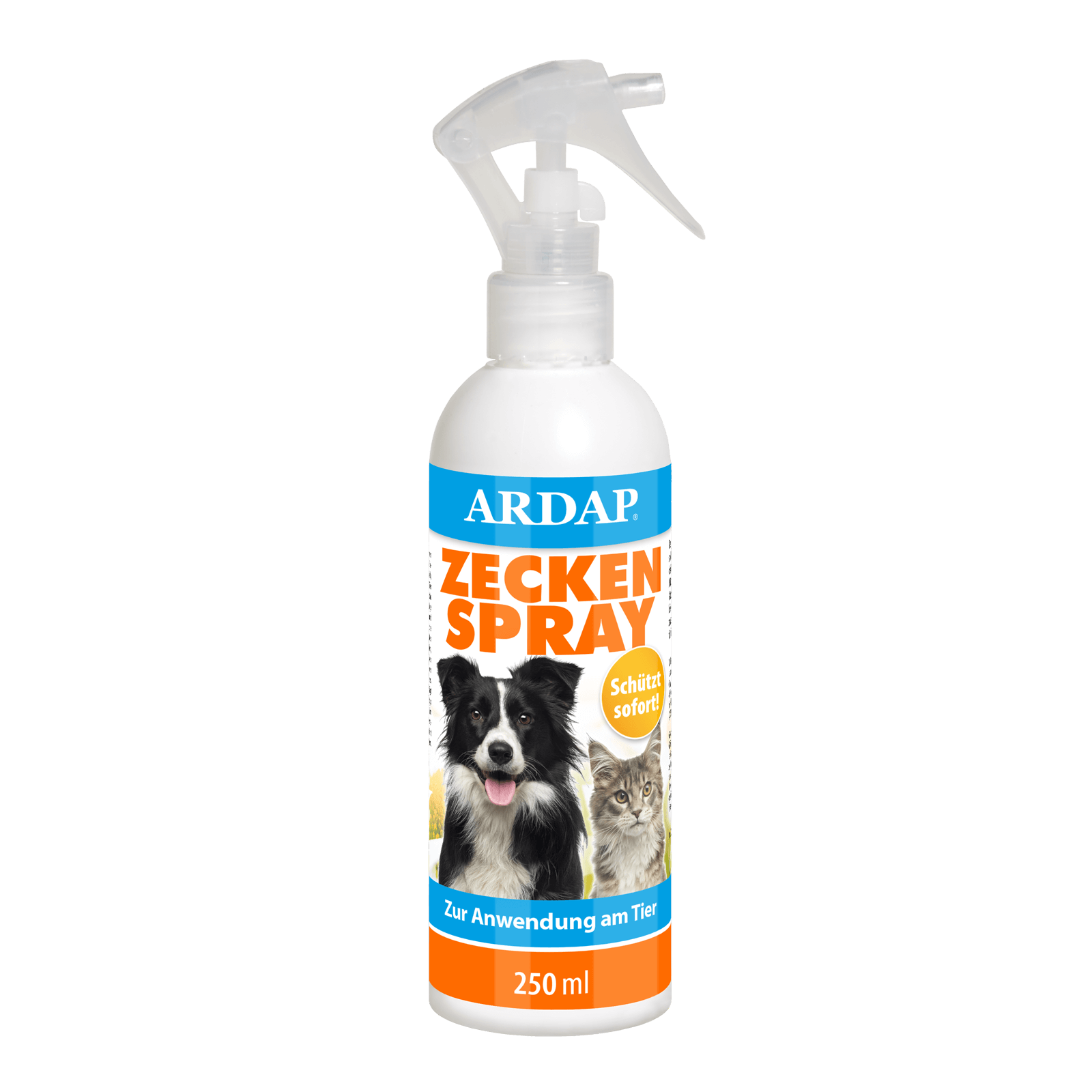
The ARDAP Tick Spray with pyrethrum and lavender oil is a quick and safe product to use to prevent tick infestations. The spray can be applied directly to the cat's fur and provides immediate protection for up to 4 weeks. Particularly vulnerable areas such as the ears or chin, but also the neck, belly and the insides of the thighs, can be specifically treated with it, for example before letting the cat out in the morning. The tick spray can also be used as an ideal supplement to the spot-on or collar.
Tick and flea powder for cats
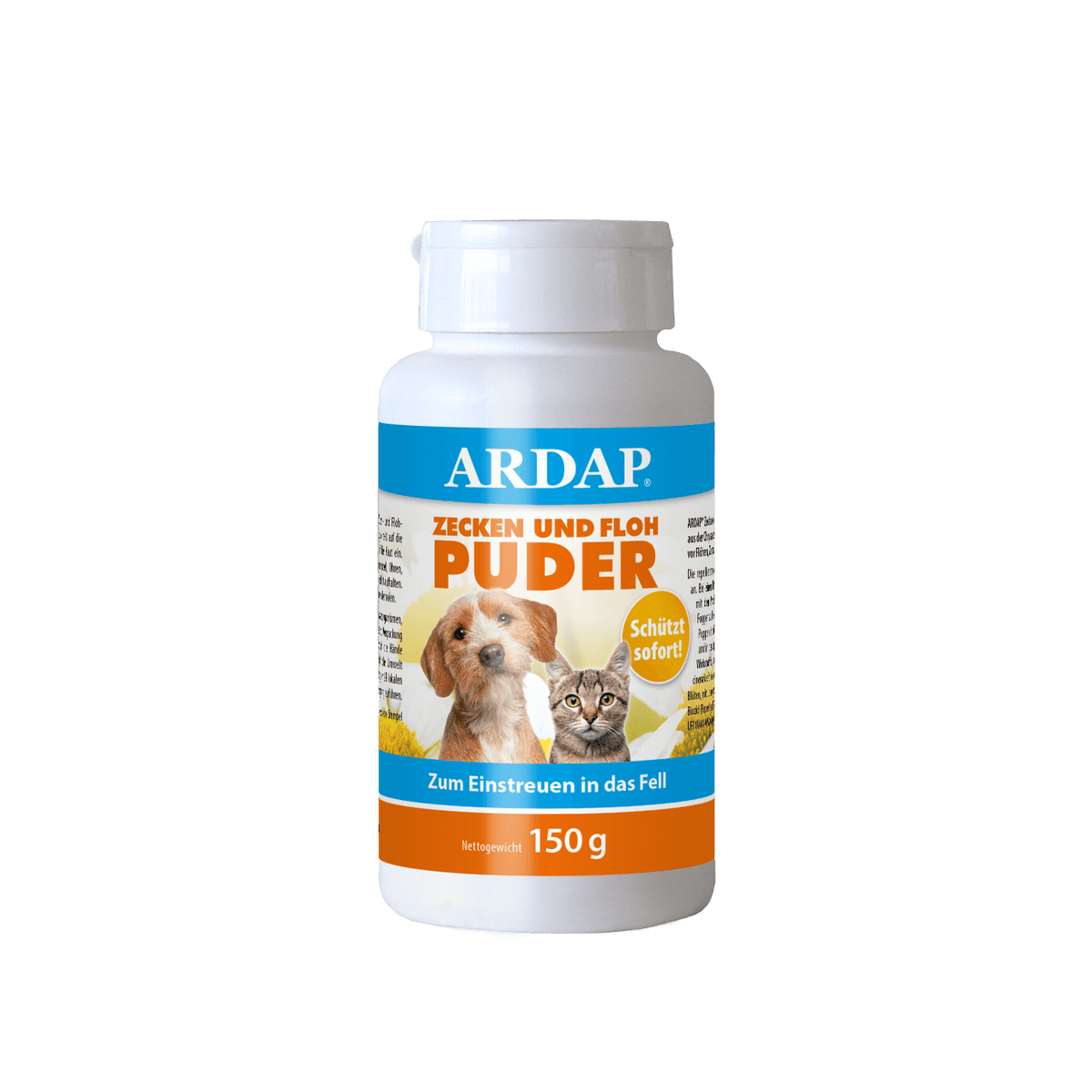
The ARDAP Tick Powder for dogs and cats is another useful product in the fight against ticks. It is easy to apply and provides immediate protection, especially for cats that do not like sprays. To use it, dust your cat's fur, especially in areas that are frequently infested with ticks. Repeat the application weekly to ensure continuous protection. The tick powder with pyrethrum and lavender oil is an optimal supplement to a protective collar or a spot-on.


Good to know
There is no vaccine for cats against ticks or against diseases that can be transmitted by ticks. This makes it all the more important to rely on proven preventive measures such as spot-ons or tick collars. These products offer not only reliable protection against ticks, but also against other parasites such as fleas.
Tick tablet for cats?
In veterinary practices, there are tablets against ticks and fleas. These are prescription veterinary medicines. These tablets contain acaricides, i.e. tick-killing active ingredients. These must be taken up by the tick to work. This means that ticks must bite your cat. Only then does the active ingredient enter the tick and kill it.
These products therefore have no repellent effect, i.e. they do not repel - unlike the collar or spot-on with the active ingredient pyrethrum from the chrysanthemum flower.


Natural tick protection? Home remedy myth
Home remedies such as coconut oil are often recommended as "natural tick repellents". Some essential oils such as lavender oil, neem oil or lemon eucalyptus oil are said to be able to deter ticks in high doses, but the effect is significantly weaker than with specially formulated tick protection products and has also not been proven. In addition, many cats react sensitively or even allergicly when strongly scented oils are rubbed into their fur. It is also impossible to prevent the cat from licking off the oil, which can lead to digestive problems. Please also note that cats are generally not allowed to consume garlic. This makes the Allium plant not only unsuitable as a home remedy for cats, but actually very dangerous.
When removing attached ticks, home remedies such as nail polish or alcohol, which are intended to kill the attached parasite, must never be used. When used, the tick may release the dreaded pathogens into the host's bloodstream even more during its death struggle. This must be avoided at all costs.
Therefore, you should rather rely on products that safely remove attached ticks from your pet and - even better - have been proven to reliably prevent ticks.
How do spot-ons with pyrethrum work?
The ARDAP Spot-On for Cats with the active ingredient pyrethrum, which is obtained from the flowers of the chrysanthemum, offers effective protection against ticks and fleas.
After applying the spot-on to the skin, the active ingredient is distributed over the entire body surface and the hair through the skin oil film. As soon as a tick comes into contact with the treated skin or fur, it is deterred by the pyrethrum, so that it does not bite on firmly, but instead becomes irritated and tries to flee or falls off and is thus repelled.
The effect of pyrethrum is fast and reliable, which makes it a popular active ingredient in repellent ARDAP products for use on animals. It provides protection against tick bites and can thus help to minimize the risk of illness caused by tick-borne pathogens.

Prevention is the best protection
The best tick protection for cats is the application of repellent (repelling) products based on pyrethrum (Chrysanthemum cinerariaefolium). Because prevention is always better than treatment. Spot-ons and tick collars offer long-lasting repellent protection. In addition, tick spray or tick powder can be used specifically to additionally protect particularly frequently infested areas such as the ears, chin, neck, belly, as well as the insides of the thighs from parasites.
Free-roaming cats should also be checked regularly for ticks. If prevention has failed and a tick has attached itself to your cat, remove it as quickly as possible with the ARDAP Tick Hook or the ARDAP Tick Tweezers, to minimize health risks.