Together with our veterinarian Prof. Dr. med. vet. Norbert Mencke, a specialist in parasitology, we are here to support you on the topic of ticks and pets.

What do ticks actually do in winter?
Ticks are inactive in winter, hiding under fallen leaves and therefore posing no danger to our pets such as dogs and cats? To believe this would be a dangerous misconception. In fact, ticks are a year-round issue in Germany. Here you will learn more about this topic and discover why you must keep an eye on the risk of tick infestation even on colder days.
Do ticks die in winter?
It is generally true that ticks do not like particularly low temperatures. As soon as temperatures drop towards freezing, the ticks' mobility is restricted, which can lead to them becoming completely dormant. For this reason, the parasites seek out hiding places under fallen leaves in winter, for example, to escape the icy conditions. However, it is rather unlikely that a tick will die directly from the cold in our latitudes, as it would have to be exceptionally cold - and remain so for an extended period. Even temperatures below minus ten degrees Celsius are easily tolerated by the parasites. So you should not assume that winter will solve your tick problem. Caution is still required.

Tick genera and activity patterns in winter
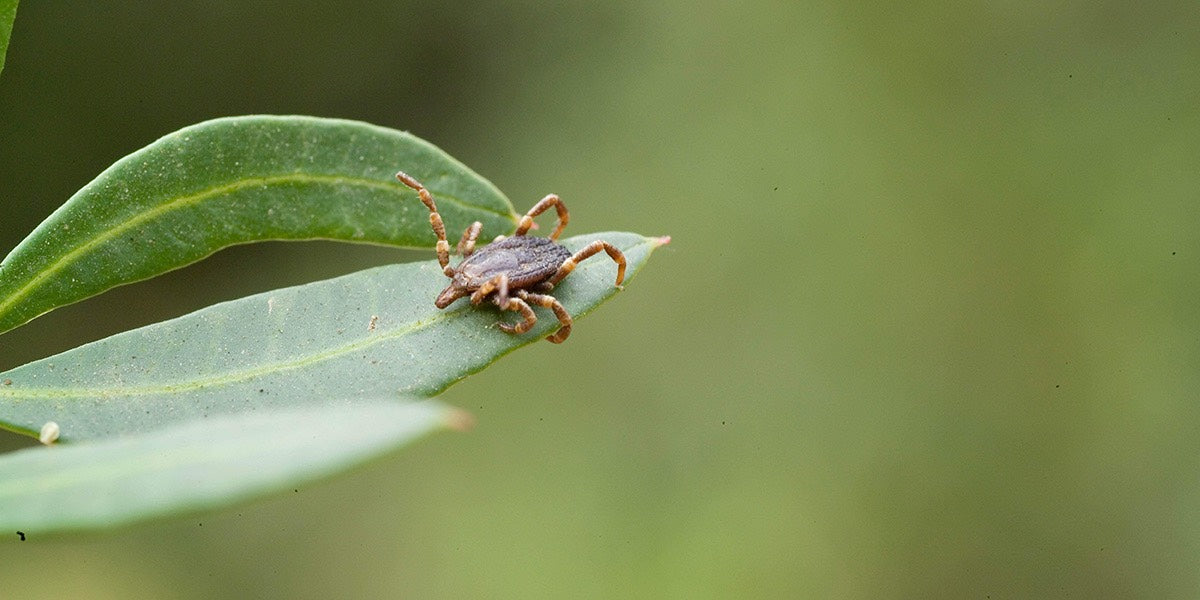
The common wood tick (Ixodes ricinus) is found throughout Central Europe and is widespread across Germany. In addition, several other Ixodes species are also widely distributed, such as the hedgehog tick (Ixodes hexagonus), the dog tick (Ixodes canisuga), and the mouse tick (Ixodes trianguliceps). All Ixodes species prefer moderate temperatures and are very active then. The wood tick (Dermacentor reticulatus), also known as the meadow tick or multicolored tick, behaves differently and is spreading ever further. This tick is active even at colder temperatures and is therefore often the tick that infests pets very early in the year.
Where do the parasites overwinter?
In principle, ticks are able to overwinter in every one of their developmental stages. This applies to adult ticks as well as nymphs and larvae. Ticks prove to be true survival experts even during the coldest months of the year. The decisive factor is their ability to cleverly use the microclimate at their respective location to their advantage. Even when temperatures are extremely low, ticks can survive, for example, under fallen leaves or a closed layer of snow. They also readily use the so-called composting effect, which can be created locally by direct sunlight and produce heat. It would therefore be risky to overestimate the paralyzing effect of winter on the activity or danger posed by the parasites. Ticks always pose a problem, even in winter.

Do the parasites survive in houses and homes?
The question also arises whether ticks can survive in our houses and homes in winter and remain active there. In fact, our homes are not part of the ticks' habitat. The protective layer of fallen leaves is missing here, as are the blades of grass they find in the wild and on which they like to lie in wait for host animals. Furthermore, the humidity in living spaces is usually far too low. However, it is naturally also possible for our pets to bring a tick in from outside during winter.
When are ticks active?
The particularly active time of year begins for Ixodes ticks from March and April. When temperatures rise again and it is not yet too dry, the parasites pose the greatest danger to us and our pets. But what about the winter months of January and February? Tick activity is indeed lower here, but it is still present.
However, Dermacentor ticks are less sensitive to cold and are often active earlier. This means that even at temperatures of less than, for example, five degrees Celsius, tick infestations can still occur. Therefore, it does not make sense to neglect prevention during the cold season. This means: The tick season takes place, at least in Germany and many other European countries, all year round.
Conclusion: Ticks - a year-round problem in Germany
More recent studies show us that ticks in our latitudes do not enter hibernation in the true sense of the word, even if their activity may be reduced. Sometimes it is enough to pick up a few fallen leaves and stimulate the ticks with your own body heat or breath alone. This naturally also applies when dogs and cats go for walks or play outside. Added to this is the problem of mild winters, which are occurring more and more frequently. Temperatures then do not drop sufficiently, and ticks show consistently higher activity.
What does this mean? As a pet owner, you must realize that year-round protection against tick infestation is necessary. Otherwise, you run a quick risk of your dog or cat picking up a tick and, in the worst case, dangerous diseases being transmitted.
Highly effective repellents protect your pet
The good news is that products are available on the market with the help of which year-round protection against ticks can be ensured. These are ideally adapted to the needs of dogs and cats. Pyrethrum from chrysanthemum flowers is one of the highly effective tick treatments and is suitable for your pet when used properly. They reliably help to ensure that the parasites do not choose your four-legged friend as a host animal in the first place, as they have a repellent effect. ARDAP repellents for use on animals are all based on this active ingredient, which is contained in the collars, spot-ons, sprays, and powder. The repellent effectiveness of pyrethrum is scientifically proven, which is why you as a pet owner can trust these products.


Spot-On and Tick Collar
You apply the ARDAP Tick Spot-On for cats or the ARDAP Tick Spot-On for dogs to your pet's skin. The advantage is that long-term protection can be achieved with the use of one tube for up to four weeks. Alternatively, you can also use the ARDAP Tick collar for dogs or the ARDAP Tick collar for cats and simply place it around the animal's neck. It is entirely up to you and your pet's preferences and needs which measure you decide on. Both products serve equally as reliable, preventive tick protection.
Tick Spray & Co
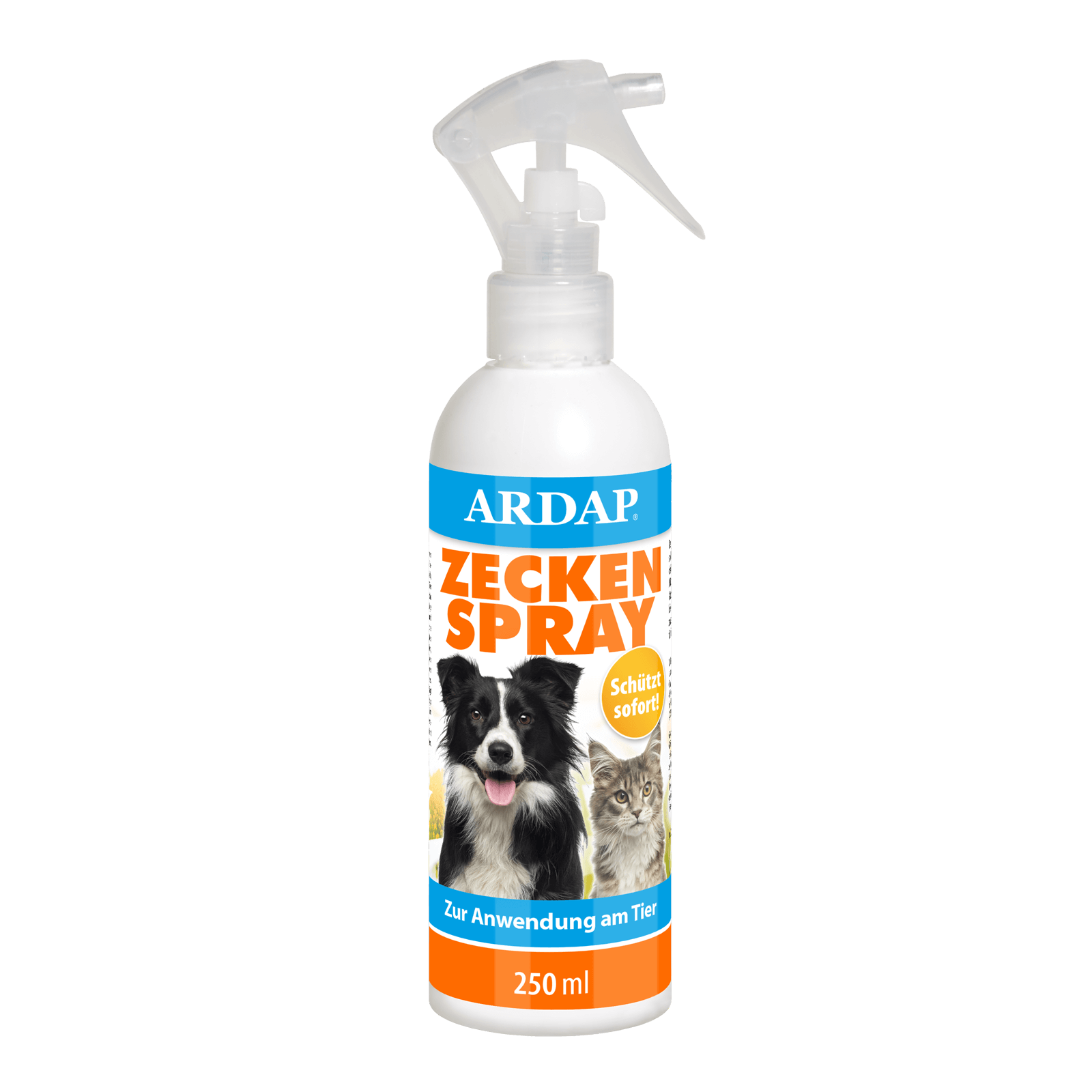
While spot-ons and collars serve as basic protection, the ARDAP Tick powder for dog & cat or the ARDAP Tick spray can be used as a supplement. Especially before going outside or taking a walk, it makes sense to additionally treat the frequently affected areas such as the neck, paws, and base of the tail with them. For your dog, a hygienic coat care with the ARDAP Anti-tick dog shampoo is also an option, for example after a longer stay in nature. Here too, the repellent effect takes effect immediately after application.
The decisive thing is that prevention is always preferable to a cure.

Targeted coat care after every excursion into nature
Perhaps you thought of comprehensive tick protection too late and your pet brought a parasite back from its excursion through nature? Here, the use of the ARDAP Flea and dust comb is recommended. This way, you can regularly comb your four-legged friend's coat and take the opportunity to check whether there are ticks on the skin anywhere. If you discover a parasite, use the ARDAP Tick hook in a set of 3 or the ARDAP Tick hook with tweezers with a 2-in-1 double function. This way, the ticks can be easily lifted from the skin and removed safely. The handling of both tick hooks is very simple and offers maximum safety in the removal of ticks that have already attached themselves to the skin. In case of emergency, it is important to always have such a professional tool at hand, for example on the leash, on the key ring, or in your pocket, so that you can react immediately.
Matching videos with application tips: