Together with our specialist veterinarian for parasitology, Prof. Dr. med. vet. Norbert Mencke, we will inform you below about the dangers of domestic ticks and introduce you to effective products for tick protection for your dog.
- Why you must protect your dog from ticks
- How do ticks get on the dog?
- Is there a tick vaccine for dogs?
- For the cat: Home remedies against ticks in dogs
- To be on the safe side against ticks: The best repellents
- Correctly removing ticks from dogs

Why you must protect your dog from ticks
In principle, any tick bite for your dog can become dangerous. On the one hand, because some ticks carry pathogens from diseases that can be transmitted during the bite. On the other hand, because even the bites of uninfected ticks can often cause inflammation of the skin, severe itching, stress, or allergic reactions in sensitive dogs.
Dangers of tick bites
Veterinarians often hear these questions: What can happen to a dog in the worst case from a tick bite? How do I best protect my dog from ticks? When should you use tick products, and which offer the best tick protection for dogs?
In veterinary practices throughout Germany, tick-borne diseases in dogs are becoming an increasingly important topic. Especially the tick species Ixodes ricinus ("Common wood tick"), which is widespread throughout Europe, can transmit dangerous bacteria that can cause Lyme disease, rickettsiosis, or anaplasmosis in dogs. Other potential carriers are the deer tick (Dermacentor reticulatus) and the brown dog tick (Rhipicephalus sanguineus), after whose bite your dog can contract babesiosis.
The diseases transmitted by ticks to dogs can in the worst case be life-threatening or even fatal for dogs and require early diagnosis and veterinary treatment to minimize the risk of complications or consequential damage.
By the way: An infected tick transmits the pathogen to its host. However, the transmission does not automatically cause symptoms or a severe course of illness. Nevertheless, caution is always advisable, as neither an infection nor the severity of an individual course of illness can be predicted. Only with reliable prophylaxis can you prevent an illness in your pet as best as possible.

Prevention – always the better decision
Accordingly, the best tick protection is prevention. Our expert Prof. Dr. med. vet. Mencke, as an experienced veterinarian and parasitologist, recommends comprehensive, i.e., year-round flea and tick protection. Because every dog is constantly outdoors in every season and ticks are often active outside the "tick season" as well. In addition, there are infected ticks that carry dangerous pathogens for dogs or cats, not only in the so-called tick risk areas.
According to the Robert Koch Institute (RKI), a region is considered an FSME risk area if “the number of reported FSME cases in at least one of the 18 five-year periods in the period 2002–2023 in the district OR in the district region (consisting of the district in question plus all adjacent districts) was significantly (p < 0.05) higher than the expected number of cases at an incidence of 1 case/100,000 inhabitants.” (to the RKI maps of the FSME risk areas). Accordingly, the danger for dogs in these areas to encounter an infected tick and fall ill also increases.
Parasitologist on comprehensive, i.e., year-round flea and tick protection. Because every dog is constantly outdoors in every season and ticks are often active outside the “tick season” as well. In addition, there are infected ticks that carry dangerous pathogens for dogs or cats, not only in the so-called tick risk areas.
With repellent, deterrent products, which keep away not only ticks but also fleas through the active ingredient Chrysanthemum cinerariaefolium (pyrethrum), you achieve reliable tick protection. Pyrethrum is available in various dosage forms, such as a tick collar or tick spot-on for dogs. To achieve the best possible protective effect, tick protection products should be applied continuously or repeatedly; how long the effect lasts and when you should reapply the product depends on the dosage form. For example, the duration of effect of the tick collar (up to 4 months) differs from the duration of effect of the spot-on (up to 3 months in total).


How do ticks get on the dog?
There are particularly many ticks between February and October. They do not tolerate severe frost, so they hide when it gets really cold and fall into hibernation. If the winter is mild, which is happening more and more frequently, they can, however, remain active all year round. Ticks are also heat-sensitive and must protect themselves from wind and direct sunlight to avoid drying out. Therefore, domestic ticks prefer to stay in damp meadows, at the edge of forests, or near water.
Since most domestic ticks have no eyes, they cannot actively pursue their hosts, but rather sit as ambush predators on grass blades, in bushes, or undergrowth. If a suitable host animal, e.g., a dog, passes close enough by the ambush spot, it brushes the tick off this spot and the tick looks for a well-accessible area of skin to attach itself. If your dog is protected by a repellent such as the spot-on or collar with pyrethrum, it will not bite, but rather avoid this host. Even if it has already landed in the fur, it will rather let go than look for a meal there.
By the way: Have you also heard that ticks drop from trees onto their victims? This is also a very widespread myth. With their eight tiny legs, ticks can only crawl slowly. Running, jumping, climbing trees, or even flying are skills that the common wood tick does not master.
Is there a tick vaccine for dogs?
There is no tick vaccine, neither for humans nor dogs. Humans can at least be vaccinated against early summer meningoencephalitis (FSME), which is quite advisable in risk areas (e.g. in southern Germany). The so-called tick vaccine for dogs, on the other hand, protects your pet from bacterial borreliosis, not from FSME. Therefore, rely on effective repellents to protect your dog from ticks and other blood-sucking parasites.


For the cat: Home remedies against ticks in dogs
There are various home remedies that are often sold with the note “without chemicals” or advertised as a “particularly natural tick protection” for dogs. But do alternative protection products really work against blood-sucking parasites, or are they “for the cat”?
Oil, amber, and co: dangerous myth of home remedies
Amber is petrified resin that looks beautiful, but definitely cannot protect your dog from ticks. Nevertheless, this superstition persists very stubbornly, which is why both amber collars for dogs and amber chains for babies are still offered as protection products. However, there is no scientific evidence for an effect.
Various oils, including neem oil and black cumin oil, are also supposed to protect dogs from ticks. Unfortunately, none of these home remedies work. Neem oil does have a certain effectiveness against some insects, for example if you use it as an emulsion in water to spray plants against aphids. But it is hardly suitable as a tick protection, because it is unhealthy for dogs and should therefore not be rubbed on the skin or into the fur.
Essential oils do have a weak repellent effect, but cannot compete with proven active ingredients such as pyrethrum. This applies not only to effectiveness, but also to the duration of effect. In addition, many dogs react very sensitively to these strongly scented oils – after all, their nose is up to 100,000 times better than that of a human. Allergic reactions are also not ruled out.
By the way: Natural home remedies are often considered harmless, whereas active ingredients on a chemical-synthetic basis quickly get a reputation for being toxic. Here, as everywhere else, it depends on the respective dosage. Home remedies can also be toxic. The note “without chemicals” (as a synonym for “natural”) is misleading in this respect, because chemistry and nature cannot be separated from each other at all. Even coconut oil, which contains triglycerides, among other things, consists of various chemical compositions.

To be on the safe side against ticks: The best repellents
When it comes to tick protection: Repelling is the best defense! Below we introduce you to various products with which you can effectively prevent tick bites in your dog.
Tick and flea collar for dogs
A tick collar for dogs is a simple and efficient method to keep ticks away. The ARDAP tick collar for dogs contains pyrethrum, which is obtained from the flowers of the chrysanthemum. Please follow the instructions for use.
Spot-on for dogs
The ARDAP tick spot-on for dogs is applied directly to the animal's skin, preferably on the neck, where the dog cannot reach and lick it, so that the active ingredient pyrethrum can distribute itself over the whole body within a short time. With one tube of ARDAP spot-on, your dog is protected from ticks and fleas for up to four weeks.
Tick spray for dogs
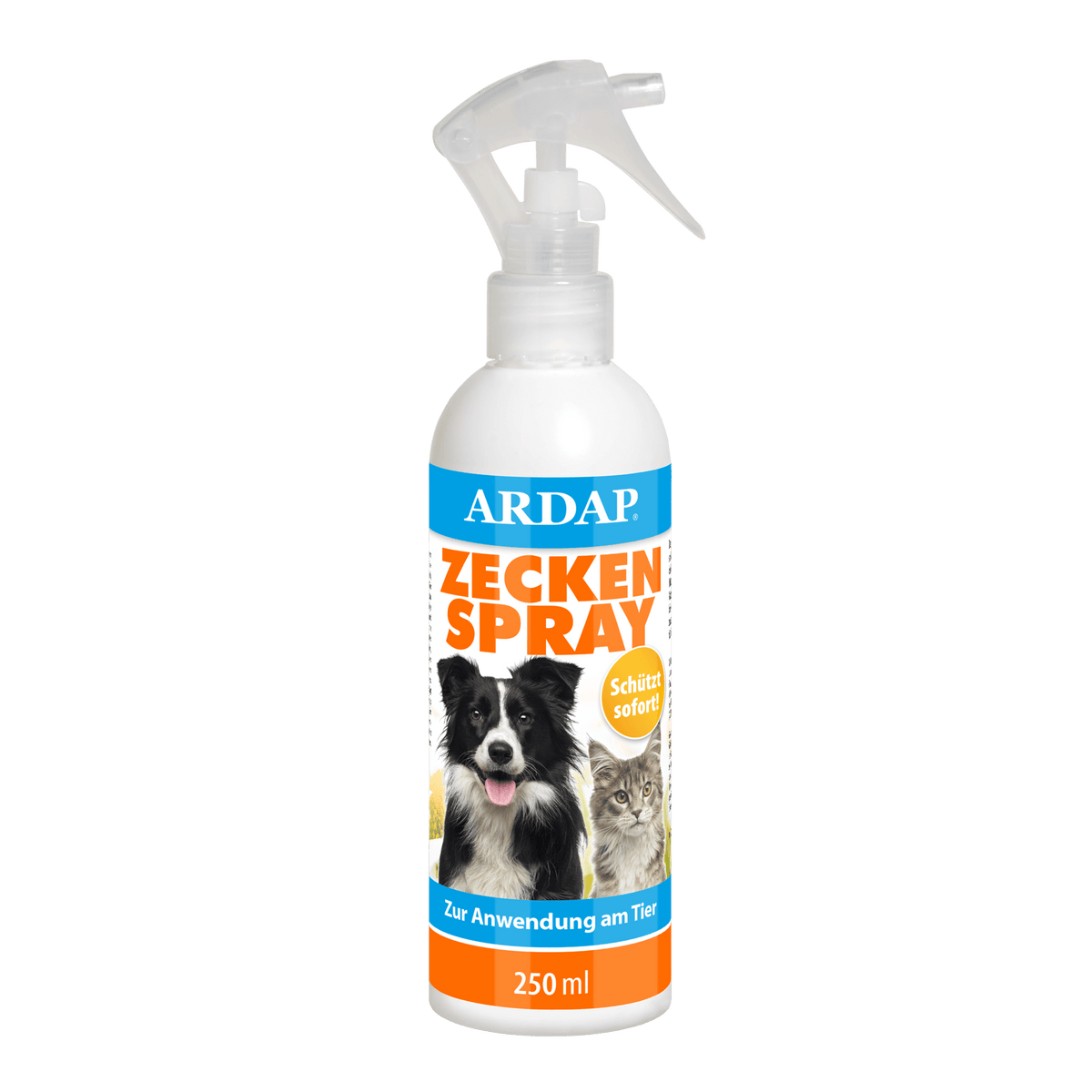
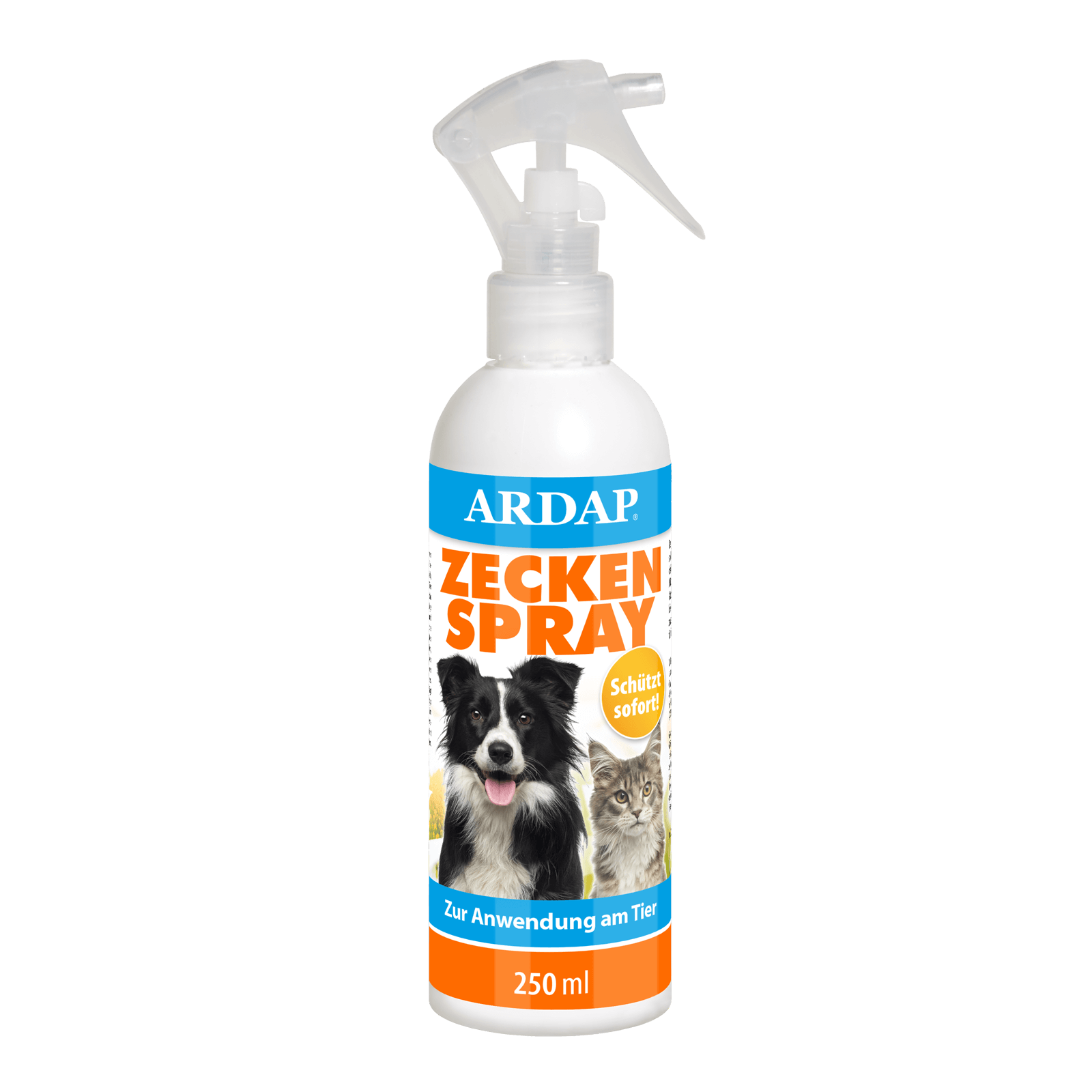
The ARDAP tick spray is sprayed directly onto the fur and offers immediate protection. You can spray the spray before a walk in the forest or a visit to the dog park on the body parts preferred by ticks, for additional tick protection for your dog.
Tick powder for dogs
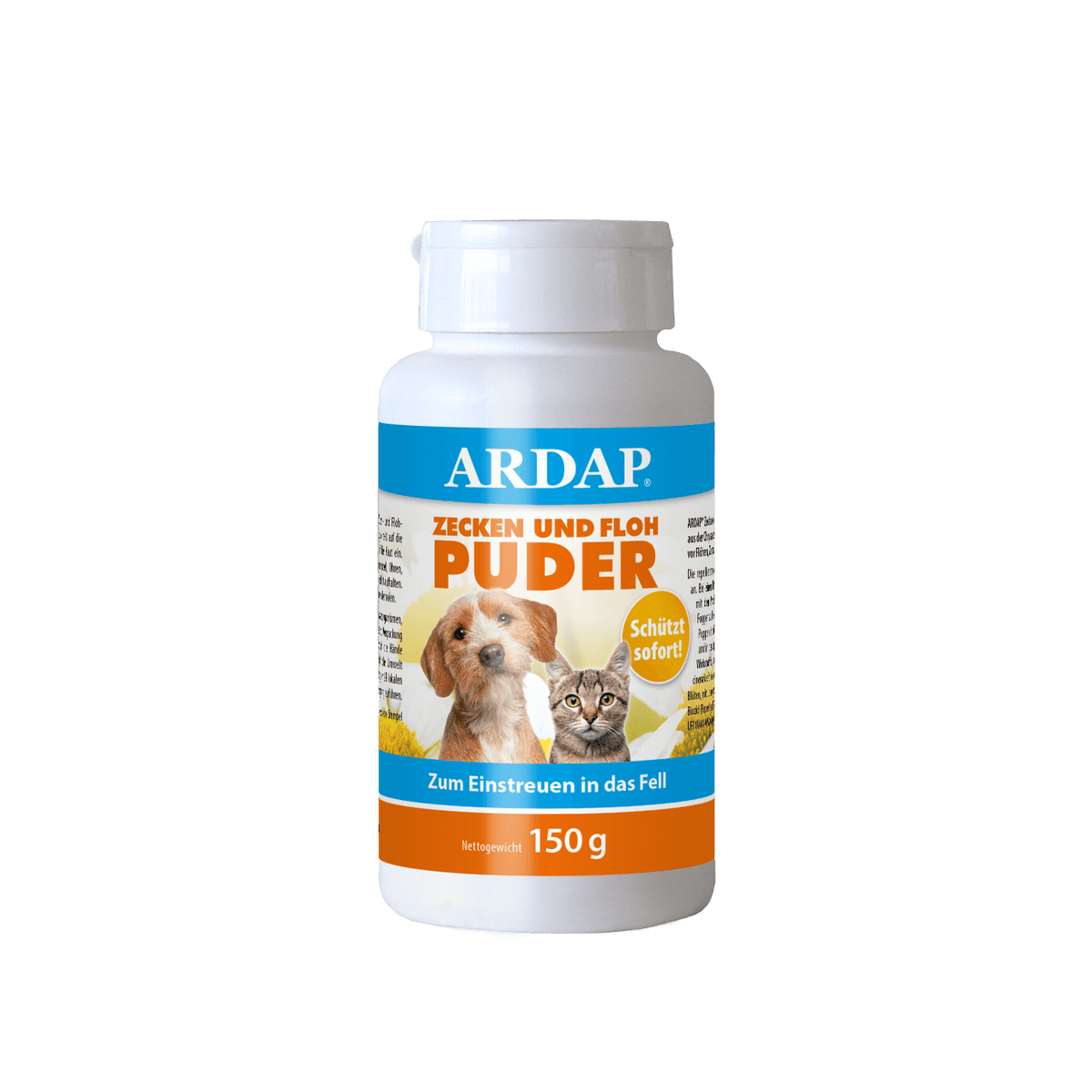
The ARDAP tick powder for dog and cat is another alternative for protection against ticks and can also be combined with other products, such as a protection collar. The powder is worked into the fur and then works for about a week against ticks and fleas.
Anti-tick dog shampoo
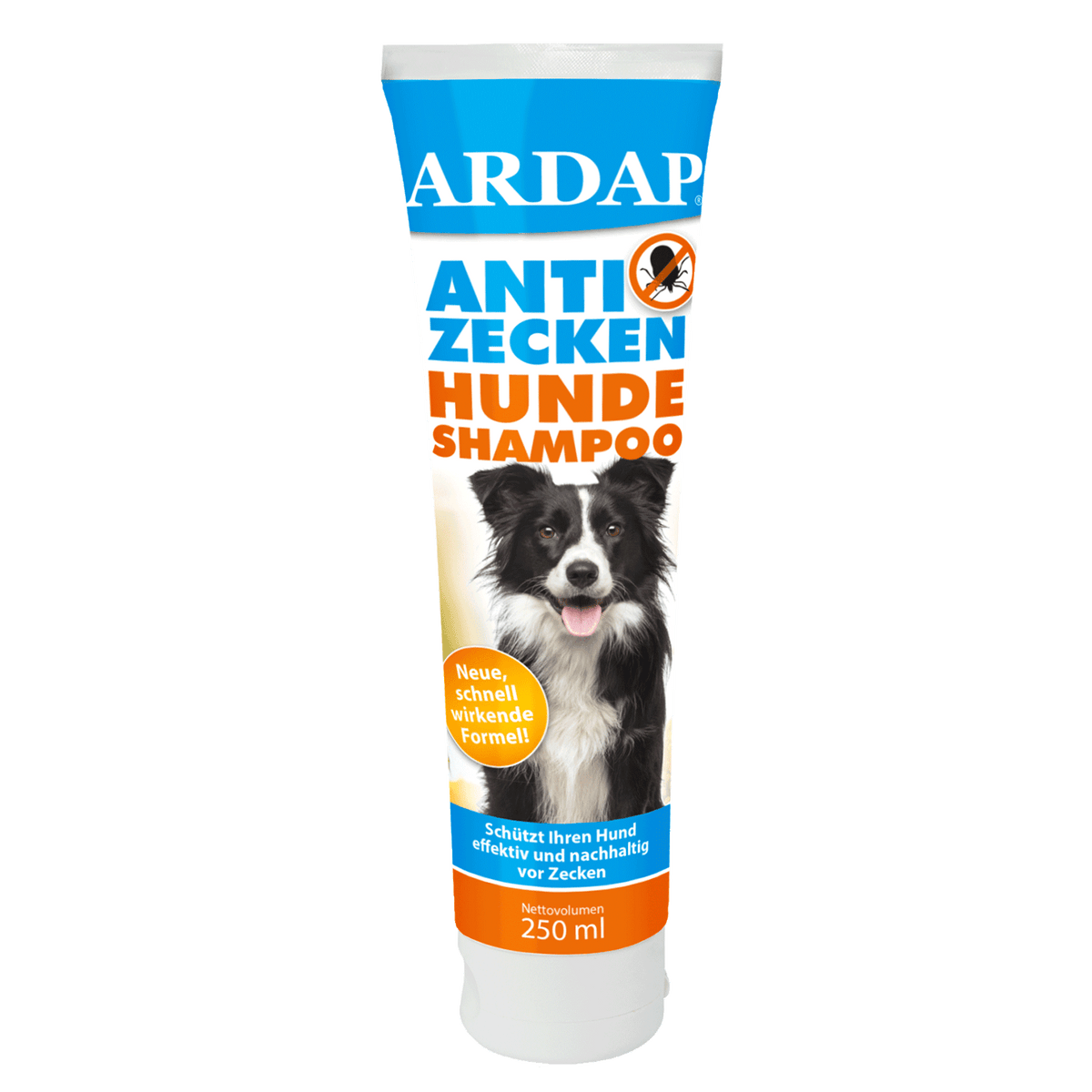
Thanks to the repellent active ingredients based on pyrethrum from the chrysanthemum flower, the ARDAP anti-tick dog shampoo reliably keeps both ticks and fleas away from your dog. The repellent effect takes effect immediately after application. At the same time, it cleanses and smooths the fur of your pet, for a hygienically fresh dog coat.

Correctly removing ticks from dogs
If you find a tick that has attached itself during the tick check on your dog, quick action is required. The longer the tick sits in the skin, the greater the probability that an infected specimen will transmit pathogens into the dog's blood.
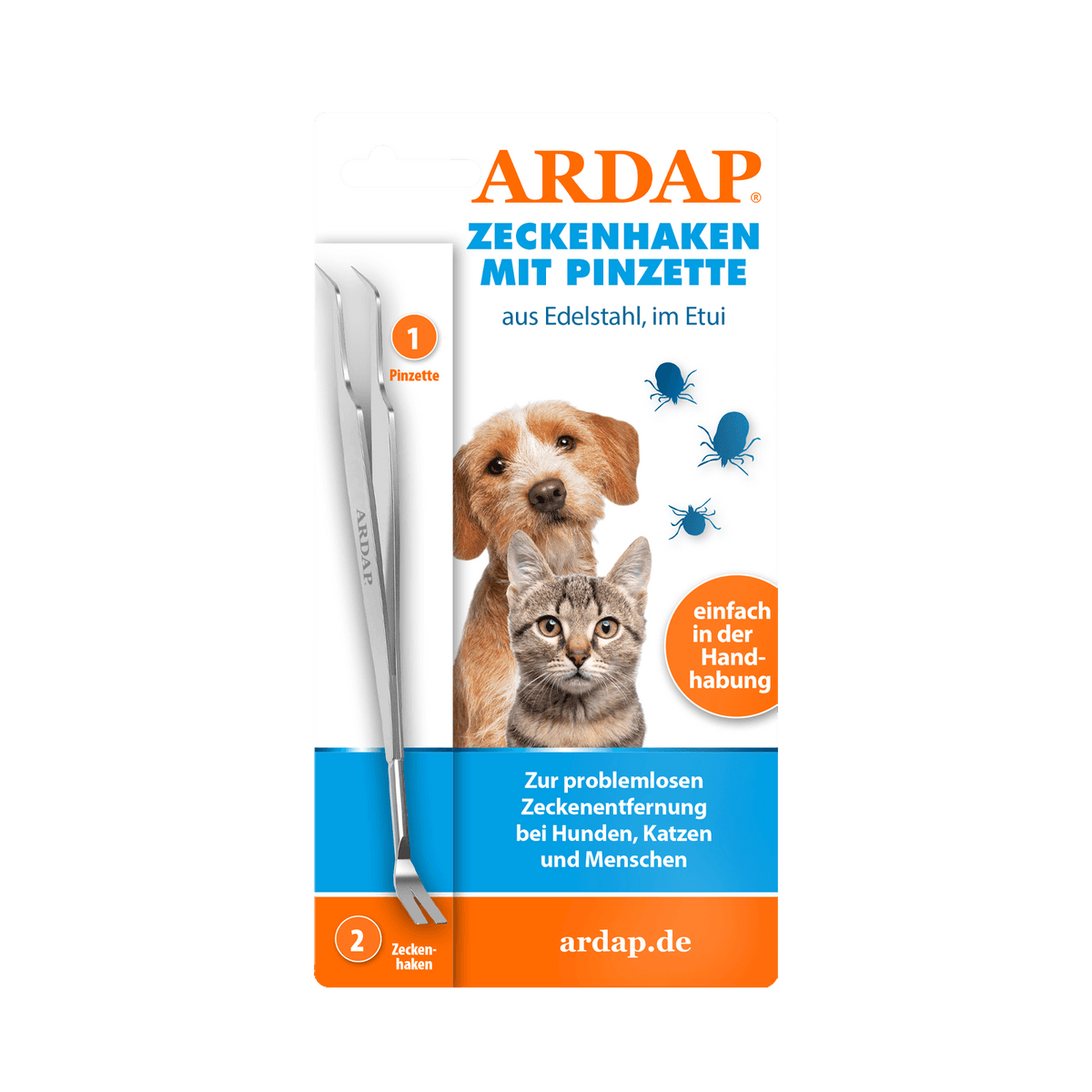
For the safe removal of ticks, it is best to use the ARDAP tick hook from the 3-piece set or the particularly high-quality ARDAP tick forceps made of stainless steel. With the practical 3-piece set, you always have the right tool at hand even on the go, because it can be easily attached to the key ring or the dog leash. Before removal, calm your dog and distract him so that you can carefully expose the puncture site with the tick. Then place the tool and grip the tick directly behind the head. Pull it carefully and straight out, without squeezing the body.
After removal, clean the puncture site thoroughly and disinfect it to prevent infections. The Canosept skin care spray cares for the skin after a tick infestation and supports regeneration. Monitor the skin for changes in the next few days and make a veterinary appointment in case of complaints or uncertainties.
Matching video with application tips: